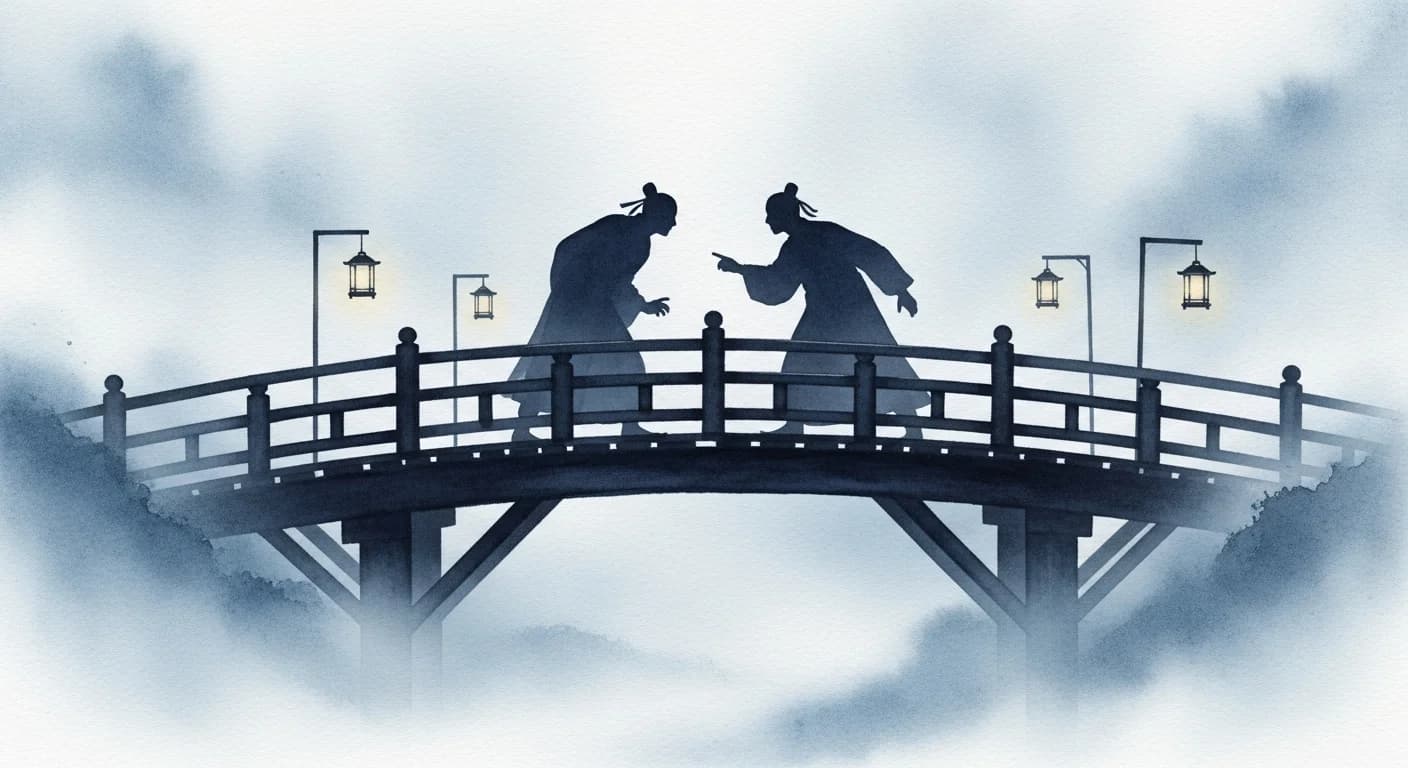
Arguing Dream Meaning — Korean Interpretation of Quarrel & Conflict Dreams
If you woke up unsettled after a heated dream argument, Korean dream tradition may actually have good news for you. In Korean 해몽 (dream interpretation), arguing dreams are among the most common 역몽 — 'reverse dreams' where the dream means the opposite of what it shows. The more intense the argument with someone close to you, the deeper that bond is about to grow in waking life. That said, not every arguing dream is a good omen — who you fight with, how you fight, and how it ends completely change the meaning. The details matter enormously here.
When Arguing Dreams Are Auspicious (길몽)
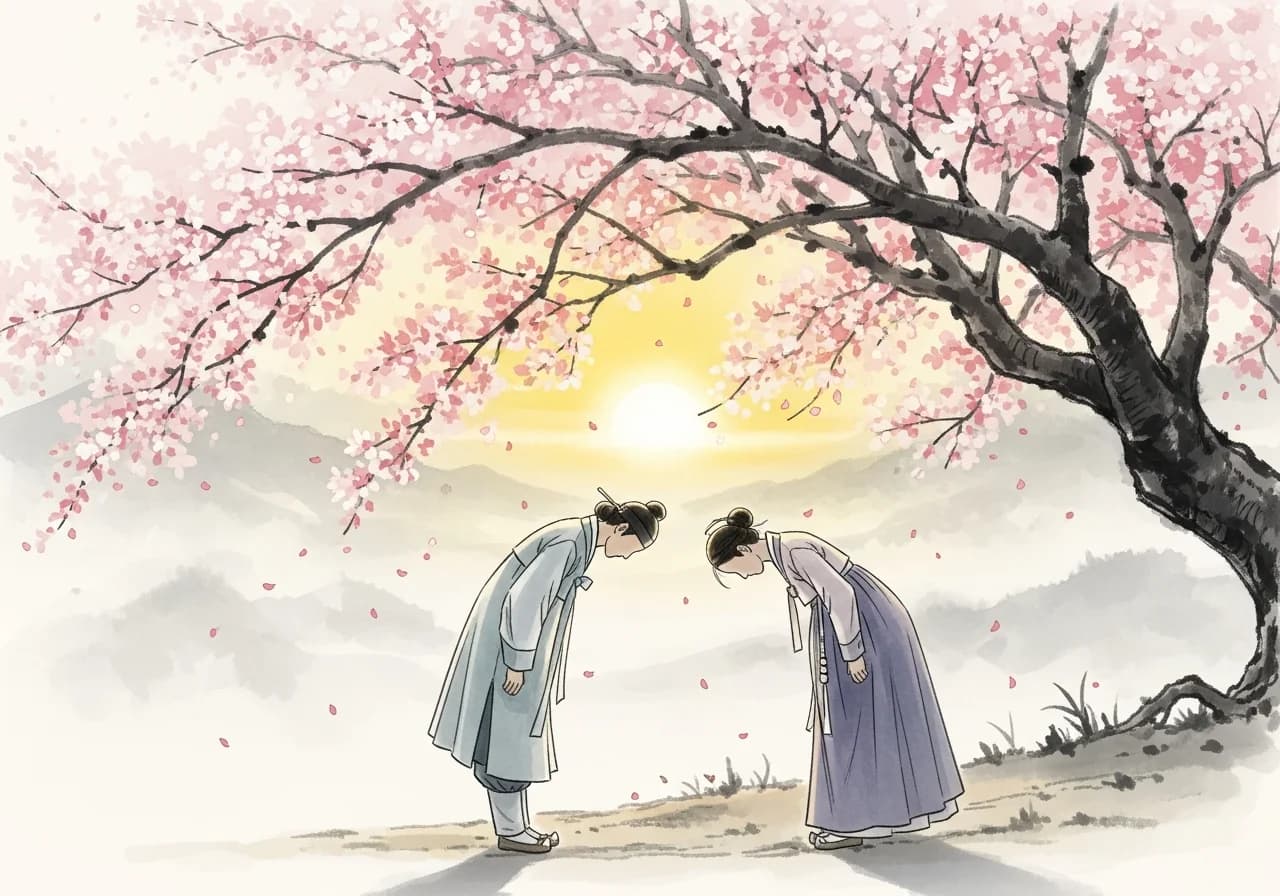
The most celebrated auspicious arguing dream in Korean tradition is fighting with a romantic partner or spouse. Counterintuitive as it sounds, the fiercer the dream argument, the deeper the emotional bond is said to become. This is the 역몽 (reverse dream) principle at work — for intimate relationships, dream conflict signals real-life harmony ahead. For married couples, this dream is read as a sign of coming domestic peace and closeness.
Arguing freely in a dream — saying everything you wanted to say without holding back — is also considered a positive sign. It suggests that suppressed emotions and pent-up tension will release, leading to smoother, more authentic relationships in waking life. The Korean expression '속이 시원하다' (feeling refreshed inside) captures the idea well: cathartic release in the dream leads to clarity in reality.
Dreams that end in reconciliation after arguing are clear good omens. They foretell that a tangled conflict or complicated problem in real life will soon find resolution. Who initiates the reconciliation is a telling detail: if the other person reaches out first, you will achieve the outcome you are hoping for; if you initiate, you may need to make some concessions.
When Arguing Dreams Are Inauspicious (흉몽)
The reverse principle does not apply universally. Arguing with a stranger in a dream is a classic warning sign — it forecasts unexpected conflict, gossip, or a loss of trust from people around you. When the person you fight with is unknown to you, the dream points outward: interference or discord coming from an unfamiliar source.
Fighting with a coworker or supervisor at work warns that your professional standing may suffer or that careless speech could escalate tensions in the workplace. If such dreams recur, they likely reflect real accumulated stress or competition that deserves attention.
Crying while arguing in a dream is one of the more concerning patterns — it warns of unjust slander or being harmed by baseless rumors. The combination of conflict and tears signals emotional distress that may spill into waking relationships.
Arguing with a parent in a dream suggests unspoken concerns have been building up, or that family tension may come to the surface. It can also signal a strong desire for independence and self-determination that has not yet been expressed.
Watching Others Argue — Neutral Interpretation
If you observed an argument between other people without participating in it, this is a neutral dream signal. It reflects the stress of your current environment — you are not directly involved in the conflict, but you are being affected by tensions playing out around you. Recurring versions of this dream can be a prompt to check in on your own psychological state and consider whether you need more distance from a stressful situation.
Arguing Dreams and Relationship Fortune
In traditional Korean dream interpretation, arguing dreams are most directly connected to 대인관계운 — fortune in personal relationships. The core principle is elegant: conflict with someone close deepens the bond; conflict with someone distant or unknown forecasts discord. By identifying who you argued with in the dream, you can gauge which relationship area (romantic, family, professional, social) is about to shift.
Dream Variations
Arguing with Family in a Dream
Family arguing dreams often surface suppressed emotions or unresolved tensions from waking life. Fighting with a sibling can signal that a complicated household matter is about to untangle — a quiet good omen. Arguing with a parent more often points to a desire for independence and self-determination, or warns of family conflict coming to a head. Either way, these dreams tend to be a gentle nudge toward more honest communication with the people at home.
Arguing with a Partner in a Dream
This is the quintessential good-omen arguing dream in Korean tradition. The intensity of the argument corresponds to the depth of emotional connection — a fierce dream fight is read as a sign that the relationship is about to grow stronger and more intimate. Some interpretations even suggest it may foreshadow engagement or marriage. The caveat: if you have been carrying genuine unresolved grievances toward your partner, the dream may simply be your suppressed feelings surfacing rather than a prophetic sign.
Arguing with a Coworker in a Dream
This dream typically mirrors real competitive tension or unresolved friction with that colleague. It warns that careless speech or behavior at work could escalate the situation and damage your professional reputation. On the positive side, it can also signal that built-up workplace stress is about to release. Either interpretation calls for the same response: take stock of the real-world relationship and communicate more thoughtfully.
Arguing with a Stranger in a Dream
A stranger in a dream argument represents external, uncontrolled forces — unexpected interference, gossip, or disputes coming from outside your close circle. The dream warns you to be careful about your words and actions in public. A silver lining: if you won the argument in the dream, it forecasts that you will navigate the difficult situation successfully in waking life.
Arguing Loudly and Shouting in a Dream
Shouting and saying everything you wanted to say freely is generally a good sign — it represents emotional release, and the dream predicts your relationships will flow more easily as a result. The quality of the argument matters, though. Expressing yourself fully and forcefully is positive; attacking, slandering, or tearing the other person down in the dream shifts the meaning toward a warning of health problems or relationship deterioration.
Arguing Then Reconciling in a Dream
Reconciliation after conflict is a reliable good omen in Korean dream interpretation. It forecasts resolution of a real-world conflict or complicated situation. The resolution detail to note: who reaches out first. If the other party initiates peace, you will get what you want from the situation. If you initiate, expect to make some compromise. Either way, an ending is coming.
Cultural Context
Korean traditional dream interpretation applies the 역몽 (reverse dream) principle to arguing dreams more than almost any other dream category. The concept of 역몽 — that dream events signal the opposite of what they show — is documented in Joseon-era dream manuals (몽서) and has deep roots in Korean folk belief. The underlying logic is that dream conflict acts as a safe release valve for suppressed emotions, purifying the relationship and allowing it to grow stronger in the real world.
Historical Korean dream manuals analyzed arguing dreams carefully, distinguishing good and bad omens based on the identity of the opponent and the outcome of the argument. Winning a dream argument was consistently interpreted as prevailing in real-life ambitions. Arguments with strangers, by contrast, were coded as warnings — previews of unwanted external conflict or reputational damage.
This tradition is still very much alive in contemporary Korean culture. Many Koreans who dream of fighting with a romantic partner find themselves feeling unusually tender toward that person the following day — a behavioral echo of the reverse dream belief. The idea that dream conflict signals real-world harmony has become a gentle, practical piece of everyday Korean emotional wisdom.
Western Psychological Perspectives
Western psychology and neuroscience approach arguing dreams from a very different angle than Korean tradition — but they converge on the same underlying truth.
Freudian psychoanalysis reads dream arguments as the surface expression of repressed aggression and unacknowledged desires. In 'The Interpretation of Dreams' (1900), Freud described dreams as the venue where censored impulses appear in disguised form, serving unconscious wish-fulfillment. Anger and conflict that cannot be safely expressed in waking life find their outlet in the dream. Arguments with parental figures, in particular, are linked to the Oedipus complex — a repressed desire to challenge and ultimately surpass authority. From a Freudian standpoint, the arguing dream is not a problem to be solved but a natural pressure-release of the psychological system.
Jungian analytical psychology takes a more philosophical view. The person you argue with in a dream often represents your own Shadow — the disowned, darker aspects of your personality that the ego refuses to acknowledge. The opponent in the dream may be a projection of a part of yourself you have been avoiding or suppressing. Jung saw these confrontations as part of the individuation process: the lifelong journey toward psychological wholeness. By engaging the Shadow in dreams — even through conflict — you create the opportunity to bring those disowned qualities into conscious awareness and integrate them.
Modern neuroscience offers a third lens. Sleep researcher Matthew Walker and others have demonstrated that REM sleep functions as a kind of overnight emotional recalibration. During REM, the brain replays emotionally charged memories from the day in a neurochemical environment stripped of the stress hormone cortisol — effectively taking the sharp edge off difficult feelings. Arguing dreams, from this perspective, are the brain running social conflict simulations in a safe context, processing unresolved interpersonal tension and preparing you to handle it more skillfully when you wake.
What unites all three frameworks — Freudian, Jungian, and neuroscientific — with Korean 역몽 tradition is a shared recognition: arguing in a dream is deeply connected to emotions that have not been fully expressed in waking life. The difference is only in how that connection is evaluated. Korean tradition reads it as a positive transformation signal; Western psychology reads it as a process of internal pressure management. Both arrive at the same practical conclusion — pay attention, and let the feelings move.
Frequently Asked Questions
An arguing dream is rarely as simple as it seems. For those close to you, it may be a reverse-dream gift — a signal that your bond is about to deepen. For strangers or workplace acquaintances, it is a gentle warning to watch your words. For the dream that ends in reconciliation, it is a forecast of resolution ahead. Korean dream interpretation has been reading these patterns for centuries, and modern psychology has arrived at much the same place from a different direction. Whatever the dream brought up, take it as an invitation to pay attention to the relationships and emotions that most need your care right now.