Bowing Dream Meaning — Who You Bow To Changes Everything
If you dreamed of bowing last night, Korean dream tradition most likely has good news for you. In the rich world of Korean 해몽 (dream interpretation), sincerely bowing to an ancestor, the Buddha, or a divine spirit is one of the most powerfully auspicious signs a dream can carry — a signal that long-blocked wishes are about to be fulfilled and unexpected blessings are on their way. For centuries, the act of bowing has served as a bridge between the living and the dead, between humanity and the divine, giving dreams of bowing a profound spiritual resonance that few other dream symbols can match. There is one important caveat, though — if you were forced to bow in fear or humiliation, the interpretation flips completely, and the dream carries an entirely different kind of message.
Auspicious: Bowing to Ancestors, the Buddha, or Divine Spirits
In Korean dream interpretation (해몽), sincerely bowing to a deceased ancestor is ranked among the most powerfully auspicious dream experiences possible. This dream signals that ancestral blessings (음덕, eumdeok) are descending upon you and your family — clearing long-standing obstacles, raising financial prospects, and bringing good health. Think of it as your ancestors reaching across the veil to smooth your path. Bowing before a Buddha statue or the Buddha himself carries an equally powerful omen for wealth and recognition. Lottery winnings, an unexpected financial windfall, career recognition, or a flourishing business are all within the scope of this dream's promise. For those hoping to have a child, this dream is sometimes interpreted as a 태몽 (taemong) — a prenatal dream foretelling the birth of a blessed child. Bowing before mountain spirits, sea dragon kings, or other divine figures from Korean shamanic tradition (musok) suggests that divine protection will resolve your current difficulties and help you achieve a major goal — particularly auspicious for those launching a new venture.
Inauspicious: Forced Bowing or Grief-Filled Funeral Bowing
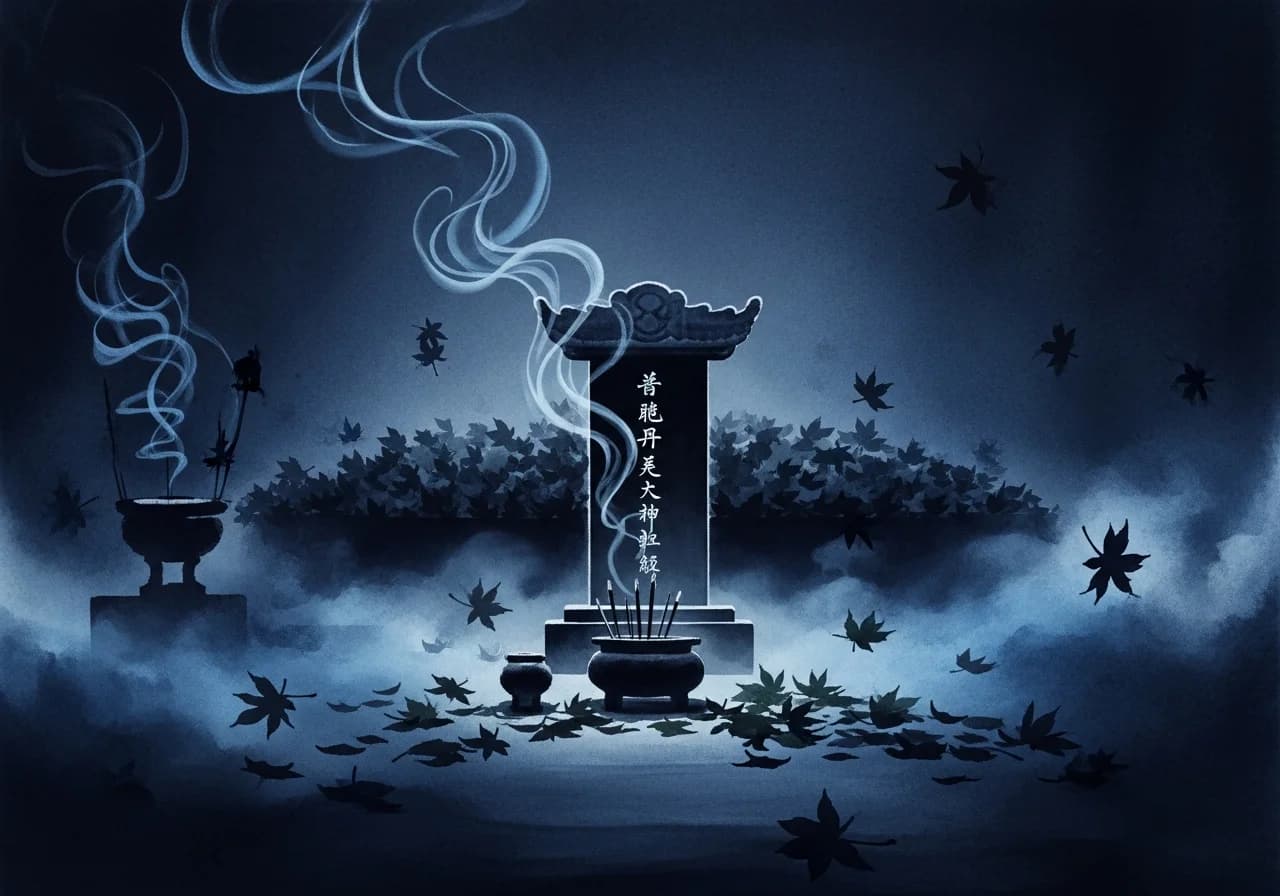
Not all bowing dreams are good omens. If you were compelled to bow against your will — perhaps by someone threatening or pressuring you, or in a situation that felt degrading — this is a cautionary dream. In waking life, you may find yourself in a situation where your autonomy or self-respect is compromised: being pressured into an unwanted agreement, or forced to defer to unreasonable authority. Pay attention to contracts, workplace dynamics, and relationships where power imbalances may be at play. Bowing at a funeral or memorial altar in a dream also warrants attention, especially if the dream was heavy with grief and the deceased was someone you recognize. This can signal a need to watch over the health of someone close to you, or a warning about harmony in the home. That said, if the same funeral dream felt emotionally calm or detached, many Korean traditions read it as auspicious — past misfortunes being released and cleared away.
When a Superior Bows to You — A Sign of Rising Status
One of the most striking and meaningful bowing dream scenarios is when someone of higher social standing bows to you first. In the logic of Korean dream interpretation, a superior initiating a bow signals that this person will seek your help or entrust you with something important in waking life. Even more broadly, it is an auspicious sign that your status or reputation is rising — that people around you will begin to recognize your value in unexpected ways. The dream is an encouragement: your abilities are about to be acknowledged. Conversely, if you bow to a superior in the dream, this foretells that your relationship with that person will improve, or that meaningful support and guidance will come from them.
Bowing at a Buddhist Temple in a Dream
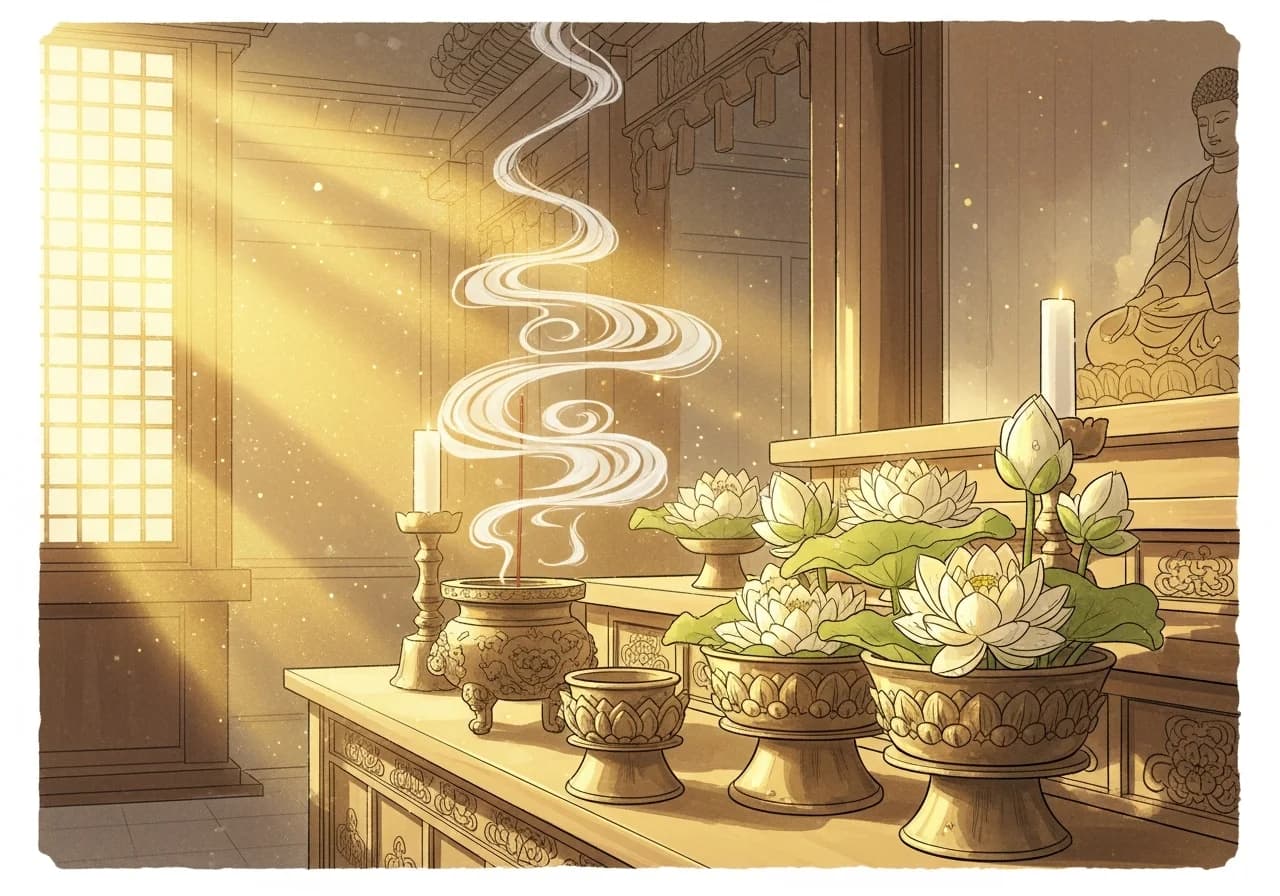
Dreaming of visiting a Buddhist temple and bowing in worship is a broadly auspicious dream touching multiple areas of life. It predicts smooth progress in your plans, whether related to business, exams, job searches, or health recovery. The more devout and serene the feeling in the dream, the greater the blessings said to follow. For women, this dream is sometimes interpreted as a prenatal dream (태몽) heralding the birth of a daughter. If the dream extends to bowing before the altar and then joyfully dancing, Korean tradition reads this as an especially powerful sign: a cascade of joyful news, abundant opportunities, and wealth arriving all at once.
Watching Others Bow to Each Other
If you observed others bowing to one another in your dream without directly participating yourself, this carries a more neutral message. Changes are coming to your social network or family relationships — tensions may surface, or alternatively, an old conflict may finally find its resolution. The key interpretive factor is the emotional atmosphere of the dream. Was it warm and harmonious, suggesting reconciliation? Or cold and awkward, hinting at friction ahead? Let the feeling of the dream guide your reading.
Dream Variations
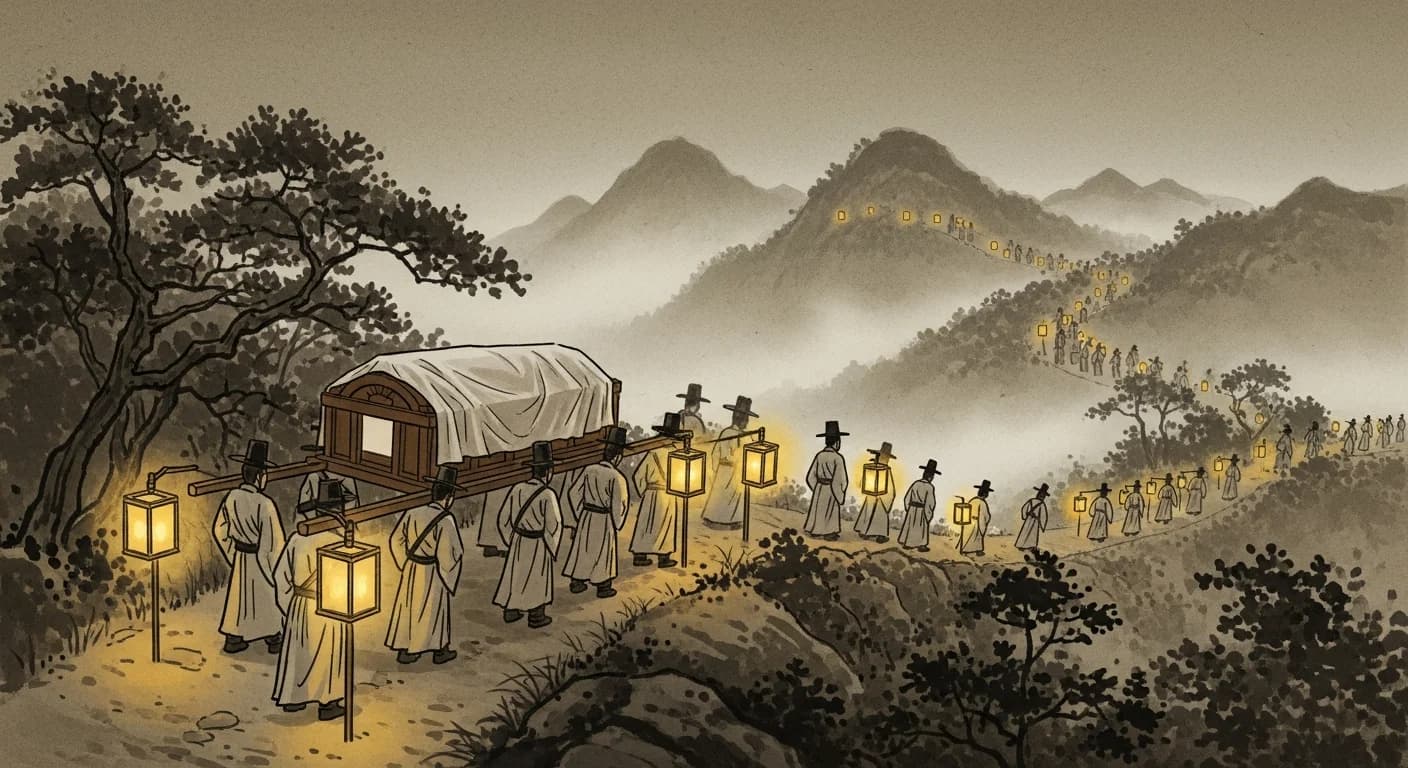
Dreaming of bowing to ancestors
Bowing deeply to deceased ancestors in a dream is one of the most powerful auspicious signs in Korean dream interpretation. It foretells ancestral blessings descending upon the entire family, long-standing obstacles dissolving, and fortune accumulating across business, wealth, and health. Joyful news and a period of family peace and prosperity are close at hand.
Dreaming of bowing to the Buddha
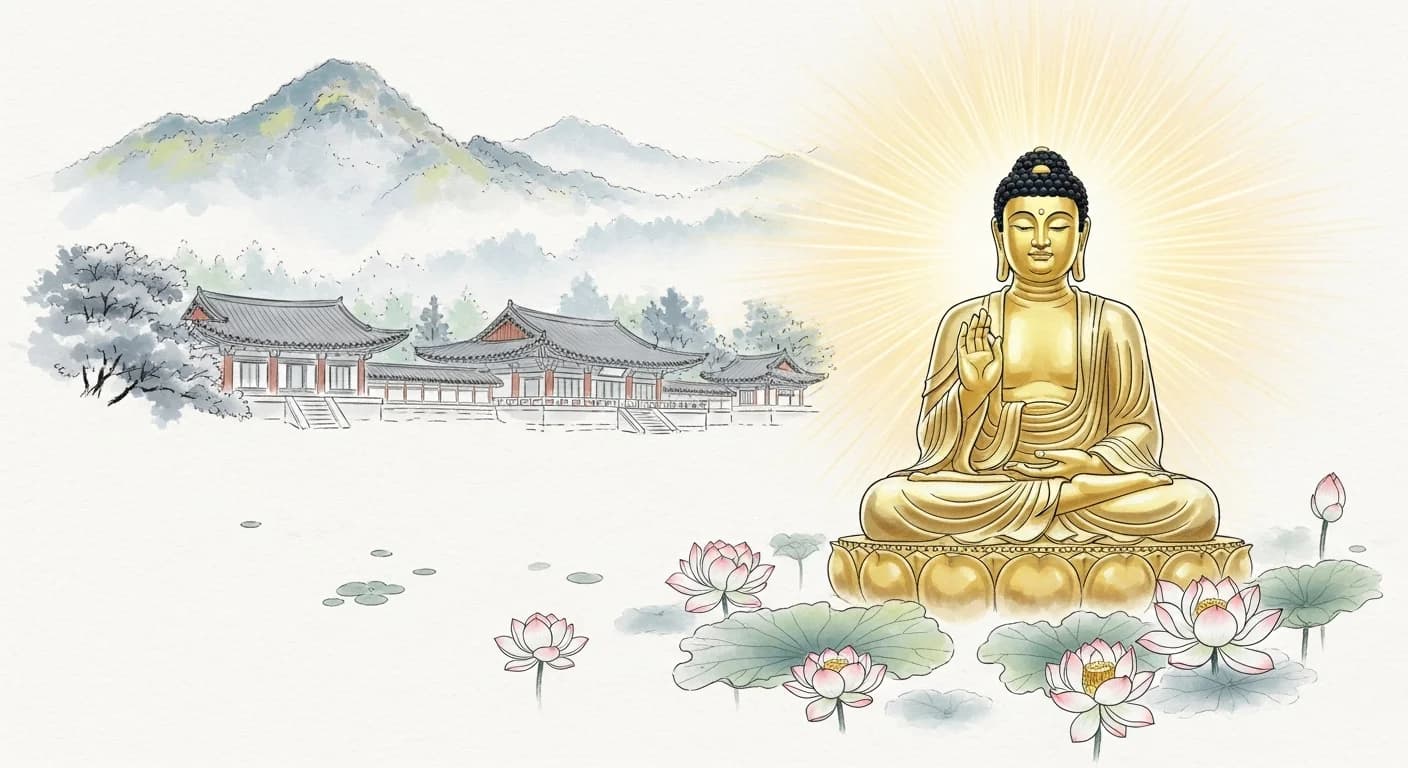
Bowing with palms pressed together (hapjang) before the Buddha or a Buddhist statue is a strongly auspicious dream simultaneously elevating financial and social standing. A lottery win or unexpected windfall may arrive, business will thrive, and career recognition is likely. For those hoping for a child, this may be a prenatal dream foretelling a blessed birth.
Dreaming of bowing to a deity or spirit
Bowing reverently to a mountain god, sea dragon king, or household deity in a dream suggests divine protection is being granted to you, clearing difficult problems and opening the path to fulfilling a major wish. For those about to start a new business or project, this dream heralds a smooth and supported beginning.
Dreaming of bowing to a superior or elder
Bowing politely to a boss, teacher, or senior figure in a dream foretells that your relationship with them will improve, or that valuable help and guidance will come from them. Korean tradition holds that the deeper and more sincere the bow in the dream, the greater the real-world benefit — career and academic prospects both rise.
Dreaming that a superior bows to you first
If someone of higher status bows to you first in a dream, it signals that person will seek your help or make an important request in waking life. More broadly, it is an auspicious sign that your status and reputation are rising, and that recognition from those around you — perhaps unexpected — is on its way.
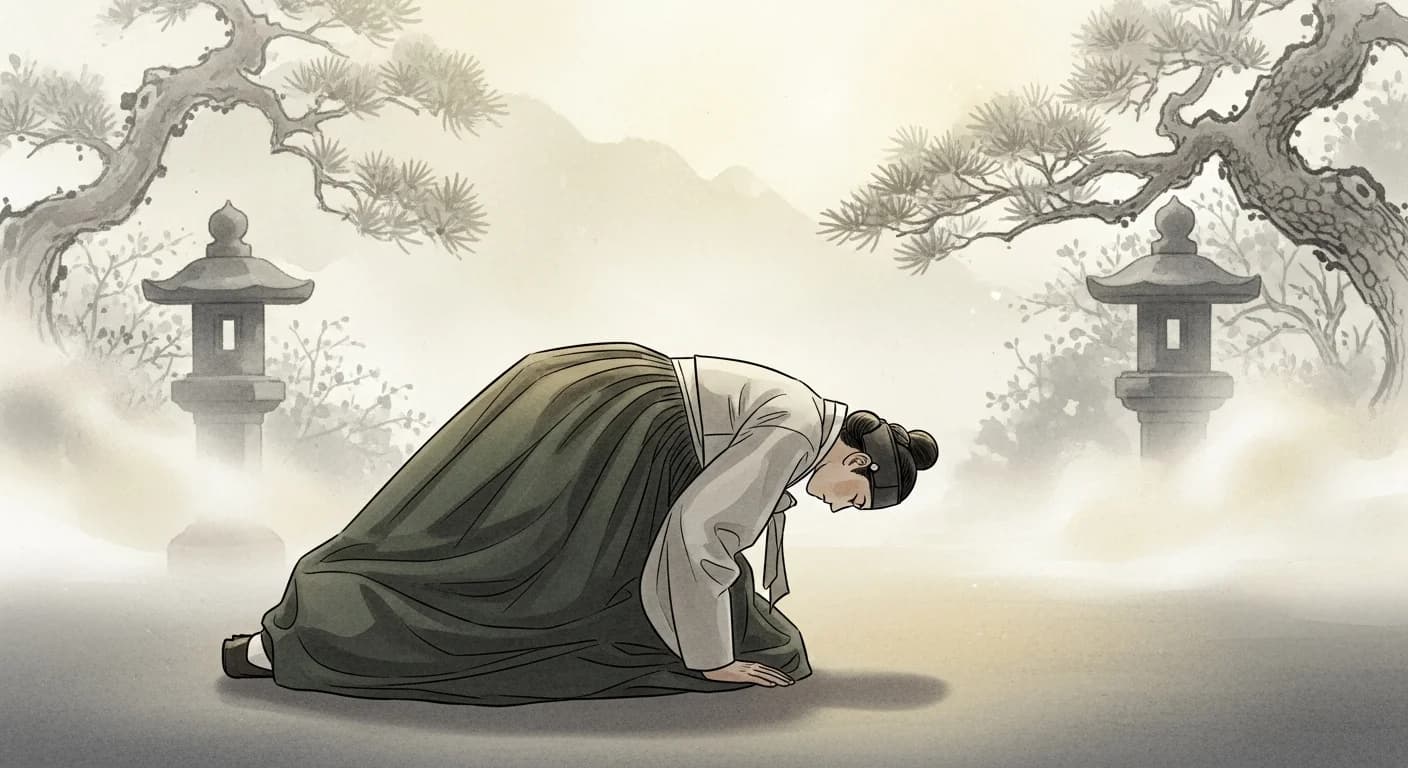
Dreaming of giving a New Year's bow (sebae)
Performing the traditional Korean New Year's bow (세배, sebae) in a dream symbolizes a fresh start and an inflow of blessings for the year ahead. Family bonds will strengthen, annual fortune opens up, and everything you take on through the year is said to proceed smoothly. A particularly warm and auspicious dream.
Dreaming of bowing at a funeral
Bowing to the deceased at a funeral wake carries a warning if grief dominates the dream — pay attention to the health of those close to you. However, if the emotional tone in the dream is calm and matter-of-fact, Korean tradition often reads this as a positive omen: past resentments and misfortunes are being cleared away, making room for fresh beginnings.
Dreaming of being forced to bow
Being compelled to bow against your will in a dream warns that in waking life your self-respect or autonomy may be challenged. You could find yourself pressured into an unwanted situation or required to submit to unreasonable authority. This is a call to hold your ground and clearly communicate your own position in key decisions ahead.
Dreaming of bowing at a Buddhist temple
Bowing in worship at a Buddhist temple in a dream is an auspicious sign predicting successful outcomes across multiple areas — business, employment, exams, and health recovery. The more devout and peaceful the dream felt, the greater the blessings to follow. For women, this dream may foretell the birth of a daughter.
Dreaming of bowing and then dancing
Bowing in a sacred space and then joyfully dancing in a dream is one of the most powerfully auspicious combinations in Korean dream symbolism — foretelling a wave of joyful news, abundant wealth, and opportunities arriving all at once. Those around you will look to you with high hopes and expectations.
Cultural Context
In Korean culture, bowing (jeol) is far more than a greeting — it is the central expression of Confucian filial piety (hyo, 孝) and ritual propriety (ye, 禮). The deep formal bow (keunjeol) is performed at ancestral rites (jesa, 祭祀), seasonal memorial services (charye, 茶禮), and New Year's bowing (sebae, 歲拜), conveying the highest reverence toward elders and deceased ancestors. Even the number of bows carries cosmic significance: two bows for men, four for women, following yin-yang principles and harmonizing with universal order. In Buddhist practice, bowing accompanies the joining of palms (hapjang) and signifies taking refuge in the Three Jewels — Buddha, Dharma, and Sangha — as well as a vow to pursue enlightenment. In shamanic traditions (musok), bowing before mountain spirits, sea dragons, and household gods is a core ritual act to invite divine protection and dispel misfortune. Because bowing bridges heaven and earth, the living and the dead, and humans and the divine, dreaming of bowing carries rich resonance across all these spiritual and social layers of Korean life.
Western Psychological Perspectives
Western psychology offers a fascinating parallel lens through which to view bowing dreams — one that often aligns with Korean dream tradition in surprising ways.
From a Freudian perspective, bowing in a dream reflects the dreamer's unconscious attitudes toward authority. Voluntarily bowing may symbolize a desire to submit to a parental or authority figure, or an underlying sense of guilt seeking absolution and forgiveness. A forced bow, on the other hand, reveals the classic Freudian tension between the superego's relentless demands and the ego's resistance to suppression — the internal conflict between what we feel we must do and what we authentically want.
Jungian psychology interprets bowing dreams as a potential encounter with the Self archetype — the deepest, most integrated layer of the psyche. When a dreamer bows to an ancestor or divine figure, the conscious mind is acknowledging and moving toward integration with deeper wisdom from the unconscious. This is a meaningful step in what Jung called the individuation process — the lifelong journey toward psychological wholeness. The figure being bowed to often projects a crucial archetypal energy: the Wise Old Man, the Great Mother, or the divine within. It is remarkable how closely this resonates with Korean tradition, which treats bowing before elders and deities as the most auspicious and transformative of all dream actions.
Modern cognitive psychology and dream research view bowing dreams as the mind's way of processing social hierarchies and self-esteem concerns. Hierarchical pressures, a longing for recognition, or anxiety within important relationships during waking hours can surface as the act of bowing in sleep. Dreaming that a superior bows to you may represent the mind rehearsing — and finding resolution for — a deep desire for social acknowledgment.
Across cultures worldwide, bowing is a universal gesture of reverence, devotion, and connection to something greater than oneself. From the Islamic sujood to Christian genuflection to Buddhist full prostration (오체투지), ritual bowing appears across every major tradition. Dreams of bowing, wherever the dreamer is from, tap into this shared human impulse: the desire to honor, to connect, and to be part of something larger.
Frequently Asked Questions
Bowing in a dream is rarely a simple gesture — it is a message from the deepest layers of your psyche and, according to Korean tradition, from the spirits and ancestors who watch over you. When the bow is sincere and heartfelt — offered to an ancestor, a divine figure, or in the stillness of a temple — it is one of the most powerfully auspicious signs Korean dream interpretation recognizes. Blessings are on their way. When the bow is forced or filled with dread, the dream is asking you to stand a little taller, protect your dignity, and be alert to situations where others may overstep. Whichever kind of bowing dream you had, take a moment to reflect on the feeling it left behind — that emotional residue is where the real meaning lives.