Brakes Failing Dream Meaning — What Korean Dream Tradition Says About Losing Control
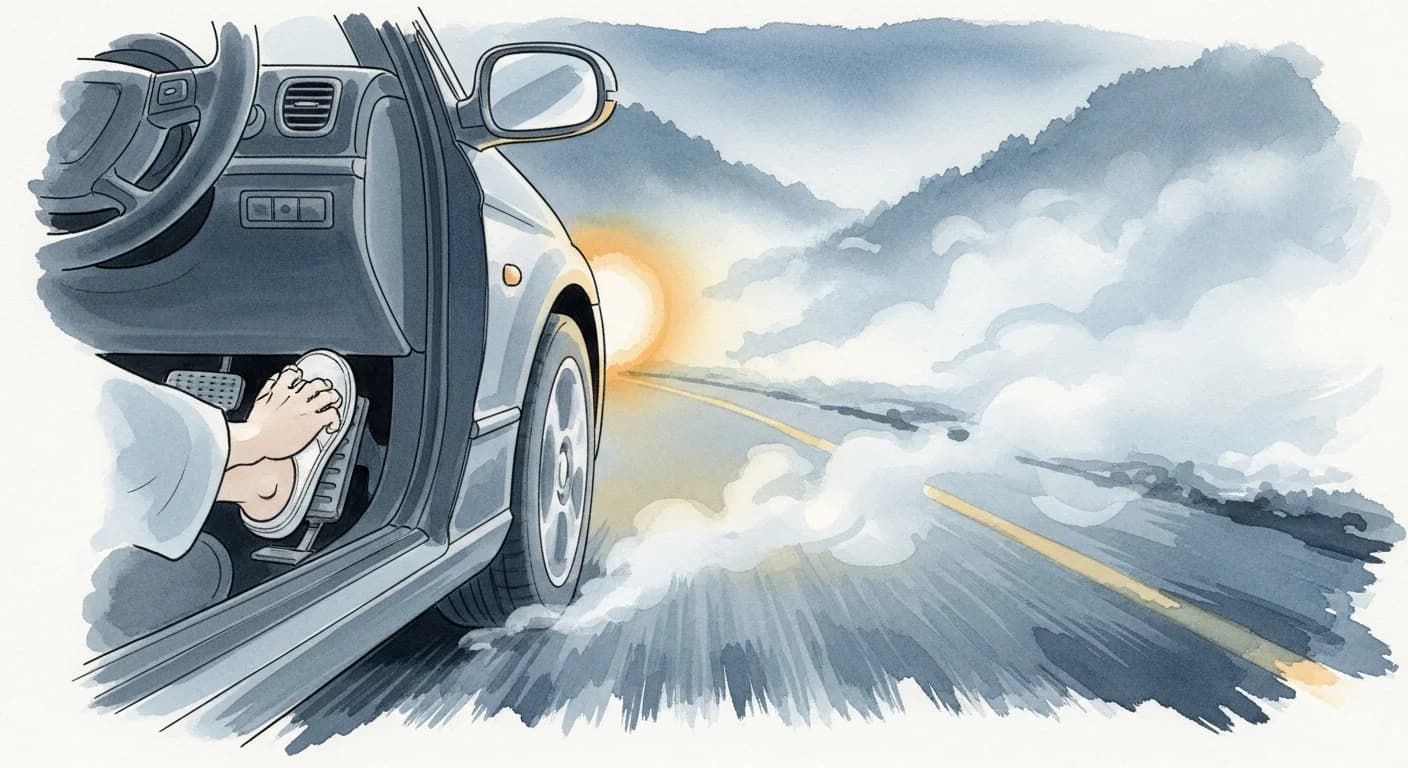
If you woke up heart pounding after a dream where the brakes simply wouldn't work, Korean dream tradition has a clear message waiting for you. The failing-brakes dream is one of the most recognized warning symbols in Korean 해몽 (dream interpretation), pointing to a loss of control in some area of waking life — whether in work, finances, health, or relationships. But here's the thing: the ending of your dream matters enormously. Whether you crashed, barely stopped, or are still replaying that sickening feeling of acceleration with no way out — each variation carries a distinct meaning that's worth understanding before you dismiss it as just another bad dream.
Core Meaning — A Warning About Loss of Control
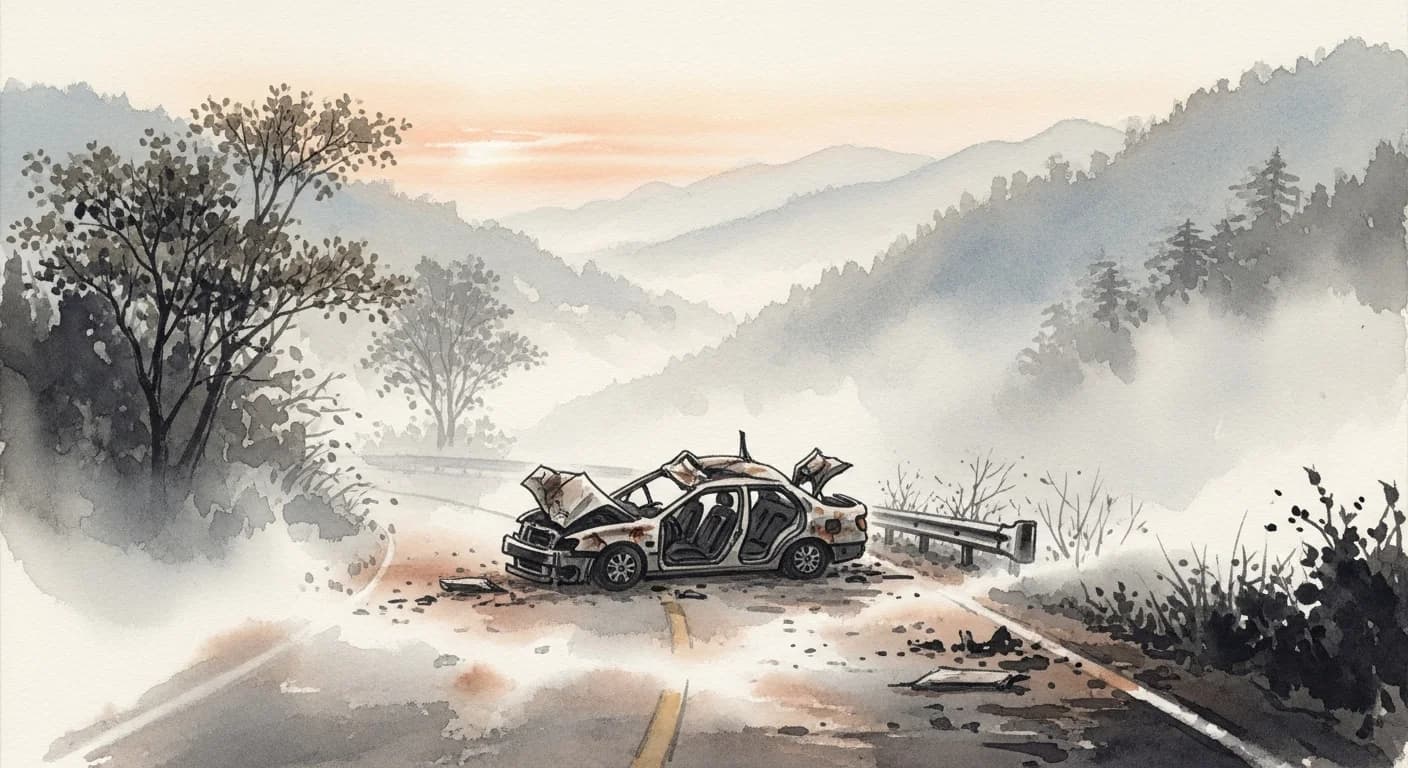
In Korean dream interpretation (꿈해몽), a car with failing brakes is a classic inauspicious (흉몽) symbol. The car represents the dreamer's life journey and personal will — and brakes represent the ability to direct and regulate that journey. When the brakes stop working, it signals that the dreamer is losing their steering capacity in waking life. Long-cultivated plans or efforts may be derailed by unexpected obstacles, and things may not unfold as hoped across work, finances, or relationships. If the dream ended in a crash, the warning carries even greater urgency. Korean dream interpretation traditionally views this as a call to pause, reassess, and act — not to push harder.
Health Warning — When Your Body Sends an Urgent Signal
A brake-failure dream that ends in a collision is also read, in Korean tradition, as a signal of physical exhaustion or deteriorating health. If the dreamer is currently overexerting themselves or carrying stress entirely alone, the body may be communicating its limits through the dream. Think of it as your internal system flashing a red warning light. If you've been running on insufficient sleep, skipping meals, or postponing a health check-up, this dream is a direct message: rest and self-care are overdue, and ignoring them carries a cost.
Career and Finances — Plans Going Off Course
In career and financial contexts, the failing-brakes dream warns that an investment, project, or plan may be moving in a direction you can no longer steer. It may reflect an unconscious awareness that something needs to be stopped — a failing investment that needs cutting, a project that should be abandoned, a contract that needs to be terminated — but the dreamer feels unable to act. The dream counsels stepping back rather than pressing forward. Reassess the strategy before accelerating further.
Relationships — Fear of Hurting Someone Close
When the brake-failure dream involves nearly hitting another person, Korean interpretation reads it as an unconscious fear that the dreamer's own words or actions could cause harm to someone important. It may also reflect uncontrolled emotions or behaviors in a relationship that risk causing real, possibly irreparable damage. If you sense tension building in an important relationship, this dream is encouragement to address it directly rather than hoping it resolves on its own.
Barely Stopping — A Sign of Resilience Under Pressure
Not all brake-failure dreams end badly. If the car barely stopped in time, or a crash was narrowly avoided, the interpretation shifts notably. This variation carries a more neutral or even encouraging message: even in crisis, the dreamer still has the capacity to manage the situation. Calm, deliberate action can still pull things through. It's a reminder that giving up is not yet the only option — and that the will to keep trying is itself meaningful.
Dream Variations
Brakes Failing on a Downhill Slope
A downhill road in dreams symbolizes decline or rapid deterioration. This variation often emerges when the dreamer is experiencing financial loss, a drop in status, or an overwhelming pace of unwanted change. It reflects a sense of helplessness — the feeling that circumstances are moving downward faster than any action can arrest them. The dream counsels directly confronting the situation and seeking help from advisors or trusted people without delay.
Brakes Failing and Nearly Hitting Someone
This variation reflects an unconscious fear that one's actions or words may hurt someone close. Alternatively, it warns of uncontrolled emotions or behaviors in an important relationship that risk causing real damage. If there are suppressed conflicts or unexpressed tensions in your relationships right now, this dream is a prompt to address them through honest conversation before they become harder to repair.
Barely Managing to Stop in Time
A comparatively encouraging variation. This dream symbolizes the dreamer's latent resilience — the capacity to pull back from the brink even when everything felt out of control. Though circumstances may have pushed to their limit, calm and deliberate action can still avert disaster. Trust that you have more agency than the situation currently feels.
Brakes Failing and Causing an Accident
A strongly inauspicious (흉몽) sign, this variation forewarns significant loss or crisis. Health problems, financial damage, or the breakdown of an important relationship may be approaching. The dream calls for an immediate and honest review of current circumstances — and a conscious effort to stop overexerting before the situation escalates further.
Car Accelerating Out of Control With No Brakes
Symbolizes unresolved stress or problems growing beyond containment. This is interpreted as a strong warning to take stock immediately and accept help from others rather than continuing to handle everything alone. The dream challenges a deeply ingrained tendency to be self-sufficient at all costs — and asks the dreamer to reconsider.
Brakes Failing While Driving Alone
This variation reflects the psychological weight of bearing all responsibility and decisions entirely alone. It commonly occurs when the dreamer feels isolated in their burdens — in work, parenting, or a relationship. The dream is a signal that it is time to ask for help honestly. Seeking support is not a sign of weakness; it is a necessary part of navigating a crisis well.
Cultural Context
In Korean folk dream interpretation, a vehicle commonly represents the dreamer's life journey and personal will. The brakes symbolize the power to control that journey — specifically, self-regulation and the ability to direct one's own life. Failing brakes therefore signal a loss of that steering capacity, traditionally read in two ways: as a warning that a difficult crisis is approaching in waking life, or as an urgent call to stop overextending oneself and honestly reassess one's current state.
Korean folk practice places significant weight on how a dream ends. If the dream concludes in a crash, the inauspicious (흉몽) reading intensifies. If a crash is narrowly avoided, the dream is read as a neutral signal — crisis is present but surmountable. A widely shared understanding across Korean dream tradition is that this dream also carries a practical social message: stop carrying the burden alone and reach out to those around you. The modern symbol of a car has been smoothly absorbed into a traditional symbolic framework that has always treated vehicles as metaphors for life's direction and the dreamer's will to guide it.
Western Psychological Perspectives
Western psychology offers several compelling frameworks for understanding the failing-brakes dream, each adding a distinct layer of meaning. From a Freudian perspective, the dream represents a tension between repressed drives and the ego's control mechanisms. The brakes function as the superego — the internal censor that suppresses impulses — and their failure signals that repressed emotions (anger, desire, or fear) are pressing toward conscious expression. Freud would interpret this as a structural crack in the architecture of repression and likely ask: what have you been suppressing, and what is it trying to surface?
Jungian analysis reads the dream differently. The moving car represents the momentum of the individual's life, while failing brakes indicate that the conscious ego can no longer govern the flow of unconscious forces. Jung might frame this as the Shadow — the collection of suppressed aspects of the self — rising toward consciousness during the individuation process. Rather than a threat, this is an invitation to engage with the inner dimensions that have been pushed aside. The dream, in this view, is not a warning but a doorway.
Modern sleep science offers a complementary explanation for why this dream is so common. During REM sleep, the brain suppresses actual physical movement through motor cortex inhibition — a process that causes intentional actions like braking to feel ineffective in dreams. Psychologically, research consistently finds this dream pattern recurring under conditions of stress, burnout, and excessive responsibility. From a cognitive-behavioral perspective, the dream is useful internal feedback: it points to the specific areas of life where the dreamer most urgently needs to recover a sense of control.
What's striking across all cultures is how universal this dream is. In Western traditions, the 'runaway car dream' and 'out-of-control vehicle dream' appear on lists of the most common anxiety dreams — right alongside falling and being chased. East Asian cultures tend to frame the experience through a lens of collective social responsibility and lost control, while Western interpretations more often center individual autonomy and freedom. Yet both traditions arrive at the same essential message: something in your waking life urgently needs attention.
Frequently Asked Questions
A dream of failing brakes is unsettling — but the message it carries is unusually clear. Korean dream tradition, Western psychology, and modern sleep science all converge on the same point: this dream is your inner mind asking you to stop, look honestly at what's overwhelming you, and reach out for support rather than pressing harder alone. Use it as a prompt, not a verdict. The capacity to regain control starts with acknowledging that something needs to change.