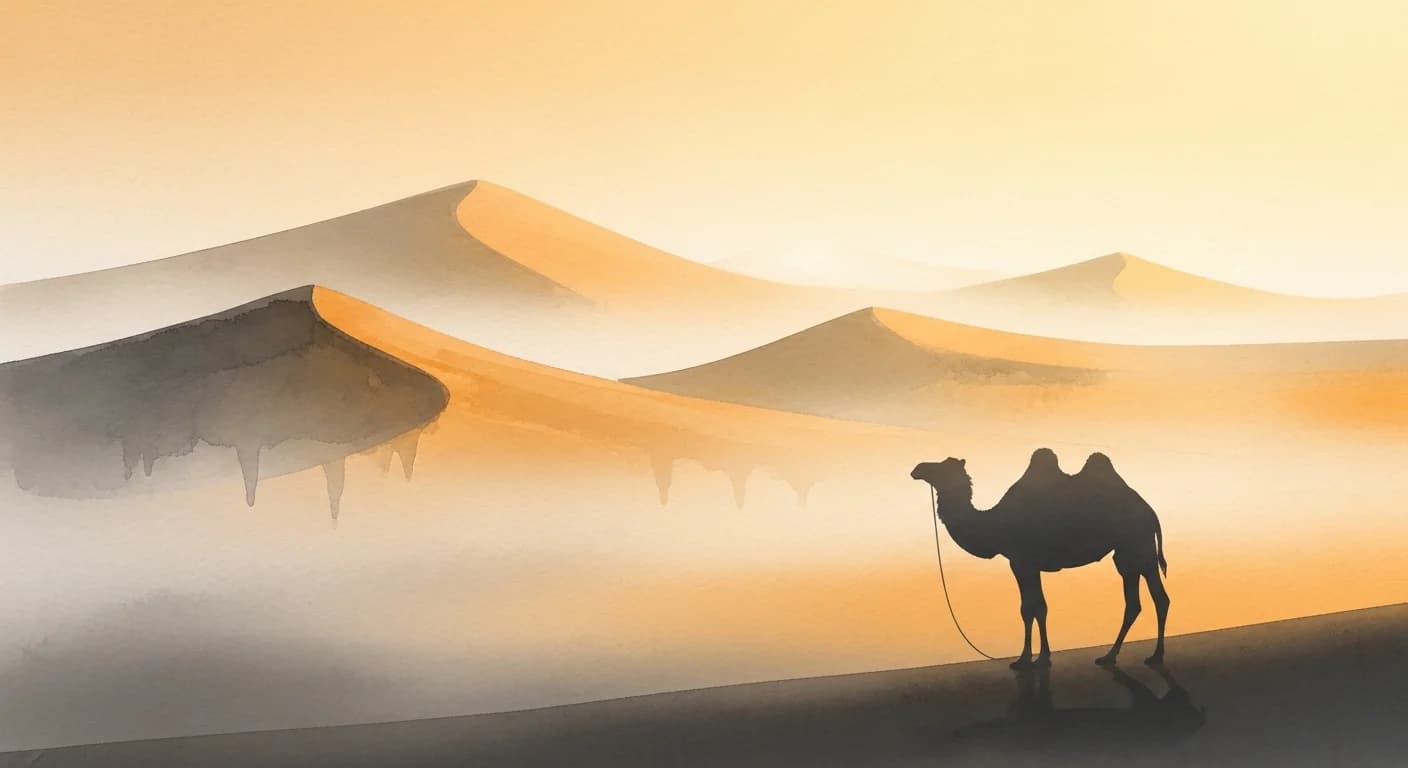
Camel Dream Meaning — Endurance, Wealth, and the Long Journey Ahead
If a camel appeared in your dream last night, Korean dream tradition reads it as a message of deep, quiet strength — the kind that gets you across the desert when others have turned back. The camel's legendary endurance on the Silk Road gave it a powerful symbolic identity in East Asian culture that has carried into modern Korean dream interpretation (해몽) as a predominantly auspicious sign. That said, the details matter enormously here — whether the camel was attacking, black, or lying dead completely changes the reading.
Auspicious Camel Dreams — Signs of Perseverance and Prosperity

In Korean dream interpretation, the camel most often arrives as an encouraging omen. Its core symbolism draws from the animal's remarkable capacity to endure — traveling vast distances without water, carrying enormous loads, weathering sandstorms with calm resolve. Dreaming of riding a camel through the desert signals decisive leadership and the unwavering willpower to reach your goals despite adversity, pointing toward success in career or business. A camel caravan moving across the dunes is one of the most fortune-rich dream images: it echoes the historic Silk Road trade routes and promises incoming wealth, successful deals, and prosperity born from teamwork. A camel walking into your home is considered a particularly powerful omen of financial fortune and household happiness — a signal that good luck is literally crossing your threshold. Seeing a white camel carries special significance, foreshadowing a promotion, a prestigious opportunity, or recognition of hard work that is long overdue.
Inauspicious Camel Dreams — Warnings to Heed
Not every camel dream brings good news. A camel spitting at you or attacking you is a direct warning from your subconscious that someone in your close circle may betray your trust. The dream advises greater discernment rather than extending unconditional loyalty — be more selective about what you share and with whom at this time. A black camel signals approaching difficulties, conflicts, or obstacles ahead, though the dream's secondary message is that with the camel's endurance as your model, these challenges can absolutely be overcome. Dreaming of a dead camel is the most somber camel dream, warning of potential financial losses or the collapse of an important plan. If you wake from this dream, it is worth reviewing your finances and avoiding major expenditures in the near term.
Camel Dreams and Wealth Fortune
Few dream animals are as consistently linked to material fortune as the camel. Its historical role as the engine of Silk Road commerce — carrying silk, spices, and gold across thousands of miles of desert — made it a living symbol of trade wealth throughout East Asia. That legacy runs through Korean dream interpretation: camel caravan dreams, camel-entering-the-home dreams, and white camel dreams are all read as strong signals of incoming wealth, business growth, or career advancement. For entrepreneurs, such a dream may hint at a major contract or partnership. For employees, it might foreshadow a raise or promotion arriving soon.
Camel Dreams and Relationships
Feeding or offering water to a camel in a dream reflects growing compassion and generosity, suggesting you will earn deep trust and respect from those around you. The karmic implication is clear: what you give freely will return to you multiplied. Conversely, a camel spitting or attacking signals relational friction — a crack forming in a trusted bond. Dreams in which you and a camel drink from an oasis together, or travel side by side in harmony, are positive omens of reliable companionship ahead, whether a loyal friend, a trustworthy partner, or a like-minded collaborator who enters your life at just the right moment.
Dream Variations
Riding a Camel Dream
Riding a camel in a dream symbolizes taking the reins of your own life direction with purpose and confidence. In business contexts, it indicates decisive leadership leading to successful outcomes. More broadly, it reflects an unshakeable determination to press forward toward your goals despite adversity.
Camel Caravan Dream
A camel caravan moving through the desert evokes the historic imagery of Silk Road trade and symbolizes great wealth and successful commerce. Multiple camels journeying together represent collective prosperity — suggesting that collaboration and shared effort will generate meaningful rewards in the period ahead.
Camel Spitting Dream
Dreaming of a camel spitting at you is a cautionary warning that someone in your close circle may break your trust or act deceptively. The dream calls for greater discernment in relationships, advising you to be more selective about who you confide in and invest your trust in right now.
Camel in the Desert Dream
Seeing a camel alone in the desert foreshadows a challenging period or difficult undertaking ahead. Yet the vision also carries an encouraging message: just as the camel is born to cross the desert, you too have the innate resources and resilience to endure and ultimately prevail.
Camel Entering the House Dream
Dreaming of a camel walking into your home is a powerful auspicious omen signifying that material fortune and good luck are about to enter your household. It hints that a family member will achieve significant success or that an unexpected windfall or opportunity is on its way.
Camel Taemong (Pregnancy Dream)
When a pregnant woman or a family member dreams of a camel, it is traditionally interpreted as a taemong — a prophetic pregnancy dream. It foretells that the unborn child will be blessed with remarkable endurance, tenacity, and an unafraid spirit, destined to forge their own path through life's hardships and emerge as a resilient, distinguished individual.
White Camel Dream
Seeing a white camel is a special auspicious omen heralding a promotion, increase in income, or arrival of a prestigious opportunity. White symbolizes purity and divine favor in Korean folk tradition, meaning your hard work is about to be recognized and rewarded in a meaningful way.
Baby Camel Dream
A baby camel appearing in a dream signals new beginnings and fresh opportunities ahead. In a business context, it suggests a promising start to a new project; personally, it is a positive sign of growth, renewal, and a welcome change of direction that is just getting underway.
Cultural Context
The camel is not a native animal to the Korean peninsula, which means it does not hold the same deep-rooted place in traditional Korean folk belief as indigenous animals like the pig, snake, or tiger. However, through Silk Road cultural exchange — a trade network that connected Korea to Central Asia and the Middle East as far back as the Three Kingdoms period — images of camels reached the Korean court and were recorded in Joseon-era texts as rare and wondrous beasts from distant lands. This association gave the camel an aura of exotic power and long-distance journeying in the Korean cultural imagination. Over time, folk dream interpretation adopted the camel primarily as a symbol of endurance on a great journey, the accumulation of wealth through trade (echoing the Silk Road merchant tradition), and the rare ability to thrive in conditions that would defeat lesser creatures. In taemong culture specifically — Korea's tradition of interpreting pregnancy dreams as omens for the child's future character — the camel is prized as a symbol of a child who will possess exceptional tenacity and fearlessness in the face of life's hardships, qualities that Korean society has long admired.
Western Psychological Perspectives
Western psychology offers several illuminating frameworks for understanding why camels appear in dreams. From a Freudian perspective, the camel can be read as a vessel for suppressed drives or instinctual energy — its hump storing reserves much as the unconscious stores repressed desires. Riding a camel may reflect a wish to control these latent impulses, while the camel's associations with prolonged endurance and deprivation connect to themes of delayed gratification or unexpressed needs. The camel that has carried a heavy load for too long is a potent image for someone who has denied their own needs in service of external demands.
Carl Jung would likely approach the camel as an embodiment of the Wanderer archetype — the figure that traverses the arid wilderness of the unconscious in pursuit of wholeness. The camel crossing the desert maps powerfully onto the individuation process: the difficult, transformative inner journey through one's psychological desert toward the integrated Self. A camel caravan can further symbolize the individual reconnecting with the collective unconscious, finding shared meaning and purpose that transcends personal concerns.
Contemporary psychological dream analysis frames the camel differently — often as a dream that surfaces in people experiencing burnout, prolonged stress, or an unsustainable workload. The camel's famous ability to go without water can symbolize chronic self-neglect, the suppression of personal needs in favor of relentless forward progress. Alternatively, the dream may emerge as a reassurance: a reminder that despite exhaustion, the inner resources to continue do exist. In either reading, the camel prompts an important question about sustainable effort and the wisdom of asking for help.
Cross-culturally, the camel carries remarkably consistent symbolic weight. In the Middle East and Islamic tradition, camels are revered animals — dreaming of one signals divine protection and abundant blessings. In Christian biblical tradition, camels appear as symbols of wealth and faithful service on long journeys, associated with patience and devoted provision. Among African nomadic cultures, the camel is the cornerstone of family livelihood, and dreaming of one represents security and protection of those you love. Across all these traditions, the camel speaks one clear language: endure, and the destination will come.
Frequently Asked Questions
A camel dream is ultimately a dream about the long game. Whether it arrives as a reassurance that your endurance will be rewarded, a warning to watch your back in a key relationship, or a taemong promising a resilient child, the camel's message is ancient and consistent: the desert is crossable, the oasis is real, and the strength to get there already lives inside you. Take the omen seriously — and keep walking.
Related Dreams

Horse Running Dream Meaning

Elephant Dream Meaning — Wealth, Status, and the Arrival of a Benefactor
Bull Dream Meaning — Wealth, Vitality, and Fortune in Korean Dream Tradition

Deer Dream Meaning — Honor, Wealth, and Sacred Omens in Korean Dream Interpretation

Riding Elephant Dream Meaning

Riding a Tiger Dream: Korean Dream Interpretation