Chased by a Ghost Dream: Korean Dream Interpretation
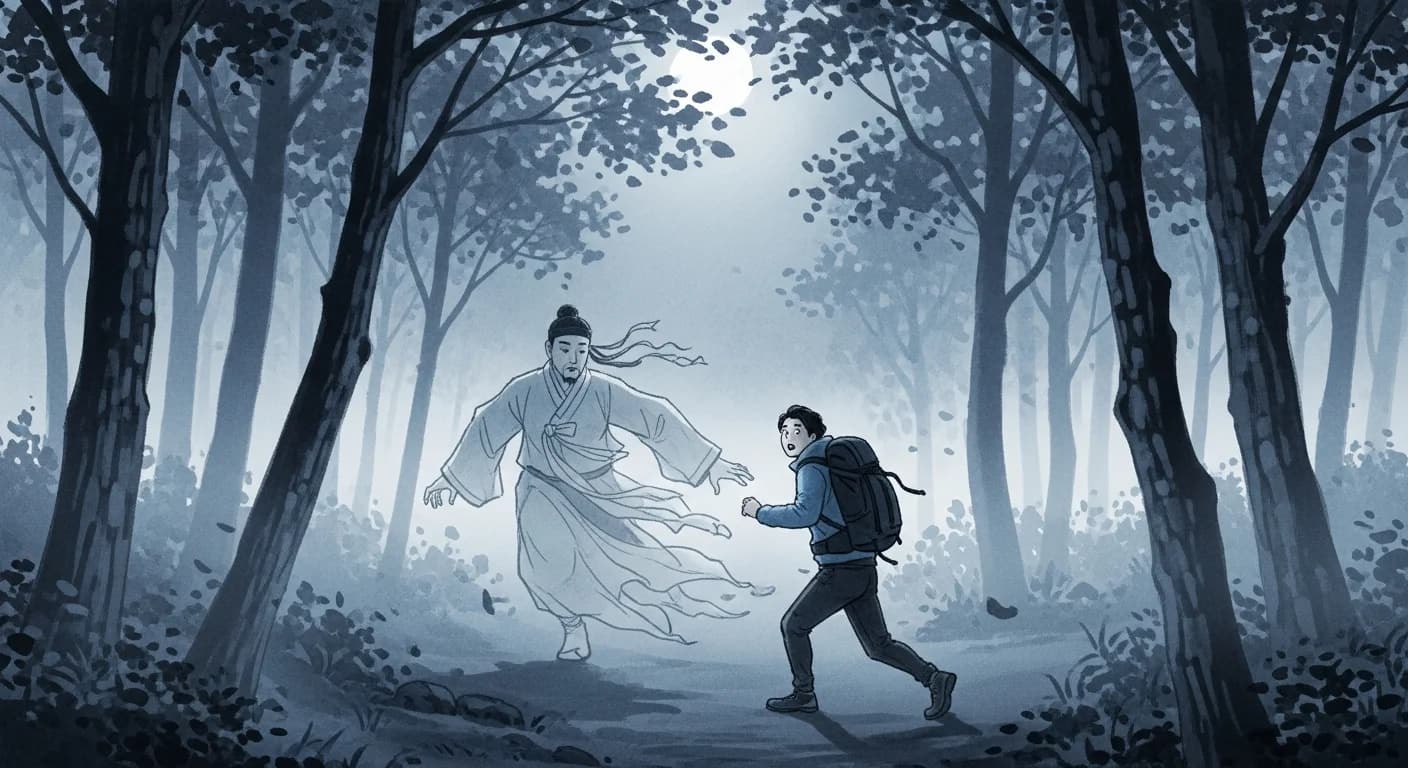
You wake up with your heart pounding — you were being chased by a ghost, and it felt viscerally real. Before you dismiss it as a random nightmare, Korean dream tradition has something very specific to say: the outcome of the chase is everything. Escape cleanly, and this is an auspicious omen of overcoming rivals. Get caught, and a warning is being issued. There is one more twist — in traditional Korean dream reading, the more ghosts chasing you, the better the sign.
Inauspicious Reading: Being Caught or Cornered
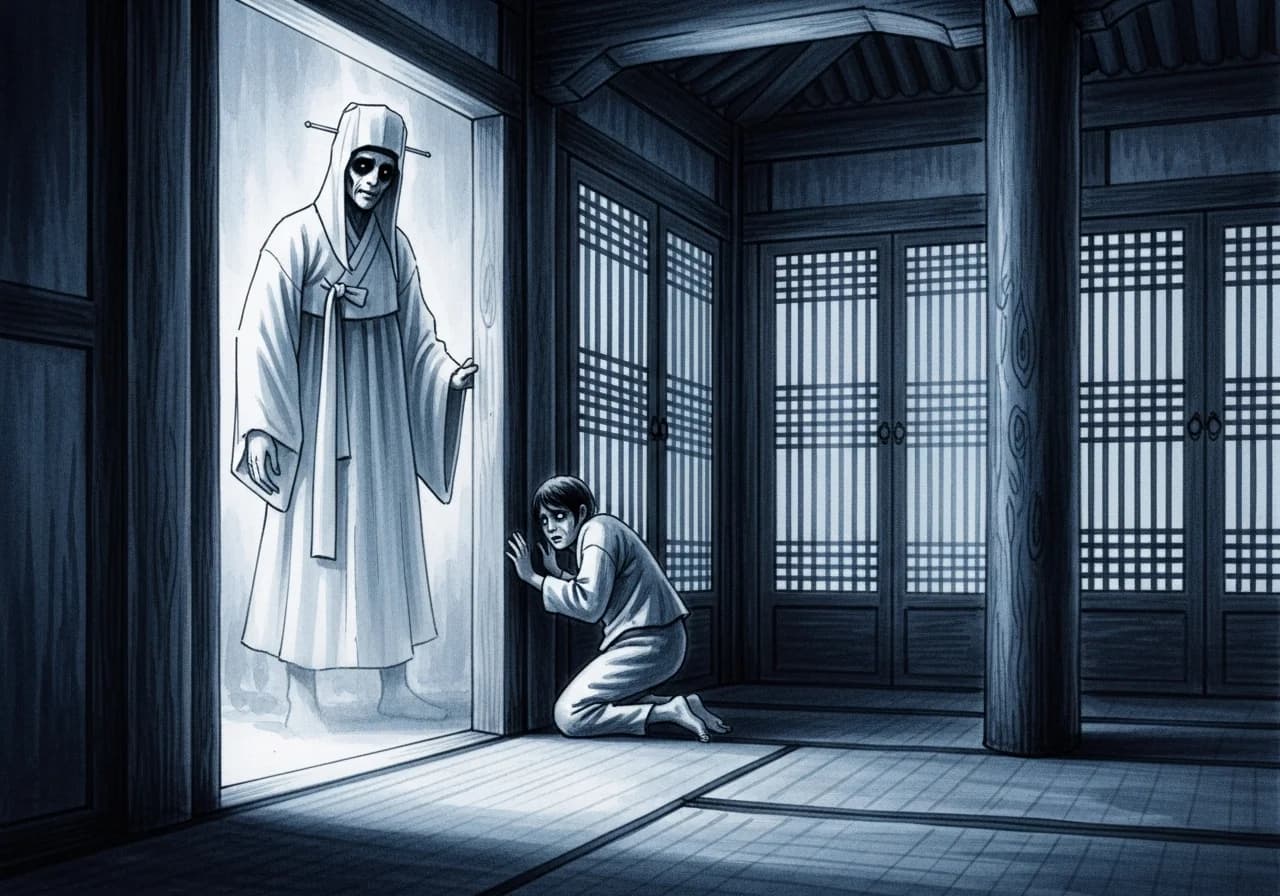
If the ghost catches you in your dream — or if you spend the entire dream fleeing without any escape in sight — this is considered an inauspicious sign. It warns of family troubles or deep personal worry arriving in the near future. Financial difficulties or health concerns may be on the horizon. Being caught by the ghost specifically suggests that a current struggle you are facing will not resolve itself quickly or easily. There may also be conflict with people around you, or risk of damaging your social standing. The more intense the fear within the dream, the more directly it reflects the accumulated pressure you are carrying in waking life.
Auspicious Reading: Successful Escape
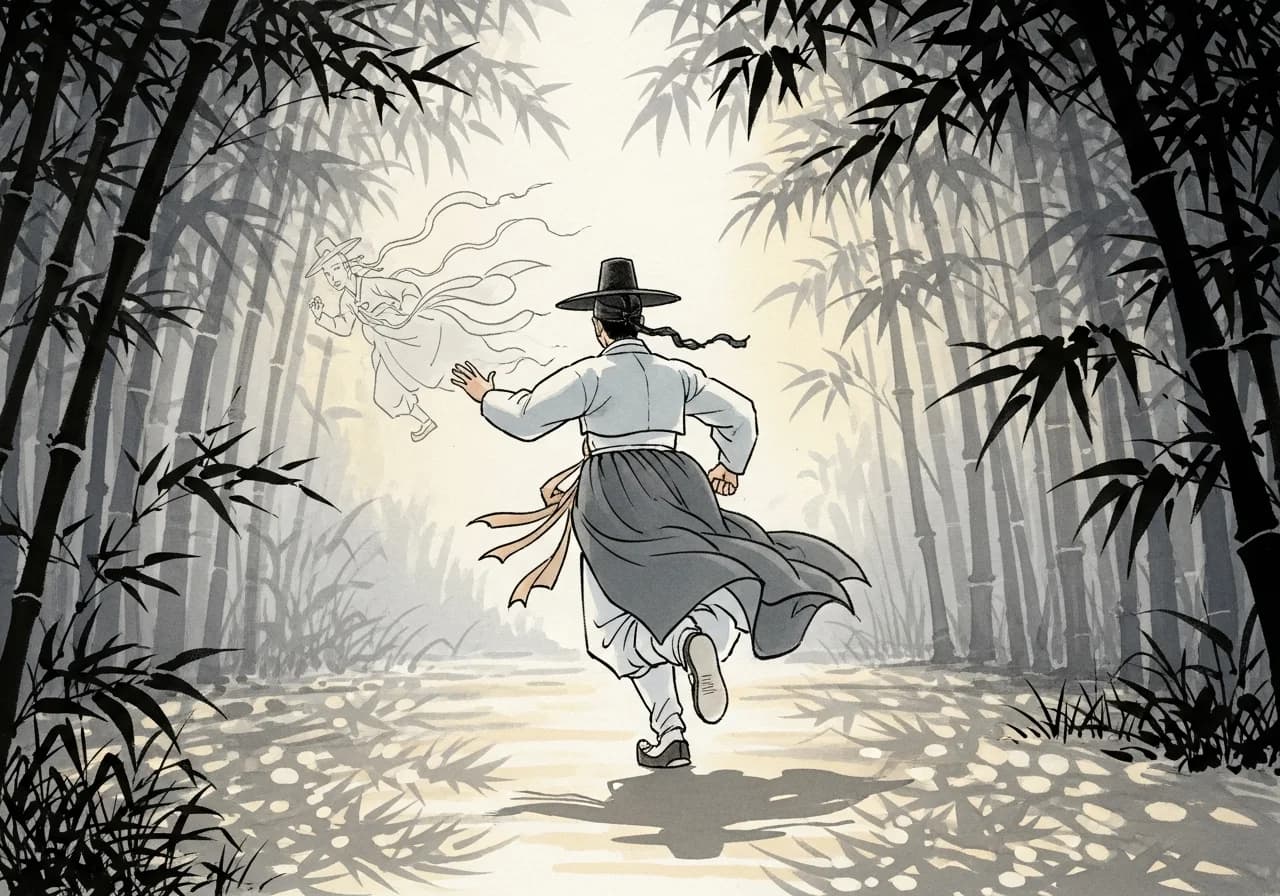
Successfully fleeing from the ghost — getting away completely and cleanly — is a strong auspicious sign. In Korean tradition, this foretells victory over rivals, resolution of conflict, and the successful completion of ongoing projects or endeavors. It marks a turning point toward restored confidence and positive momentum. There is also a fascinating reversal within this tradition: if the ghost simply follows you quietly, without overt menace, it is sometimes read as an omen of long life. And counterintuitively, being chased by many ghosts at once can be interpreted as even more auspicious — the greater the number of pursuers, the stronger the favorable sign. The key qualifier: if the multi-ghost dream was dominated by sheer terror and desperate flight, the reading reverses to inauspicious.
Neutral Reading: When the Outcome Is Unclear
If the dream ended ambiguously — neither escape nor capture — or if the dominant emotion was anxious tension rather than full terror, a neutral interpretation is most appropriate. Dreaming of being chased by a ghost frequently mirrors something in waking life that you are avoiding, suppressing, or not yet ready to confront: an unresolved conflict, a difficult decision that keeps getting postponed, or a relationship issue that has been quietly building pressure. The first and most important step after waking from this dream is honest self-reflection: what is it in my life that I am currently running from?
Korean Ghost Lore and Dream Tradition
Understanding this dream fully requires understanding the Korean concept of 귀신 (ghost). The word itself is a compound of two characters: 귀 (a being that brings misfortune) and 신 (a being that bestows blessing) — reflecting the fundamentally dual nature of spiritual entities in Korean folk belief. In Korean shamanism (무속신앙), ghosts fall into two main categories: 원귀, spirits of those who died with deep unresolved grievances or injustice, and 고혼, lonely wandering souls who never received the proper funeral rites and ancestral ceremonies their rest depended on. Both types were believed to visit the living through dreams. A ghost chase was sometimes understood as a resentful spirit directing its wrath at the dreamer, or alternatively as an ancestral warning sent to protect a descendant from approaching danger. The iconic white-robed female ghost (처녀귀신) — with long disheveled hair — is the most recognizable image in Korean ghost folklore, representing the spirit of a young woman who died with deep grievances unresolved. The shaman (무당) traditionally performed 굿 rituals to appease or expel such spirits, and recurring ghost dreams could be interpreted as a sign that such a purification ceremony was needed.
Dream Variations
Chased by a Ghost and Caught
Being caught at the end of a ghost chase is an inauspicious omen: it signals that current difficulties will not resolve easily or quickly. It warns of conflict with those around you, potential social scandal, and possibly prolonged health challenges. The traditional advice is to stop avoiding the problem — facing it directly is the only path through.
Successfully Escaping from a Ghost Chase
Getting away from the ghost completely is an auspicious sign. It foretells victory in competition or ongoing conflict, progress in projects or business endeavors, and improvement in strained relationships. The greater the sense of relief and freedom you felt upon escaping, the more expansive the breakthrough you can expect in waking life.
Chased by a Female Ghost (처녀귀신)
Being chased by a white-robed female ghost — the most iconic image in Korean ghost tradition — is interpreted as an inauspicious sign of deteriorating interpersonal relationships and emotional hurt caused by someone around you. If there is already tension in a relationship, especially with a woman in your life, this dream calls for extra care and careful communication.
Chased by a Dead Person's Ghost
When the ghost chasing you takes the form of a deceased family member or someone you once knew, it symbolizes unresolved emotional debts, lingering regret, or psychological pressure rooted in that relationship. In Korean folk tradition, it may also be a prompt to perform ancestral memorial rites or ceremonies, as the spirit may be signaling an unmet need. If there are feelings about this person that you never processed, this dream suggests it is time.
Fleeing from a Ghost into Your Home
Running from a ghost and retreating into your home during the dream warns that external threats or misfortune may begin to affect your household. It is read as an inauspicious sign calling for heightened attention to family health and domestic harmony — the home as sanctuary may be compromised.
Chased by Multiple Ghosts
One of the more surprising aspects of Korean dream interpretation: being chased by a crowd of ghosts can be read as more auspicious than being chased by just one. The greater the number of pursuing ghosts, the stronger the favorable sign — provided the dream was not dominated by extreme fear and desperate flight. When terror is the primary emotional note, the reading reverses. The emotional tone of the dream is the decisive variable.
Recurring Ghost Chase Dreams
If the same ghost chases you in a recurring dream pattern, this is a clear signal that something in your waking life — chronic stress, an unresolved relationship, an avoided responsibility — is not being addressed. In this context, the traditional auspicious/inauspicious framework is less useful than treating the dream as a psychological prompt. Honest identification of what you are persistently avoiding is the most effective response.
Ghost Chase During Sleep Paralysis
Experiencing the sensation of being chased or pressed down by a ghost during sleep paralysis (가위눌림 in Korean) has a neurological explanation: the brain, in REM-induced muscle paralysis, generates sensory impressions that can feel like the presence of an external entity. Korean tradition reads this as a warning of severe accumulated physical and mental exhaustion — an urgent call for rest, recovery, and attention to sleep quality.
Cultural Context
In Korean tradition, the concept of 귀신 (ghost or spirit) encompasses far more than simple horror. The word itself combines 귀 (a being that brings misfortune) and 신 (a being that bestows blessings), reflecting the inherently dual nature of the spiritual world in Korean folk belief. In Korean shamanism (무속신앙), ghosts fall into two main categories: 원귀 — spirits of those who died with deep resentment or injustice unresolved — and 고혼 — lonely wandering souls who never received proper funeral rites or ancestral ceremonies. These spirits were believed to intervene in the living world, and appearing in dreams was one of their principal means of communication. Being chased by a ghost in a dream was sometimes understood as the wrath of a resentful spirit, and sometimes as an ancestral warning sent to protect a descendant from coming danger. The iconic image of the white-robed female ghost (처녀귀신) with long disheveled hair — familiar from centuries of Korean folklore and modern cinema alike — represents the spirit of a woman who died young with deep grievances unfulfilled. The shaman (무당) traditionally served as the intermediary who could appease or expel such spirits through ritual ceremony (굿), and a dream of being chased by a ghost could be taken as a sign that such a purification ritual was needed.
Western Psychological Perspectives
In Freudian psychoanalysis, the ghost pursuing you in a dream is a personification of repressed guilt, forbidden desires, or unresolved past trauma striving to break through from the unconscious into awareness. The act of fleeing represents the ego's desperate effort to keep these suppressed psychological contents at bay. The emotional tone of fear and avoidance signals an active repression mechanism, and being caught by the ghost may indicate that this repression is becoming unsustainable — the unconscious material can no longer be held back.
From a Jungian perspective, the ghost chasing you is a classic manifestation of the Shadow — the rejected, suppressed, or unacknowledged aspects of your own personality that are demanding integration. Rather than viewing this as a threat, Jung would interpret it as an invitation: what pursues us in dreams often carries exactly what we need for psychological wholeness and individuation. Turning to face the ghost — rather than fleeing — is seen as the psychologically mature response. If the ghost takes the form of a deceased ancestor or known individual, it may represent an archetypal image from the collective unconscious, carrying the weight of inherited patterns or forgotten wisdom that is asking to be acknowledged.
From a modern cognitive neuroscience perspective, being chased by a ghost in a dream reflects the brain's REM-stage processing of unresolved daily stress and negative emotions. Research shows that chase dreams are among the most universally reported dream types, consistent with the idea that the brain's threat-detection system continues simulating scenarios during sleep as an evolutionary safeguard. The ghostly pursuer is the brain's way of giving a concrete image to diffuse anxiety. When the experience accompanies sleep paralysis, it often arises from a neurological quirk in which the sleeping brain misinterprets the sensation of REM-induced muscle paralysis as the presence of an external agent — explaining why this experience is reported across virtually every culture in human history.
Korean folk interpretation and Western psychology approach this dream from opposite directions — one seeing a real spiritual agent acting on the dreamer, the other seeing a projection of the dreamer's own inner world — yet both converge on exactly the same actionable message: stop running. Whatever it is you have been avoiding in your waking life, this dream is an invitation to turn and face it.
Frequently Asked Questions
The meaning of a ghost chase dream ultimately hinges on two things: the outcome of the chase, and how you felt throughout it. A successful escape points toward triumph and positive change. Being caught signals it is time to stop avoiding something that is genuinely demanding your attention. Either way, this dream is not random noise — Korean tradition and modern psychology alike agree that whatever is chasing you in the dream is worth examining carefully in the light of day.