Clothes Dream Meaning — Korean Dream Interpretation (꿈해몽) Guide
If you dreamed of putting on a brand-new outfit last night, Korean dream tradition (해몽) has good news for you — it is one of the clearest signals of a fresh start, rising fortunes, or an unexpected windfall. This interpretation runs deep: in Joseon-dynasty Korea, a person's social rank was literally written in the color of their official robes, and that cultural memory never left the dreamscape. There is a catch, though — the very same symbol flips from auspicious to ominous depending on whether those clothes were clean and well-fitting, or torn and dirty.
Auspicious Clothes Dreams — New Clothes, Beautiful Garments, Gifts

Dreaming of wearing or buying new clothes is a classic auspicious dream in Korean tradition. It signals new beginnings, a rise in social standing, or incoming wealth. Long-held desires — including a marriage proposal materializing — are also common associations. Wearing splendid, well-fitting clothes in a dream foretells the acquisition of riches and honor, while a wardrobe full of clothes is a powerful sign that material abundance and authority are increasing in your life.
Receiving clothes as a gift in a dream is especially positive — it points to unexpected good fortune or the help of an influential benefactor who will lift your social position. White clothes signal the fulfillment of all wishes and the arrival of wealth and honor. Bright red clothes foretell a rise in status that earns the admiration and even envy of those around you.
Inauspicious Clothes Dreams — Dirty, Torn, or Lost Garments
Not all clothing dreams bring good news. Dreaming of dirty or torn clothes is a warning omen in Korean tradition. It signals potential business setbacks, interpersonal conflict, or damage to your reputation. Appearing before a crowd in shabby or dirty clothes specifically warns of demotion or dismissal at work — your public image is at risk.
Losing clothes in a dream warns of financial loss or the painful end of a valued relationship. Wearing clothes inside out or misfastening buttons hints at public embarrassment or a romantic partner's change of heart. Receiving black clothes as a gift carries a particularly strong warning of misfortune within the household. Giving away expensive clothes suggests you may suffer financial harm through betrayal or fraud.
Wealth and Career Fortune — What Clothes Dreams Say About Money
Clothes dreams are strongly connected to material fortune. Buying or receiving new garments often foreshadows unexpected income or a successful investment. A wardrobe bursting with beautiful clothes is one of the strongest omens of growing financial security you will encounter in Korean dream interpretation.
On the flip side, losing clothing or giving away valuable garments to someone else warns of financial loss ahead. There is an interesting exception: dreaming of washing dirty clothes is a good sign — the act of cleaning symbolizes worries being dissolved, and happiness returning to the household.
Social Status and Relationships — Identity Through Clothing
In Korean dream symbolism, the quality of the clothes you wear reflects your standing in the social world. Wearing fine, appropriate clothes in a dream means you will earn recognition and respect; it may even point toward promotion or public honor.
By contrast, appearing in public in ill-fitting, tattered, or reversed clothing warns of social humiliation or exposure to gossip. Wearing someone else's clothes signals that you will take on a new collaborative role — or step into someone else's position. Whether this is positive or negative depends on how comfortable the borrowed clothes felt in the dream.
Color Symbolism — White, Black, and Red Clothes
The color of clothing is crucial to the Korean dream interpretation.
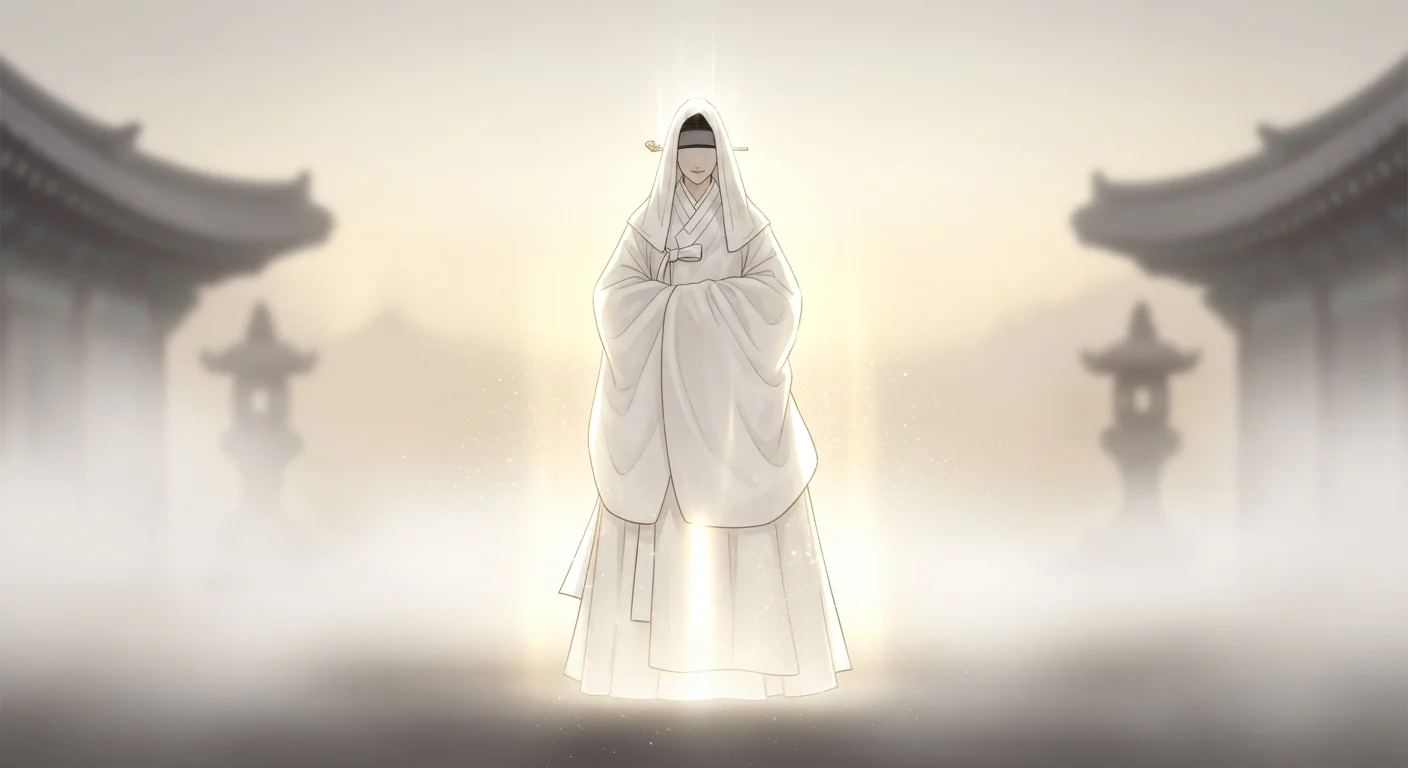
White clothing is generally auspicious — a sign of wishes fulfilled and honor gained — though since white is also the traditional Korean mourning color, some interpreters read it as a sign of major change or loss. Red clothing signals a rise in status and resolution of long-standing worries, though a minority of traditional readings also associate it with physical injury. Black clothing is the most clearly negative color in this context: it warns of household misfortune, illness, or accident, and receiving black clothes as a gift is a traditional warning of a death among those close to you. Yellow and green garments are traditionally associated with new vitality and abundance.
Dream Variations
Dream of wearing new clothes
An auspicious omen representing the start of new opportunities or relationships. Business ventures and academic pursuits go smoothly, and long-desired outcomes — including marriage proposals — are likely to materialize. If the new clothes felt comfortable and flattering in the dream, the positive signal is even stronger.
Dream of buying clothes
A sign that a new chapter in life is opening. You may meet a new romantic partner or experience a positive career change. Finding the perfect outfit and buying it with satisfaction in the dream suggests that wise choices you make now will lead to rewarding outcomes.
Dream of clothes tearing
Interpreted as a sign of business failure, interpersonal conflict, or family discord. It can also indicate that the dreamer's emotional defenses are weakened. If you had this dream before an important contract or decision, it is worth taking extra care in your due diligence.
Dream of dirty clothes
Appearing in public in dirty clothes warns of demotion, dismissal, or a fall from grace. However, washing dirty clothes in the same dream is actually auspicious — worries are dissolved and happiness comes to the home. The act of cleaning transforms the omen from negative to positive.
Dream of losing clothes
Warns of financial loss or economic hardship ahead. It also cautions against separation from someone dear or a decline in professional standing. Where in the dream you lost the clothes can refine the meaning: losing them outside suggests public or professional loss, while losing them at home may point to family matters.
Dream of receiving clothes as a gift
An auspicious omen of unexpected windfall or assistance from an influential benefactor who elevates your social position. It may also signal that current worries and problems are about to be resolved. Who gives the clothes matters: a superior or stranger suggests career support, while a romantic partner signals deepening intimacy.
Dream of white clothes
Widely interpreted as auspicious — all wishes fulfilled, wealth and honor coming. Seeing someone else dressed in brilliantly white clothes signals that person is destined for high social standing and prestige. The important nuance: because white is also Korea's traditional mourning color, white clothing dreams can occasionally point to significant loss or transformation rather than pure good fortune.
Dream of black clothes
An inauspicious dream warning of misfortune within the household, accident, or illness. Receiving black clothes as a gift in a dream carries a traditional warning that news of a death among close ones may be forthcoming. After this dream, it is worth checking in on the health of family members.
Dream of red clothes
Foretells a rise in status that draws admiration from those around you, and symbolizes passion and the resolution of long-standing worries. The Korean tradition also contains a minority interpretation associating very vivid red clothing with physical injury or accident, so the overall context of the dream matters.
Dream of hanbok (Korean traditional dress)
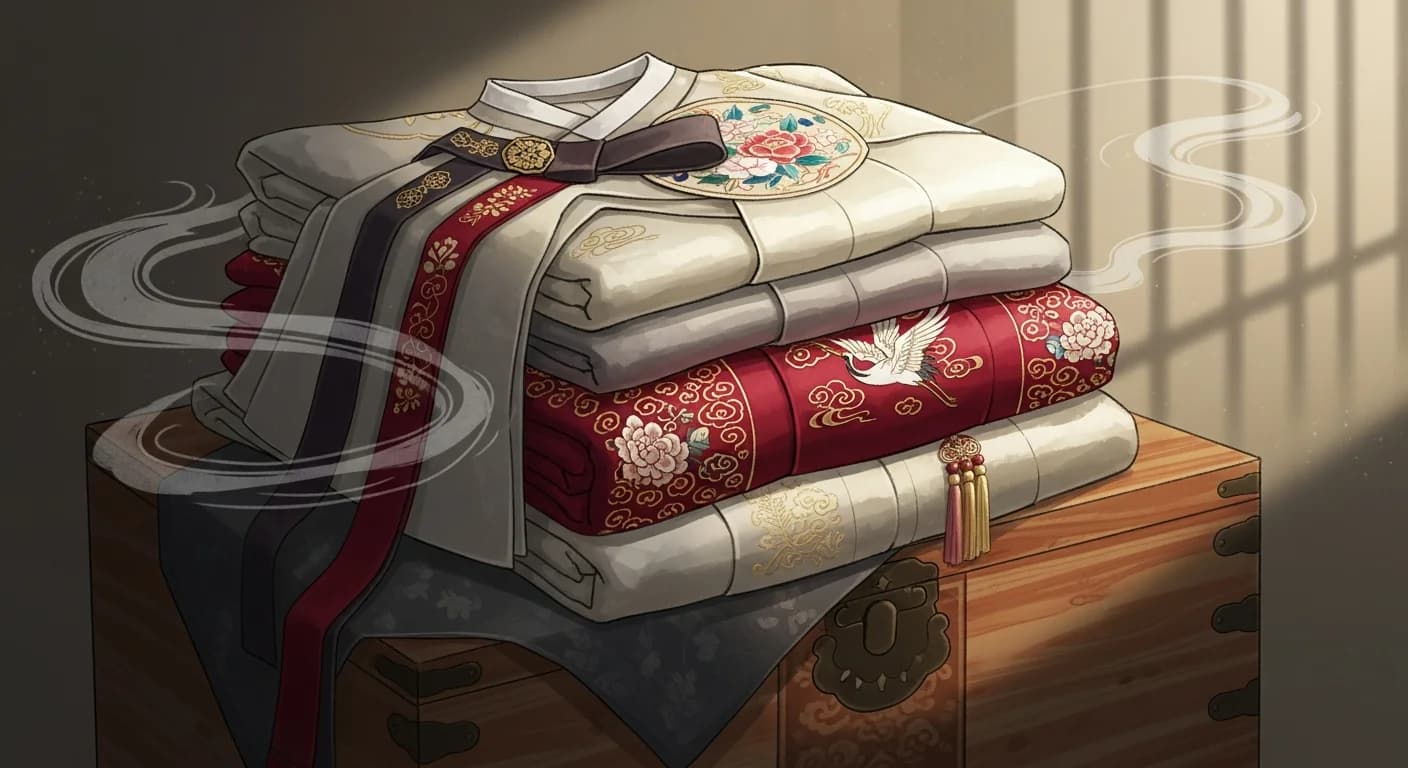
Dreaming of wearing splendid hanbok is strongly auspicious — it signals that an influential benefactor will help elevate your honor and that a promotion is near. For unmarried people it foretells a meaningful new romantic connection; for married people it signals improved popularity and stronger interpersonal bonds. Wedding-style hanbok specifically may connect to marriage or an important celebratory event.
Dream of undressing or removing clothes
May represent a desire for liberation from past constraints, but is generally read as an inauspicious sign of gossip, embarrassing exposure, or vulnerability. If you intentionally undressed in the dream, it leans toward personal liberation; if the clothes were removed against your will, the warning of unwanted exposure is stronger.
Dream of washing clothes
An auspicious dream in which worries and anxieties are cleansed away and happiness comes to the home. It symbolizes inner purification — washing away past mistakes and starting fresh. If the clothes came out brilliantly clean and white afterward, the positive signal is especially strong: a long-standing problem is about to be fully resolved.
Dream of a wardrobe full of clothes
A strongly auspicious omen of significant increase in wealth, authority, and social standing. The more varied and beautiful the clothes in the wardrobe, the broader the abundance being signaled — spanning career success, financial growth, and social recognition.
Dream of wearing someone else's clothes
Signals that you will collaborate with others or step into another person's role. If the borrowed clothes fit well and felt comfortable, the new role will suit you. If they felt wrong or ill-fitting, the transition may come with friction. This dream commonly appears during career transitions or role changes.
Cultural Context
In Korean tradition, clothing was far more than fabric — it was a social language that instantly communicated the wearer's rank, status, and virtue. From the Three Kingdoms period (57 BCE – 668 CE) through the Joseon dynasty (1392–1897), the colors and styles of official robes were strictly codified by civil rank. A first-rank official's crimson gown and a commoner's undyed white hemp told the entire story of a person's place in society at a single glance.
White mourning clothes (소복, sobok) were associated with death and grief, while vibrant red garments symbolized celebration and noble standing — associations that map directly onto dream interpretation. In shamanic tradition (무속, musok), special ritual garments — particularly the shaman's ceremonial attire (무복, mubok) — functioned as conduits for communicating with spirits. Receiving or wearing beautiful clothing in a dream was therefore understood as receiving a blessing from heavenly or ancestral spirits. Conversely, torn or dirty dream-clothes warned of spiritual and social decline.
This cultural weight is why Korean dream interpretation pays such close attention to the color, condition, and fit of clothing: each detail carries specific symbolic meaning built up over centuries of lived tradition.
Western Psychological Perspectives
Western Psychological Perspectives
Freud viewed clothing in dreams as a symbolic substitute for nudity — a surface that conceals the tension between repressed desires and the demands of social life. When clothes are removed or disappear in a dream, Freud interpreted this as anxiety about hidden unconscious desires or shameful impulses being exposed to others. The condition of the clothing in the dream, on this reading, acts as a gauge of how successfully the ego is managing its ongoing negotiation with social expectations.
Jung's framework takes a different but complementary approach. For Jung, clothes in dreams represent the 'persona' — the social mask we construct and wear in everyday life. Well-fitting, beautiful garments signal that your social role is in genuine harmony with your deeper self. Strange, uncomfortable, or ill-fitting clothes carry the opposite message: the role you are currently playing in the world no longer fits who you truly are. Dreaming of magnificent attire can be read as a meaningful signal in the individuation process — the lifelong journey toward authentic selfhood — suggesting you are moving closer to expressing your genuine identity in the world.
Modern psychology and sleep research understand clothing dreams primarily as reflections of self-image and social identity, activated by the brain's overnight emotional processing. Studies suggest that clothes dreams appear most frequently during periods of life transition — job changes, shifts in relationship status, or moments of intense social pressure. The brain, during sleep, revisits the social evaluations it encountered during waking hours and may render them as the vivid visual metaphor of clothing.
What is striking is how the Korean folk tradition and Western psychological frameworks, developed independently across thousands of miles, converge on the same core insight: clothing in dreams reflects how you see yourself within the social world. Korean tradition externalizes this as prophecy about tangible changes in status and wealth; Western psychology internalizes it as a window into identity, persona, and unconscious anxiety. Both are looking at the same phenomenon through different lenses.
Frequently Asked Questions
Clothes dreams may feel mundane, but in Korean dream interpretation they carry centuries of cultural weight. The single most important variable is the condition and fit of the clothing: new and beautiful means rising fortune; torn and dirty means approaching hardship. Color adds another layer — white and red are generally positive, black carries a warning. Pay attention to what you felt wearing those clothes in the dream. That emotional register — joy, pride, shame, or anxiety — is often the clearest signal of all. Whether you approach this through the lens of Korean folk tradition or Western psychology, the dream is telling you something real about how you see yourself in the world right now.