Disaster Dream Meaning: Korean Interpretation of Natural Disaster Dreams
Woken up shaken from a disaster dream? In Korean dream tradition, these dreams carry some of the most dramatic reversals in all of 꿈해몽 — the same catastrophe can be a powerful omen of fortune or a serious warning, depending entirely on one thing: what happened to you inside the dream.
Auspicious: Surviving or Escaping a Disaster

Dreaming of safely escaping or surviving a disaster is a strongly auspicious sign that you will overcome current hardships and difficulties. Escaping unharmed from earthquakes, floods, or other catastrophes signals good opportunities ahead and the dawn of a new beginning. Being the sole survivor when others are harmed is especially positive — it indicates a decisive advantage in competition or an exceptional stroke of luck coming your way. Watching the disaster unfold from a safe distance, or heroically rescuing others during the calamity, is also auspicious, foretelling an opportunity to showcase hidden talents and gain influence in your workplace or community.
Peace After the Storm — Clear Skies Following Disaster
Seeing calm, peaceful scenery after the disaster passes is a very positive omen for stability and renewal. Long-standing problems that seemed impossible to resolve may clear up unexpectedly well. Like sunlight breaking through after a typhoon, this dream reassures you that whatever hardship you are currently enduring will pass, and something better waits on the other side.
Inauspicious: Being Swept Away or Your Home Destroyed
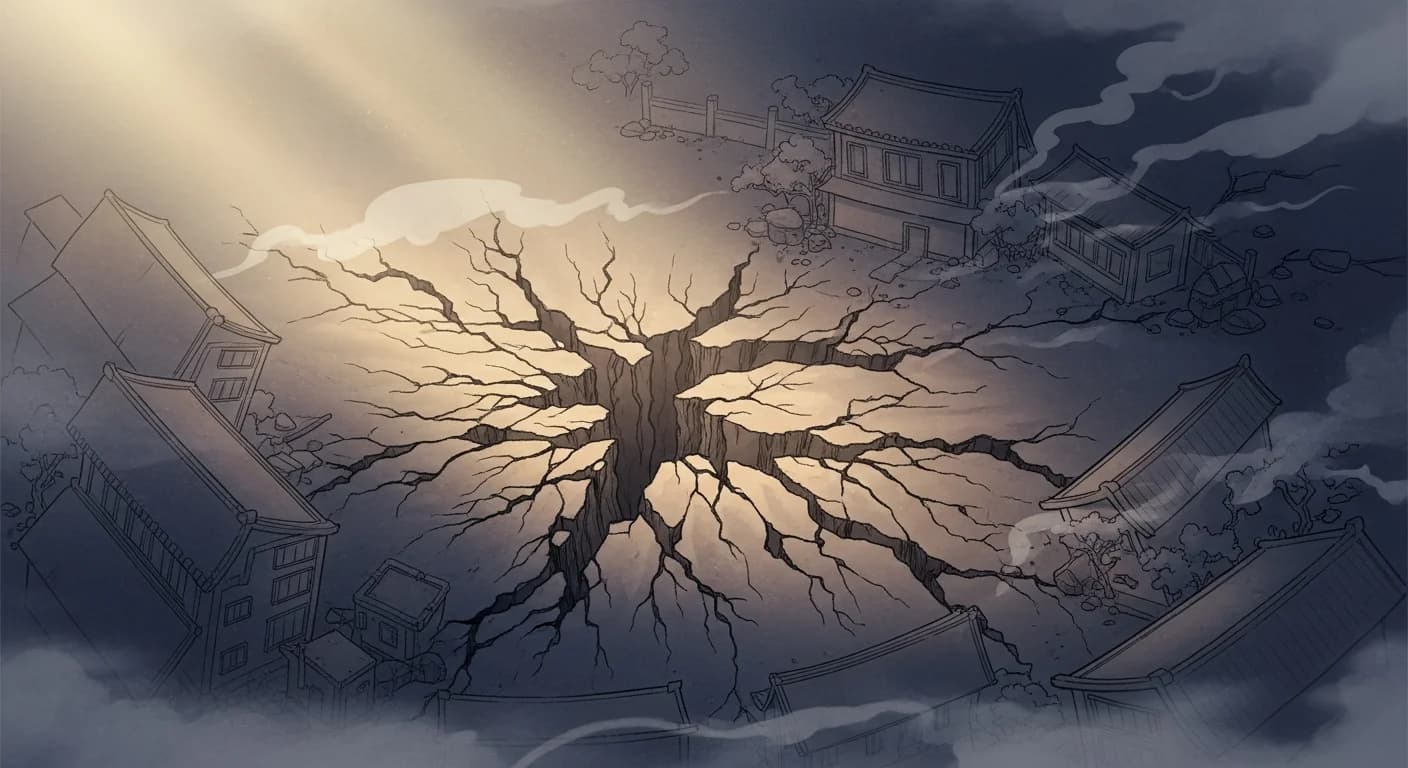
Dreaming of being overwhelmed by a disaster, or of your home being completely destroyed, is inauspicious — it warns of family discord, business losses, or deteriorating health. Being submerged in muddy or dark water is especially foreboding for family and personal wellbeing. Dreaming of the ground splitting or roads destroyed by disaster warns of serious conflict and disputes in your workplace, school, or social group. Irreparable rifts in important relationships may be approaching — take this as a prompt to tend to your key connections before things reach a breaking point.
Trapped in Rubble or Left Alone
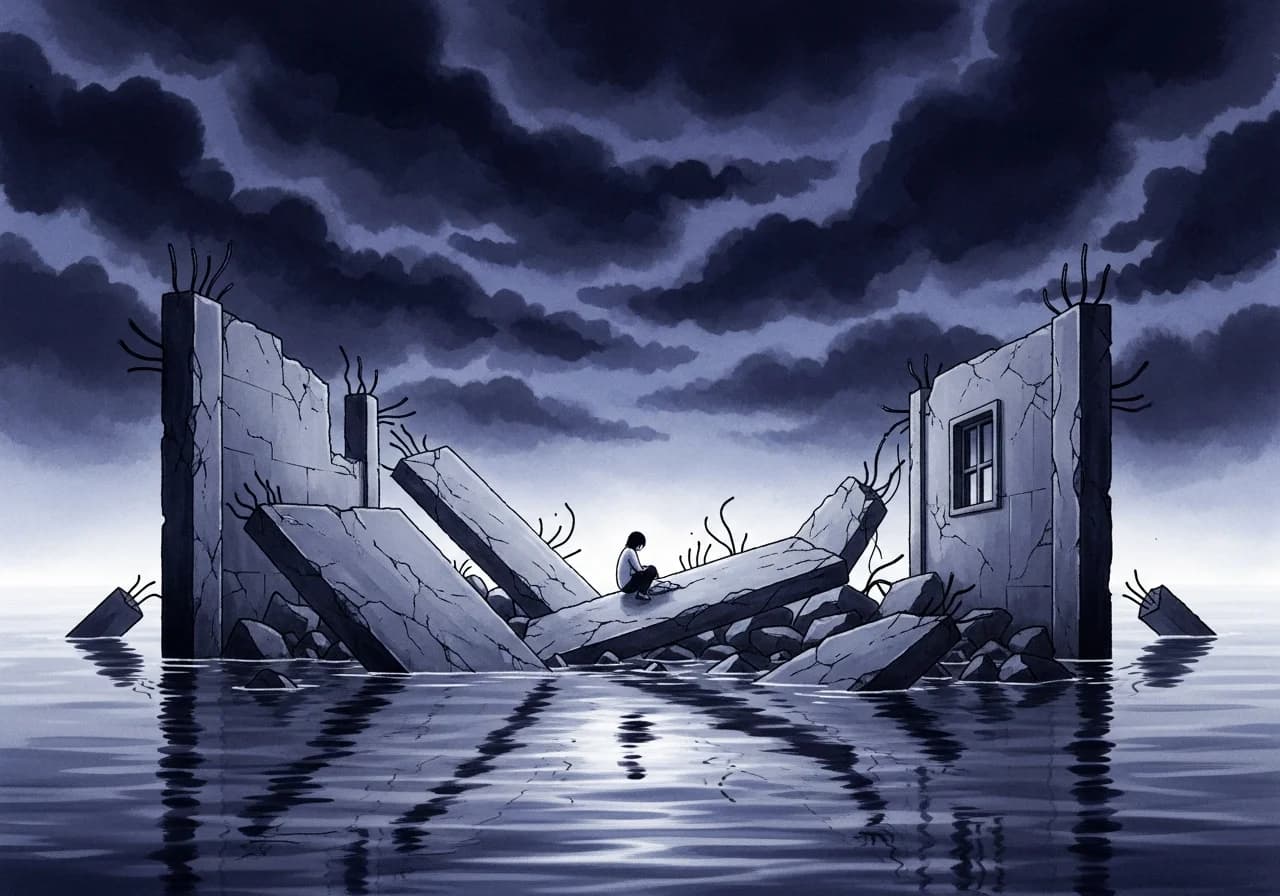
Being trapped in rubble or left alone after a disaster reflects deep feelings of isolation and helplessness, signaling that you may be in a desperate situation where outside help is urgently needed. Watch for health issues and social disconnection in the coming weeks. If this dream resonates, reaching out and leaning on your support network is worth the effort.
Neutral: Anticipating Disaster or Watching News Coverage
Dreaming of an imminent but not-yet-arrived disaster signals that major change is approaching in your life. Whether this change is positive or negative depends on the emotional tone of the dream and how events unfold within it. Watching news reports or disaster alerts in a dream signals an incoming turning point or important news — it could be acceptance to school, a contract signed, a promotion, or simply unexpected news about events beyond your control.
Dream Variations
Earthquake Dream Meaning — When Life's Foundation Shakes
Earthquake dreams foretell major upheaval in life's foundations. Escaping safely is auspicious — you will overcome obstacles ahead. A collapsing house warns of family discord or business crisis. Peaceful scenery after the quake signals recovery and a fresh start.
Flood Dream Meaning — Clear Water vs. Muddy Water
Flood dreams with clear water overflowing are auspicious for wealth — unexpected financial gains are indicated, especially when the clean water flows into your home. Muddy or turbid floodwater warns of financial losses or health deterioration. The quality of the water is the decisive detail.
Tsunami Dream Meaning — Overwhelming, Sweeping Change
Tsunami dreams symbolize overwhelming, sweeping change. Running from a tidal wave is auspicious — promotions and business success are foretold. Waves entering the home signal great wealth incoming. As a pregnancy dream (태몽), a tsunami foretells a child destined for exceptional fame and wide influence.
Typhoon Dream Meaning — Suppressed Forces Released
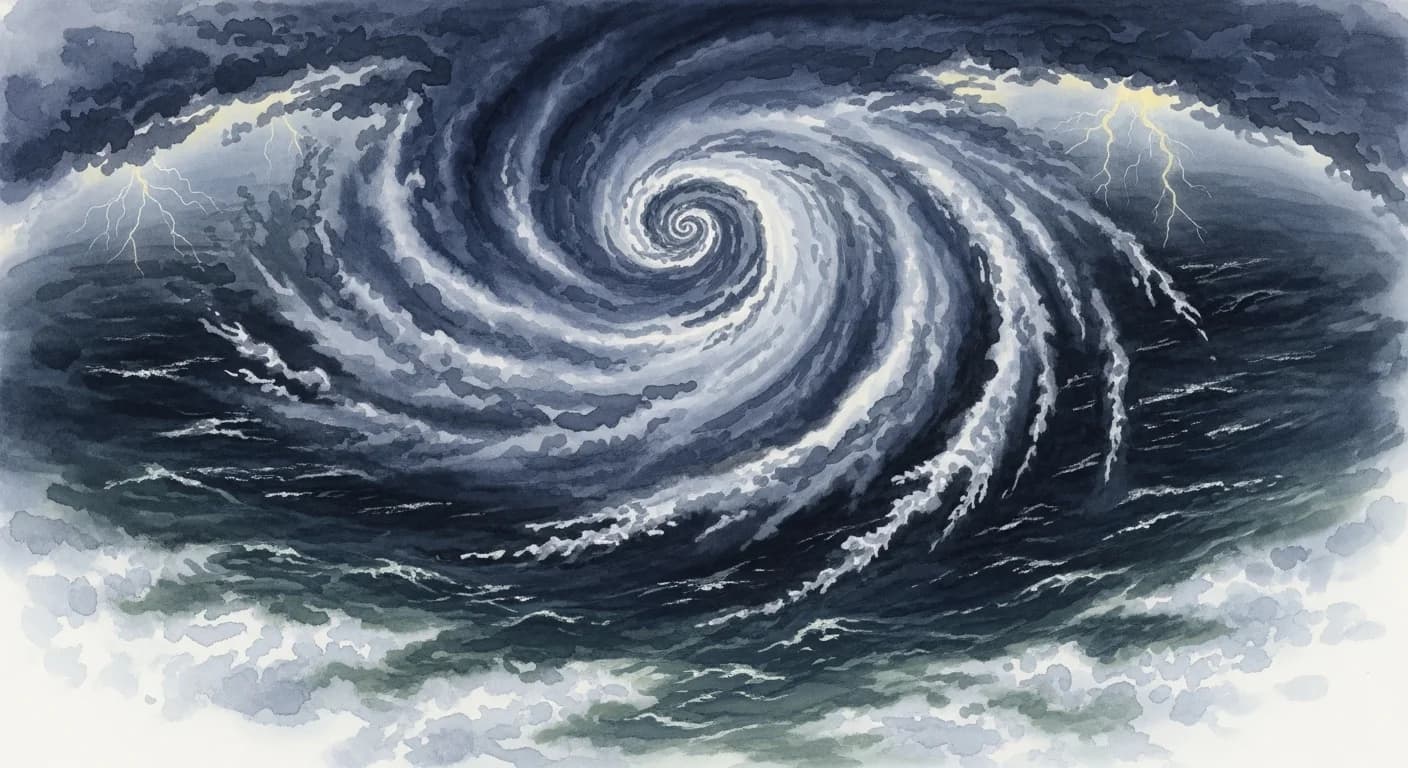
Typhoon dreams represent suppressed emotions or external pressures that have built beyond your control. Clear skies after the typhoon passes are auspicious — peace and new opportunities await after crisis. A typhoon destroying your home warns of family problems or financial instability.
Building Collapse Dream Meaning — Destruction as Renewal
A building collapsing completely can be auspicious — old stagnant energies are cleared away and a fresh start opens ahead. Partial collapse or being injured in the rubble warns of a shaky foundation in career or business, or conflict within an organization you belong to.
Evacuation Dream Meaning — Escaping Danger
Successfully evacuating in a disaster dream is auspicious — you will find a way out of current difficulties and pressing situations. Failing to evacuate or being trapped warns of a desperate situation where outside help may be urgently needed.
Surviving a Disaster Dream — A Powerful Good Omen
Surviving a disaster dream is a strong auspicious sign that you will overcome whatever hardship life throws at you and emerge renewed. Being the sole survivor when others perish is especially powerful — it suggests you will gain a decisive advantage in competition or receive an unusual stroke of good fortune.
Fire Disaster Dream Meaning — The Bigger the Blaze, the Better
Fire at a house or building is traditionally auspicious in Korean interpretation — business prosperity and financial gain are indicated, with larger flames meaning greater success. Heavy black smoke or a weak, sputtering fire reverses the meaning and warns of health or financial troubles.
Cultural Context
In traditional Korean dream interpretation, disaster dreams are not merely expressions of fear or anxiety but are regarded as significant harbingers of major life change. Korean shamanism (무속 신앙) viewed natural calamities as manifestations of divine or spiritual will, so disaster dreams were interpreted as messages sent by these forces to the dreamer. Because water is a symbol of wealth and abundance in Korean folk belief, flood dreams are frequently interpreted as auspicious omens of financial gain. The principle of reverse interpretation (반몽) also means that terrifying disaster dreams often herald great fortune. During the Joseon dynasty, dreams were widely believed to carry prophetic power — kings who dreamed of disasters would consult shamans and ritual specialists, then perform protective rites accordingly. Far from being feared, disaster dreams functioned in Korean culture as instruments of wisdom for reading the currents of life's inevitable changes.
Western Psychological Perspectives
Western psychology regards disaster dreams as some of the most psychologically revealing dream experiences a person can have — vivid dispatches from the deeper layers of the mind.
From a Freudian perspective, disaster dreams represent the explosive release of repressed anxieties and unconscious conflicts during sleep. The catastrophe is a symbolic manifestation of suppressed fears, feelings of powerlessness, or guilt about desires that seem threatening or forbidden. The scale and destructiveness of the disaster tends to correspond to the intensity of the repressed emotional material — a minor tremor is one thing; a world-ending flood quite another.
Carl Jung offered a broader view. For Jung, disaster dreams connect to archetypal images in the collective unconscious that transcend personal experience. Floods, earthquakes, and storms carry the ancient archetype of chaos and rebirth — humanity's primal confrontation with overwhelming natural forces. Jung saw these dreams not merely as warnings but as reflections of a deep psychic transformation: the old self is dismantled so that a more mature selfhood can emerge. In this light, a disaster dream is less about catastrophe and more about necessary shedding.
Modern psychology and neuroscience understand disaster dreams primarily as the brain's stress-simulation mechanism. Research consistently shows that people under high stress, facing major life transitions, or processing unresolved trauma dream about disasters more frequently — and the link to PTSD symptom patterns is well documented. These dreams are often the psyche's way of rehearsing worst-case scenarios to build psychological resilience.
What is striking is how Korean tradition and Western psychology converge from opposite directions: one calls a disaster dream an omen of change and new possibility; the other calls it a signal of internal transformation. Both agree it is not simply a bad sign — it is a call to attention.
Frequently Asked Questions
Disaster dreams are unsettling, but they carry important messages about change, resilience, and the direction of your life. The core principle to remember: surviving means auspicious, being overwhelmed means cautionary. Reflect on how you experienced the disaster in your dream — that emotional truth is far more revealing than the disaster itself. Whether this dream arrived as a warning or a herald of new beginnings, it is asking you to pay attention to the forces reshaping your life right now.