Flying Dragon Dream Meaning — Korea's Most Powerful Auspicious Omen
If a dragon soared through the sky in your dream last night, Korean dream tradition has remarkable news for you — this ranks among the most powerfully auspicious dreams a person can have. There is even a traditional saying: 'the dragon dream is the dream of all dreams,' reflecting centuries of belief that a soaring dragon predicts a dramatic rise in career, wealth, and honor. There is one important nuance, though — the direction and circumstances of the flight completely change the reading, so the details of your dream matter more than you might expect.
Why Is the Flying Dragon Such a Powerful Dream Omen?
In Korean dream interpretation (꿈해몽), the dragon is not a fearsome monster as in many Western traditions — it is a sacred, divine being that bridges heaven and the human world. Counted among the Four Sacred Animals alongside the phoenix, qilin, and turtle, the dragon embodies infinite transformative power and supreme authority.
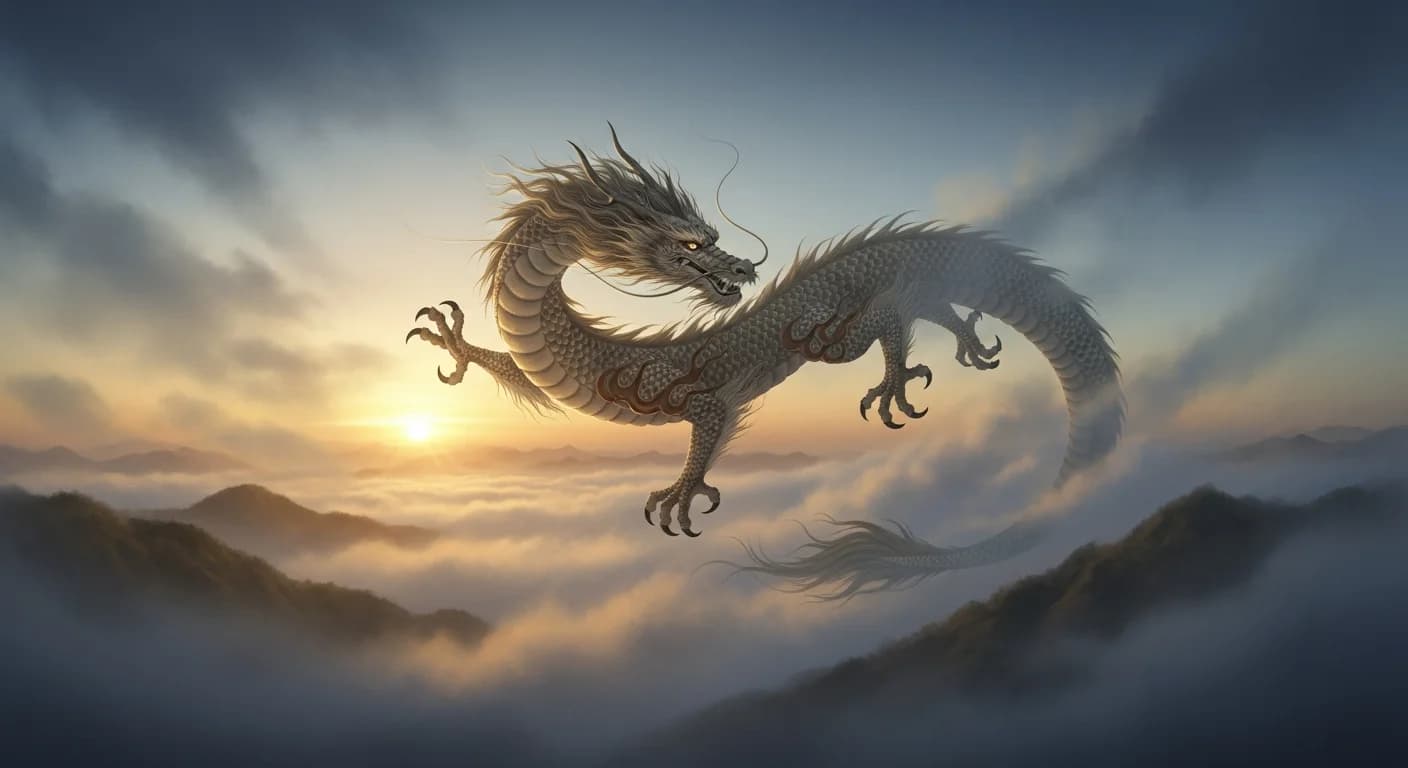
The act of ascending through the sky is the critical element. In Korean interpretive tradition, a dragon rising upward maps directly onto real-world advancement: promotions, exam success, business breakthroughs, and financial windfalls. The higher and more powerfully the dragon flies, the stronger the omen. This is why a dream in which a dragon soars majestically through a clear, bright sky is considered one of the greatest gifts the unconscious mind can deliver.
Auspicious Interpretations — Career, Honor, and Wealth
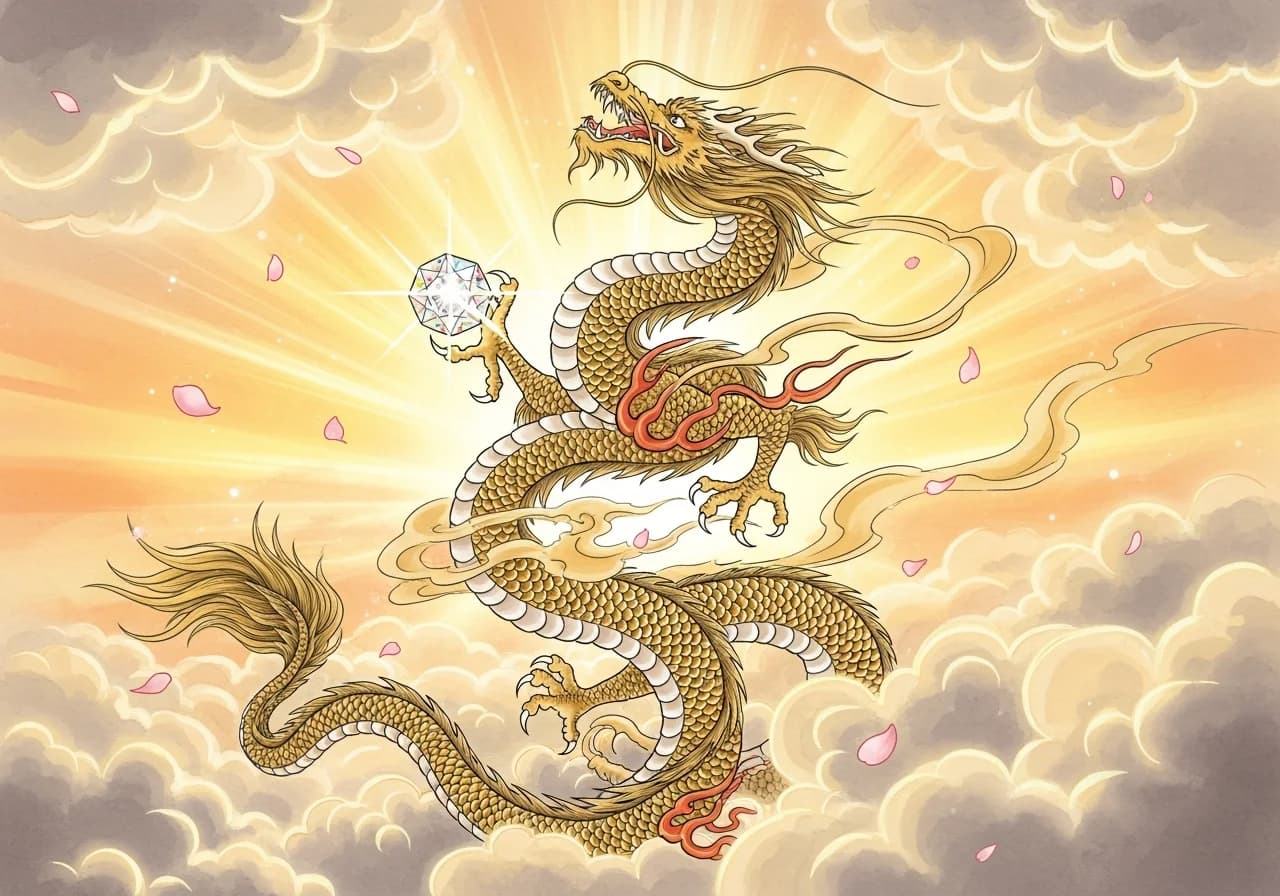
A dragon vigorously ascending through bright, clear skies is the quintessential auspicious omen (길몽) in Korean dream tradition. It signals a rise in social status, the fulfillment of long-held ambitions, and the arrival of a benefactor who opens major opportunities in one's life. For exam takers, it foretells passage. For job seekers, it predicts employment. For entrepreneurs, it promises significant growth.
Riding a dragon through the sky takes this interpretation even further — it is regarded as one of the highest-tier auspicious dreams possible. When the dreamer is personally on the dragon's back, the authority and success belong directly to the dreamer rather than simply surrounding them. All wishes come true; competitive dominance is assured.
A dragon carrying the wish-granting jewel (여의주, pronounced 'yuh-ee-joo') in its mouth while flying is especially auspicious for financial fortune. Joseon King Jeongjo reportedly dreamed of exactly this image and named a newly built Buddhist temple 'Yongjusa' (Dragon Jewel Temple) in its honor — testament to how deeply this symbol is embedded in Korean royal and folk culture alike.
Inauspicious Interpretations — When the Dragon Falls
Not all dragon dreams are good omens. A dragon falling from the sky mid-flight is classified as an inauspicious dream (흉몽) in Korean tradition. It warns of plans unraveling, a decline in status or authority, or significant setbacks in business. Some interpreters also read a falling dragon as a signal to pay closer attention to health.
Equally cautionary is the dream of a dragon unable to fly — trapped in a confined space or struggling but failing to ascend. This reflects suppressed potential in waking life, significant obstacles blocking one's goals, or a sense of frustrated ambition caused by external interference. If the dragon in your dream could not get airborne, it may be worth examining what is holding you back in reality.
Wealth Fortune — Dragon Dreams and Financial Windfalls
Dragon dreams carry a special association with financial luck in Korean culture. Unlike dreams of being bitten by ordinary animals — which are usually read negatively — being bitten by a dragon is almost universally auspicious, signaling unexpected wealth or financial gain. Even fighting a dragon and being bitten in the struggle is read as a portent of great business success.
The golden dragon (황룡) rising from mountains or valleys is particularly associated with material wealth in production, distribution, or food-related industries. The dragon carrying the wish-granting jewel is the classic image associated with lottery luck and unexpected windfalls — many Koreans purchase lottery tickets after dreaming of this image.
Health and Relationships — What the Dragon Foretells
A powerfully flying dragon often reflects robust physical energy and good health in the dreamer's current state. For someone recovering from illness, this dream can signal the turning point toward recovery.
In terms of relationships, dragon dreams frequently announce the arrival of a significant benefactor — someone who will extend crucial help at a pivotal moment. The dreamer may also be entering a period when they are recognized as a person of influence by those around them. A dragon descending and entering the home is particularly associated with family-wide prosperity and the arrival of great fortune into the household.
Dream Variations
Dragon Ascending to the Sky Dream — Major Career Advancement
A dragon rising high through the clouds is a greatly auspicious omen for social advancement and honor. It frequently appears before major milestones such as exam success, job placement, or promotion, and signals that a helpful benefactor will soon appear in one's life. The higher and more directly the dragon rises, the stronger the omen.
Riding a Flying Dragon Dream — The Highest-Tier Omen
Riding on a dragon's back as it flies through the sky is one of the most powerful auspicious dreams in Korean tradition. Authority and honor flow directly to the dreamer; wishes are fulfilled; competitive dominance is assured. For business owners this means major success; for students, exam passage; for professionals, promotion.
Blue Dragon Dream (청룡) — Honor and Academic Achievement
A blue dragon (청룡, cheong-ryong) flying through the sky foretells the gaining of honor and influence. Scholars will achieve outstanding intellectual accomplishments, entrepreneurs will see extraordinary success, and public figures will rise to respected prominence. The blue dragon is also the guardian deity of the East in Korean cosmology, symbolizing wisdom and authority.
Golden Dragon Dream (황룡) — Wealth and Business Success
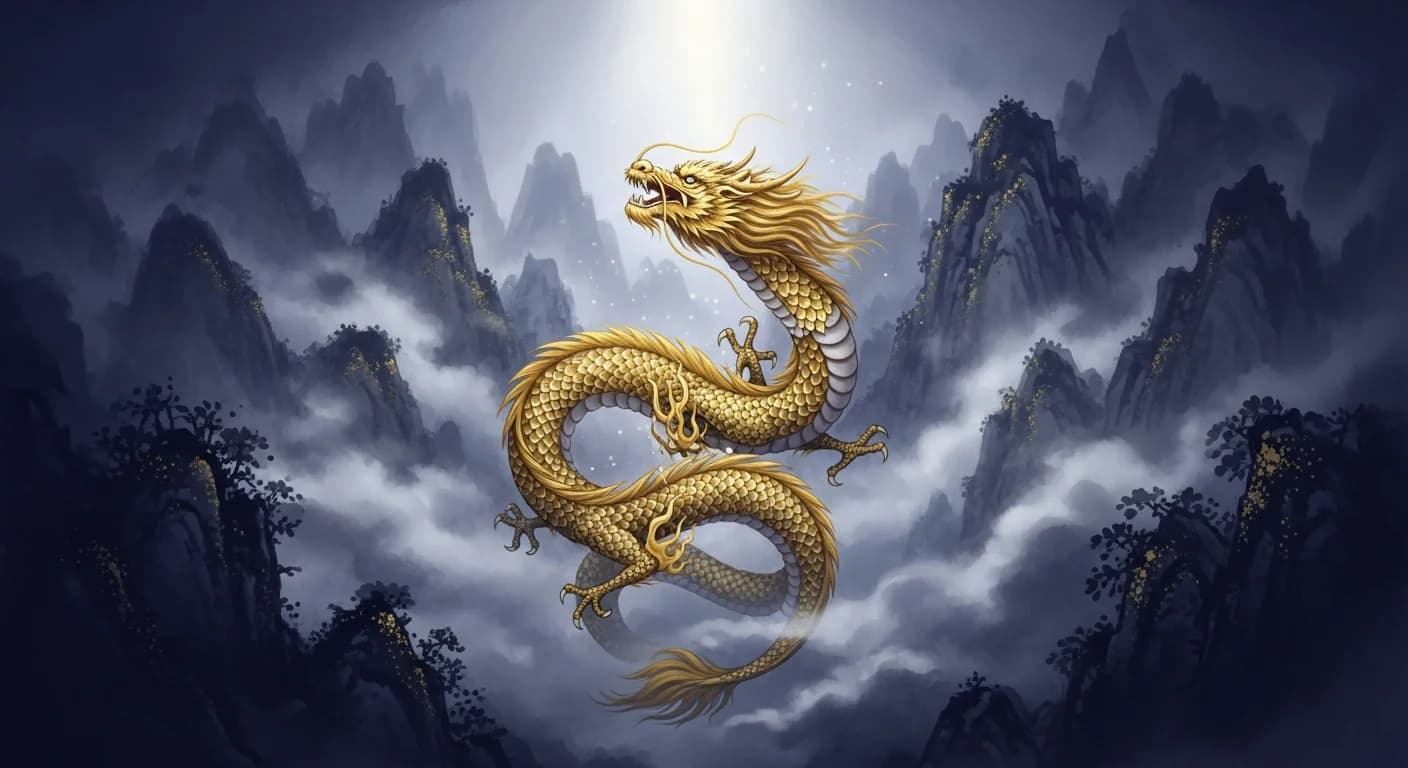
A golden yellow dragon flying through the sky is a spectacular omen for wealth and business fortune. When a golden dragon rises from mountains or valleys, it specifically predicts major commercial success in production, distribution, or food-related industries. Traditionally, the golden dragon symbolized imperial power — the highest authority in the land.
Black Dragon Dream (흑룡) — A Dream of Two Faces
A black dragon (흑룡) flying through the sky carries dual meanings. Some interpreters read it as auspicious — signifying family prosperity and strong financial fortune. Others see it as a warning of illness, disaster, or financial loss. Historically, the black dragon was the object of rain-summoning rituals (기우제) during droughts, embodying the raw, unpredictable power of nature.
White Dragon Dream (백룡) — Promotion and New Beginnings
A white dragon (백룡) flying through the sky symbolizes purity, fresh starts, and official advancement. It is particularly associated with promotion in government or administrative roles, and carries wealth alongside status. Traditionally, the white dragon — along with the golden dragon — was considered a symbol of supreme authority in Korean culture.
Dragon Flying with the Wish-Granting Jewel — Wishes Fulfilled
A dragon flying with the wish-granting jewel (여의주) in its mouth is the ultimate windfall dream — signifying the fulfillment of any wish and the acquisition of wealth. The jewel literally means 'that which grants all desires,' amplifying the dragon's already-powerful energy. Whatever one is currently pursuing will come to complete fruition.
Dragon Entering Your Home — Family Fortune and Pregnancy Omen
A dragon descending from the sky and entering one's home signals the arrival of a noble benefactor, great fortune, and honor into the household. It is frequently interpreted as a taemong (태몽) — a pregnancy omen dream predicting the birth of an extraordinary child. It can also indicate the meeting of an excellent spouse. Economic prosperity is expected to encompass the entire family.
Being Bitten by a Dragon — Unexpected Windfall
Being bitten by a flying dragon is interpreted as an unexpected windfall or major financial gain — a counterintuitive but firmly established reading in Korean dream tradition. Unlike dreams of being bitten by ordinary animals, a dragon bite is almost universally positive. Even fighting the dragon and getting bitten in the struggle signals great fortune in business.
Dragon Taemong (용꿈 태몽) — Pregnancy Omen for a Future Leader
In Korean tradition, a taemong (태몽) is a dream that predicts pregnancy and reveals the child's destiny. A dragon taemong — dreamed during pregnancy or just before conception — is among the most celebrated omens, predicting a child destined for greatness: a future leader who will rise to authority and honor. Traditionally associated with sons, but daughters born after this dream are equally expected to achieve remarkable prominence.
Multiple Dragons Flying Together — Competition and Complex Dynamics
Multiple dragons flying through the sky together suggests a highly competitive environment or complex interpersonal dynamics in the dreamer's life. Two dragons entering a home may be read as a twin pregnancy omen. If the multiple dragons are fighting each other, the dreamer is warned to avoid getting caught up in others' conflicts.
Dragon Roaring in the Sky — Power and Influence
A dragon roaring loudly while flying is auspicious, signifying the acquisition of power and great influence. The dreamer's exceptional abilities will lead to success, and good fortune accompanies all endeavors. However, if the roar felt threatening in the dream rather than majestic, this may warn of potential damage to the dreamer's reputation.
Cultural Context
In Korean traditional culture, the dragon (용, yong) was never the terrifying monster of Western lore — it was a sacred, auspicious being that connected heaven and the human world. Among the Four Sacred Animals (사령) alongside the phoenix, qilin, and turtle, the dragon embodied infinite transformative power and supreme authority.
The dragon was particularly venerated as the Water Deity (수신), governing rivers, seas, and rain clouds. During droughts, entire communities performed rain-summoning rituals (기우제) appealing directly to the dragon spirit for relief — a practice that wove dragon worship into both shamanic folk religion and Buddhist temple culture. As Buddhism spread through the Three Kingdoms period (57 BCE–668 CE), dragon-king shrines (용왕각) appeared within Buddhist temple compounds, giving the tradition institutional weight that persisted for centuries.
The connection between dragons and royal authority ran extraordinarily deep in Korean history. The king's throne was called the 'dragon seat' (용상), the royal ceremonial robe the 'dragon robe' (곤룡포), and the king's face the 'dragon face' (용안). Because the dragon symbolized the pinnacle of earthly power and divine connection, the folk saying 'the dragon dream is the dream of all dreams' emerged naturally — and people who had dragon dreams would commission dragon paintings to preserve the dream's auspicious energy in their home.
While dragons are broadly auspicious across East Asian cultures — Chinese, Japanese, Korean, and Vietnamese traditions all honor them — Korea developed a particularly distinctive interpretive tradition in which the physical act of ascending (승천, literally 'ascending to heaven') maps directly onto real-world advancement. This makes the Korean flying dragon dream unusually specific in its promises: not just general good fortune, but the particular kind of upward mobility — passing exams, earning promotions, achieving social respect — that has been central to Korean cultural aspirations for centuries.
Western Psychological Perspectives
Western psychology approaches the flying dragon dream from an entirely different angle — not as prophetic omen but as a window into the dreamer's inner life.
From a Freudian psychoanalytic perspective, a dragon soaring through the sky represents suppressed libidinal energy and the desire for power erupting in the dream in magnificent, symbolic form. The upward soaring motion itself may symbolize what Freud called 'sublimation' — the redirection of sexual or aggressive drives into socially acceptable ambitions. Some Freudian readers also connect the dragon to the mother archetype, interpreting the ascending dragon as a desire to break free from maternal authority or dependency. When the dreamer rides or controls the dragon fearlessly, it suggests the ego is successfully mediating between the repressed drives and conscious life — a sign of psychological integration rather than conflict.
Jungian analytical psychology offers a broader and perhaps more resonant lens. For Jung, the flying dragon is a powerful archetypal image drawn from the collective unconscious — the shared psychological inheritance of all humanity, not just any one culture. Jung often viewed the dragon as the Shadow: the primitive, intense inner force that rational consciousness tends to repress. A dragon soaring high into the sky represents a pivotal moment in the individuation process — the lifelong journey toward becoming a whole, integrated self. When the dragon in the dream feels majestic and awe-inspiring rather than threatening, it signals that the dreamer is successfully integrating these deep archetypal energies rather than fighting them.
Modern cognitive psychology and neuroscience add a more pragmatic dimension. Flying dreams of any kind frequently arise from vestibular system activation during sleep — the body's balance system firing without physical movement, creating the felt sensation of flight. When this combines with the culturally loaded symbol of a dragon, the resulting dream often projects real psychological states: the exhilaration of an upcoming challenge, anticipation before a major life transition, or a deep desire for control. It is cognitively natural to dream of soaring dragons before significant 'ascents' in waking life — exams, promotions, career pivots. Joyful, free flight reflects high self-efficacy; anxious or uncontrolled flight reflects the fear underlying a major challenge.
What is striking is that despite their radically different frameworks, Korean traditional interpretation and Western psychology converge on the same intuition: the soaring dragon is fundamentally a symbol of ascent and transformation. Korean tradition reads this as external prophecy; Western psychology reads it as internal mirror. The dream carries meaning either way.
Frequently Asked Questions
The flying dragon dream is one of the most celebrated omens in Korean dream interpretation — a symbol so powerful that it has its own folk saying: 'the dragon dream is the dream of all dreams.' Whether the dragon soars through clear skies, carries the wish-granting jewel, or carries you on its back, the dream speaks to a period of upward momentum in career, wealth, and personal authority. Pay attention to the color, the direction of flight, and how the dream felt — these details refine the interpretation considerably. If you had this dream, Korean tradition says to take it seriously: something significant may be on the horizon.