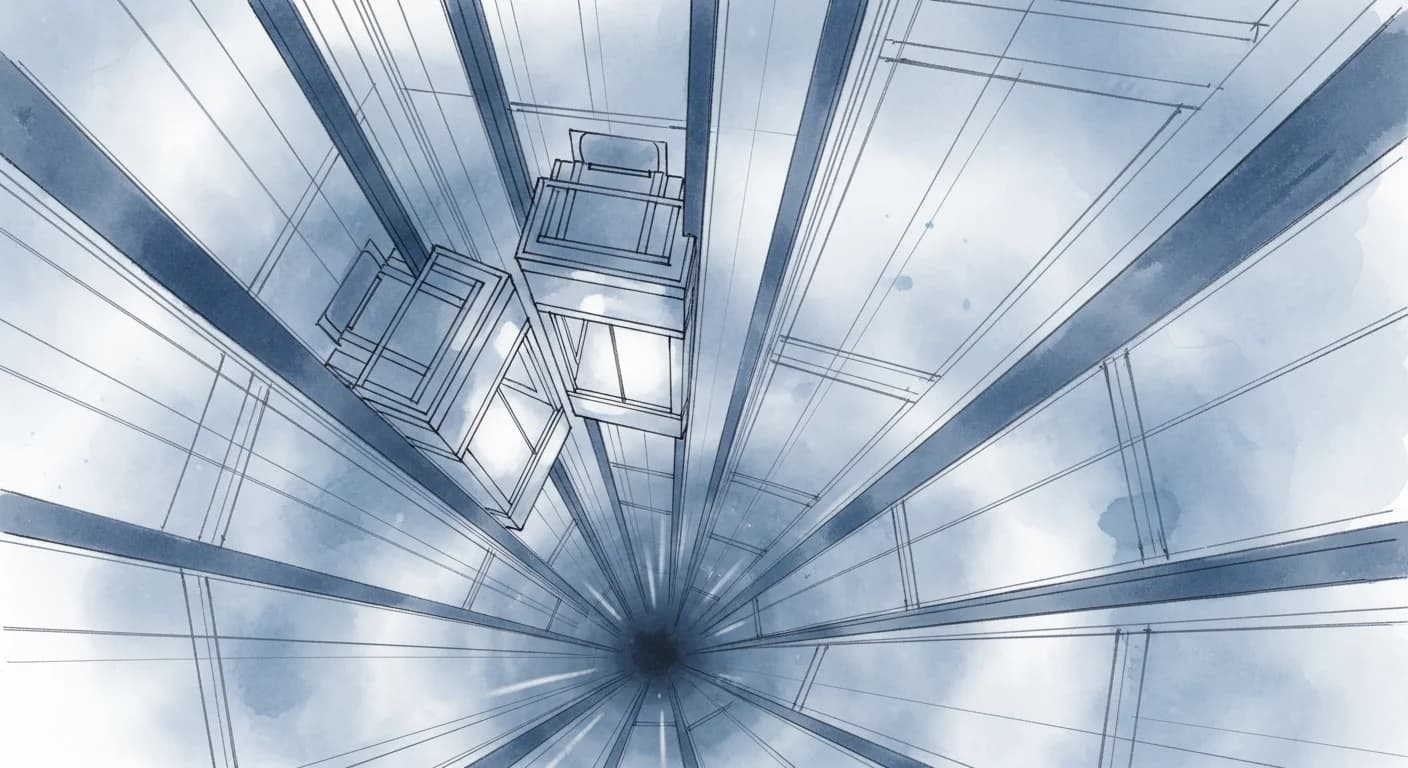
Elevator Falling Dream Meaning — What Korean Dream Tradition Really Says
If you dreamed of an elevator plunging downward last night, resist the urge to write it off as a nightmare — Korean dream interpretation (꿈해몽) has a more nuanced verdict. This dream carries both auspicious and inauspicious readings depending on one crucial factor: how you felt as it happened. In Korean tradition, the emotion experienced during a dream is the true key to interpretation, not the surface event. And here's the twist — if you felt strangely calm, or even relieved, as the elevator fell, this dream may actually be signaling the release of long-held burdens rather than incoming disaster.
The Inauspicious (흉몽) Interpretation
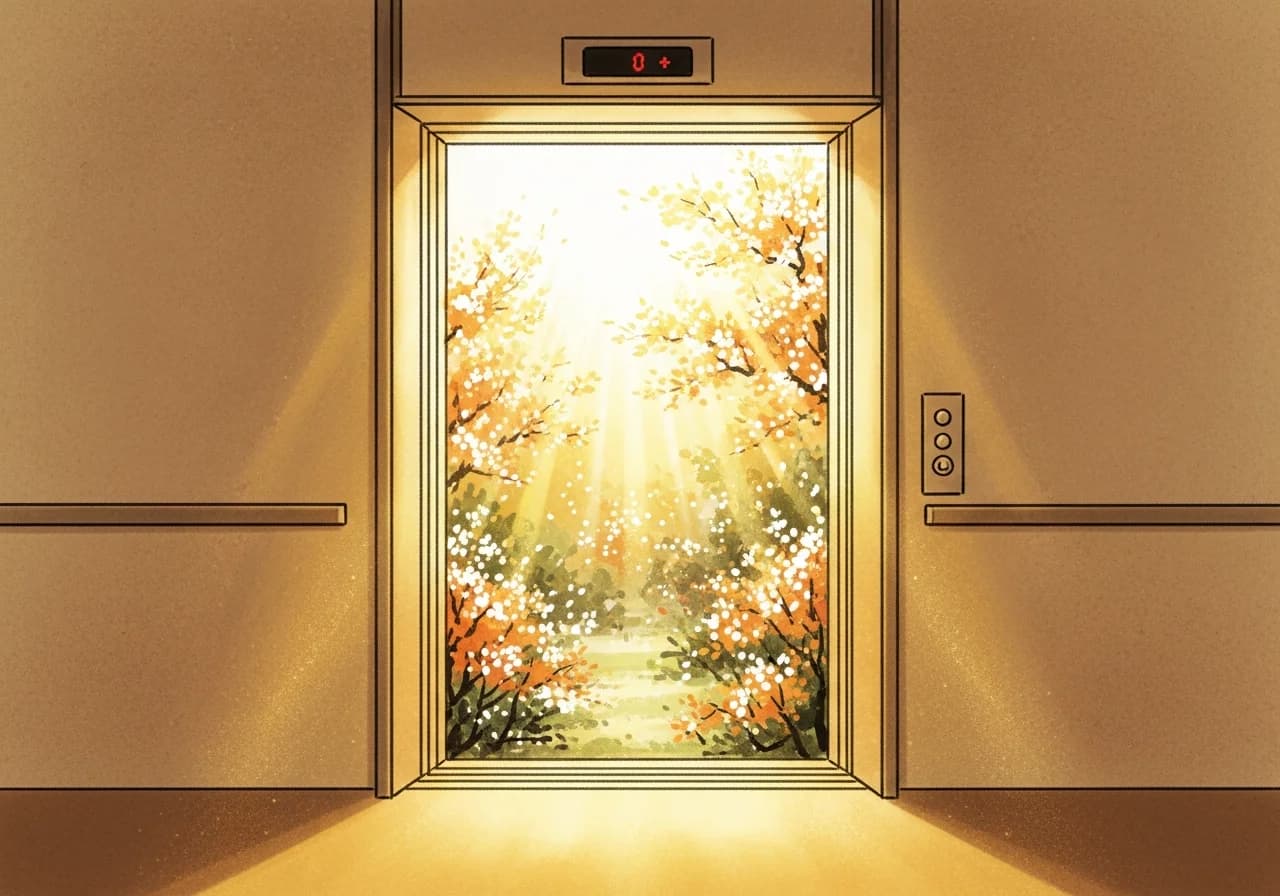
When an elevator plunges rapidly in your dream and you wake up gripped by fear or panic, Korean dream tradition reads this as a classic inauspicious sign (흉몽). It warns of unexpected setbacks in waking life — a project going off the rails, a sudden shift in your professional standing, or a relationship reaching a sudden crisis point. The speed matters: the faster the descent, the more urgent the warning. You may have less time to react than you think. This dream urges vigilance — take a careful look at ongoing commitments, workplace dynamics, and close relationships to identify any overlooked vulnerabilities before they become full crises.
The Auspicious (길몽) Interpretation
Here's what surprises many people: an elevator falling dream can be a genuinely auspicious sign (길몽). If you felt calm, unafraid, or even relieved during the fall, Korean dream tradition interprets this as a signal that long-standing worries are finally dissolving and life is settling into a smoother current. You may find that things you've been working toward begin flowing more naturally. The most powerfully positive version is when the elevator stops mid-fall, or when you survive the crash and walk away unharmed — this is considered a symbol of remarkable resilience, signifying that no matter what adversity comes, you have the inner strength to rise again and claim new opportunities on the other side.
A Mirror of Your Inner State
Beyond traditional auspicious and inauspicious readings, the falling elevator dream is often simply the subconscious mind holding up a mirror. When you're under sustained pressure — a major decision looming, a high-stakes situation at work, or uncertainty in a relationship — this imagery surfaces naturally as the mind processes stress. In this light, the dream isn't a prophecy but an invitation: to pause, examine which areas of your life feel out of control, and take stock of the direction you're heading. The elevator, after all, is a modern symbol of life's ascent and descent — and where you feel it taking you matters.
Dream Variations
Elevator Plunging Rapidly Dream
A dream of an elevator dropping at high speed is a strong inauspicious signal, warning of impending bad news or a sudden collapse of plans you've been building. The urgency of the speed is meaningful — it suggests you have little time to course-correct. Immediate attention to risks in current projects or commitments is advised.
Elevator Slowly Descending Dream
A gentle, gradual descent is a comparatively hopeful sign. Even if things currently feel like they're going in the wrong direction, time is on your side. You have the space to find solutions and regain stability at your own pace — this dream suggests a manageable transition rather than a sudden collapse.
Elevator Going Up Dream
The counterpart to the falling dream — an elevator rising smoothly is one of Korean dream tradition's clearest auspicious symbols. It points to promotion, success in business, academic achievement, or general upward momentum. If the atmosphere in the dream felt bright and optimistic, the things you've been working toward are likely to bear fruit soon.
Falling Out of an Elevator Dream
Falling from inside the elevator to outside of it carries a more specific warning: that you may find yourself in a situation that spirals beyond your control, particularly in an ongoing project or professional context. This variation suggests unexpected obstacles that knock you off the course you had planned.
Surviving an Elevator Crash Dream
One of the most powerfully positive variations — surviving a crash or escaping unharmed is a strong auspicious sign symbolizing extraordinary resilience. It's a direct message that you will overcome whatever crisis comes your way and emerge with new opportunities waiting on the other side. If you're currently facing a difficult situation, this dream is a reassuring signal.
Trapped in an Elevator Dream
Being stuck inside an elevator that won't move reflects a current sense of being trapped or stuck — emotionally, professionally, or in a relationship. It symbolizes standing at a crossroads without being able to move forward or backward. This dream often appears when you're facing a difficult decision you've been avoiding.
Elevator Door Won't Open Dream
Doors that refuse to open represent communication breakdowns or obstacles blocking a goal you're close to reaching. Frustrating as the imagery feels, this is typically interpreted as a temporary blockage rather than a permanent barrier — the situation is likely to resolve itself with patience.
Shaking Elevator Dream
A violently shaking elevator foretells significant change ahead. The nature of that change — positive or negative — depends on the emotional tone of the dream. The core message is to remain flexible and adaptable: big shifts are coming, and how you respond to them is what matters most.
Broken Elevator Dream
A malfunctioning elevator suggests that stable relationships or business ventures may be headed for unexpected friction or misunderstanding. It's a prompt to proactively check in with important relationships and address any lingering tensions before they escalate into something harder to repair.
Cultural Context
In traditional Korean dream interpretation (꿈해몽), the symbolism of falling has deep roots. Long before elevators existed, falling in a dream was associated with sudden loss of status, declining fortune, or unexpected failure. The concept is grounded in a classical framework that Korean culture has carried for centuries: ascending means good fortune and advancement, while descending or crashing signals trials and caution.
When the elevator arrived as a distinctly modern symbol, Korean dream tradition absorbed it seamlessly into this existing framework. The elevator became a powerful new metaphor for social mobility — rising toward success and falling away from it — particularly resonant in South Korea's achievement-oriented culture, where career advancement and social status carry significant weight.
Crucially, traditional Korean dream interpretation does not operate in simple black-and-white terms. It weighs the dreamer's emotional state, the atmosphere of the dream, and the feeling upon waking alongside the visual content. A dream of falling can shift from inauspicious to auspicious depending on whether fear or peace was present. This holistic, emotion-first approach to dream reading is one of the distinctive qualities of Korean 꿈해몽 tradition — and it's why two people can dream of the same falling elevator and receive entirely different interpretations.
Western Psychological Perspectives
Western psychological frameworks offer a fascinating parallel to Korean dream tradition's reading of the falling elevator dream — and in many places, the two traditions converge.
Sigmund Freud interpreted vertical movement in dreams through the lens of sexual symbolism. Ascending represented the rise of desire and its fulfillment, while falling signified the suppression or frustration of unconscious drives. Freud viewed rapid falling in dreams as a common expression of repressed emotions breaking through the surface — the mind's way of releasing what the waking self has kept firmly locked away.
Carl Jung offered a more philosophical reading. In Jungian psychology, the elevator functions as a vessel traveling between the conscious mind (the upper floors we present to the world) and the unconscious (the basement depths we rarely visit). A falling dream represents the ego descending into the unconscious — an encounter with repressed feelings and the Shadow self, the parts of our personality we prefer not to acknowledge. Importantly, Jung did not view this descent as inherently negative. Quite the opposite: he believed that facing one's inner darkness was a necessary step toward psychological wholeness. As he famously noted, 'in the Shadow lies the gold.'
Modern psychology connects recurring falling dreams to anxiety disorders and chronic stress. Threat Simulation Theory proposes that the brain uses dreams to safely rehearse threatening scenarios, building real-world crisis response capabilities. An elevator falling dream functions as a controlled mental simulation — a space where the mind confronts its deepest fears of losing control, failing despite genuine effort, or being exposed as less capable than others believe (a classic marker of impostor syndrome).
Across cultures, 'falling' is among humanity's most universal archetypal fears. The myth of Icarus soaring too close to the sun, Lucifer's fall from heaven — these stories encode the symbolic meaning of falling as hubris punished, status suddenly lost, or a dramatic plunge from a high position. The elevator is a modern invention, but the fear it carries is ancient. It gives contemporary form to an archetypal dread that resonates across every culture on earth.
Frequently Asked Questions
The elevator falling dream is one of the most emotionally charged dreams people experience — and one of the most misunderstood. The Korean tradition's core insight is elegant: look not at what happened in the dream, but at how it felt. Fear signals a need for caution; calm signals release and recovery; survival signals resilience. Whether you approach this dream through the lens of Korean 꿈해몽, Jungian depth psychology, or modern stress research, the message is consistent — your inner world is asking for your attention. Take that seriously, take care of yourself, and trust in your capacity to navigate whatever comes next.
Related Dreams

Falling Dream Meaning — Is It Always a Bad Omen?
Flying Dream Meaning in Korean Tradition — The Complete Interpretation Guide
Elevator Dream Meaning — What Korean Dream Tradition Says About Direction

Drowning Dream Meaning — What Korean Dream Tradition Really Says

Climbing Stairs Dream Meaning — What Korean Dream Tradition Says

Being Chased Dream Meaning