End of World Dream Meaning — Korean Dream Interpretation of the Apocalypse
If you woke up from a world-ending dream with your heart racing and a strange sense that something in your life is about to shift — that intuition has more backing than you might think. In Korean dream tradition (꿈해몽), a striking principle called 반몽 (banmong, or 'reverse dreams') holds that the most extreme dream imagery often manifests as its opposite in waking life: total destruction can signal a total new beginning. The real key, though, is what you were doing when the world ended. Whether you survived, fled, helped others, or simply watched from a distance will completely change whether this is a dream of fortune or a warning — and the difference matters.
When an Apocalypse Dream Is Auspicious (길몽)
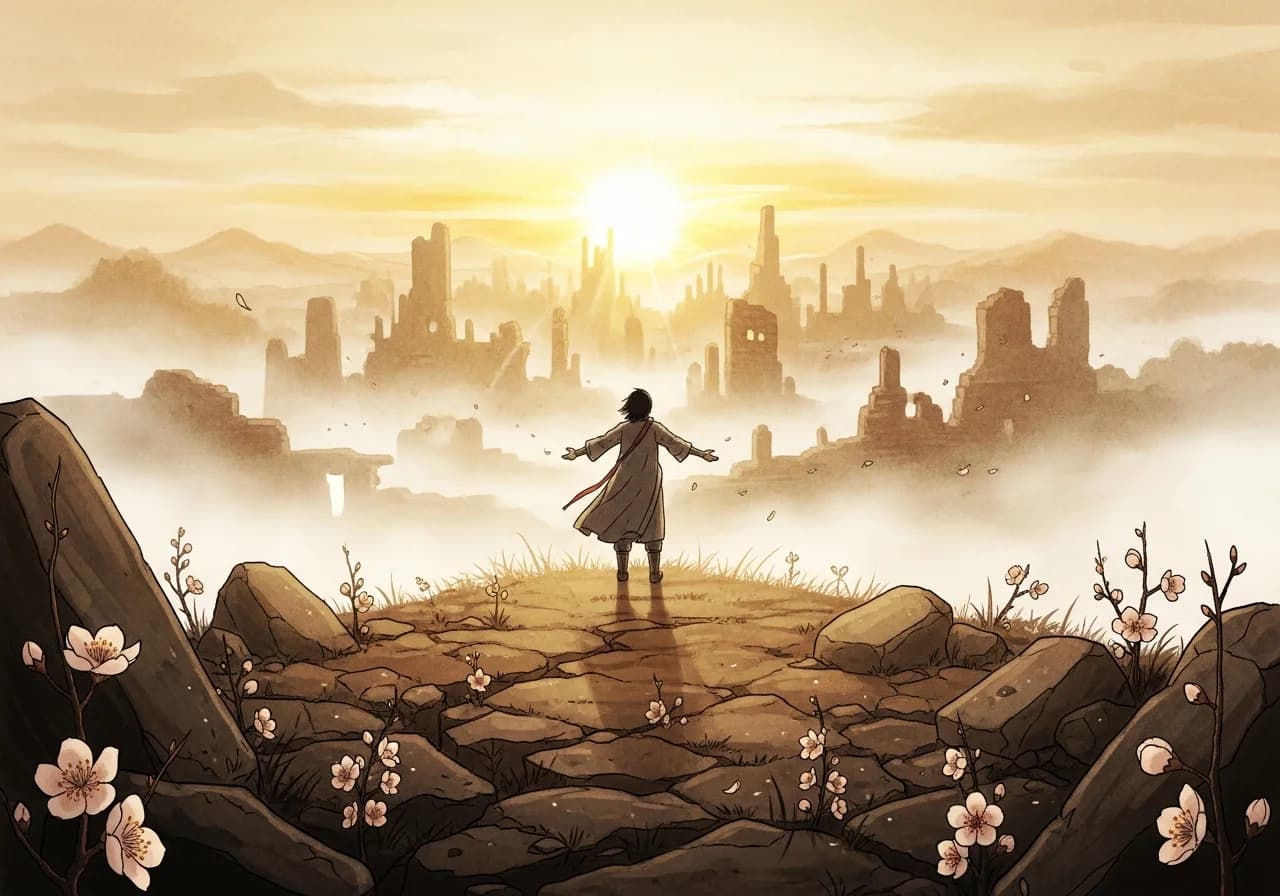
In Korean dream interpretation, the single most important variable in an end-of-world dream is survival. If you made it through the apocalypse — even alone — that is considered a strongly auspicious dream (길몽). It signals that you carry extraordinary inner resilience capable of overcoming any adversity in real life, and that you are entering a period of fresh starts under the protection of higher forces.
Helping or rescuing others during the catastrophe is equally auspicious. Acting selflessly in extreme circumstances foreshadows personal growth, emotional maturity, and hard-won wisdom. You are being told: the trials ahead will make you a bigger person.
Perhaps surprisingly, dying in the apocalypse dream can also be auspicious. Korean folk interpretation treats death in dreams as symbolic of regeneration and transformation — not literal death, but the end of an old version of yourself and the birth of something new. This interpretation runs parallel to Buddhist ideas about cycles of destruction and renewal, which have deeply influenced Korean dream culture.
When an Apocalypse Dream Is a Warning (흉몽)
On the other side of the coin, passively watching the world end from a distance — unable to act, helpless — is considered an inauspicious dream (흉몽). The imagery of powerless observation warns that circumstances in waking life may feel increasingly beyond your control. Approaching disappointment, loss, or separation may be signaled.
Being chased or fleeing through an apocalyptic landscape is a stronger warning still. It suggests major misfortune or a serious negative event is approaching — potentially a crisis in relationships or a professional setback.
Bleeding or suffering injury during the catastrophe warns of financial loss or material damage. And if the same apocalyptic dream recurs repeatedly, Korean interpretation views this as the subconscious sending an urgent signal: be more careful and measured in your words and actions in waking life.
What the Apocalypse Dream Reveals About Your Inner State
End-of-world dreams are also considered a mirror of your present emotional life. A dream of nuclear war or human-caused destruction often reflects intense suppressed anger or fear arising from unresolved interpersonal conflict. The imagery of unstoppable collision is your unconscious externalizing a tension you have not yet faced head-on.
Dreaming of the apocalypse alongside family, on the other hand, carries a comforting meaning. Even in total chaos, your family safety net remains intact — a sign that family bonds will anchor you through whatever difficulties lie ahead.
Being alone in a silent post-apocalyptic world after all destruction is complete carries a neutral, even hopeful interpretation: it is the blank-slate moment, the complete reset, the invitation to build something entirely new.
Dream Variations
Meteor Destroying the World Dream
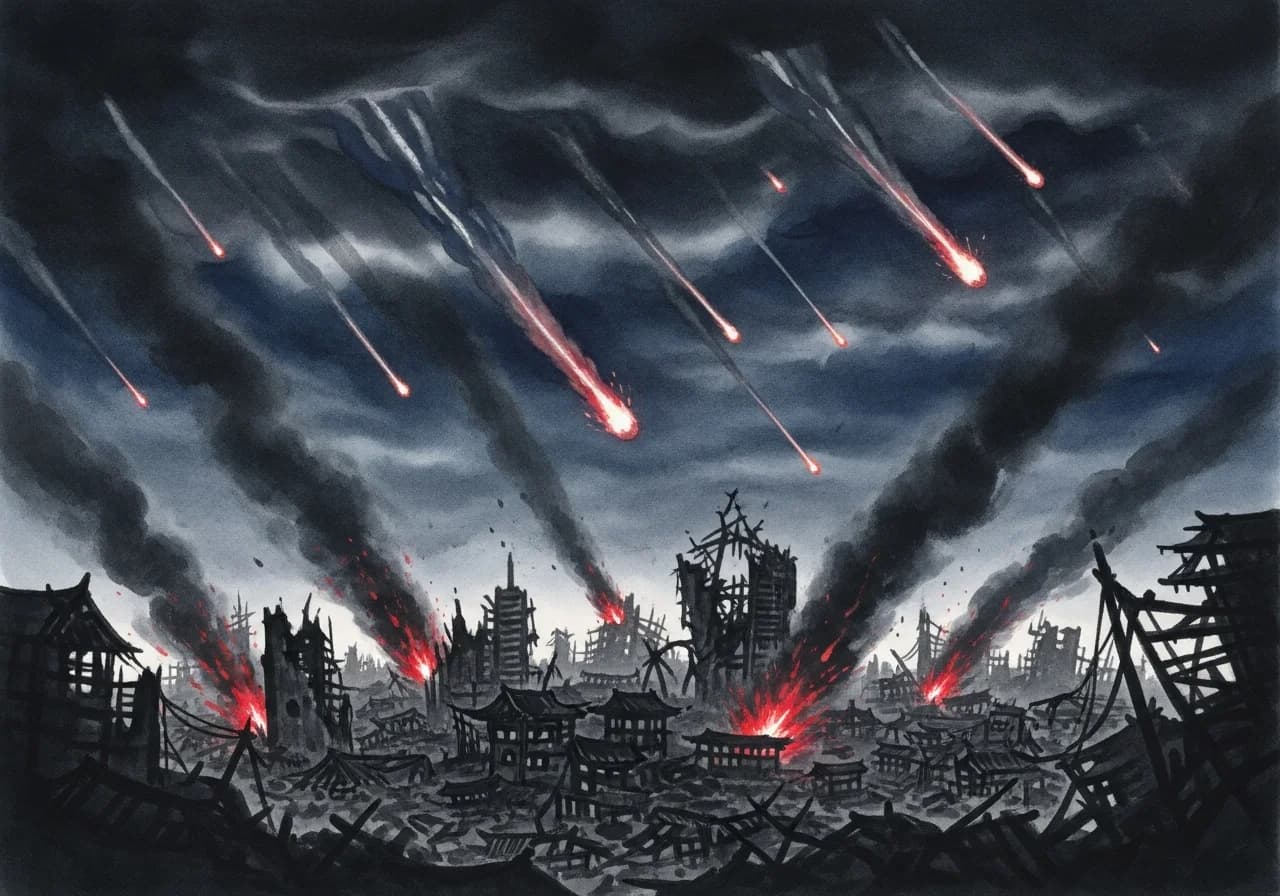
A dream of meteors destroying the world reflects deep fear of extreme, uncontrollable change. It warns of declining health or the emergence of problems too overwhelming to face alone. Korean interpretation suggests this is a signal to seek support from trusted people around you rather than trying to manage everything independently.
Earth Being Destroyed Dream
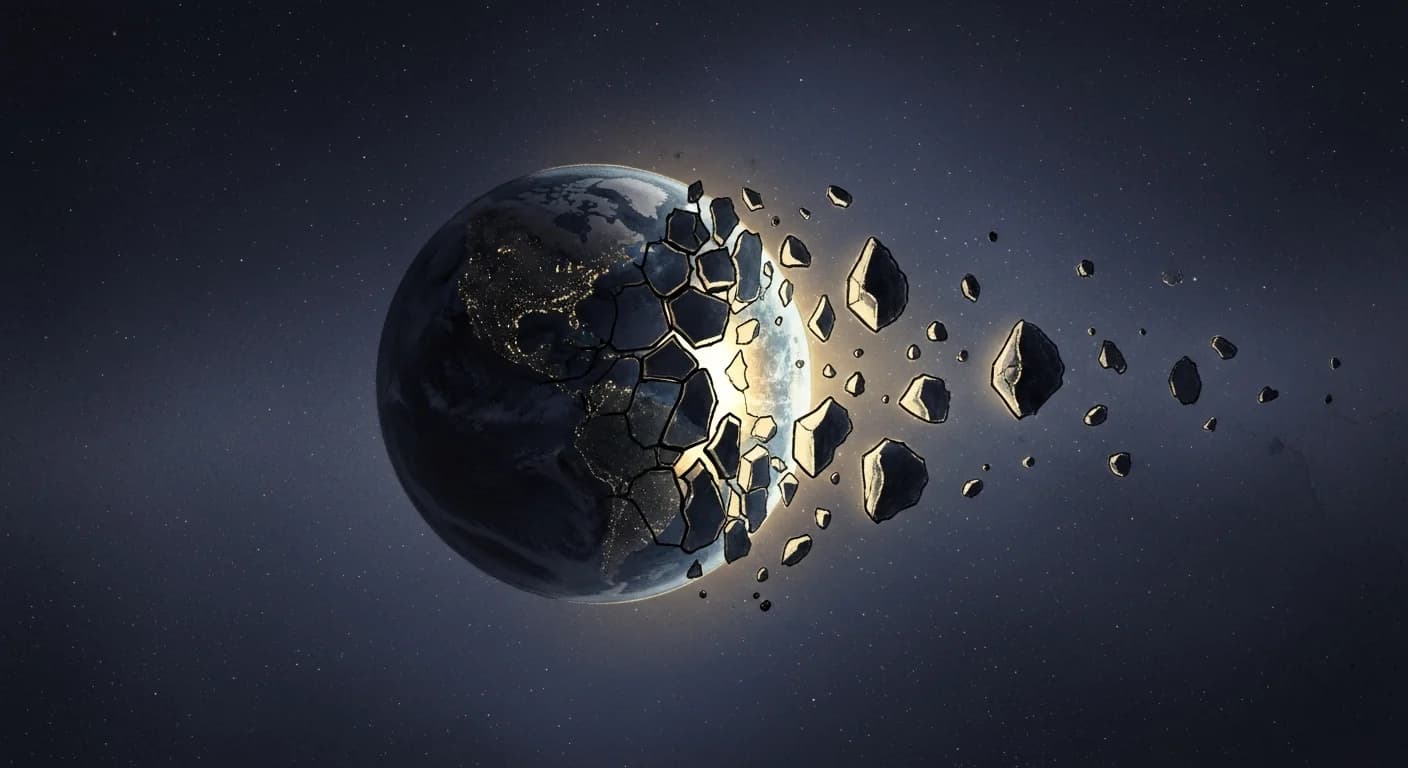
Dreaming of the Earth itself being destroyed reflects anxiety about the very foundations of your life being destabilized — your job, home, or core relationships. It signals that a period of fundamental change is approaching. Under the reverse-dream principle, this often means the current instability is about to resolve and a new foundation will form.
Nuclear War End of World Dream
A dream of nuclear war ending the world reflects intense fear and anger arising from interpersonal or social conflict. It projects anxiety about uncontrollable confrontation onto a cosmic scale, signaling unresolved tensions in your waking relationships that need direct attention. Finding healthy outlets for suppressed emotion is the key message.
Zombie Apocalypse Dream
A zombie apocalypse dream warns of isolation caused by self-centered behavior, or signals that an important life crossroads is approaching. If you survive the zombie horde, it is actually a strong auspicious dream: it means you can maintain your individuality and resist negative group pressure or mindless conformity in waking life.
Natural Disaster End of World Dream
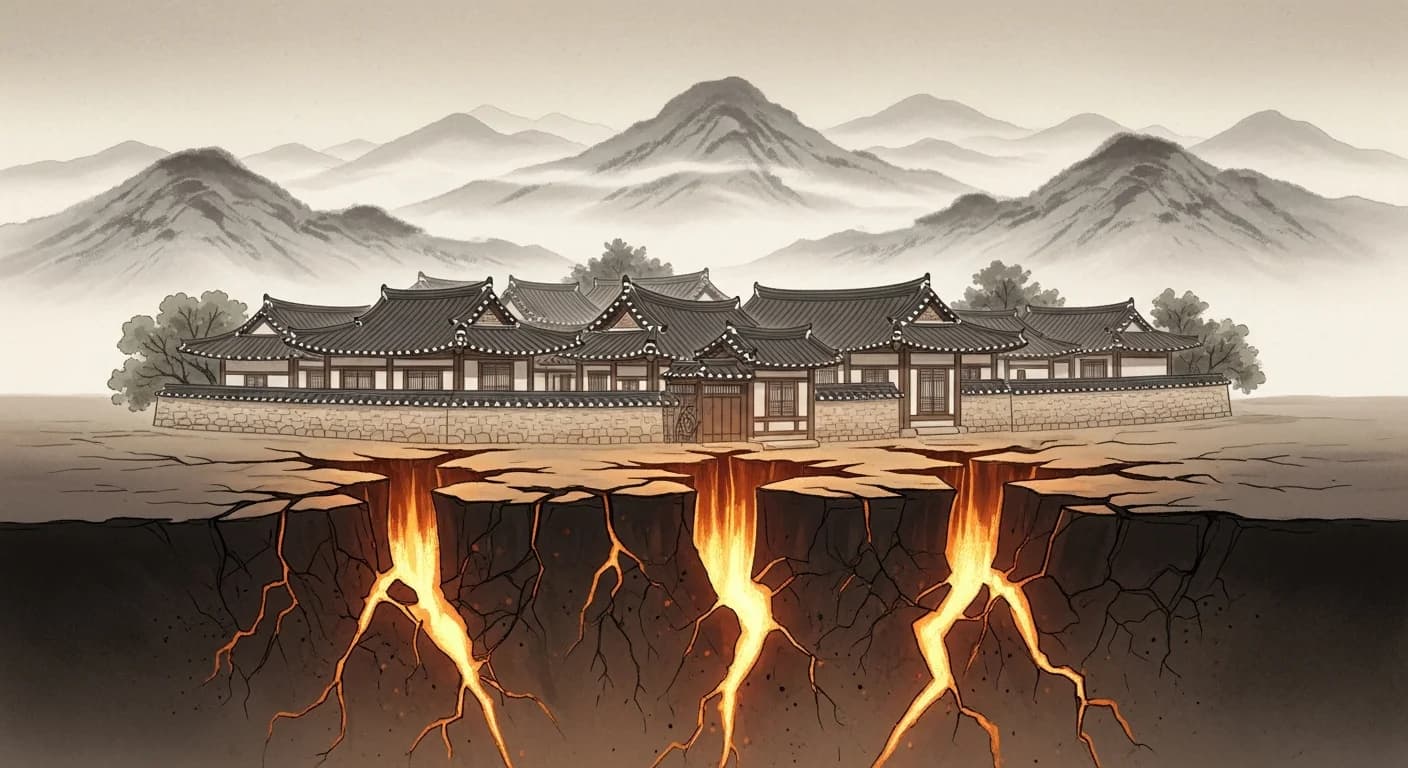
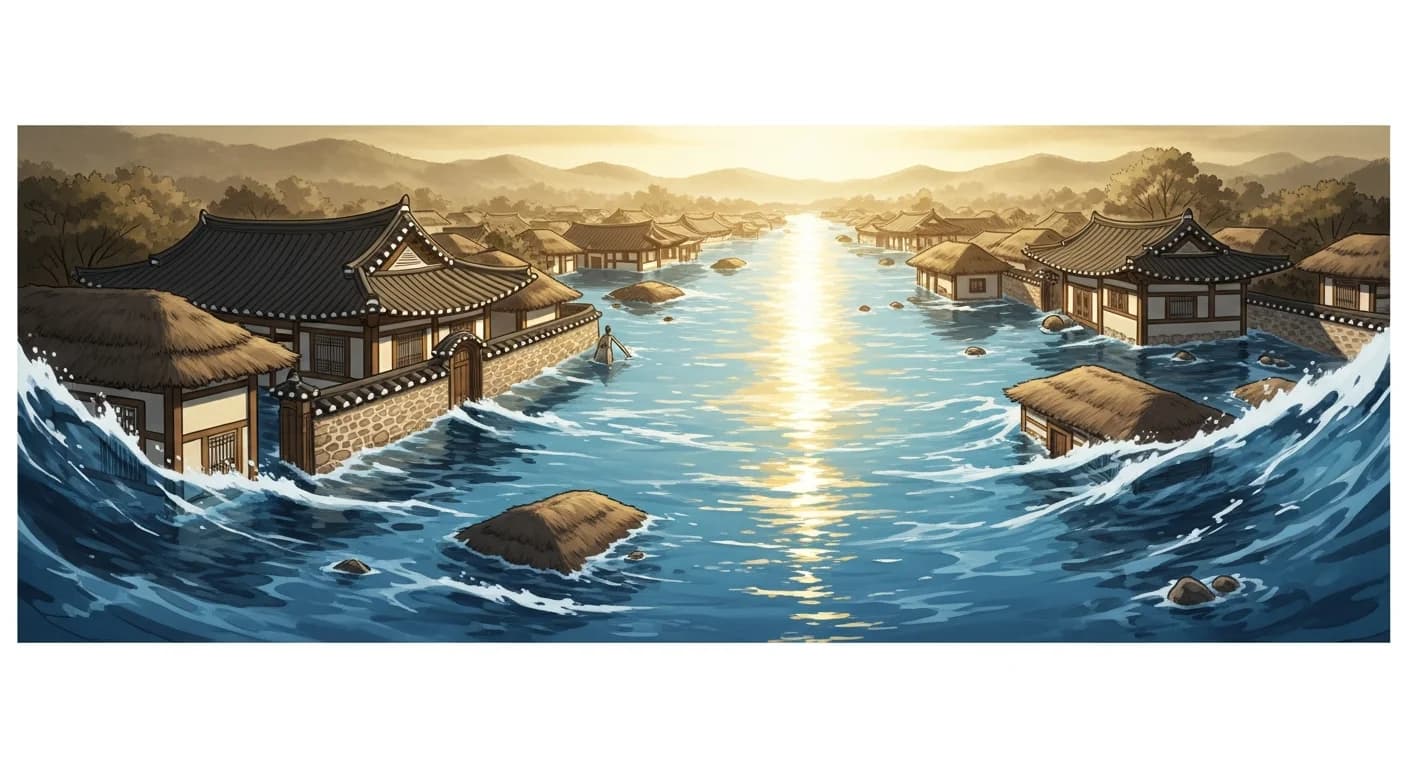
The world ending through floods, earthquakes, or volcanic eruptions symbolizes overwhelming emotional release or a massive life change. In Korean folk tradition, large bodies of water carry strong associations with financial fortune, so a flood-driven apocalypse dream may actually signal wealth flowing amid great upheaval — not purely a bad omen.
Surviving the Apocalypse Alone Dream
Being the sole survivor of the apocalypse is among the most powerfully auspicious dream scenarios in Korean tradition. It symbolizes extraordinary inner strength and a divinely protected opportunity for a completely fresh start. After this dream, it is considered an ideal time to launch new ventures, take on bold challenges, or embrace major life changes.
Experiencing the End of World with Family Dream
Going through the apocalypse alongside family carries a comforting, neutral meaning. It signals that your family safety net remains strong even in extreme adversity — a reassurance that family bonds will serve as your anchor through whatever difficult period lies ahead in waking life.
Post-Apocalyptic Ruins Dream
Standing amid the ruins of a destroyed world symbolizes complete renewal and an open-ended new beginning. All that came before has been cleared away, leaving a blank canvas to create something entirely new. Korean dream tradition reads this as a positive turning point — the threshold of total transformation rather than an image of despair.
Cultural Context
In Korean traditional dream interpretation, a dream of the world ending is not simply dismissed as a bad omen. The Korean art of dream divination — called 몽점 (mongjeom) — stretches back to the Three Kingdoms period (57 BCE–668 CE) and was shaped by the overlapping influences of Buddhism, shamanism (무속), and Confucianism. In the shamanistic worldview, dreams were considered channels through which spirits and ancestors delivered guidance to the living, making vivid or disturbing dreams especially worthy of attention rather than dismissal.
A key principle of traditional Korean dream interpretation is 반몽 (banmong) — the 'reverse dream' concept, the belief that a dream's content can manifest as its opposite in waking reality. Under this framework, an apocalyptic dream can be read as a signal that the current difficult period is about to end entirely, giving way to a new chapter. This is reinforced by Buddhist conceptions of rebirth and cyclical renewal: destruction is not the end but a necessary precursor to regeneration. In Korean oral tradition, accounts of people dreaming of total catastrophe and then experiencing remarkable positive life changes are not uncommon — the most dramatic endings, it seems, sometimes precede the most dramatic new beginnings.
Western Psychological Perspectives
Western psychology offers several compelling frameworks for understanding end-of-world dreams, each adding a different layer of insight to what Korean tradition already recognizes.
From a Freudian perspective, apocalyptic dreams are understood as eruptions of the repressed death drive — what Freud called Thanatos — combined with suppressed aggression from deep in the unconscious. The scale of destruction in the dream is proportional to how much anger, despair, or frustrated desire has been held down in waking life. For Freud, dreaming of total annihilation was a symptom of profound powerlessness or frustration in the dreamer's daily existence: the mind choosing the most extreme possible image to express what cannot be said aloud.
Carl Jung offered a more transformative reading. For Jung, the end of the world is a powerful archetype residing in the collective unconscious — shared symbolic material that all humans carry. He understood apocalyptic dreams as arising specifically when the old ego structure begins to collapse to make way for the deeper realization of the Self: a process he called individuation. What Jungians call 'ego death' — the necessary dismantling of old identity structures — almost always precedes a more integrated, whole personality. This is strikingly close to the Korean traditional view of 반몽: that destruction signals imminent renewal. Both traditions, arriving from entirely different directions, land at the same place.
Modern neuroscience frames this differently but compatibly. The human brain is evolutionarily wired to run worst-case simulations during sleep, rehearsing extreme threats to build adaptive resilience. Research shows that as collective anxieties rise — climate change, economic uncertainty, social fragmentation — apocalyptic dreams become more frequent across populations. This is not pathological; sleep researchers note that such dreams are healthy expressions of the brain processing emotional load and stress. The rise in shared catastrophic imagery in dreams during periods of global uncertainty provides striking evidence for Jung's concept of an activated collective unconscious.
What unites these frameworks — Freudian, Jungian, and neuroscientific — is the shared conclusion that an end-of-world dream is not a cause for alarm but an invitation: to examine what you are suppressing, what old structure is ready to be released, and what new beginning might be waiting on the other side of the destruction.
Frequently Asked Questions
An end-of-world dream may be one of the most dramatic visions the sleeping mind can produce — but both Korean tradition and Western psychology agree that it carries far more than simple terror. If you survived the apocalypse in your dream, trust the extraordinary resilience inside you. If you watched helplessly or fled in fear, that is your inner self asking you to face something you have been avoiding. Either way, the deepest message of the world-ending dream has remained the same across cultures and centuries: on the other side of every ending, a beginning is always waiting.