Failing an Exam Dream Meaning — Why Korean Tradition Calls It a Good Omen
If you dreamed of failing an exam and woke up with that hollow feeling in your chest, Korean dream tradition has a surprising message for you: this is one of the most auspicious dream types you can have. The concept behind it is 역몽 (yeongmong) — a 'reverse dream' — an ancient folk belief that holds the events of certain dreams are inverted in waking life, so that the more devastating the failure in the dream, the greater the real-world success. There's a catch, though — not every failing-exam dream follows the reverse pattern, and knowing which type you had completely changes the interpretation.
Failing an Exam Dream — The Auspicious Interpretation

The classic failing-exam dream — where you confirm the result, feel crushed, and walk home in defeat — is considered one of the most reliable auspicious omens in the Korean 해몽 (dream interpretation) tradition. Because it follows the 역몽 (reverse dream) principle, that wrenching moment of failure in the dream is read as the mirror image of what will happen in reality: top marks, a successful outcome, or smooth progress in whatever endeavors you are currently pursuing.
Crucially, the emotional intensity amplifies the omen. Being publicly shamed, scolded, or sobbing uncontrollably in the dream? That's considered an even stronger positive signal. The folk logic is elegant: the more painfully the dream defeats you, the more vividly the waking world will reward you.
For working adults who aren't students, dreaming of taking and failing an exam is interpreted as a signal that a desired job, promotion, or professional goal is about to be achieved — often through an unexpected opening. The exam in the dream represents any high-stakes real-life evaluation.
Failing an Exam Dream — Warning Signs and Inauspicious Patterns
Not every exam failure dream is a good omen. Three specific patterns are read as cautionary signals rather than reverse omens.
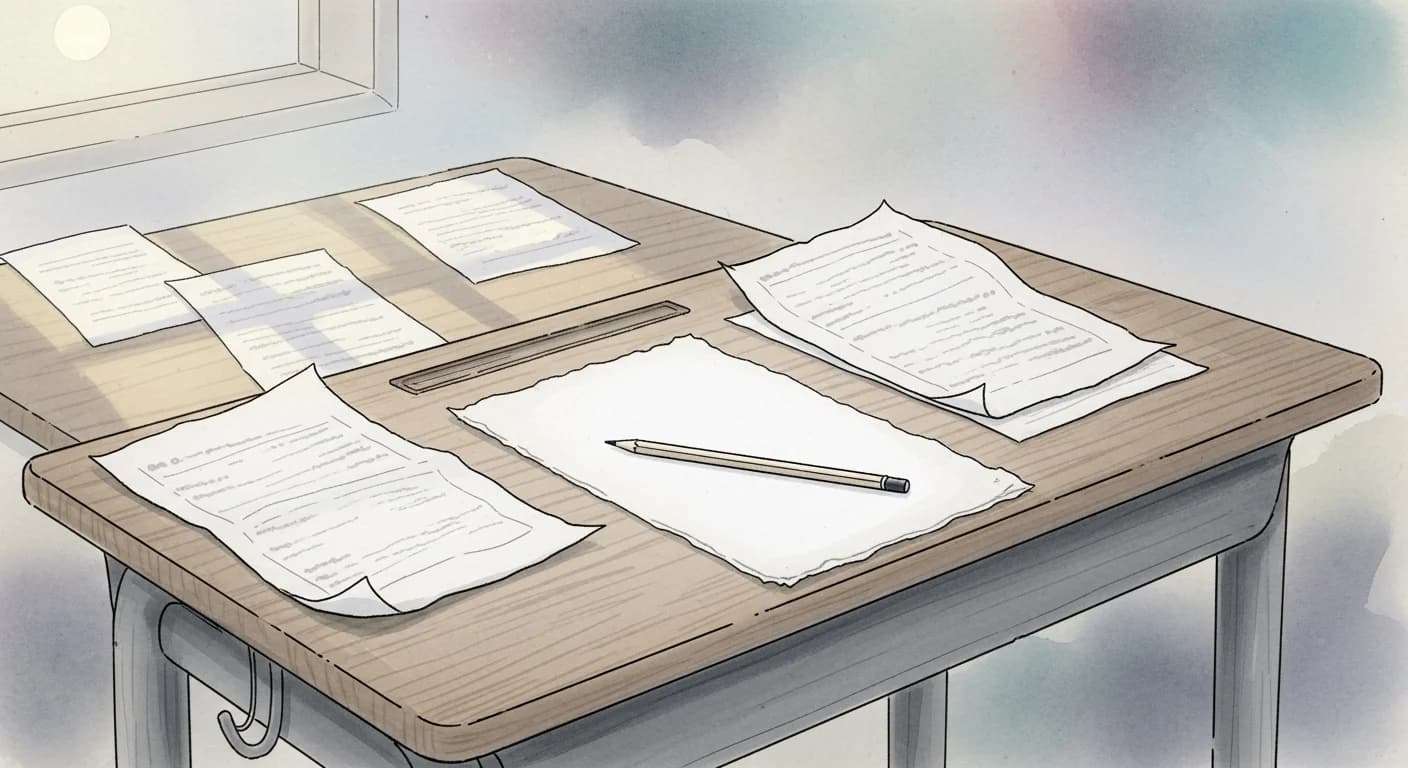
The blank answer sheet dream — where you sit down to the exam and find yourself unable to write a single word, or submit an entirely blank paper — is generally interpreted as a psychological mirror of current emotional state rather than a reverse omen. It symbolizes directionlessness, helplessness, and diminished self-confidence. If this is your dream, the message is to reassess your current direction and begin rebuilding through small, achievable goals.
Running out of time and having the exam paper taken away warns of real-world situations where important opportunities may be missed or deadlines may close in. It's an unconscious alert to check your current timelines and commitments.
A soiled or stained answer sheet signals that careless mistakes — rather than external factors — may stand between you and your goal. This is a cue for more thorough preparation and attention to detail.
Why Adults Keep Having Exam Dreams
One of the most common questions about exam dreams is: 'I graduated years ago — why am I still dreaming about school exams?' The answer is both psychologically and culturally illuminating.
The brain uses familiar symbolic frameworks to process unfamiliar stress. Your school exam is the most universally understood high-stakes evaluation most people have ever experienced — so when you face a job review, a major business pitch, or a critical interpersonal confrontation, the unconscious mind reaches for that ready-made symbol. In this context, a failing-exam dream is the unconscious acknowledging the real-world stakes while — if it follows the reverse pattern — simultaneously reassuring you that the outcome will be positive.
If the dream evokes strong emotion, the reverse omen reading applies. If you feel strangely detached or indifferent in the dream, it's more likely a neutral psychological reflection of current anxiety worth paying attention to.
Dream Variations
Dream of Failing the 수능 (CSAT)
Failing South Korea's 수능 (the national college entrance exam) in a dream is the single most cited example of the 역몽 reverse-dream principle among Korean students and parents. Receiving a low score or a rejection notice in the dream is interpreted as a positive omen that real academic or career goals will be achieved. The tradition holds that the stronger the grief felt in the dream, the greater the real-world joy will be. If you are preparing for the 수능 and have this dream, the folk advice is clear: don't be rattled — focus on rest and final preparation.
Dream of Failing a Job Exam
Failing a job application exam or interview in a dream is considered an auspicious omen that the desired position will soon be secured. For job seekers currently in the application process, this dream is read as a positive signal that good news is approaching. The stronger the disappointment felt in the dream, the more certain the traditional interpretation — your name is going on that offer letter soon.
Dream of Failing a Certification Exam
Receiving a failure notice for a professional certification in a dream follows the same reverse-omen logic: real-world certification success or professional recognition is on the way. If you are currently studying for a certification, this dream is an encouraging sign to continue with confidence rather than doubt your preparation.
Dream of Being Unable to Write Answers
When the pen won't work, words won't form, or you simply freeze at the blank exam paper unable to write a thing, this dream is read as a psychological reflection rather than a reverse omen. It points to real feelings of inadequacy, performance anxiety, or being overwhelmed by a current challenge. The prescription: self-compassion, incremental goal-setting, and addressing the root source of the anxiety in waking life.
Dream of Submitting a Blank Answer Sheet
Deliberately or helplessly submitting a blank paper signals a deep sense of having nothing to show — directionlessness and paralysis in the face of important choices. It often mirrors a real-life state of indecision. This is not a reverse omen but a direct message: concrete small goals and a track record of small wins can help restore confidence and a sense of forward motion.
Dream of Retaking an Exam
An adult who has long since graduated dreaming of retaking a school exam often reflects unresolved regret over past choices or a deep wish for a second chance. On the practical side, it can be the unconscious alerting you not to squander a real second opportunity that is present or coming — a re-application, a revised proposal, a renewed effort at something important. If you performed well in the retake dream, that's a positive signal for real-life second chances.
Dream of Name Not on the Pass List
Scanning the announcement board and not finding your name frequently follows the reverse-dream pattern — your name will actually appear in reality. However, if you feel emotionally neutral or flat while searching the list in the dream, it may simply be a neutral anxiety reflection rather than a strong reverse omen. The dreamer's emotional intensity in the dream is the key indicator.
Dream of Giving Up Mid-Exam
Walking out of an exam hall before finishing signals real-world overwhelm, escapism, or burnout in a current role or project. Unlike the failure-at-the-end scenarios, giving up mid-exam isn't typically read as a reverse omen — it's a direct signal from the unconscious that current pressures have reached a threshold, and genuine rest, boundary-setting, or restructuring of responsibilities is needed.
Cultural Context
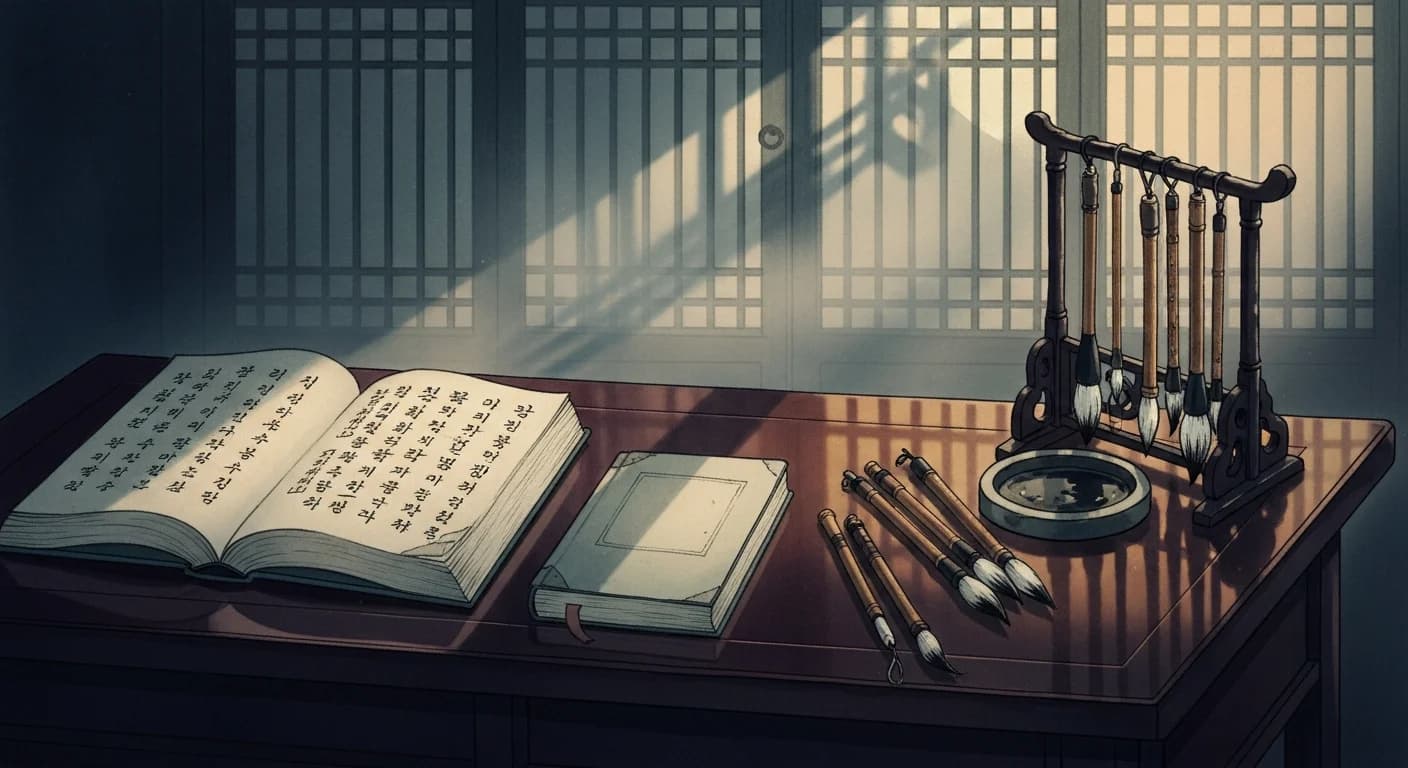
In Korea, exams carry cultural weight far beyond their literal function as evaluations. From the Joseon-era 과거 (gwageo) civil service examinations — which determined an official's rank and lifetime prospects — to today's 수능, civil service exams, and professional certifications, a single test result has historically defined social mobility and family honor. This profound cultural stake makes exam dreams among the most commonly reported dream types for Koreans.
The folk concept of 역몽 (yeongmong, 'reverse dream') is central to traditional Korean dream interpretation: a dream whose content predicts the opposite in waking life. Failing an exam dream is the archetypal 역몽 — the worse the failure in the dream, the better the real-world result is expected to be. Weeping over a failed result or being publicly shamed in the dream only amplifies the positive interpretation.
Modern Korean dream culture sits at a crossroads between traditional folk omens and psychological interpretation. Dreams of submitting blank papers or being unable to write are increasingly read as psychological mirrors of real anxiety rather than reverse omens — reflecting how contemporary Koreans integrate folk wisdom with modern self-awareness.
Western Psychological Perspectives
Exam dreams are among the most universally documented dream types in psychological literature — reported consistently across the United States, Europe, East Asia, and beyond. What makes the cross-cultural comparison fascinating is how differently the same dream content is interpreted depending on the cultural lens applied.
Freud, who catalogued exam dreams as one of the quintessential 'typical dreams,' made a striking observation: exam-anxiety dreams almost never connect to exams the dreamer has actually failed. Instead, they recall exams the dreamer feared intensely — but ultimately passed. His conclusion was that these dreams serve an anxiety-relief function: the unconscious reminds the dreamer that a previous terrifying trial was survived, offering implicit reassurance before tomorrow's challenge. There is a quiet resonance here with the Korean 역몽 tradition — both frameworks, separated by centuries and oceans, converge on the same counter-intuitive message: the dream of failure is actually a form of inner encouragement.
Jung read exam dreams through a richer symbolic lens. The exam represents a 'rite of passage' — a threshold moment of the Self. Failing it in a dream signals a confrontation with the Shadow: those unacknowledged parts of the psyche, including feelings of inadequacy, suppressed fears, and unresolved inner conflicts. For Jung, a failed exam dream is not a prediction but an invitation — the unconscious asking the dreamer to acknowledge and integrate the disowned aspects of the self as part of the individuation journey toward wholeness.
Modern psychological research adds a sociological twist: exam dreams are more frequent among working adults and middle-aged individuals than among actual students. The school exam is simply the most universally available symbol for high-stakes evaluation, so the brain recruits it whenever a job review, business pitch, or social judgment triggers performance anxiety. Research links frequent exam-failure dreams with perfectionism and heightened sensitivity to external evaluation — conditions that respond well to self-compassion practices and stress management.
Across all these frameworks — Korean folk tradition, Freudian dream theory, Jungian depth psychology, and modern cognitive research — a consistent thread emerges: the dream of failing an exam is not a forecast of failure, but a complex, multi-layered invitation to look honestly at what we value, what we fear, and what resilience we already carry inside us.
Frequently Asked Questions
In Korean dream tradition, failing an exam in your sleep is far more often a herald of success than a warning of failure. The 역몽 principle — that the worst-feeling dreams bring the best real-world outcomes — applies most powerfully to this dream type, and has been trusted across generations for good reason. If your dream involved weeping, shame, or deep disappointment, take heart. If your dream showed you a blank page with nothing to write, use it as a gentle signal to reconnect with your goals and rebuild confidence step by step. Either way, the dream is on your side.