Falling Into Water Dream Meaning — Good Omen or Bad?
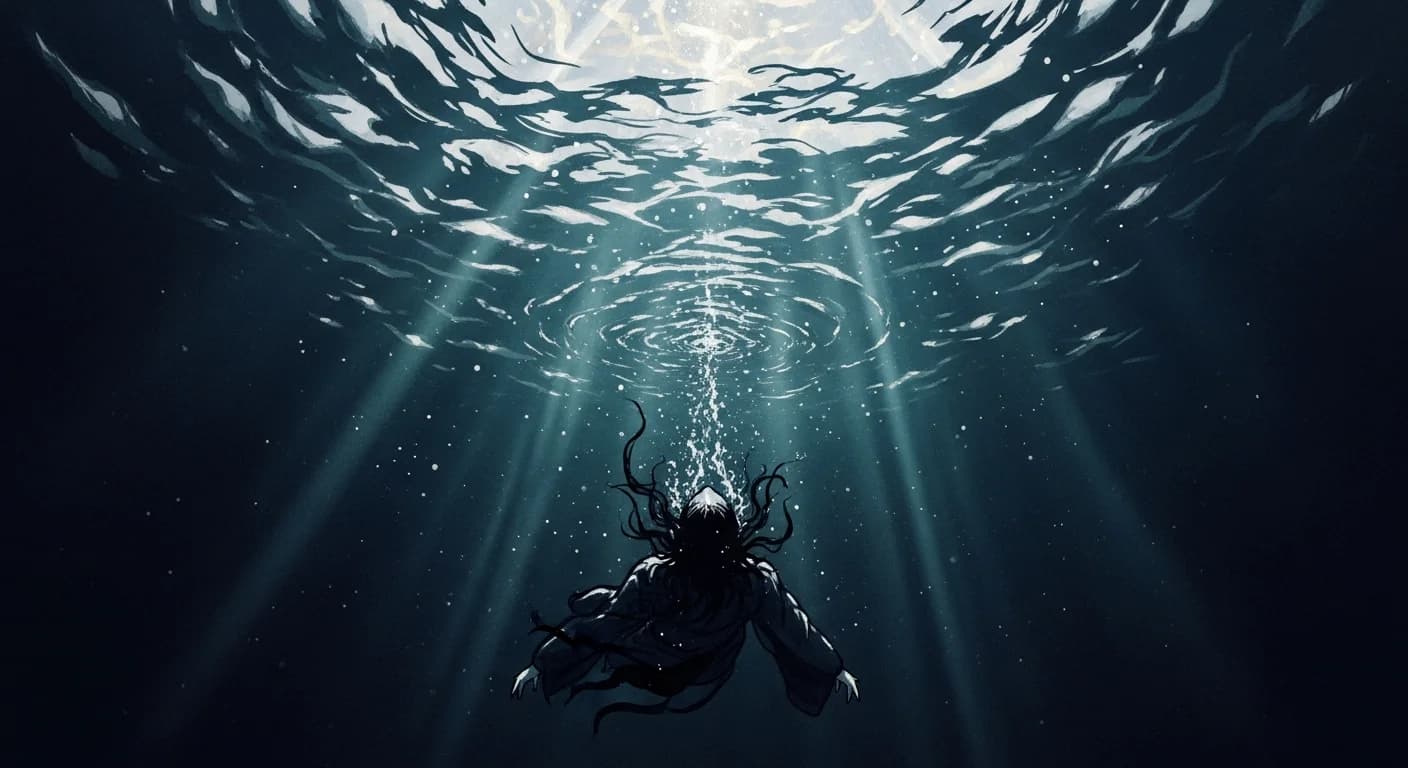
If you dreamed of plunging into water last night and woke up uneasy, Korean dream tradition may actually have good news for you — it all depends on what happened next. In the rich framework of Korean 해몽 (dream interpretation), falling into water is never simply good or bad: the water's clarity, the body of water, and crucially how the dream ended are everything. Falling into a clear river and swimming out is one of the stronger auspicious signs the tradition recognizes, foretelling the overcoming of hardship and the opening of new opportunity. Korean ancestors understood water as a sacred liminal space — the domain of the water deity — so falling into it in a dream was read as entering the divine realm itself, not merely a mishap. But here is the nuance worth knowing: turbid, dark, or freezing water, paired with a drowning outcome, flips the reading entirely. Let's decode exactly which dream you had.
Auspicious Signs: When Falling Into Water Is a Good Omen
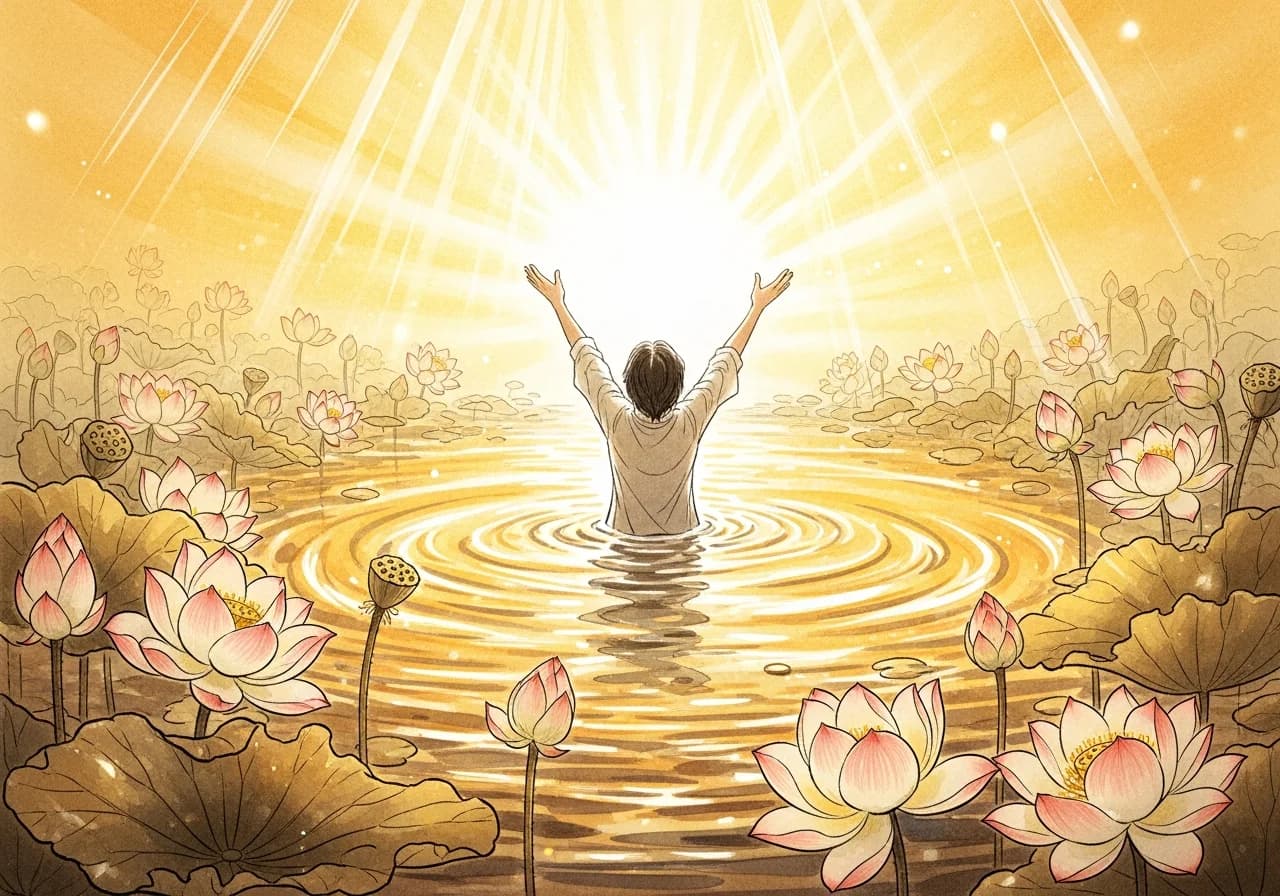
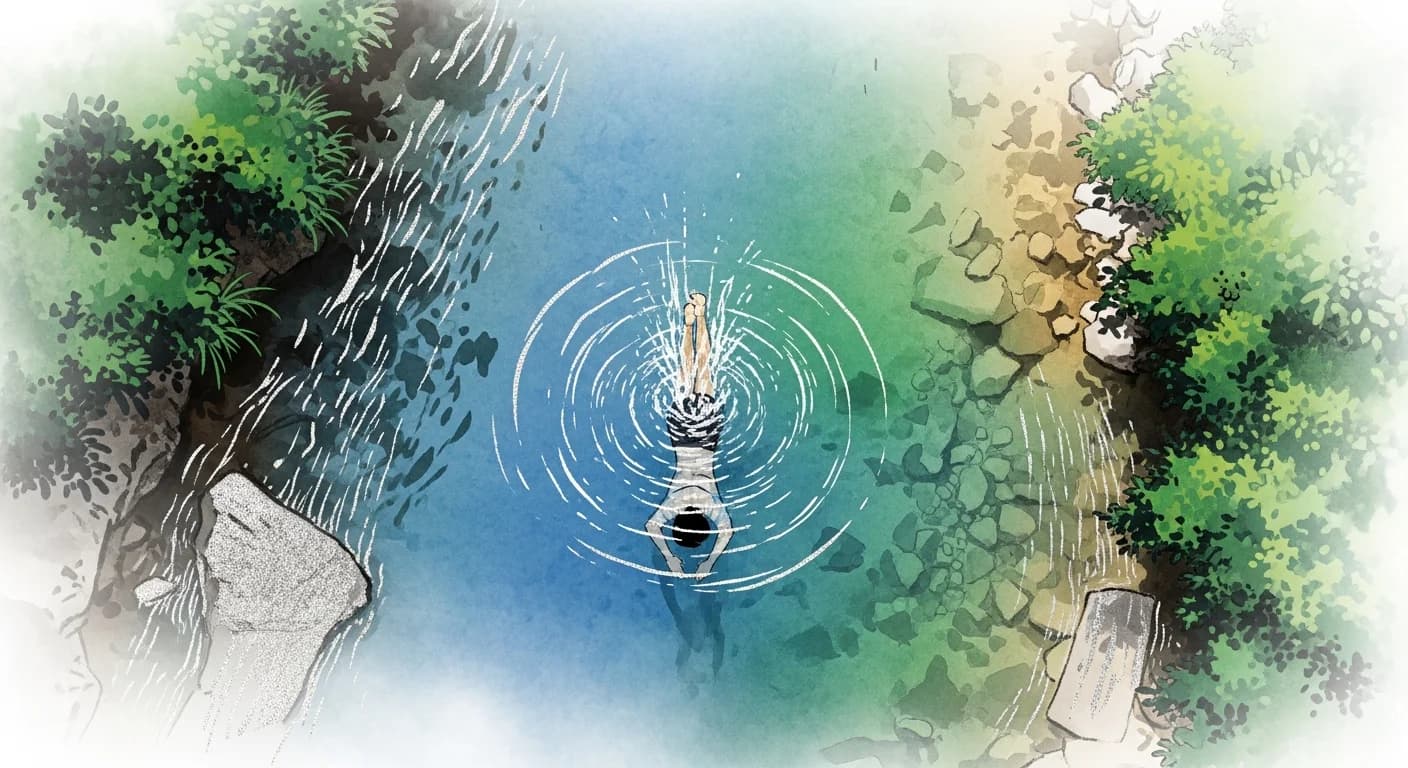
Falling into clear, clean water and then swimming out safely — whether under your own power or with someone's help — is a classic favorable omen in Korean dream interpretation. It signals that you will successfully navigate current hardships and move into a new phase of life. For business people this may foreshadow a key contract coming through; for employees it can indicate a promotion or the restoration of trust at work.
Escaping a river by your own efforts is equally auspicious, because the act of self-rescue symbolizes the will and capability to achieve your goals independently. In Korean 해몽, the outcome of a dream outweighs the event itself — it is not that you fell in, but how you came out, that determines the omen.
Perhaps the most counterintuitive reading: watching someone else drown in your dream is actually considered a good omen for you personally in Korean tradition, foretelling positive changes and approaching good fortune. The dreamer is the reference point — others' misfortune in the dream often signals their own luck on the horizon.
Inauspicious Signs: When Falling Into Water Is a Warning
Struggling in murky or polluted water, suddenly plunging into a deep sea without explanation, or falling into a dark well are the classic warning variations of this dream. These signal unresolved conflicts, financial setbacks, health concerns, or unexpected accidents in waking life.
Continuously flailing in a river without managing to escape is a particularly strong warning — it suggests you may find it difficult to break free from your current situation, and that problems could become prolonged. Active effort to seek support or reconsider your approach is the message here. A car falling into a river carries similar energy: a key plan or project may be derailed by unforeseen obstacles.
Actively jumping in to rescue someone who has fallen into water is also in the warning category. While the intention is generous, the interpretation cautions that helping others at great personal cost may delay your own goals or lead you into difficulties — the dream may be nudging you to consider where your energy is best directed right now.
Water Clarity and Temperature: The Master Key
The single most important factor in interpreting a falling-into-water dream is the state of the water itself. Clear, transparent water represents purification, healing, and fresh beginnings — consistently a favorable indicator. Murky, cloudy, or polluted water carries the opposite meaning: confusion, conflict, and difficulty.
Temperature also matters. Falling into ice-cold water in a dream points to emotional numbness and a sense of alienation in relationships — feelings may be 'frozen' or emotional connection with important people may be severed. Water that feels neutral or even warm, by contrast, tends to signal a psychological transition rather than a warning or a blessing.
The body of water further shapes the reading. Rivers represent flow, challenge, and personal momentum. The open ocean evokes vast and potentially overwhelming change. Swimming pools reflect social confidence (or the lack of it). Lakes speak to emotional expression and connection. Wells, historically the lifeline of the Korean household, carry meanings tied to family health and foundational stability.
The Outcome: Escape, Rescue, or Drowning
Korean dream interpretation places enormous weight on how a dream ends — and the falling-into-water dream is no exception. Swimming out under your own power is the strongest auspicious reading, symbolizing self-directed problem-solving and the strength to reach your goals. Being rescued by someone is also favorable, and may specifically foreshadow the arrival of a helpful person or benefactor in your life.
Failing to escape — struggling indefinitely or drowning — is the clearest warning sign, suggesting that current difficulties may not resolve quickly. Health, finances, and key relationships are all worth reviewing when this is the dream's ending.
There is a fascinating paradox in the case of falling in and then getting out: it is both an auspicious sign of overcoming crisis and, in traditional Korean interpretation, a warning that you may be refusing the help of a benefactor (귀인) — turning away an important opportunity or meaningful connection. The emotional tone of the dream is your best guide to which reading applies.
Dream Variations
Falling Into Clear Water Dream
Falling into clear, transparent water is an auspicious sign symbolizing inner purification and emotional healing. Even amid current difficulties, a positive turning point is coming, heralding a fresh start or psychological renewal.
Falling Into Muddy Water Dream
Falling into murky or dirty water warns of emotional confusion and loss of direction in waking life. Unresolved problems or relationship conflicts may worsen, calling for caution and careful judgment. An important exception: barely surviving in muddy water reverses into an auspicious sign of eventual resolution after hardship.
Falling Into the Ocean Dream
Falling into the vast deep ocean reflects fear of major life changes or overwhelming challenges — generally an inauspicious sign. However, if you fall into the sea and then swim out powerfully, it becomes a strong favorable omen of overcoming a great challenge. Whether the water is clear blue or dark and turbulent also influences the reading.
Falling Into a River Dream
Falling into a river expresses a desire to escape current circumstances and signals mental fatigue. Escaping the river on your own is auspicious, meaning you will overcome problems independently. Continuously struggling in the current warns of prolonged difficulty. Traditional Korean folk interpretation sometimes reads simply falling into a river as a positive omen in itself.
Falling Into a Swimming Pool Dream
Falling into a swimming pool represents obstacles arising as you pursue a goal, and reflects self-doubt or low social confidence. Clear pool water signals the ability to overcome difficulty; murky water suggests challenges may persist.
Falling Into a Lake Dream
Falling into a lake signifies emotional isolation and difficulty expressing yourself. It signals blocked communication with those around you, urging a more active effort to share feelings and reconnect emotionally.
Falling Into a Well Dream
Falling into a well is a clear warning omen, traditionally associated with illness or accidents. In Korean folk belief, the well was the lifeline of the home and community, so this dream suggests that fundamental life stability may be under threat. Pay particular attention to health.
Falling Into Water and Escaping Dream
Falling into water and getting out carries a dual Korean interpretation: auspicious as a sign of overcoming crisis, but also a warning — traditional interpretation reads it as rejecting the help of a benefactor (귀인), meaning an important opportunity or meaningful connection may be inadvertently turned away.
Falling Into Icy Water Dream
Falling into ice-cold water represents emotional numbness and a sense of alienation in relationships. Feelings may be frozen, or emotional bonds with important people may be severed. The dream calls for active effort to restore warmth in your connections.
Falling Into a Waterfall Dream
Falling into a waterfall symbolizes intense emotional upheaval and extreme stress. It indicates facing a sudden, dramatic change or a situation that feels out of control — the dream urges staying calm and embracing change with flexibility rather than resistance.
Dream of Family Member Falling Into Water
Seeing a family member fall into water is commonly interpreted as an auspicious omen foretelling good fortune for that person. However, if the family member drowns and cannot escape, it serves as a warning to pay close attention to that person's health or safety in waking life.
Dream of Rescuing Someone From Water
Actively rescuing someone from water is an inauspicious sign in Korean interpretation, suggesting that helping others at personal cost may lead to your own difficulty or delay your goals. By contrast, simply watching another person fall into water is a favorable omen — good luck is heading your way.
Cultural Context
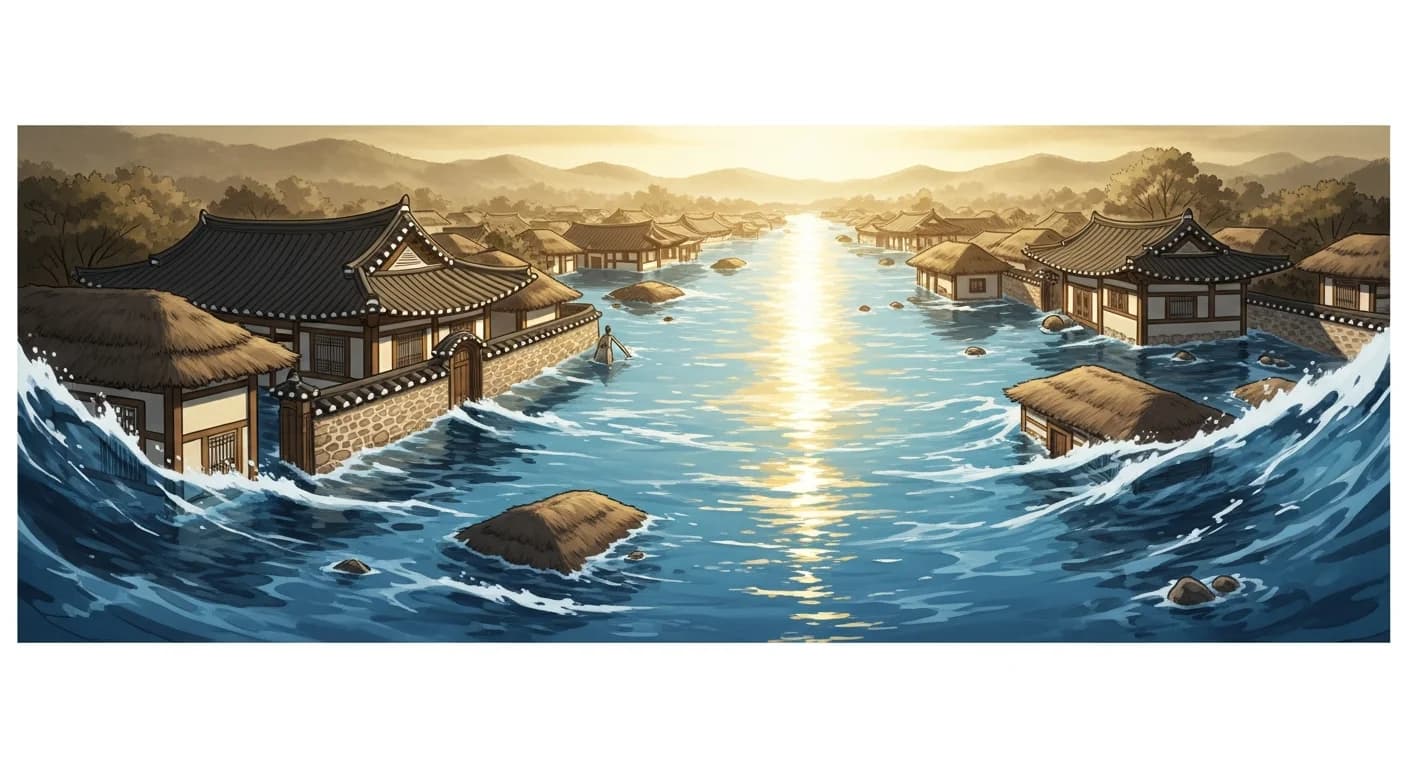
In Korean folk belief, water occupies a liminal space where life and death, purification and danger coexist. Under the framework of su-sin sinang (water deity faith), rivers, seas, wells, and springs were each governed by distinct divine beings, and to fall into water was to cross into the domain of those gods.
Korea's founding mythologies are deeply saturated with water symbolism. Jumong, founder of Goguryeo, was the grandson of Habaek, the river god. In the Silla kingdom, a dragon emerged from a sacred well to announce the birth of a queen. Water thus underpins divine birth and royal legitimacy as an archetypal space in Korean cultural memory.
Coastal communities revered Yongwang, the Dragon King, as the lord of abundance and protection over the sea. Agricultural villages honored him as the rain-bringer who determined the harvest. To fall into water in a dream was to enter this sacred threshold — whether the encounter became a divine blessing or a divine warning depended entirely on the dream's resolution: the clarity of the water and how the dreamer emerged.
During the Joseon era, pregnancy dreams (태몽) featuring retrieval of objects from water or encounters with aquatic creatures were considered auspicious omens predicting the birth of a precious child. The symbolism of water as origin, renewal, and the boundary between worlds has remained consistent across Korean history from ancient myth to contemporary dream interpretation.
Western Psychological Perspectives
Western psychology brings several illuminating lenses to the experience of falling into water in a dream, each adding a different dimension to what Korean tradition addresses through the language of omens.
From a Freudian perspective, falling into water symbolizes a return to the womb — an unconscious longing for safety and protection. The act of falling itself can represent anxiety about loss of control, or repressed urges and desires breaking through to conscious awareness. Freud would read it as contact with primal instincts residing in the id: something suppressed is pushing its way to the surface, and the water is the mind's image for the depth of that unconscious material.
Carl Jung went further, calling water 'the commonest symbol for the unconscious.' For Jung, falling into water is a descent journey — the ego moving down toward the deeper Self. This submersion can represent a confrontation with the repressed shadow (the parts of ourselves we deny or ignore) or a rite of passage toward psychological rebirth. Crucially, Jung saw this unsettling experience as ultimately positive: the individuation process, the integration of conscious and unconscious, often requires exactly this kind of uncomfortable plunge. Coming back up is the emergence of a more whole self.
Modern psychology takes a more practical view, reading these dreams as direct reflections of everyday stress and overwhelm. They appear most frequently before major decisions or during turbulent life transitions, and the emotional quality of the dream — fear, relief, numbness — functions as a fairly direct readout of the dreamer's current psychological state. Cognitive-behavioral therapists note that the brain uses sleep to simulate and process unresolved material; recurring water-falling dreams in particular often indicate persistent unprocessed anxiety.
Across cultures, the symbolism converges on transformation and threshold-crossing. Christian baptism evokes purposeful immersion as purification and spiritual rebirth. Buddhist teaching sees water as the mind's inherent fluidity and the possibility of release from attachment. Taoism holds water as the ideal symbol of yielding to the natural flow (the Tao) — powerful precisely because it does not resist. In Hindu tradition, water purifies karma and represents the source of new life. Across all of these frameworks, falling into water in a dream marks a pivotal transition: the death of an old self, and the potential emergence of a renewed one.
Frequently Asked Questions
Dreaming of falling into water is one of the most contextually rich dreams in Korean tradition — the same event carries radically different meanings depending on three factors: water clarity, the body of water, and the dream's outcome. Clear water and a successful escape signal that current hardships have an end. 해몽 is not fate — it is a framework for reading the signals your own mind is sending during sleep. If this dream visited you last night, hold onto those three details: what the water looked like, where it was, and whether you came out. They are the key to what your dream is telling you.