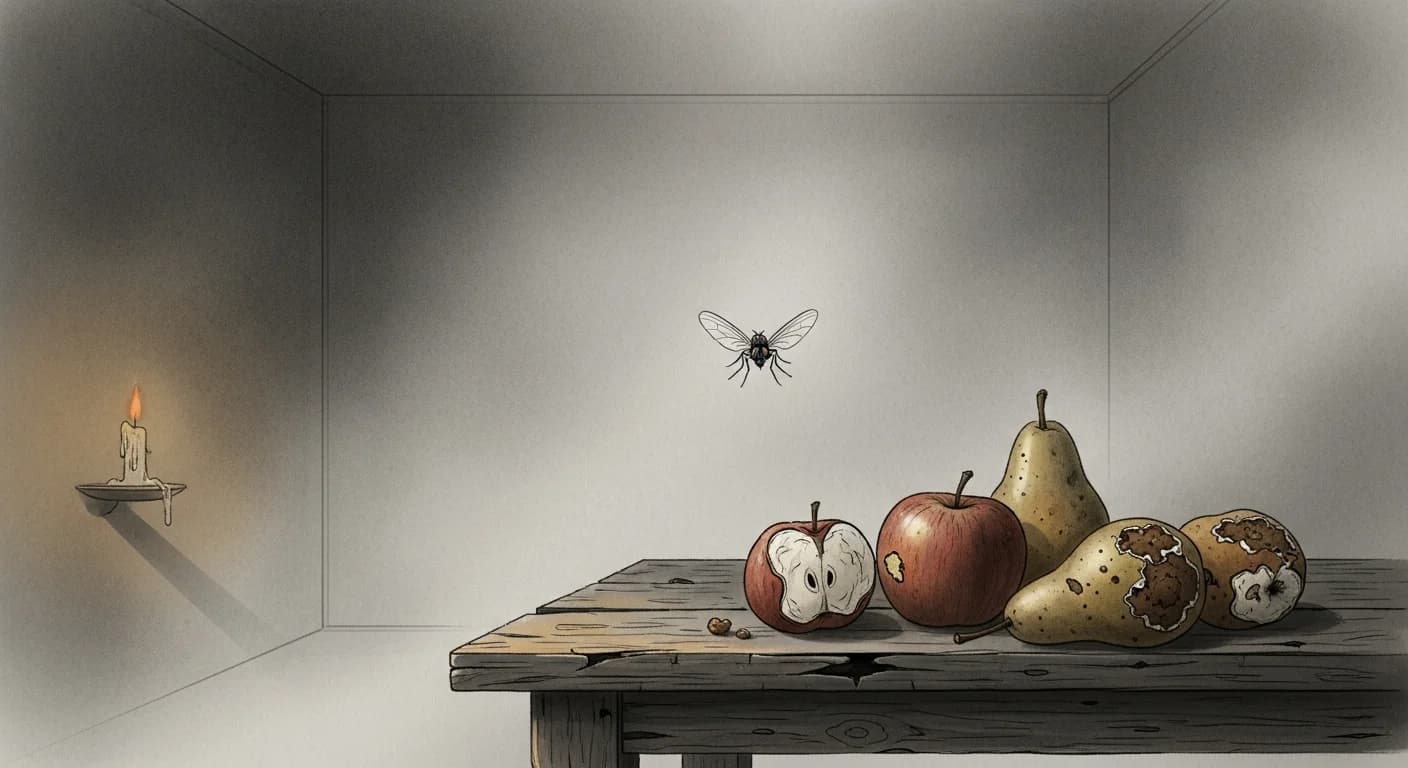
Fly Dream Meaning in Korean Folk Interpretation
If flies were buzzing in your dream last night, Korean dream tradition reads that as a direct signal about the people around you. Flies have symbolized petty adversaries and harmful gossip in Korean folk belief for centuries — their habit of swarming filth made them a natural stand-in for people who scheme behind your back. That connection runs deep, rooted in Joseon-era folklore where a sudden influx of flies into the home foretold misfortune for the household. Here's the twist, though: if you killed or drove those flies away in the dream, the interpretation flips entirely.
Overall Meaning of Fly Dreams
In Korean dream interpretation (꿈해몽), fly dreams are generally classified as inauspicious (흉몽). Flies, with their instinct to gather around decay and filth, became a cultural symbol for petty, disloyal, or envious people — what Koreans call 소인배 (soin-bae), meaning small-minded troublemakers. When flies appear in your dream swarming or descending on you, the tradition warns that such people may be active in your waking life.
That said, not every fly dream is bad news. The crucial variable is what happens in the dream. A dream of flies swarming is very different from a dream of killing flies. Context, action, and the emotions felt during the dream all shape the final interpretation.
Auspicious Fly Dreams (길몽)

Fly dreams become auspicious when you take action against the flies. The clearest good omen is catching or killing flies — this signals that you will overcome rivals or obstacles that have been blocking your path, and that long-standing problems will finally be resolved. For those who have been dealing with illness, killing flies in a dream can also be a sign of physical recovery.
Another auspicious scenario is watching a swarm of flies on a wall or ceiling suddenly depart and fly away. This symbolizes the lifting of burdens and the resolution of worries that have been weighing on you. Chasing flies away with your hand carries a similar meaning — your determination to escape a difficult situation will bear fruit.
Inauspicious Fly Dreams (흉몽)
A swarm of flies descending on you is one of the more serious warnings in Korean dream tradition. It signals that petty people may be slandering you, that trouble may befall elders or family members, or that multiple problems may arrive all at once. The dreamer is advised to be cautious in dealings with others during this period.
A fly entering your mouth is considered a strongly inauspicious sign specifically tied to health — it warns of possible illness and calls for prompt attention to physical well-being. Flies landing on food suggest conflict or betrayal in close relationships, with a risk of disputes or legal trouble. The persistent buzzing of flies (especially when that sound dominates the dream) warns that harmful rumors about you may already be circulating.
Fly Dreams and Health
Korean folk interpretation maintains a particularly strong connection between fly dreams and physical health. Flies entering the body, landing on the face, or swarming around you are consistently read as health warnings. If you have been experiencing fatigue or existing health issues, a fly dream of this nature is traditionally taken as a prompt to seek medical attention.
Conversely, killing flies in the dream is seen as a signal of recovery — if you have been unwell, this dream suggests improvement is coming.
Fly Dreams and Relationships
The interpersonal dimension is central to Korean fly dream interpretation. Flies represent people who operate in bad faith — gossips, slanderers, and two-faced acquaintances. A swarm points to multiple such people, while the buzzing sound specifically evokes rumors being spread behind your back. Flies on food suggest that someone close to you may act against your interests.
After a fly dream, it can be worth examining your social environment. Are there relationships that feel draining or untrustworthy? The dream may be your subconscious processing something your waking mind hasn't fully registered yet.
Dream Variations
Dream of Fly Swarm (Many Flies)
A swarm of flies is a strongly inauspicious sign in Korean tradition. It warns of troubles befalling elders or superiors, or an overwhelming pile-up of personal problems arriving simultaneously. The risk of slander and false accusations is also elevated. Extra caution in all dealings is advised.
Dream of Killing or Catching Flies
Killing or catching flies is one of the clearest auspicious signs in the insect dream category. It indicates that rivals or obstructive people will be overcome and desired outcomes achieved. For those managing illness, this dream can signal recovery. Long-standing problems that have resisted resolution are finally on their way out.
Dream of Flies on Food
Flies swarming over food — especially on a dining table — suggests conflict or betrayal in close relationships. There is a risk of quarrels or legal disputes. The image of contaminated food points to a relationship or situation that seems fine on the surface but has hidden problems. Be attentive to the dynamics in your closest circles.
Dream of Fly on Face / Fly Entering Mouth
A fly landing on your face or entering your mouth is interpreted as a health warning. The mouth-entry version is considered the more serious of the two — a direct signal to pay attention to your physical health, potentially prompting a medical check-up. Don't dismiss this as coincidence if you have been feeling run-down.
Dream of Flies Buzzing
When the prominent sensory element of the dream is the buzzing sound of flies — rather than the visual — it specifically warns of harmful rumors or damaging gossip being spread about you behind your back. In Korean folk tradition, the buzzing sound has always been associated with the sound of people whispering malicious things.
Dream of Chasing Flies Away
Chasing flies away by hand is an auspicious sign. It represents the will to free yourself from troublesome people or difficult circumstances, and the interpretation holds that this determination will succeed in reality. If you are currently dealing with a situation that feels suffocating, this dream is an encouraging signal.
Dream of Dung Flies / Blowflies
Dung flies or blowflies (particularly foul varieties) in a dream indicate that a morally questionable or dishonest person may be entering your life. Be cautious with new acquaintances who seem suspiciously eager or whose intentions are unclear. The specific association with filth amplifies the warning about moral character.
Dream of a Large or Giant Fly
The size of the fly in a dream corresponds to the scale of the problem it represents. A large or unusually giant fly signals proportionally greater worries and harder-to-resolve challenges ahead. If that large fly is circling you threateningly, it may be warning of a significant adversary or serious obstacle on the horizon.
Dream of Maggots (Fly Larvae)
Maggots writhing in rotting food or on a corpse portend property loss, complicated legal disputes, or illness. As a rare exception, an abundance of healthy, plentiful maggots can be interpreted positively as a sign of growing wealth — the emotional tone of the dream (disgust vs. a strange sense of plenty) is the key to reading it correctly.
Cultural Context
In Korean folk tradition, flies have been among the most inauspicious insects appearing in dream symbolism for centuries. Their biological habit of swarming around decay and filth made them a perfect cultural metaphor for 소인배 (petty, disloyal people), sycophants, and those motivated by envy or malice. Classical Korean texts and oral folklore from the Joseon dynasty frequently deploy flies as symbols of disloyal or disruptive characters.
From a shamanic (무속 신앙) perspective, flies carried associations with death energy. A sudden influx of flies into the home was traditionally seen as an ill omen foretelling misfortune for a family member. The buzzing sound itself symbolized nagging rumors and damaging gossip — an auditory metaphor that still resonates in Korean culture. The expression '파리 목숨' (fly's life) captures their cultural status as something trivial and disposable.
Despite this generally negative symbolism, Korean dream interpretation does not treat flies as purely passive bad omens. Dreams in which the dreamer actively kills or chases away flies are read as positive — defeating petty adversaries rather than suffering them. This active vs. passive framing is central to Korean dream philosophy: your role in the dream's narrative shapes its meaning as much as the symbol itself.
Western Psychological Perspectives
Western psychological traditions offer a rich parallel framework for understanding fly dreams, one that complements Korean folk interpretation in interesting ways.
From a Freudian psychoanalytic perspective, flies represent repressed anxiety, guilt, or unpleasant impulses that intrude upon the ego. A fly entering the body in a dream may reflect an unconscious fear of contamination — something 'dirty' from the outside world threatening to corrupt the self. Freudians might also connect this to the eruption of suppressed impulses (sexual or aggressive) breaking through into dream consciousness in a form the dreamer finds viscerally unpleasant.
Jungian analytical psychology connects flies to the 'Shadow' archetype in the collective unconscious. Flies universally carry images of decay, death, and pestilence across human cultures. The Hebrew name 'Beelzebub' — Lord of the Flies — represents a dark and destructive force, illustrating how deep this symbolic connection runs in the Western imagination. Encountering flies in a dream may represent the dreamer's confrontation with their own Shadow: the disowned, unacknowledged dark aspects of the self that must be faced for genuine psychological growth.
Modern cognitive psychology and neuroscience take a more grounded view. Fly dreams are often the brain's way of processing chronic low-level stress, accumulated minor irritations, and unresolved emotional tension. Flies rank among the most disgust-eliciting stimuli in waking life, and research on REM sleep suggests that high-disgust stimuli tend to recur in dreams as the brain works through emotional residue. Rather than a prophetic signal, the modern lens sees fly dreams as the brain doing emotional housekeeping.
Comparing the two traditions reveals a telling difference in emphasis: Korean interpretation focuses outward, on the social threat posed by petty adversaries and gossip, while Western psychology looks inward, at the dreamer's own anxiety and repressed material. Both traditions agree that flies signal something negative — but whether the source of that negativity is external or internal is precisely where the two frameworks diverge.
Frequently Asked Questions
Dreaming of flies doesn't automatically mean bad news is coming — but it does mean something worth paying attention to. Whether the dream is drawing your attention to the people around you, a health issue you've been putting off, or stress that hasn't been fully processed, the fly is asking you to look. If you killed the flies or drove them away, take that as encouragement: the obstacles in your path are beatable. Korean dream tradition has always been less about fate and more about readiness — and you're already one step ahead.
Related Dreams
Mosquito Dream Meaning — What Korean Dream Tradition Says
Cockroach Dream Meaning — Korean Dream Interpretation (꿈해몽)

Ant Dream Meaning — What Korean Dream Tradition Says About Your Ant Dream

Bee Dream Meaning: Korean Interpretation from Honeybees to Hornets

Spider Dream Meaning — The Dual Symbol of Fortune and Warning in Korean Dream Lore