
Flying High in a Dream — Korean Interpretation of Soaring to the Sky
If you soared freely through a vast, open sky last night, Korean dream tradition has very good news for you. For thousands of years, dreaming of flying high has been one of the most celebrated auspicious omens in Korean culture — so valued that people in the Joseon Dynasty would literally buy and sell such dreams as tradeable fortune. But here's the thing: not every high-flying dream is a good one. The height matters far less than how it felt. Joy means ascent; fear means something else entirely.
Flying High as Korea's Greatest Auspicious Omen
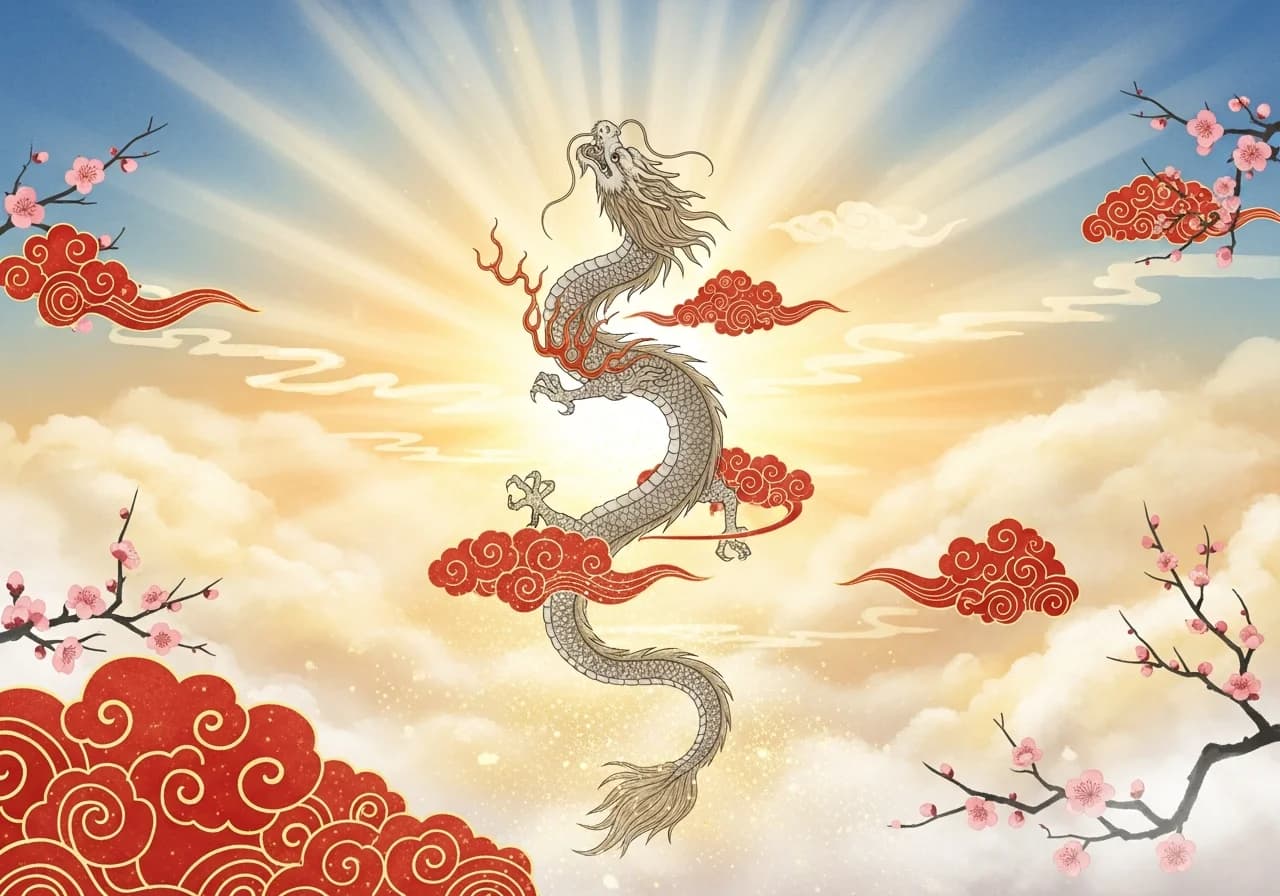
In Korean dream interpretation (해몽, haemong), freely soaring through a clear sky is ranked among the most auspicious of all dream omens. The altitude you reach in the dream directly maps to the scale of achievement coming in your waking life. If you've been working toward a promotion, expecting exam results, or launching a new business venture, this dream is a powerful sign that good news is on the way.
Landing safely after a high flight adds another layer of meaning — it's not just luck, but assured accomplishment. The image of touching down exactly where you intended to represents plans coming to solid fruition rather than fleeting good fortune. Dreaming of flying high while unclothed carries an even stronger omen: hidden talents are about to emerge, and every plan is set to unfold without obstruction.
The emotional quality of the flight is the final key. If you felt your heart soaring alongside your body, that feeling is the dream's confirmation.
When the Dream Warns: Fear and the Fall
Not every high-altitude dream carries good news. Flying too high and then losing control, or plummeting mid-flight, warns that you may be pursuing ideals that have drifted too far from reality. Korean dream interpretation reads this as a signal to examine whether overambition is quietly eroding your foundations.
Struggling to take off despite wanting to fly, or suddenly reversing direction mid-flight, suggests that an unexpected obstacle may be forming around current plans. There is also a traditional reading that links sudden falling dreams to health concerns, making it worth a check-in with your body.
The critical dividing line is always the emotion. Flying at tremendous height while feeling afraid is the unconscious mind's way of saying that current changes or goals are becoming an unsustainable psychological burden. Take this dream not as a sign to stop, but as a nudge to recalibrate your pace.
When Height Alone Doesn't Decide the Meaning
The richest dimension of flying-high dreams is how much the meaning shifts depending on factors beyond altitude alone. Flying low but feeling deeply at peace indicates genuine contentment with your current life stage — a positive message in its own right.
A slow, gradual ascent reflects inner calm and thoughtful self-reflection. You're growing steadily, without the need to rush. Rapid horizontal flight indicates strong, consistent progress along a path you've already chosen — momentum carrying you forward.
The environment of the dream matters too. A clear blue sky signals an open road ahead, while a sky full of dark clouds reflects real-world confusion or difficulty. If a companion flew alongside you, that relationship may be playing a more pivotal role in your life than you currently realize.
Wealth and Career Fortune
In Korean dream tradition, high-flying dreams are strongly associated with financial fortune as well. Soaring imagery correlates with rising income, business expansion, and successful ventures. Flying through golden light is particularly associated with imminent economic abundance.
For those starting a business or launching a new project, a high-flying dream is read as confirmation that the direction is right. The one caveat: if the dream ended with endless ascent and no sense of landing, a check on real-world foundations is still advisable.
Promotions, Exams, and Relationships
Among Korean office workers, the flying-high dream is perhaps most famous as the classic promotion omen. It signals that long effort is about to be recognized and that your leadership and capabilities are rising in others' estimation.
For students, the dream is embraced as a symbol of exam success — there's even a folk saying that entering the exam hall after a high-flying dream allows your true abilities to shine without anxiety.
In relationships, this dream suggests either a significant new ally entering your life or an existing relationship deepening to a new level. If an important meeting or interview follows a high-flying dream, approach it with genuine confidence.
Dream Variations
Flying Above the Clouds Dream Meaning
Flying above the clouds symbolizes transcending current difficulties and emotional turbulence to reach a higher level of achievement. It signals that confusion is clearing and a positive transformation is near — you are in the process of surmounting a major obstacle on the path to your goals.
Flying Among the Stars Dream Meaning
Flying among the stars at night is considered an exceptionally rare and supremely auspicious omen in Korean dream interpretation. It foretells the emergence of exceptional talent, extraordinary fortune, or the achievement of goals that seemed nearly impossible. This dream symbolizes vast untapped potential that is ready to transcend ordinary limits.
Flying High with Wings Dream Meaning
Growing wings and flying high is one of the most powerful dream omens. It indicates that new abilities or talents are awakening and that a complete transformation in social standing is imminent. This dream symbolizes self-made success achieved through your own power, accompanied by genuine admiration from those around you.
Riding a Dragon Flying High Dream Meaning
Riding a dragon soaring into the sky is the ultimate auspicious omen in Korean dream tradition, historically associated since the Joseon Dynasty with passing state examinations, securing high office, and gaining great authority. It specifically foretells a sharp rise in social standing aided by a powerful benefactor, or the arrival of a life-defining turning point.
Flying Like an Immortal Sage Dream Meaning
Flying freely on clouds like a Taoist immortal sage foretells becoming a deeply influential leader within an organization or community. Connected to Taoist ideals of freedom from worldly desire, this dream symbolizes a noble spirit and lofty aspirations, indicating both worldly achievement and genuine spiritual and personal maturity.
Flying Higher Than Mountaintops Dream Meaning
Looking down on mountain peaks from above signals surpassing all major obstacles and competitors to reach the summit of your field. The dreamer is destined to develop the leadership qualities that guide others, marking the beginning of a life peak period — the best years you've been working toward.
Flying High at Great Speed Dream Meaning
Flying high at great speed symbolizes perfect adaptability and skill at navigating challenges. It reflects a strong, focused will driving relentlessly toward goals and foretells that plans currently in motion will unfold smoothly and rapidly, without the delays or resistance that have held things back.
Flying High with Fear Dream Meaning
Dreaming of flying high while feeling afraid or anxious is an important unconscious signal: outward ambition may appear intact, but internally the situation or goals have become a significant psychological burden. The dream calls for releasing excessive self-imposed pressure and recalibrating to a more sustainable pace.
Falling from High Flight Dream Meaning
Suddenly falling while flying high warns that a current project faces serious disruption, or that overconfidence may be set to meet the wall of reality. Korean dream interpretation frames this not as certain failure, but as a timely opportunity to stabilize, reassess, and correct course before pushing forward again.
Flying Up to Outer Space Dream Meaning
Flying beyond Earth into outer space is an exceptionally rare and supremely auspicious dream, foretelling extraordinary achievement that surpasses imagination. It symbolizes a yearning for unexplored possibilities and potential that transcends ordinary limits — interpreted as a sign of emerging exceptional ability or historically significant accomplishments.
Cultural Context
To understand why Korean dream tradition holds flying dreams in such high regard, you have to understand how differently ancient Koreans conceived of the sky itself. The heavens (天, cheon) were not a physical expanse — they were the sacred domain of deities and ancestors, the supreme authority governing human fate. Ancient Koreans revered the sun as the master of heaven and earth, and rulers were understood as descendants of light, their authority literally flowing downward from the sky.
The concept of 한울 (han-ul, meaning 'great enclosure') embedded the belief that humans and the cosmos are fundamentally one. Flight, in this worldview, was more than freedom — it was a movement toward divine connection. The image of the 신선 (sinseon), the Taoist immortal sage who rides clouds and soars freely through the heavens, embodied the ideal human: liberated from worldly desire, elevated beyond ordinary existence.
During the Joseon Dynasty (1392–1897), dreams of dragons ascending to the sky became the quintessential auspicious omen, invariably read as a sign of passing the state civil service examinations or attaining high government office. The cultural weight attached to auspicious dreams became so significant that the practice of buying and selling favorable dreams — 꿈 매매 (kkum maemae) — literally existed as a social custom. If you woke from a fortunate dream and sold it to someone else, the fortune was believed to transfer along with it. This practice reveals something deep about Korean dream culture: dreams were not dismissed as noise from a sleeping brain. They were treated as genuine transmissions of meaning, as real and valuable as any tangible asset.
Western Psychological Perspectives
Western psychological traditions approach the flying dream from a very different starting point than Korean folk tradition — yet they arrive at surprisingly convergent conclusions about what it means.
Freud interpreted flying dreams as disguised expressions of repressed unconscious desires. Soaring to great heights, he suggested, could connect to childhood bodily memories — the sensation of being lifted or of leaping — as well as to libidinal impulses seeking escape from the constraints of waking life. For Freud, the flying dream was a classic case of wish fulfillment: suppressed drives for power, freedom, or release finding an outlet through uninhibited aerial imagery.
Jung pushed the interpretation in a richer direction. He understood flying dreams not as symptoms of repression but as archetypal images emerging from the collective unconscious — the vast inherited storehouse of symbols shared across all of humanity. Flying high, in Jung's framework, may symbolize the process of individuation: the ego moving toward its higher potential, the 'Self.' It resonates with the universal archetype of the hero's ascent — the mythological pattern of the chosen individual rising above ordinary life toward a higher calling. Jung read this not as a pathological wish, but as a genuinely positive signal of psychological growth and approaching self-realization. The overlap with Korean tradition's reading of flying as imminent social and personal ascent is striking.
Modern neuroscience explains the mechanism differently. Flying dreams tend to occur during REM sleep, when the prefrontal cortex's self-monitoring systems weaken, gravity perception is released, and the brain runs simulations of unconstrained movement. Research shows that the dopamine-driven goal-pursuit system remains active during dreaming, meaning real-world ambitions and achievement motivation can manifest as flight imagery. Both threat simulation theory and emotional regulation theory interpret high-altitude flying dreams as the brain's way of rehearsing mastery and reinforcing positive self-efficacy.
Across cultures and centuries — from Korean ancestral tradition to Freudian psychology to modern neuroscience — flying high carries one consistent core message: something in you is reaching upward, and it has real energy behind it.
Frequently Asked Questions
Dreaming of soaring high through the sky is one of the most beloved and celebrated omens in Korean dream tradition — a sign that your life is moving upward. Whether it predicts a promotion, an exam pass, a business breakthrough, or simply a period of renewed confidence and clarity, the high-flying dream carries a consistent message across thousands of years of Korean cultural wisdom: your aspirations have weight, and the path upward is opening. Remember the feeling when you woke. If it was joy, you have very good reason to move forward boldly. If it carried fear, your unconscious is offering you something equally valuable: an honest map of where you need to ease the pressure. Either way, the sky is telling you something worth listening to.
Related Dreams

Flying Dream Meaning in Korean Tradition — The Complete Interpretation Guide

Flying Low Dream Meaning — Korean Dream Interpretation

Falling Dream Meaning — Is It Always a Bad Omen?

Dreaming of Climbing a Mountain — What It Means in Korean Tradition

Climbing Stairs Dream Meaning — What Korean Dream Tradition Says
Dragon Dream Meaning — Korean Dream Interpretation Complete Guide