
Forgetting Dream Meaning — What You Forget Changes Everything
You wake up from a dream where you forgot something critical—an exam date, a name, which way to go—and the anxiety lingers. Forgetting dreams are among the most universal anxiety dreams across cultures, and in Korean dream interpretation (꿈해몽), they carry specific, nuanced meanings depending on exactly what was forgotten. But here's the twist: crying bitterly over something you forgot, or finding it by the dream's end, may actually be your luckiest dream of the year.
Inauspicious Interpretations — Anxiety, Loss, and Warning Signs
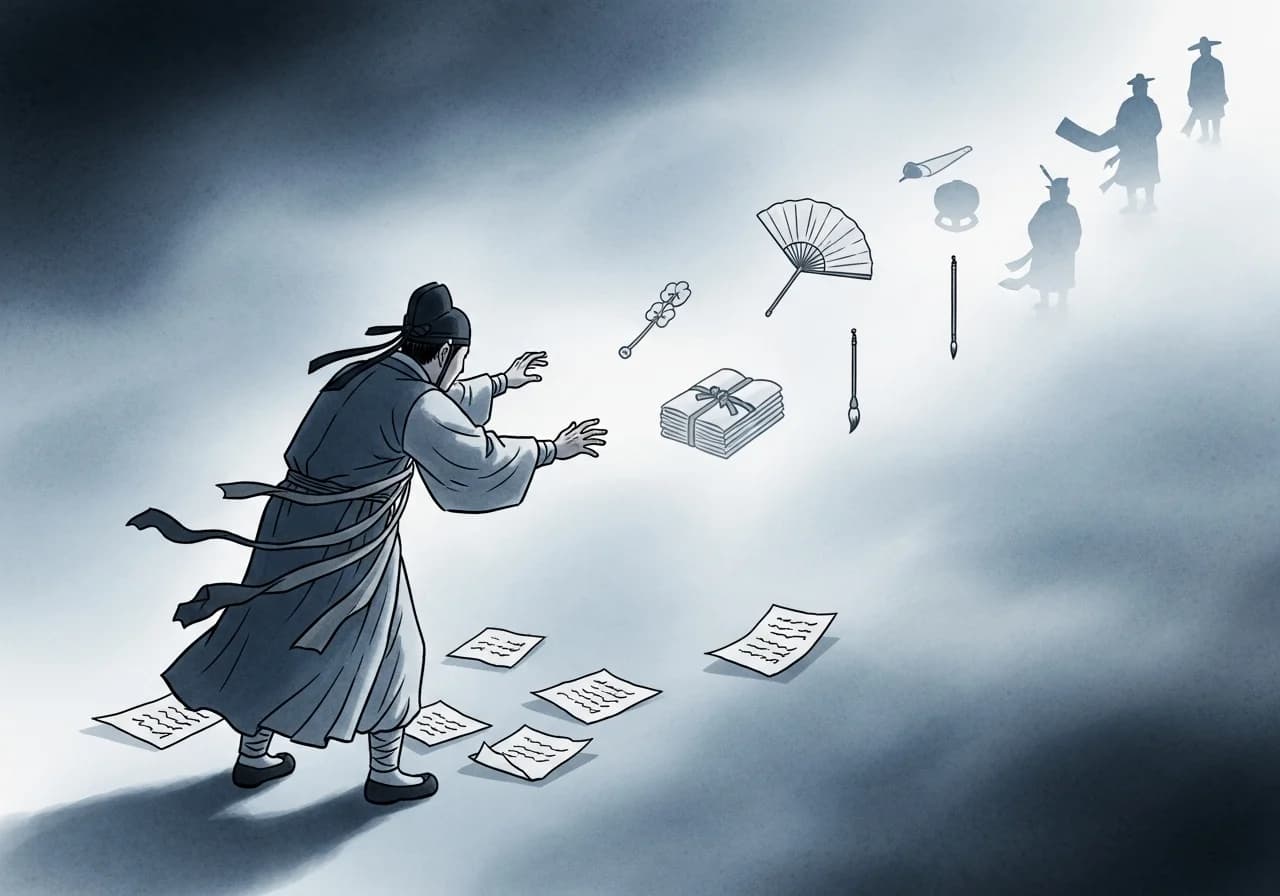
Most forgetting dreams reflect real-world pressure and a fear of losing control. Dreaming of forgetting an important appointment or exam date signals extreme psychological pressure around deadlines and responsibilities. Plans may be disrupted by unforeseen variables—double-check your critical schedules.
Frantically searching for a misplaced object often foreshadows loss of control, declining confidence, or impending loss of rights and wealth. Losing wallets, keys, or important documents specifically warns of financial loss or workplace conflict. Forgetting someone's name suggests a relationship growing distant or an important connection fading. Getting lost because you forgot the way signals that you're losing direction in a current endeavor, or that a crucial opportunity may slip by.
Auspicious Interpretations — The Paradox of Forgetting and Recovering

Not all forgetting dreams are inauspicious. Crying bitterly over something you've forgotten is paradoxically one of the strongest good-omen dreams in Korean tradition. Grief in dreams often signals a reversal of blocked fortune in real life—long-standing problems resolve, and good news arrives.
Finding a forgotten object or recovering a lost memory within the dream is equally auspicious: it foretells restoration of honor or wealth, and unexpected assistance from a benefactor. An opportunity once abandoned may reopen, and a damaged relationship may heal.
Neutral — Your Mind Signaling Mental Overload
Recurring forgetting dreams—especially for those not normally forgetful—may reflect mental fatigue or stress overload rather than a specific omen. The subconscious is signaling a need for rest, regular sleep, and a slower daily pace. If this dream repeats, take stock of unfinished obligations lingering on your mental task list, prioritize sleep hygiene, and establish a more regular routine. The dream is less a prophecy and more a diagnostic.
Dream Variations
Dreaming of Forgetting an Important Appointment
This dream signals that the burden of responsibilities has peaked in waking life. Stop postponing important decisions or conversations. If this dream recurs, reassess how you manage commitments and deadlines—the problem may be systemic, not situational.
Dreaming of Forgetting Your Exam Date
An extreme anxiety response to being evaluated—career, academic, or social. While it warns of missing a critical opportunity, it equally reminds you that thorough preparation can still turn things around. If you have an important test or evaluation ahead, let this dream spur preparation rather than paralysis.
Dreaming of Forgetting Someone's Name
Suggests a bond weakening or severing. From a Freudian lens, the unconscious may be suppressing emotions tied to that person's name. If someone close, proactive communication can help repair the relationship before the distance becomes permanent.
Dreaming of Forgetting the Way and Getting Lost
Symbolizes losing direction or life purpose. Forgetting the way to familiar places—work, school, home—signals deep anxiety or a sense of crisis in those specific life domains. If you eventually find your way in the dream, it's a hopeful sign you'll overcome the challenge.
Dreaming of Forgetting Where You Put Something
Reflects a loss of everyday control. The specific item matters: wallet = financial anxiety, keys = inability to find solutions, phone = communication breakdown. Finding the object in the dream suggests the problem resolves itself—losing it without recovery is the more concerning version.
Dreaming of Forgetting Homework or an Assignment
Common even in adults, this dream is the subconscious reminding you of an unfinished obligation or a lingering task. If you've been procrastinating on something significant, this is your cue to begin. The dream recurs until the obligation is addressed.
Cultural Context
In Korean traditional dream interpretation (꿈해몽), forgetting dreams are typically classified as a subcategory of 'loss dreams' (잃어버리는 꿈). Since ancient times, forgetting something in a dream was believed to foreshadow real-world losses of wealth, relationships, or health.
However, a notable counter-tradition holds that weeping bitterly over something forgotten is actually a good omen—blocked fortune reverses and positive events follow. This reversal logic is deeply embedded in Korean folk wisdom: extremes in dreams often signal their opposite in reality.
Joseon-era dream books attributed memory-loss dreams to 'excess heart fire' (심화, 心火), interpreting them through a Korean traditional medicine lens as an imbalance between the heart organ and the spirit (精神). When heart fire rises, sleep becomes shallow, dreams multiply, and mental clarity diminishes—a description that maps closely onto modern stress physiology. In modern Korea, recurring forgetting dreams are still popularly linked to signs of health decline or excessive mental burden.
Western Psychological Perspectives
Western psychology offers rich frameworks for understanding forgetting dreams that complement Korean traditional interpretations.
Freud interpreted forgetting within dreams not as memory error but as the operation of psychic censorship. Forgetting a name or important thing in a dream represents displacement—the ego blocking repressed desires or guilt connected to that object. The unconscious disguises its wish-fulfillment by enacting the very act of forgetting what the dreamer unconsciously wants to forget. If you forget a specific person's name, look there for unresolved emotion.
Jung viewed forgetting dreams as tension between the ego and the unconscious. The act of forgetting in a dream signals Shadow elements—repressed emotions, unfinished tasks, or aspects not yet integrated in the individuation process—pushing toward the surface. What was forgotten in the dream can serve as a map to what the dreamer is avoiding in waking inner life.
Modern cognitive neuroscience links forgetting dreams to emotional memory processing. A 2024 study in Scientific Reports showed dreams selectively consolidate emotionally significant experiences and erase non-salient ones. The 'clean slate hypothesis' proposes that dream-induced forgetting resets the brain for each new day. Recurring forgetting dreams may indicate this processing system is overloaded due to chronic stress or disrupted sleep quality.
Cross-culturally, forgetting dreams appear across every major tradition. In Chinese Zhougong Jie Meng, losing one's way or memory reflects Yin-Yang imbalance. In Japan, such dreams may be framed as the mythical Baku consuming nightmares. Universally, forgetting dreams reflect the deep, shared human fear of being unprepared, losing the irreplaceable, or missing the moment that defines everything.
Frequently Asked Questions
Forgetting dreams aren't random. What you forget, and how the dream ends, are the interpreter's key data points. When the dream leaves you anxious and empty-handed, it's a prompt to audit your real-world responsibilities and reclaim your sense of direction. When it ends in tears or recovery, Korean tradition reads it as one of the most promising reversals your unconscious can send. And when it keeps returning night after night, your brain isn't sending omens—it's filing a formal complaint about your schedule and sleep quality. Listen.