Fruit Dream Meaning — Abundance, Warning, or Pregnancy Omen?
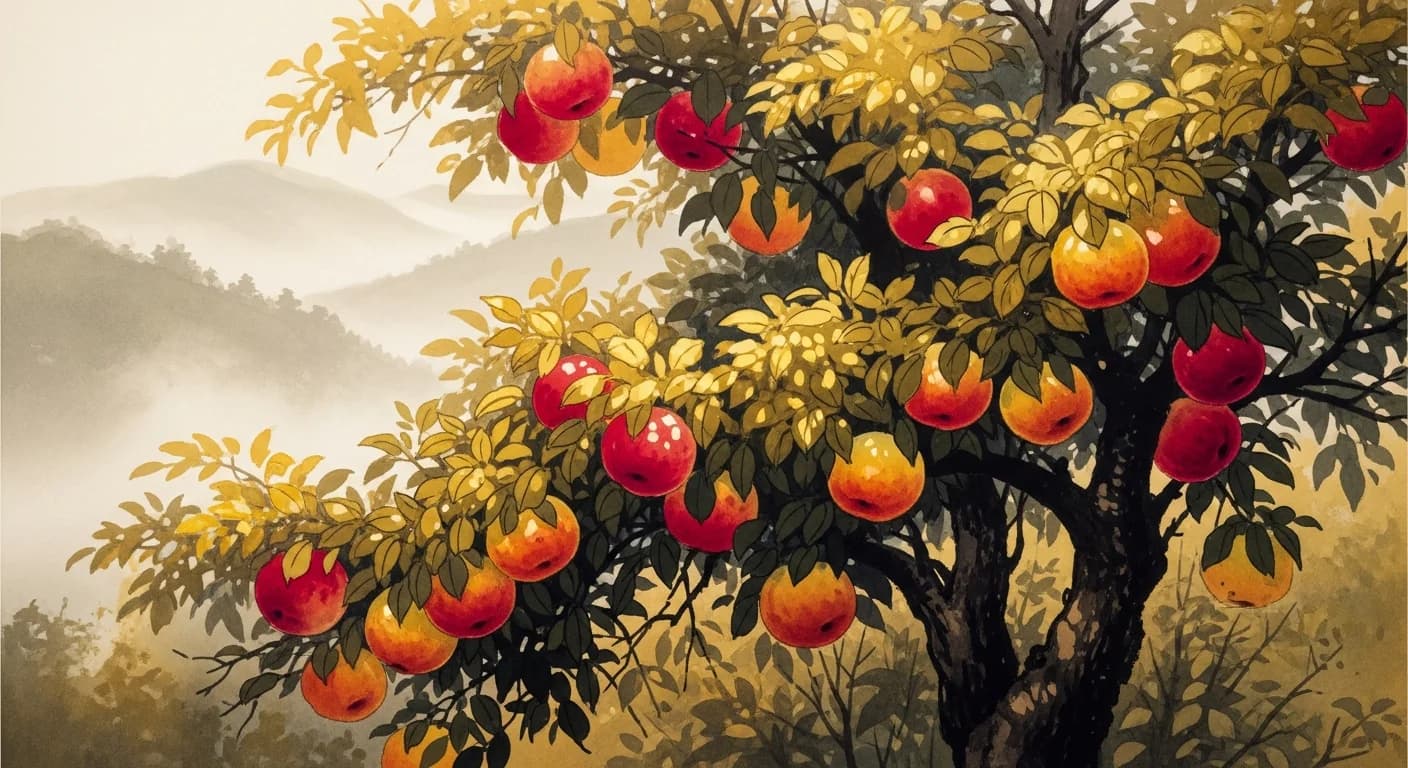
If last night's dream brought you baskets of ripe, glowing fruit, Korean dream tradition (꿈해몽) has very good news: abundance and success are heading your way. Fruit is one of the oldest and most universally recognized auspicious symbols in Korean folk belief, connecting the rewards of hard work to real-world outcomes in wealth, career, and even childbirth. But there is one crucial catch — the condition of the fruit in your dream determines whether this is a blessing or a warning.
Ripe and Abundant Fruit — The Classic Auspicious Dream
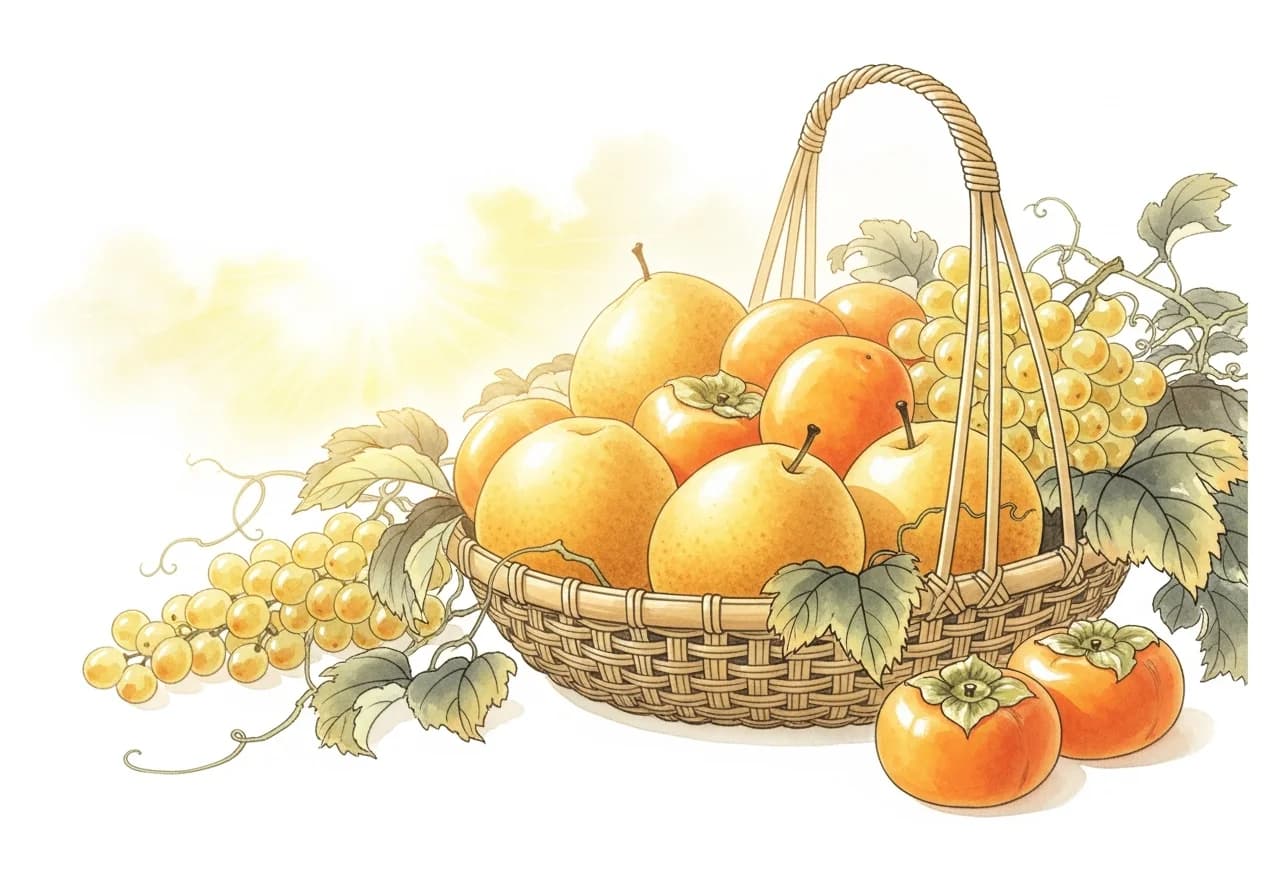
In Korean dream interpretation (해몽), a dream filled with ripe, beautiful, abundant fruit is one of the clearest positive omens you can receive. A fruit tree loaded with harvest signals significant wealth accumulation and business success on the horizon. An overflowing fruit basket means that stalled projects and plans are about to break free and move forward, bringing multiple new opportunities to your door. If you are currently studying for an exam, pursuing a promotion, or building a business, this is the dream that says: your efforts are about to pay off. Actively picking fruit from a tree carries an even more empowering message. Rather than fortune simply arriving, it means you will personally claim your rewards through your own hands — a promotion secured, a contract signed, a major goal achieved. Receiving fruit as a gift in a dream carries its own distinct meaning: a benefactor or helpful person is about to enter your life, or good news and unexpected fortune will arrive without you having to seek it out. This is the "luck finds you" interpretation of the fruit dream.
Rotten or Unripe Fruit — Warning Signs to Take Seriously
When the fruit in your dream is rotten, moldy, or spoiled, Korean tradition reads this as a significant warning. The most common interpretations point to disappointment in a current project, a breakdown in a relationship (potentially a separation or divorce), or the decline of a business. Health concerns may also be signaled — it is a good time to get a check-up or pay more attention to your physical wellbeing. Unripe or sour fruit carries a similar message. If an authority figure — a boss, a senior colleague, or someone in a position of power — hands you unripe fruit in a dream, traditional interpretation reads this as a direct warning about professional setbacks, such as a missed promotion, a failed exam, or difficulties in the workplace. Perhaps the most unsettling variation is dreaming of worms or insects inside fruit. This is a metaphor for hidden problems: something that appears fine on the surface — a project, a relationship, an investment — contains a serious flaw or hidden threat. If you have this dream, it is worth looking more carefully at ongoing commitments and financial decisions.
Fruit as a Pregnancy Dream (태몽, Taemong)
One of the most culturally distinctive aspects of Korean dream interpretation is the concept of 태몽 — a special dream that foretells a pregnancy or reveals characteristics of an unborn child. Fruit is among the most common and highly regarded 태몽 symbols. The general rule is: the more beautiful and ripe the fruit, the healthier and more prosperous the child's future will be. Korean folk tradition also has a detailed system for predicting the baby's gender based on the type of fruit. Soft, sweet fruits like apples, peaches, and strawberries are traditionally associated with daughters. Heavy, round fruits like pears, grapes, persimmons, and melons are associated with sons. Dreaming of a laden fruit tree and picking from it as a 태몽 is considered one of the strongest possible omens — it predicts a child destined for great achievement and prosperity in life.
Fruit Dreams and Wealth — Should You Buy a Lottery Ticket?
One of the most commonly searched questions about fruit dreams in Korea is whether they signal lottery luck. It is a genuine cultural tradition: after dreaming of abundant ripe fruit, picking fruit from a tree, or seeing a fruit tree groaning with harvest, many Koreans do purchase a small lottery ticket as a way of acting on the dream's positive energy. The folk belief is that such dreams indicate a "rising fortune window" — a period when luck is aligned with effort. That said, Korean dream interpretation has always been a folk wisdom tradition, not a guarantee. The healthiest approach is to treat an auspicious fruit dream as a positive sign to act boldly on your real-world goals — not to make financial decisions based on a dream alone.
Dream Variations
Ripe fruit dream meaning
A strongly auspicious sign of abundance and success. Whatever you are currently working on is close to bearing excellent results, and financial improvement is likely ahead.
Rotten fruit dream meaning
A clear warning of failure, disappointment, relationship breakdown, or declining business. Health issues may also be signaled. Use this dream as a prompt to review what is going wrong before problems escalate.
Picking fruit dream meaning
An auspicious dream of actively reaping what you have sown. It signals career advancement, exam success, or business achievement. As a pregnancy dream (태몽), it traditionally predicts a healthy son.
Eating fruit dream meaning
Eating sweet fruit signals contentment, happiness, and recognition of your abilities — a positive dream. For expectant mothers, the type of fruit eaten is traditionally used to predict the baby's gender.
Receiving fruit as a gift dream meaning
An auspicious dream indicating a benefactor, unexpected windfall, or fortunate opportunity arriving from outside your own efforts. Good news is coming to you.
Buying fruit dream meaning
Auspicious — signals rising fortune and the attainment of desired possessions or goals. A new investment or venture is likely to yield good returns.
Red fruit dream meaning
Red fruit symbolizes passion, energy, and love. This dream suggests an emotionally rich period ahead, or that romantic feelings will play a major role in your life soon.
Yellow fruit dream meaning
Yellow fruit represents hope and positive transformation. This is an auspicious dream suggesting bright, energizing changes and good news are on the way.
Dream of a fruit tree laden with fruit
One of the strongest auspicious variations — a tree bursting with fruit signals major wealth accumulation and business success. As a pregnancy dream, it predicts a child destined for great achievements.
Dream of worms in fruit
An inauspicious dream warning that something fine on the surface — a project, relationship, or investment — contains hidden problems. Beware of financial losses and hidden competitors.
Stealing fruit dream meaning
Stealing fruit carries dual meaning — it may reflect being drawn toward something forbidden, or in traditional Korean folk belief, it can foretell meeting a romantic partner through a matchmaker.
Dream of a full fruit basket
A basket overflowing with fruit signals that stalled matters will begin to progress smoothly, and that multiple opportunities and options are about to open up.
Fruit pregnancy dream (taemong) meaning
A fruit 태몽 symbolizes the child's health and prosperous future. Apples, peaches, or strawberries suggest a daughter; pears, grapes, persimmons, or melons suggest a son by folk tradition.
Cultural Context
In Korean traditional culture, fruit held a significance far beyond ordinary food — it was seen as a sacred embodiment of heaven's grace and nature's abundance. Specific fruits such as jujubes (대추), chestnuts (밤), pears (배), and persimmons (감) are essential offerings on ancestral ritual tables (제사상 and 차례상), each carrying specific meanings: jujubes represent descendants, chestnuts symbolize purity of lineage, pears stand for filial piety, and persimmons for official rank. The traditional placement of red fruit on the east side and white fruit on the west reflects the philosophy of yin-yang and the Five Elements (오행 사상) that underpins much of Korean cosmology. Peaches occupy a particularly revered place in Korean folk belief — considered food of the immortals (신선), they symbolized eternal life and were believed to ward off evil spirits, serving as protective talismans in household rituals. Against this rich ritual backdrop, dreaming of fruit was understood as a divine message granting permission for abundance and harvest. The condition of the fruit in the dream became the decisive factor in whether the omen was auspicious or inauspicious — a framework that has carried through centuries of Korean folk tradition to the present day.
Western Psychological Perspectives
Western psychology reads fruit dreams through a very different lens than Korean folk tradition, yet arrives at some remarkably similar core intuitions. From a Freudian psychoanalytic perspective, fruit is closely tied to sexual symbolism. Soft, rounded fruits like peaches, strawberries, and apples are often read as representations of the female body or erotic desire, and eating fruit in a dream may represent the gratification of repressed libidinal urges. The image of "forbidden fruit" — deeply embedded in the Western unconscious through the biblical narrative of the Garden of Eden — is particularly significant here. Freud saw such symbols as desires slipping past the dream's censorship mechanism, appearing in disguised form precisely because they cannot be acknowledged directly in waking life.
Jungian analytical psychology takes a broader and more universally applicable view. In Jung's framework, fruit serves as a symbol of the Self and the individuation process — the lifelong journey toward psychological wholeness. Ripe fruit represents potential fully realized and psychological maturity, while fruit still hanging on a tree embodies unrealized inner possibilities waiting to be claimed. The collective unconscious, Jung argued, stores archetypal imagery shared across all cultures — and fruit is one of the most consistent of all symbols, universally representing fulfillment, completion, and the rewards of patient growth.
Modern cognitive psychology and neuroscience offer a more grounded perspective. During periods when we are striving intensely toward a goal, the brain's reward system may generate imagery of fulfillment — and ripe, beautiful fruit is a classic example of such compensatory dream imagery. Research also suggests that physical hunger and nutritional state can influence dream content. In contexts of financial stress or scarcity, vivid imagery of abundant fruit may represent the unconscious mind's wish-fulfillment response — the psyche offering comfort through the dream.
What is striking is how closely East and West converge despite their very different frameworks. Korean tradition links specific fruits to concrete outcomes like wealth, pregnancy, or career success. Western psychology interprets fruit more abstractly as desire, maturity, and self-realization. Yet both agree on the essential message: ripe, beautiful fruit is a positive sign, while rotten or damaged fruit signals trouble ahead.
Frequently Asked Questions
Whether you dreamed of a tree heavy with harvest, a basket overflowing with golden fruit, or a single rotten apple on the ground, Korean dream tradition has something meaningful to say about it. The core message is beautifully simple: the ripeness of the fruit mirrors the ripeness of your fortunes. Treat an auspicious fruit dream as a signal to act boldly on your goals, and a warning dream as a prompt to look more carefully at what may need your attention. Either way, 꿈해몽 offers a rich cultural lens for self-reflection — one that has guided Korean dreamers for centuries.
Related Dreams

Apple Dream Meaning — Fruition, Fortune, and What Korean Tradition Says

Peach Dream Meaning — Longevity, Love, and Abundance in Korean Dream Tradition

Grape Dream Meaning — What Korean Dream Interpretation Says
Watermelon Dream Meaning — Korean Dream Interpretation (수박꿈 해몽)

Tree Dream Meaning in Korean Interpretation — What the Tree's Condition Reveals

Food Dream Meaning — What Korean Dream Interpretation Says About Eating in Your Sleep