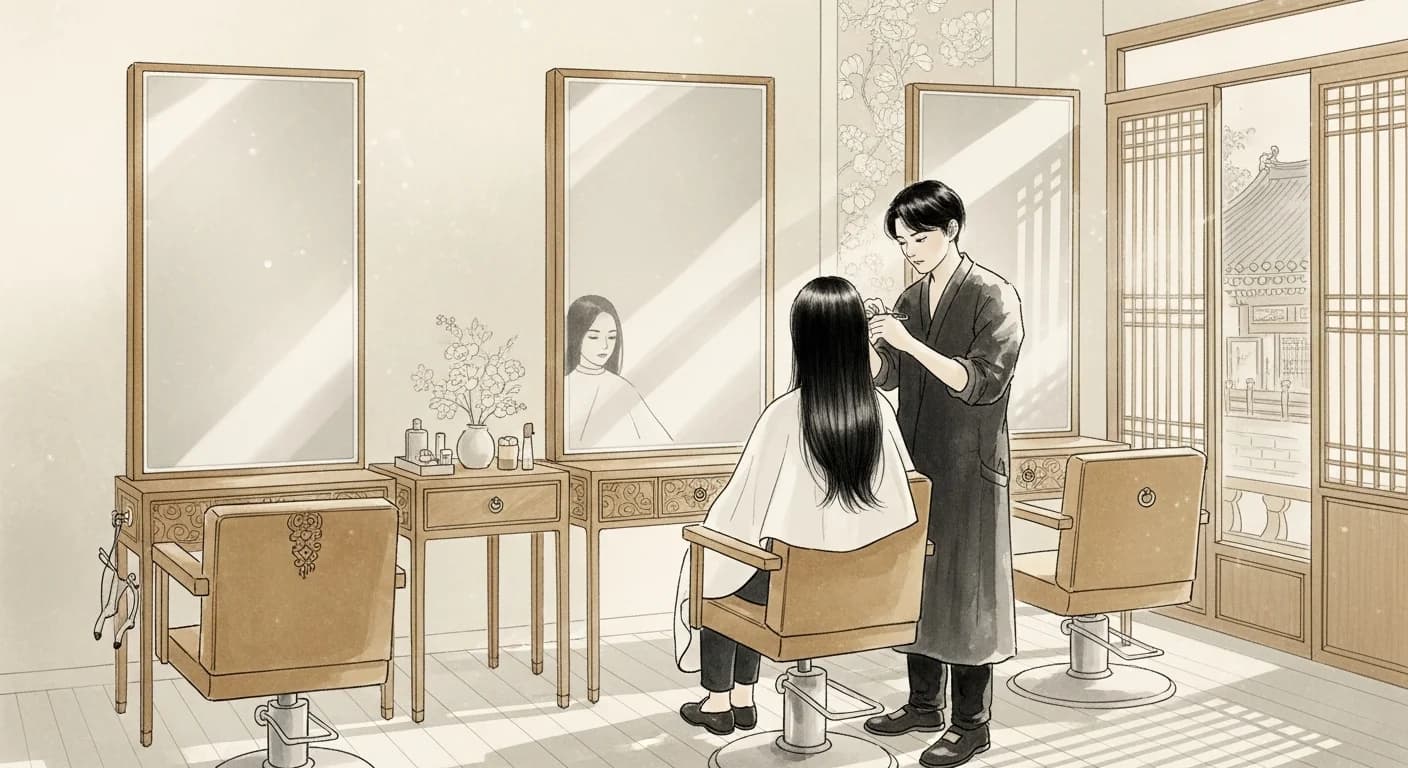
Dream of Getting a Haircut at a Salon — What Does It Mean?
If you woke up from a dream where you sat in a salon chair, felt the scissors at work, and checked yourself in the mirror — this dream is worth paying attention to. In Korean dream interpretation, hair is far more than a cosmetic concern; it has long symbolized life force, social identity, and the act of entrusting yourself to change. The crucial detail? Whether you liked what you saw in the mirror determines everything about whether this is a fortunate or warning dream.
Auspicious — When You Love the Result
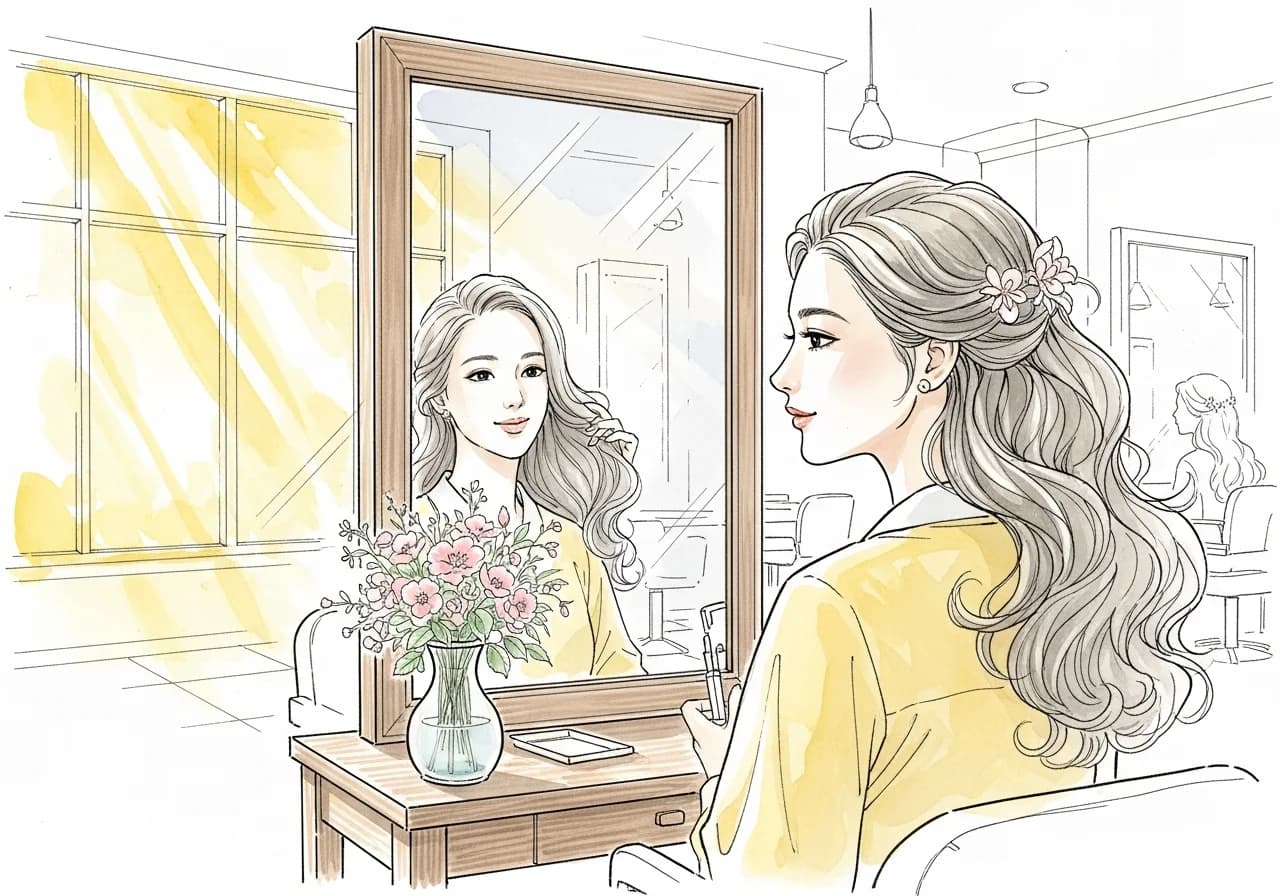
A salon haircut dream where you feel genuinely pleased with the outcome is a strongly auspicious omen. In Korean dream tradition, it signals that long-standing worries are about to be resolved and good news — a promotion, a successful contract, exam results — may arrive soon.
When the hairstylist in your dream is kind and skilled, the symbolism deepens: this is interpreted as a sign that a trustworthy helper or mentor (귀인, gwiin) will appear in your waking life, someone whose guidance will help you clear a major obstacle. The salon as a space of trusted professional care reflects support arriving from the right person at the right time.
Inauspicious — Botched Results or a Forced Cut
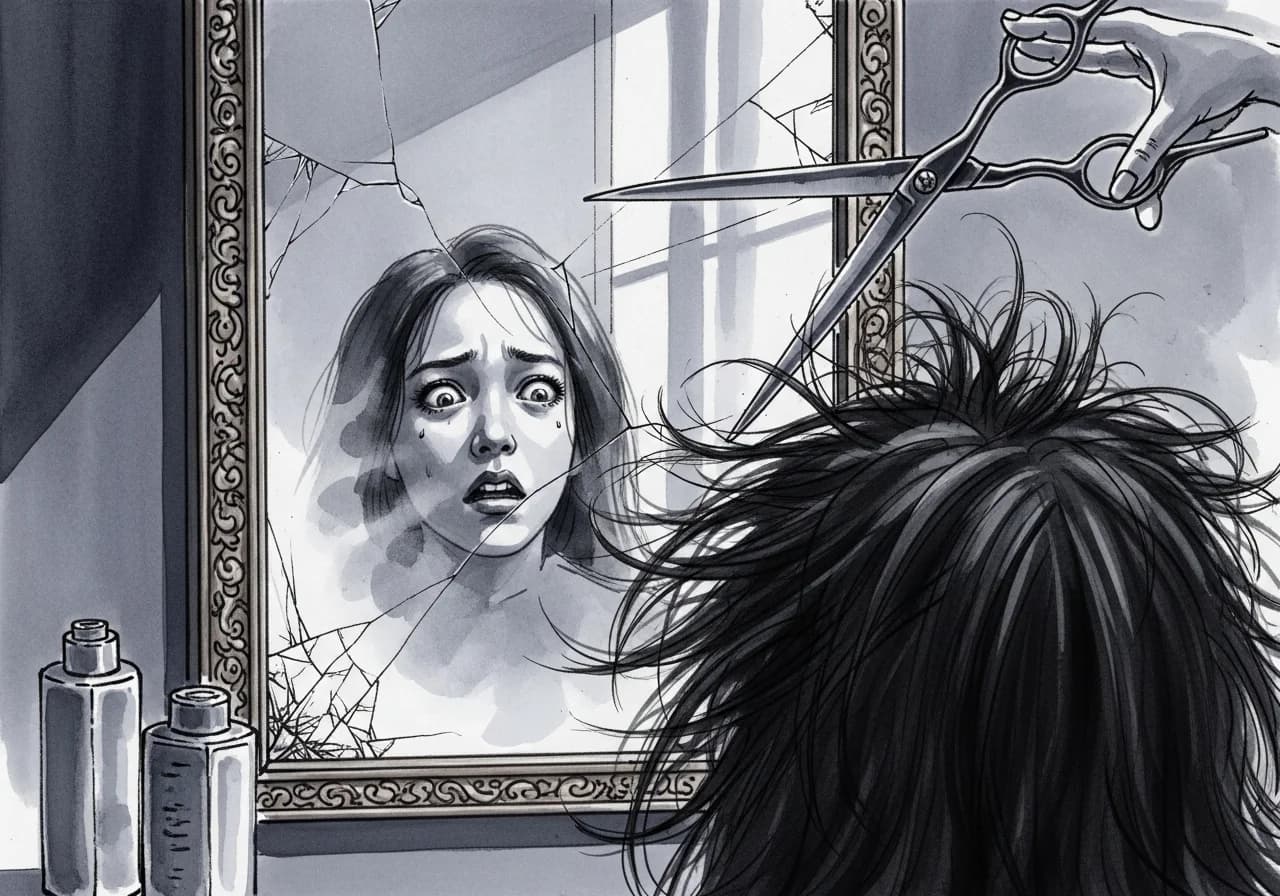
If the haircut goes badly in your dream — the stylist makes a mistake, you leave the chair dissatisfied, or worse, someone forces scissors through your hair against your will — these are warning signs. A botched haircut warns that a current project or plan may not yield the results you expect, and someone you trusted may disappoint you.
A forced haircut carries an especially pointed message: it represents a loss of control or autonomy. In a workplace context this may mean an unwanted reassignment or decision imposed by others; in personal life, it can point to pressure from family members or partners regarding choices that are rightfully yours. If the dream featured intense discomfort or fear, take it as a call to be more mindful of how your actions affect those around you.
Neutral — Simply Visiting the Salon
When the dream carries no strong emotional charge — you simply find yourself in a salon, browsing styles, waiting — it reflects psychological readiness for change rather than a specific fortune. The salon as a social, professionally-guided space hints at a desire to refresh your public image or how others perceive you.
This is a common dream during life transitions: changing jobs, ending a relationship, moving cities, starting a new academic year. Your unconscious may be rehearsing the idea of transformation before you consciously commit to it.
Dream Variations
Very Short Haircut — A Bold Break from the Past
Symbolizes a determined break from your past and a move toward a new direction. You may decisively let go of old habits or relationships. However, it can also warn of sudden family discord or an abrupt life change that may be difficult to adjust to quickly.
Dyeing Hair — Desire to Transform Your Identity
Reflects a desire to transform your image or social identity. Dyeing hair a bright or light color signals positive life changes and renewed vitality. Dyeing hair darker suggests a need to rebuild inner confidence or create boundaries from external scrutiny.
Getting a Perm — Craving Variety and New Opportunities
Reflects a desire for variety and transformation in your daily routine. A successful perm in the dream is an auspicious sign indicating improved social magnetism, new opportunities in relationships, and a more dynamic period ahead.
Bad Haircut Dream — Warning of Plans Going Wrong
A strong warning dream. It signals that an ongoing project or plan may not unfold as hoped, and those you trusted might disappoint you. Careful review of current commitments is advised before proceeding with major decisions.
Forced Haircut — Loss of Autonomy Warning
Warns of a situation where important decisions may be made for you by others, stripping you of control. In a workplace context this can indicate an unwanted reassignment or forced change; in personal life, it may point to pressure from family members regarding a major decision.
Cutting Bangs — Testing Small Changes
Reflects dissatisfaction with the current state of affairs and a desire for change, but uncertainty about how to proceed. Cutting only the bangs suggests you are testing the waters — seeking small adjustments rather than a total overhaul before committing to larger transformation.
Shaving Head — Total Life Reset
Symbolizes a complete life reset — letting go of every burden and reinventing yourself from scratch. This dream often appears at pivotal turning points: a drastic career change, spiritual awakening, or major personal reinvention. If accompanied by feelings of liberation, it is powerfully auspicious.
Kind Hairstylist — A Trustworthy Helper Appears
An auspicious sign indicating that a trustworthy helper or mentor will appear in your waking life. You may encounter a key person who can resolve a long-standing problem or offer expert advice that helps you make a critical decision wisely.
Waiting at the Salon — Patience Required
Suggests that patience is required before the transformation you seek can materialize. The waiting period in the dream mirrors a real-life delay — but the fact that you are in the queue at all signals that change is coming; you simply need to wait your turn.
Doing Someone Else's Hair — Rising Influence
Suggests you will soon play a role in helping someone else transform or grow. Your influence over others may increase, and you may be presented with a leadership opportunity or chance to mentor someone close to you.
Cultural Context
In Korean culture, hair carries profound Confucian, shamanic, and social significance far beyond mere aesthetics. The Confucian teaching from the Hyogyeong (Book of Filial Piety) — that one's body, hair, and skin are gifts from one's parents and must not be harmed — made cutting hair a symbolically charged, even transgressive act throughout the Joseon dynasty. The sangtu (상투), or topknot worn by adult married men, was a visible marker of Confucian filial piety and social standing.
When King Gojong issued the Danballyeong (단발령) — the edict ordering men to cut their topknots — in 1895, it sparked nationwide resistance, illustrating how deeply hair was tied to identity and moral virtue. In Korean shamanism (무속), hair is considered a vessel of spiritual energy; shamans incorporated hair into healing and prayer rituals. In traditional funeral rites, chief mourners would let their hair down as an expression of grief and spiritual disorientation.
In this context, dreaming of a salon visit — having one's hair professionally reshaped — carries rich symbolic weight: it speaks to identity transformation, social reinvention, and the deliberate shedding of an old self under trusted guidance.
Western Psychological Perspectives
Western psychology offers equally rich frameworks for interpreting the salon haircut dream.
Freudian Perspective: In Freudian psychology, hair symbolizes sexual energy and libido. Dreaming of a haircut can be linked to repressed desires or castration anxiety — a fear of losing power or vitality. The biblical story of Samson, whose strength was lost when Delilah had his hair cut, is the archetypal narrative underpinning this reading. Surrendering to a stylist in a salon adds a dimension of willingly yielding control to another, which Freud might read as ambivalence about authority or external power.
Jungian Perspective: From a Jungian standpoint, hair represents vitality, instinct, and connection to the collective unconscious. A salon haircut dream can be understood as a stage in the individuation process — the shedding of an outdated persona and a move toward a more authentic self. The hairstylist, as a skilled external guide facilitating transformation, may represent the animus or anima archetype: a figure that helps the dreamer integrate disowned parts of the psyche and emerge more whole.
Modern Psychology: Contemporary psychology interprets salon dreams as expressions of the gap between one's current self-image and a desired identity. The act of seeking professional help reflects real-life needs for external validation, guidance, or support during a period of change. Emotional tone is especially significant: excitement during the dream suggests confident readiness for transformation, while anxiety points to fear of change or loss of control over one's self-presentation.
Cross-Cultural Perspectives: Across cultures, cutting hair has served as a powerful rite of passage. In Hinduism, head-shaving (mundan) signifies spiritual purification and rebirth. Buddhist ordination involves shaving the head as a renunciation of worldly identity. In many Native American traditions, cutting hair marks mourning or the close of a life chapter. Ancient Greek and Roman barber shops (tonstrinae) functioned as social and political gathering places. The salon dream thus taps into a deep cross-cultural archetype: deliberate transformation of one's outer form as a mirror of inner renewal, enacted within a communal, socially recognized space.
Frequently Asked Questions
The hair salon dream speaks to one of the most universal human experiences: the desire to transform. Whether the scissors in your dream brought satisfaction or dread, the core message is always about change — its welcome or its warning. Pay close attention to how you felt in the dream. That emotional signature is the key to unlocking what your unconscious is trying to tell you about the transitions already underway in your waking life.
Related Dreams
Showering Dream Meaning — Purification, Renewal, and What Your Subconscious Is Telling You
Dreaming of Washing or Bathing — Korean Dream Interpretation
Getting Dressed Dream Meaning — Korean Interpretation & Western Psychology
Shopping Dream Meaning — Korean Dream Interpretation (꿈해몽)
Cleaning Dream Meaning — Purification, Fortune, and Fresh Beginnings