Knife Dream Meaning — When a Blade in Your Dream Is a Blessing
If you were stabbed by a knife in your dream last night and blood flowed, Korean folk wisdom has something surprising for you: that is one of the most celebrated wealth omens in the entire tradition. Far from a nightmare, being stabbed with blood flowing is associated with unexpected money arriving, wishes being granted, and — yes — lottery wins. The ancient logic runs deep: blood represents vitality and the flow of fortune, so pain in a dream is understood as a purging of bad luck, not a portent of real harm. But here is the critical catch — not all knife dreams are auspicious. Being stabbed in the back, a blade piercing the heart, or being stabbed without any blood are powerful inauspicious warnings of betrayal, serious health threats, or imminent loss. Two details determine everything: where on the body the knife lands, and whether blood appears.
The Core Rule: Blood Determines Everything
In Korean knife dream interpretation, the single most important detail is whether blood flows. A stabbing without blood is neutral to inauspicious — it suggests that something you have been hoping for will not fully resolve, or that efforts will go unrewarded. A stabbing with flowing blood, however, flips the meaning entirely: the more blood, the greater the fortune on its way. This paradoxical framework is rooted in a traditional Korean equation between blood and the flow of life force and prosperity. Suffering in the dream is seen not as bad news but as a purging ritual — the body expelling negative energy to make room for abundance. It is a uniquely Korean inversion that consistently surprises Western readers encountering Korean dream culture for the first time.
Auspicious: Being Stabbed with Blood — The Wealth Omen
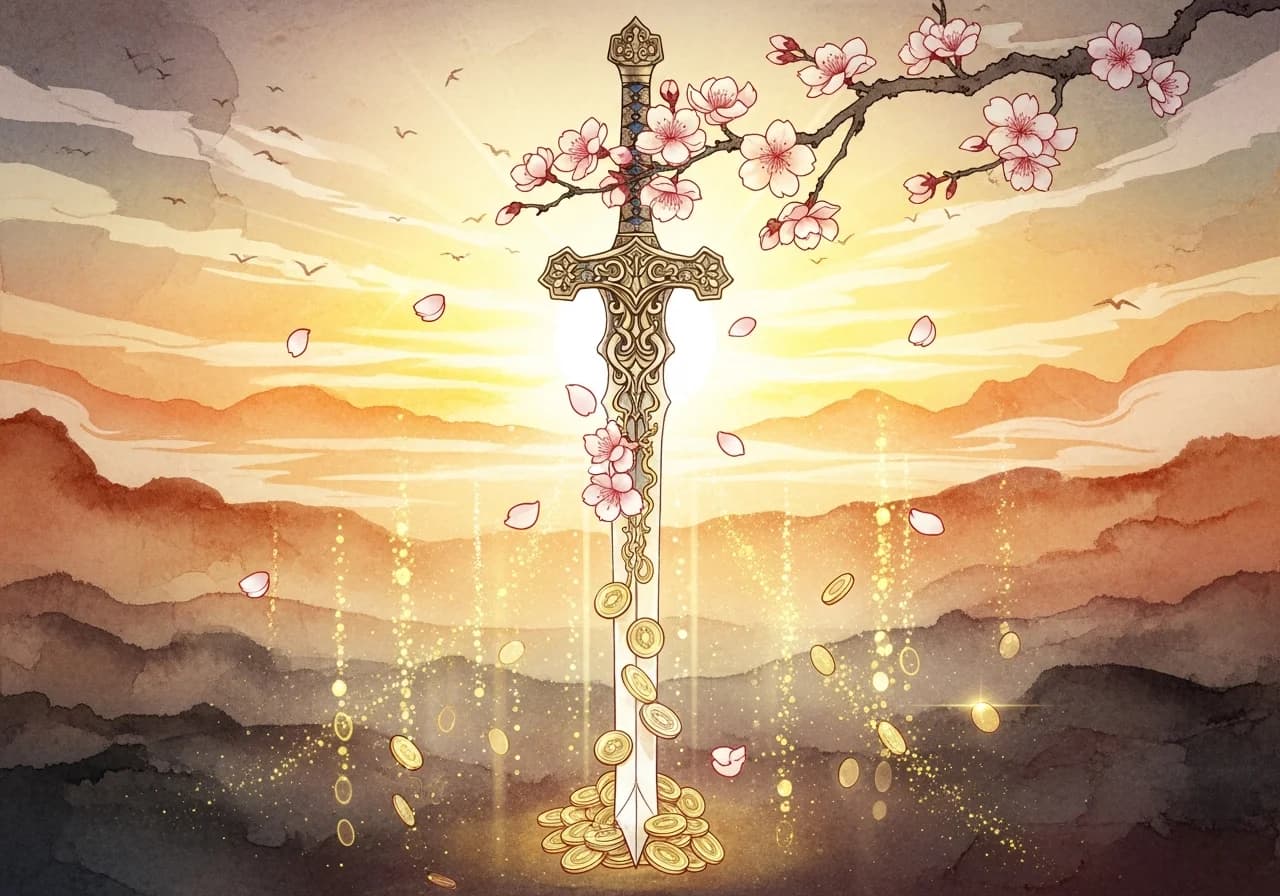
Being stabbed by a knife with blood flowing is among the most powerful financial omens in Korean dream tradition. It forecasts unexpected money arriving, business flourishing, or a long-held wish finally being fulfilled — and the more vivid the wound and the more blood that flows, the larger the anticipated fortune. The body part matters too. Being stabbed in the abdomen signals business prosperity; a wound to the hand points to smooth professional progress; and a stab to the thigh or leg carries the strongest association with lottery-type windfalls. This dream is frequently reported by people who go on to experience sudden financial windfalls, making it one of the most eagerly remembered dreams in Korean popular culture.
Auspicious: Receiving or Finding a Knife — Benefactors and Opportunity
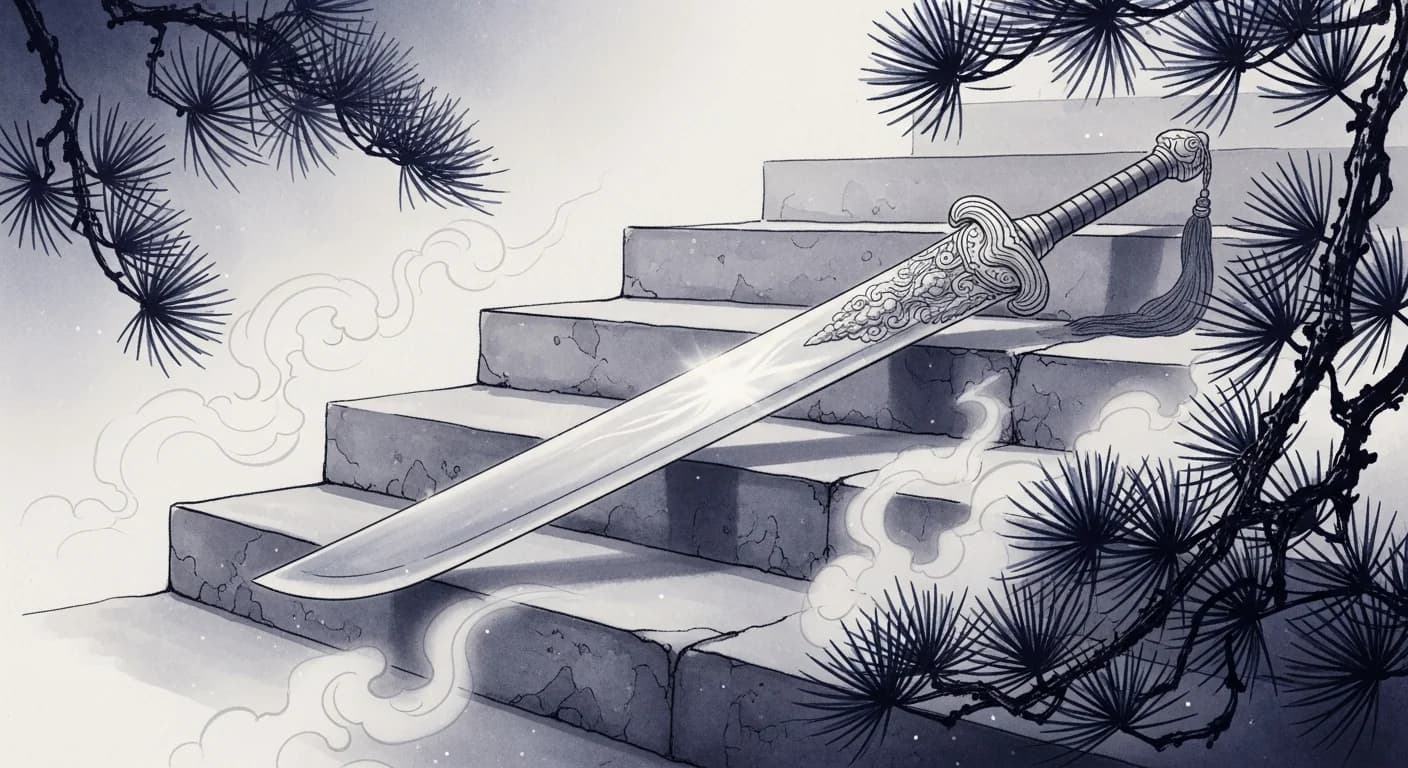
Receiving a knife as a gift, buying a new one, or finding a knife unexpectedly are all auspicious signs. They forecast the arrival of a helpful mentor or benefactor who will assist you through difficulty, the fulfillment of a cherished goal, and an overall lift in financial, professional, and romantic fortune. If the knife you receive is large, ornate, and brilliantly gleaming — or closer to a sword — the omen is even more powerful: significant authority or leadership is about to be entrusted to you. For pregnant dreamers, this dream can function as a 태몽 (pregnancy omen), foretelling a child destined for great social influence.
Auspicious: Stabbing Someone or Sharpening a Knife — Victory and Growth
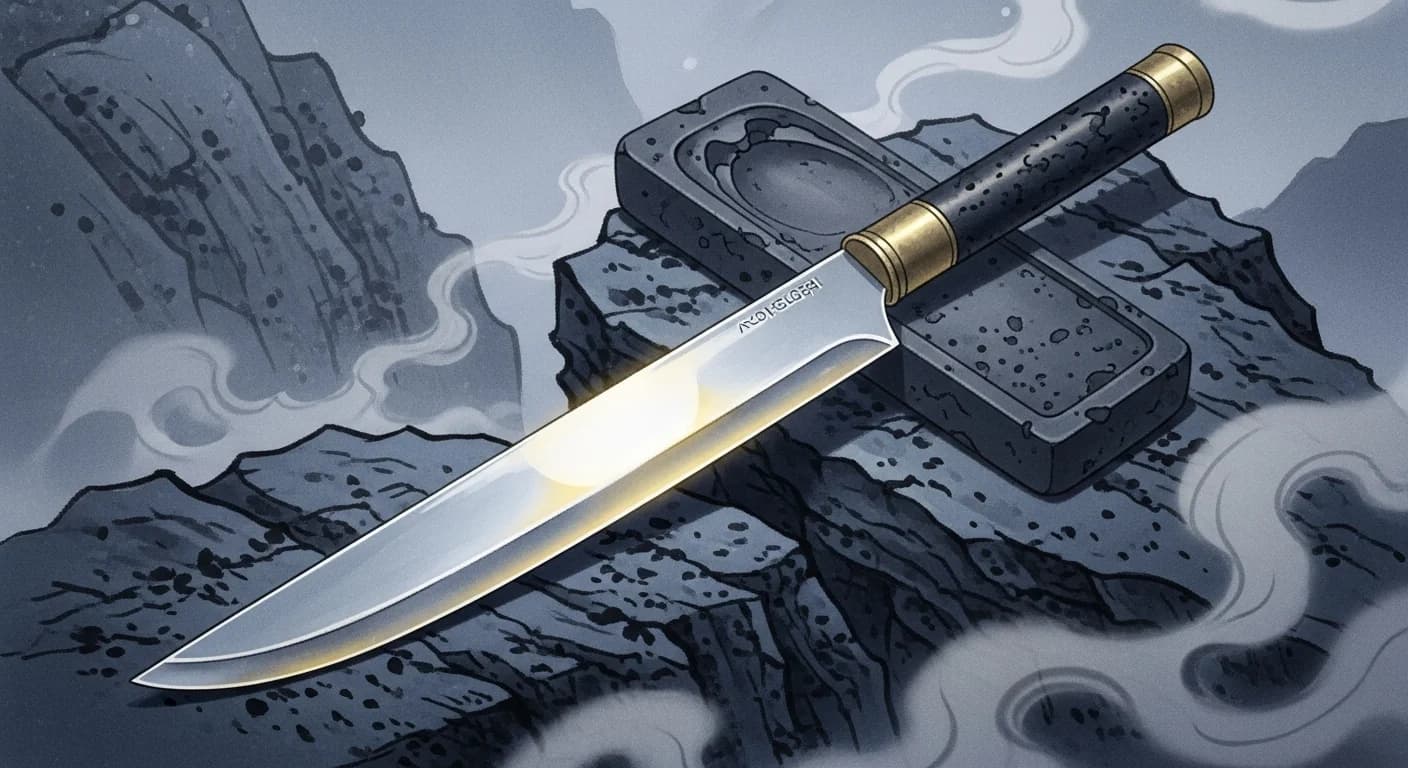
Stabbing someone in a dream — particularly if they fall or die — is an auspicious sign of overcoming competition and achieving your goals decisively. Whether the contest is a job promotion, an exam, or a business bid, this dream says the outcome will be in your favor. If the opponent survives, the success may be partial or incomplete. Sharpening a knife or carefully maintaining one in a dream reflects a period of focused preparation and self-improvement that is about to pay off. Recognition, reward, and breakthrough results are approaching for those who have been diligently building their skills.
Inauspicious: Stabbed in the Back or Heart — Betrayal and Crisis
Being stabbed from behind — in the back — is the most recognized betrayal-warning dream in Korean interpretation. A trusted friend, colleague, or associate may be scheming against you without your knowledge. This dream urges you to scrutinize close relationships carefully and to be more cautious about sharing sensitive information. A knife piercing the heart or chest warns of a serious threat to the core of your life — health, career, or a vital project. It is a signal to schedule a health check-up without delay and to carefully reassess risks in your most important current endeavors.
Inauspicious: Rusty, Broken, or Lost Knife — Decline and Loss
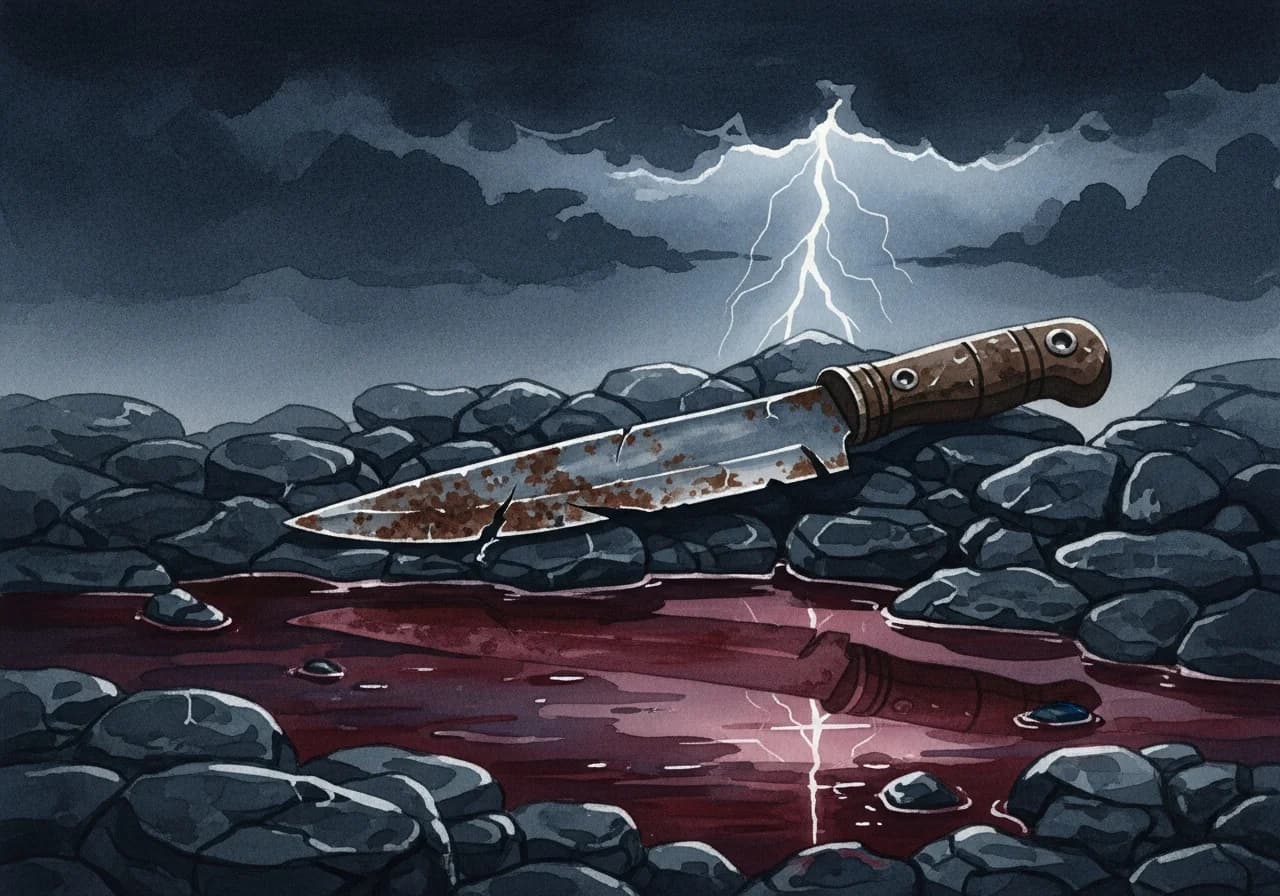
A rusty or dulled knife warns of declining physical vitality, weakened immunity, and a period of stagnation in romantic or personal relationships. Neglected problems may worsen and financial loss could follow. A knife breaking or being taken by force warns of failure in an ongoing project or the loss of a valuable opportunity — competitive edge and influence may weaken. Two nuanced exceptions: a knife that breaks on its own can paradoxically signal an unexpected promotion or windfall, and losing a knife that leaves you feeling calm and relieved is a positive sign of emotional release and peaceful transition.
Dream Variations
Dream of being stabbed by a knife
The top auspicious dream for financial fortune when blood flows. Being stabbed in the abdomen forecasts business prosperity, in the hand signals smooth work progress, and in the thigh signals a potential windfall such as a lottery win. No blood makes it inauspicious.
Dream of being cut by a knife
Distinct from being stabbed. Being cut or slashed is generally inauspicious, warning of unpleasant events or family trouble. Being cut on the arm or hand specifically forecasts interpersonal conflict or domestic discord.
Dream of being stabbed in the back
The classic Korean betrayal-warning dream. Exercise heightened caution in close relationships and avoid sharing sensitive information until trust is reaffirmed.
Dream of being stabbed in the heart
Warns of a serious crisis in career or health — a threat to the very core of your life. Get a health check-up and carefully audit the risks in your most important current endeavors.
Dream of a knife at the throat
An inauspicious warning of a threat to social standing or reputation. May also symbolize something important left unspoken — suppressed emotions or words you feel unable to express.
Dream of receiving a knife as a gift
Auspicious. Forecasts the arrival of a helpful mentor and an overall rise in financial, career, and romantic fortune. Unexpected opportunities and strong support are on the way.
Dream of sharpening a knife
Auspicious. Consistent preparation and effort will bear fruit. Predicts recognition and reward for dedicated self-development work.
Dream of a knife breaking
Generally inauspicious, warning of failure in ongoing plans and a loss of motivation. Exception: a knife that breaks on its own can paradoxically signal unexpected promotion or windfall.
Dream of a rusty knife
Inauspicious. Warns of declining health, weakened immunity, and stagnating relationships. Neglected issues may worsen and financial loss could follow.
Dream of losing a knife
Warns of missed opportunity or weakening competitive position. Exception: if losing the knife brings a feeling of calm relief, it signals emotional release and a peaceful transition.
Dream of stabbing someone with a knife
Auspicious sign of overcoming competition. If the opponent falls or dies, complete success is indicated; if they survive, the outcome may be partial or unsatisfying.
Dream of a large knife or sword
Highly auspicious. Holding a large, gleaming blade signals that significant authority or leadership will be entrusted to you. For pregnant dreamers, may foretell the birth of a remarkably influential child.
Dream of a shaman wielding a ritual knife
Symbolizes spiritual cleansing and protection. Negative energies are being cut away and a fresh beginning becomes possible. Generally neutral to auspicious.
Dream of a blood-stained knife
Symbolizes existing conflict or unresolved emotional wounds — unhealed discord in close relationships or lingering trauma that has yet to be processed.
Cultural Context
In Korean tradition, the knife carries far more symbolic weight than a simple tool or weapon. At the heart of this significance is the 신칼 (spirit knife) of Korean shamanism (무속). The spirit knife is one of the three sacred implements of Korean shamanistic practice — alongside the bell and the mirror — and shamans (무당) wield it during gut ceremonies to expel evil spirits and cut away communal misfortune from a household or village. A pair of brass-bladed spirit knives serves both ceremonial dance and divination; the act of wielding them is itself understood as a healing ritual that cleaves through darkness and restores cosmic order. On Jeju Island, the sacred knife is particularly venerated as one of the 삼멩두 (three sacred objects), with roots tracing back to foundational shamanic mythology about the creation of the afterworld. Because of this dual heritage as both a practical tool and a sacred implement, knives in Korean dreams carry inherently ambiguous symbolism: a bright, actively wielded knife presages wealth, status, and success, while a rusty, broken, or back-stabbing knife warns of betrayal, illness, or loss. The particularly Korean belief that being stabbed and bleeding is a lottery or windfall omen stems from the traditional equation of blood with vitality and the flow of fortune — suffering is seen as purging bad luck and inviting abundance.
Western Psychological Perspectives
Western psychology reads knife dreams through a very different lens than Korean folk tradition, and the contrast is illuminating. For Freud, sharp-cutting objects like knives were quintessential phallic symbols — representations of repressed sexual energy or aggressive impulses surfacing from the unconscious. Stabbing in a dream, in the Freudian framework, reflects the discharge of suppressed desire, while being stabbed can signal anxiety about passivity or loss of control in a relationship. Having a knife taken away or losing one may express unconscious fears about diminished power or self-efficacy — the blade as an extension of personal agency.
Jung took a broader archetypal view. For him, the knife was a tool of separation and discernment — cutting away the inessential to support the process of individuation, the lifelong journey toward psychological wholeness. A gleaming sword in a Jungian reading connects to the Hero archetype, symbolizing the inner strength to confront and integrate the Shadow: the repressed or denied aspects of the self that we project onto others. Being threatened by a knife reflects tension with unintegrated Shadow material that is attempting to overwhelm conscious awareness — not external danger, but internal conflict demanding attention.
Modern cognitive psychology and neuroscience offer a more grounded framework. Knife dreams are understood as the brain processing real-life stress, interpersonal conflict, or difficulty maintaining personal boundaries during the memory-consolidation phases of sleep. Threat simulation theory suggests that weapon dreams function adaptively — the brain rehearsing responses to dangerous situations to strengthen real-world coping capacity. People navigating workplace conflict, interpersonal tension, or violations of personal space tend to report weapon-related dreams more frequently, which lends these experiences a clear emotional logic.
The cross-cultural contrast is striking. Where Western psychology primarily reads knife dreams as the language of aggression, repressed desire, or boundary violation, Korean folk interpretation celebrates the stabbed-and-bleeding dream as one of the finest wealth omens available. Pain as a harbinger of abundance, suffering as a precursor to fortune — this paradox reflects a distinctly Korean cultural ethos in which enduring hardship is understood as purging bad luck and opening the door for good fortune to enter.
Frequently Asked Questions
The knife dream occupies a uniquely paradoxical position in Korean dream interpretation — a symbol capable of being both one of the greatest wealth omens and one of the sharpest betrayal warnings, depending on just two details. Blood flowing from a stab wound signals abundance on its way; a blade entering from behind warns of disloyalty lurking nearby. Whether you approach this through the lens of Korean shamanic tradition, Jungian archetypes, or modern stress-processing science, the knife in your dream is asking you to pay attention — to boundaries, to trust, and to the opportunities or threats gathering at the edges of your waking life.