
Lake Dream Interpretation — Auspicious and Inauspicious Meanings
The meaning of a lake dream comes down to one central question: how is the water? Clear and still means good fortune is near; murky and turbulent signals something to watch out for. In Korean dream tradition, a lake has long been regarded as a mirror of the mind — its surface faithfully reflecting the state of one's emotions and life fortune. Here is everything you need to know about lake dream meanings.
Clear, Calm Lake Dream — An Auspicious Omen for Prosperity
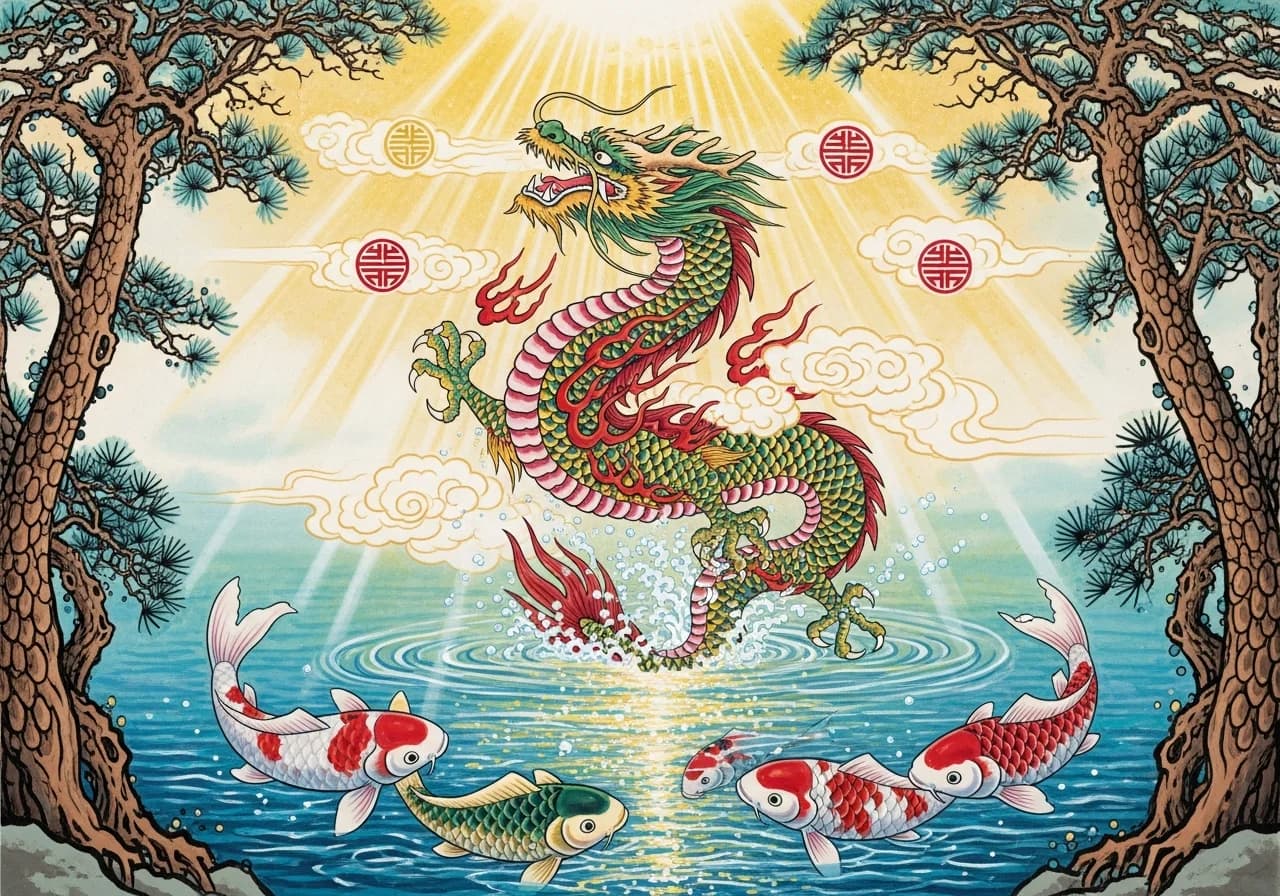
Gazing at or walking beside a clear, still lake is one of the most auspicious lake dreams in Korean tradition. It foretells psychological stability and rising financial fortune, with peace at home and smooth progress in work or business. A lake reflecting morning sunlight or perfectly mirroring the sky signals new opportunities opening — an auspicious sign for examinations, employment, and new ventures alike.
Catching fish or fishing in a lake is also a powerfully auspicious dream tied directly to financial luck. The larger the fish caught, the greater the expected gain. Watching many fish swim freely signals that wealth and good connections are close at hand. Gliding across a calm lake in a boat similarly indicates that life is flowing in a stable and favorable direction.
Murky or Drying Lake Dream — A Warning of Loss and Conflict

A murky or polluted lake is an inauspicious omen warning of health problems or financial loss. Its turbid surface reflects emotional turmoil or unresolved inner conflict. Falling into a muddy lake is specifically interpreted as a caution against unexpected harm — theft, fire, or fraud. A lake that smells foul or carries floating debris hints at approaching betrayal or conflict in a close relationship.
A lake with a falling water level or exposed lakebed warns of financial loss, a business setback, or the severing of an important relationship — in Korean folk belief, depleted water equals depleted vitality and financial luck. A lake suddenly churned by storm winds is an inauspicious warning of an unforeseen disruption to a period of calm; the fiercer the storm, the more serious the challenge ahead.
Dragon Rising from a Lake — A Powerful Omen of Success
A dragon or great fish rising from the depths of a lake is considered one of the most powerfully auspicious dream images in Korean tradition — often recognized as a pregnancy dream (tae-mong, 태몽) or a harbinger of major life success. A dragon ascending from a lake in particular symbolizes attainment of high status, honor, and social achievement.
A lake appearing in a pregnancy dream (tae-mong) is traditionally interpreted as heralding a child of broad magnanimity and deep character. When that dream features a dragon soaring skyward or a great fish leaping from the water, it is considered one of the very finest tae-mong — believed to announce the birth of a child destined for exceptional renown.
Dream Variations
Calm Clear Lake Dream
An auspicious dream signifying inner peace and rising financial fortune. It foretells harmony at home and smooth progress in work or business, with current worries resolving naturally.
Murky Muddy Lake Dream
An inauspicious dream warning of possible health issues or interpersonal conflict. Falling into a murky lake is specifically interpreted as a caution against theft, fraud, or unexpected mishap.
Swimming in a Lake Dream
Swimming freely in a clear lake is auspicious, symbolizing emotional liberation and freedom. Struggling through a dark lake reflects real-life challenges that still need to be faced and resolved.
Boat on a Lake Dream
Riding a boat on a calm lake is auspicious, symbolizing smooth progress in life. The calmer the water, the higher the likelihood that an ongoing project or relationship will conclude favorably.
Lake Drying Up Dream
An inauspicious dream warning of financial loss or the disappearance of opportunity. It suggests that an important resource, relationship, or business prospect is gradually diminishing — time to re-examine the current situation.
Lake Reflecting the Sky Dream
A lake perfectly mirroring the sky is an auspicious dream indicating deep inner stillness and balance. It signals a period of heightened self-awareness and insight — an ideal time to make important decisions.
Falling into a Lake Dream
Falling into a clear lake is positive — symbolizing the overcoming of fears and an emotional turning point. But falling into a murky lake or being unable to escape is a warning of unexpected loss or entrapment.
Frozen Lake Dream
A neutral dream reflecting a temporary halt in life's flow. It suggests suppressed emotions or stalled progress, and advises the wisdom of patient waiting rather than forced action.
Dragon Emerging from Lake Dream
A dragon rising from a lake is a powerfully auspicious dream foretelling great success or elevation in status. For expectant parents, it is interpreted as a tae-mong heralding the birth of a child destined for renown.
Lake Pregnancy Dream (Tae-mong)
A lake in a pregnancy dream (tae-mong) is said to herald the birth of a child with broad magnanimity and deep inner character. A large fish or dragon emerging from the lake is an especially auspicious tae-mong, believed to signal that the child will grow into a person of exceptional distinction.
Misty Foggy Lake Dream
A misty lake suggests an uncertain path ahead or important facts being obscured. However, if the fog lifts and the lake comes into clear view within the dream, it implies that a blocked situation is about to resolve itself.
Fishing in a Lake Dream
Fishing in a lake symbolizes patient waiting for wealth and opportunity. Catching many fish is auspicious — financial fortune rises significantly. Catching nothing suggests that efforts may yield disappointing returns for now.
Cultural Context
In Korean traditional culture, the lake (호수, 湖水) carries a symbolism distinct from rivers or the sea. As a body of still, land-enclosed water, a lake has long been regarded as a mirror that reflects the state of the inner mind — its stillness believed to echo the condition of one's heart and soul. Joseon-era scholars cultivated gardens with lakes and ponds to nurture inner equilibrium; spaces like Yi Hwang's Dosan Seodang and Yun Seon-do's Buyongdong garden — where water met nature in quiet harmony — were revered as places of learning and introspection. In folk belief, deep lakes and ponds were thought to be inhabited by the Dragon King (용왕) or water spirits, prompting nearby villages to hold periodic ritual offerings to ward off disaster and invite abundance. Historically, royal artificial lakes such as Anapji Pond (now Donggung Palace and Wolji Pond) in Gyeongju and Gungnamji Pond in Buyeo functioned as sacred spaces embodying royal authority and heavenly will. In dream interpretation, a lake serves as a personal mirror for one's emotional state and life fortune — with the clarity, water level, and turbulence of the lake being the key factors that determine whether the dream is auspicious or inauspicious.
Western Psychological Perspectives
From a Freudian perspective, the lake represents a reservoir of latent unconscious material. Unlike a flowing river, the still, enclosed water of a lake symbolizes emotions that have been repressed and left unresolved — desires that cannot find release. Falling into a lake may symbolize the ego's anxiety about being overwhelmed by unconscious pressures, while retrieving something from the lake can represent a repressed memory or wish finally rising to the surface.
In Jungian analytical psychology, the lake represents a liminal space where the personal and collective unconscious meet — deeply connected to the Self archetype. A calm lake perfectly mirroring the sky embodies the ideal state of individuation: a complete integration of consciousness and unconscious, the outer world and the inner world. The lake's depths are where the unexamined Shadow and Anima/Animus archetypes lie dormant; bravely exploring the lake in a dream is part of the journey toward psychological maturity. Jung noted that seeing one's own reflection in still water represents a moment of confronting the gap between the persona — the social mask — and the authentic Self.
In modern psychology and sleep science, lake dreams are understood primarily as products of emotional regulation and stress processing. A calm lake in a dream often reflects a parasympathetic-dominant state — the relaxed or mindful condition of the waking brain. Research has found correlations between recurring turbulent lake dreams and elevated cortisol levels associated with chronic stress. In cognitive-behavioral therapy (CBT), the imagery of a clear, still lake is actively used in relaxation and cognitive restructuring techniques.
While Korean traditional interpretation reads the lake's clarity and water level as a barometer of wealth and life stability, Western psychology tends to map the lake as a chart of the unconscious inner world. Yet both traditions agree on one crucial point: stillness is positive, turbulence and murkiness are negative. This convergence — echoed also in Japanese and Chinese symbolic traditions where still water represents mental clarity and gathered wealth — confirms that the quiet lake is an archetypal image of memory, reflection, and the unconscious shared across human cultures worldwide.
Frequently Asked Questions
A lake dream is one of the most direct windows into your inner world. A clear, still surface signals that your life is on a stable and fortunate course. A turbulent or murky one is a quiet prompt to attend to something unresolved — within yourself or in your circumstances. If you dreamed of a lake, let it be an invitation to pause and take stock of where you are. When the inner lake stays clear and calm, the good fortune it reflects has a way of becoming real.
Related Dreams

Water Dream Meaning — The Clearer the Water, the Greater the Fortune

Ocean Dream Meaning — What the Sea Is Telling You

Riding a Boat Dream Meaning — What Your Voyage Reveals

Flood Dream Meaning — The Color of the Water Changes Everything

River Dream Meaning: What a River in Your Dream Is Telling You

Drowning Dream Meaning — What Korean Dream Tradition Really Says