Missing a Train Dream Meaning
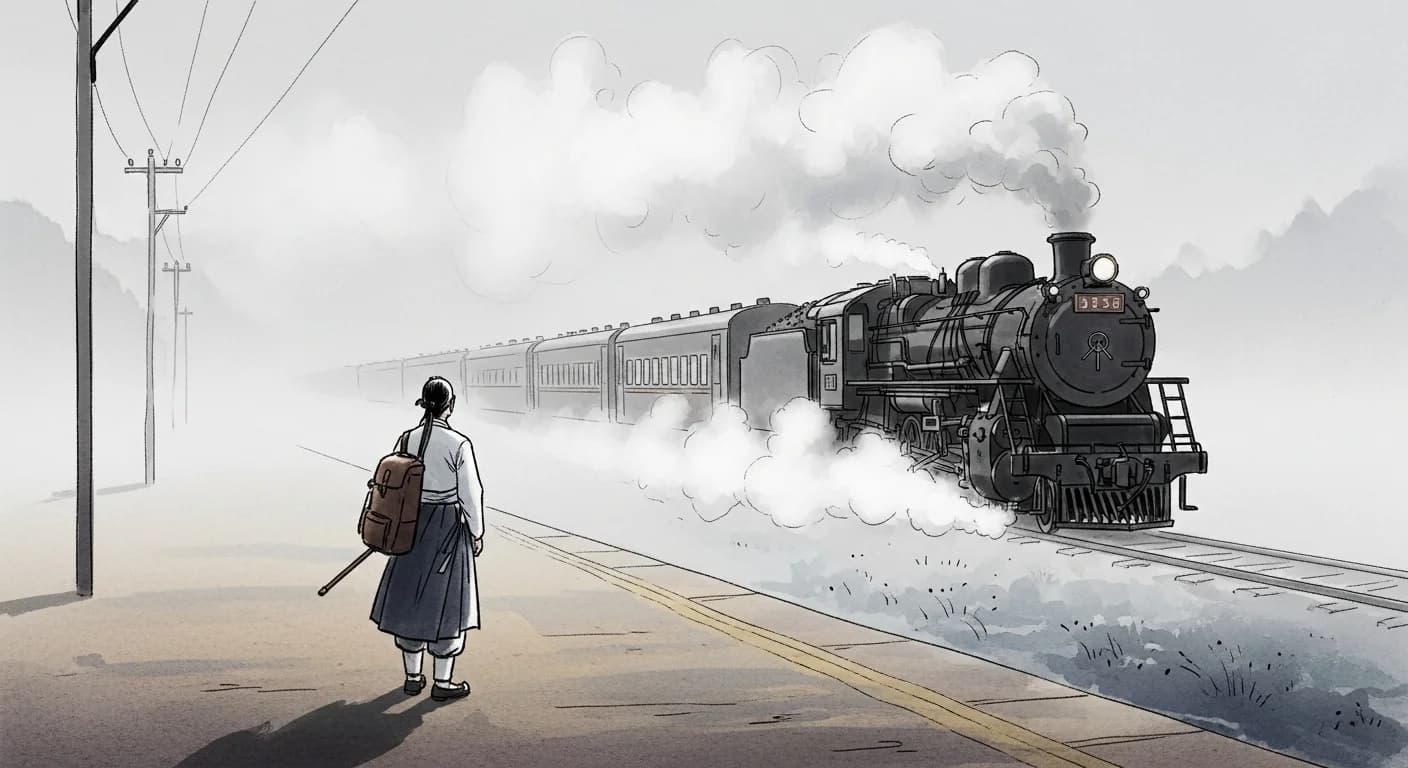
That split-second feeling of helplessness as the train doors close in front of you — this is one of the most visceral anxiety dreams a person can have. In Korean dream tradition, the train is no ordinary vehicle: it runs on fixed tracks at fixed times, making it a symbol of fate's current and life's major momentum. Missing it, in Korean dream interpretation, signals that a critical timing window in your real life may be at risk. The full meaning depends heavily on the details — did you watch from the platform, run and fail, or just barely make it on?
Inauspicious: Watching the Train Depart Without You
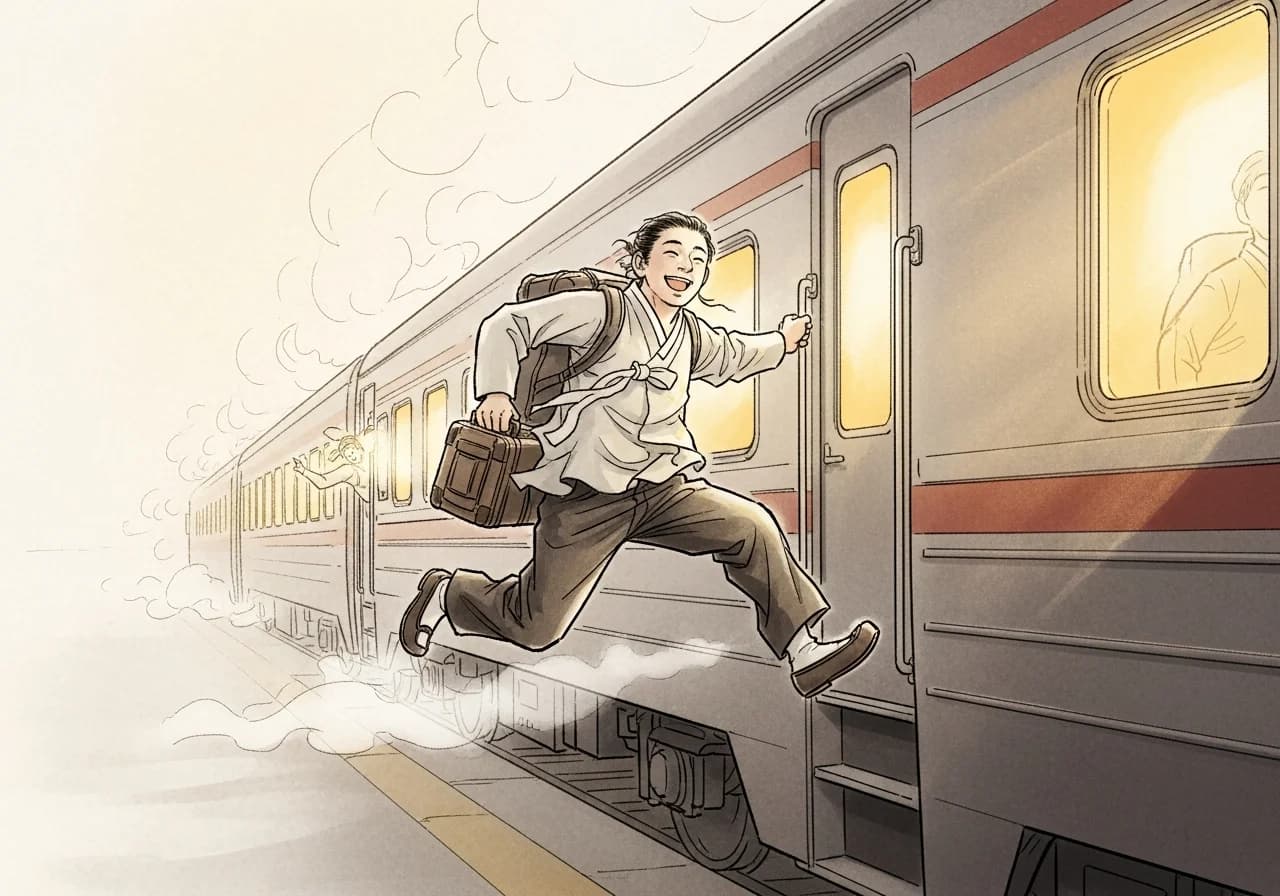
When the train pulls away and you're left standing on the platform, this is a clear inauspicious warning. In Korean dream tradition, it indicates that a long-prepared opportunity — an exam, a job application, a key business deal — may slip away at the crucial moment. The more helpless and panicked you felt in the dream, the more urgent the real-world signal. A variation of this is watching the train shrink into the distance from outside the platform: this often reflects an inner awareness that an important window has already closed. Whether it's a competition, a relationship, or a life crossroads, the dream urges you to audit your timing and priorities now, before it's too late.
Most Serious Warning: Missing the Last Train
Missing the last train carries a heavier warning than missing any ordinary train. The 'last train' symbolizes a final, non-repeatable opportunity — once it's gone, there's no next one coming soon. In Korean dream interpretation, this is among the most serious transportation omens, suggesting an irreversible loss of opportunity if you delay further. If you're facing a major decision and this dream appears, treat it as a clear call to action. Stop deliberating and move — the window may be narrower than you think.
Auspicious: Barely Making It Onto the Train
Not all missed-train dreams are bad omens. If you nearly miss the train but leap aboard at the very last second, this is actually a fortunate dream. In Korean tradition, it foretells a last-minute success — the acceptance letter that arrives right at the deadline, the contract that closes in the final hour, the narrow competitive victory. The dream emphasizes that persistence and refusing to give up will ultimately deliver the result you need. If you experienced this dream, don't quit whatever important endeavor you're currently pushing through.
Neutral Signal: Running Hard But Still Missing It
Sprinting at full speed toward the train but failing to board signals a specific situation: you are making genuine effort, but external timing or circumstances are working against you. This dream is not a message to try harder — it's a message to try differently. The approach, the strategy, or the timing may need to change rather than the intensity. Step back and assess whether the method itself needs rethinking, or whether waiting for better conditions might be wiser than forcing the current approach.
Dream Variations
Dream of Missing a Train
An inauspicious warning that a long-prepared endeavor — exam, job application, business venture — may end in failure. Treat it as a signal to prepare more thoroughly and tighten your time management.
Dream of Watching the Train Leave Without You
An inauspicious dream indicating that an important opportunity may have already passed or that you risk falling behind rivals. The stronger the regret and helplessness in the dream, the more serious the real-world warning.
Dream of Running After a Departing Train
Signals a period where effort is present but external timing or circumstances are misaligned, making desired results difficult to achieve. The dream advises revisiting strategy or method rather than simply working harder.
Dream of Barely Catching the Train
An auspicious dream of seizing opportunity at the last possible moment. Though the outcome looks uncertain, it ultimately comes together — emphasizing that persistence and refusal to give up will pay off.
Dream of Boarding the Wrong Train
Warns that the current direction or plan may have a fundamental flaw. The dream urges a reassessment of career path, relationships, or goals, and suggests it is not too late to course-correct.
Dream of Missing the Last Train
A serious inauspicious warning about missing a final, irreversible opportunity. The dream cautions against excessive hesitation or insufficient preparation when facing a critical chance that cannot easily be repeated.
Dream of Not Knowing the Train Departure Time
Reflects insufficient information or inadequate preparation regarding an important opportunity or deadline. The dream calls for greater attention to information gathering and schedule awareness for critical matters.
Dream of Waiting on the Platform for a Train That Never Comes
Reflects a situation where long-awaited results or news refuse to materialize. Patience is needed, but passive waiting alone is insufficient — a proactive shift in approach is required to change the situation.
Dream of Missing the Train Because You Could Not Buy a Ticket
Symbolizes a lack of the qualifications or resources needed to seize an opportunity. The dream suggests you may be reaching for a door of opportunity before the necessary preparation — financial, academic, or skill-based — is fully in place.
Dream of Missing the Train but Calmly Waiting for the Next One
A relatively positive signal indicating that even if a current opportunity is missed, the goal will eventually be reached through another route. Regrouping and trying again with a different approach will yield good results.
Dream of Missing the KTX High-Speed Train
The KTX — Korea's fastest high-speed rail — symbolizes rapid advancement and fast-track success. Missing it represents falling behind while competitors surge ahead, or losing access to a high-growth opportunity in a fast-moving environment.
Recurring Dream of Missing the Train
Recurring missed-train dreams signal chronic anxiety in waking life, or a deep-rooted fear of perpetually failing to capitalize on opportunities. The pattern suggests a need to focus on time management, goal clarity, and rebuilding self-confidence.
Cultural Context
The train became a symbol of modernization in Korea following the opening of the Gyeongin Line in 1899, and has since been deeply embedded in Korean collective life. In traditional Korean dream interpretation, the train is not merely a vehicle but a symbol of fate's current — the flow of life running along predetermined tracks. Unlike a bus, a train cannot deviate from its preset route and must be boarded at a specific, fixed time. This gives it a uniquely fatalistic quality in Korean dream tradition: missing the train means stepping out of life's essential current at a critical moment. Since the KTX high-speed rail launched in 2004, the speed dimension of the train dream has intensified. Missing a KTX now carries the distinctly modern anxiety of being left behind in Korea's fast-paced competitive society, while missing a slower Mugunghwa or Saemaul train evokes a gentler form of missed opportunity tied to life's slower rhythms and hometown connections. The annual national scramble for holiday train tickets during Chuseok and Seollal has reinforced, across generations, a deeply collective psychological association between trains and the absolute necessity of seizing the right moment — a cultural pattern woven directly into how Koreans interpret this dream.
Western Psychological Perspectives
Western psychological traditions offer several complementary lenses for understanding the missed-train dream. Freud, in 'The Interpretation of Dreams,' specifically addressed this dream type as a manifestation of unconscious fear — particularly the fear of death or permanent loss of opportunity. The image of train doors closing just before you can reach them was for him a classic example of frustrated wish-fulfillment: the desired object vanishing at the last moment. Recurring nightmares of missing trains, in the Freudian view, often surface during periods of intense competitive anxiety or when a person feels their sense of control collapsing. Jung interpreted the train as an archetypal image of society's collective schedule — the timetable we are all expected to follow. Missing that train signals a disjunction between the ego and the collective timeline. But unlike Freud, Jung might read this not simply as failure but as a signal of individuation: the psyche's invitation to stop following the collective path and discover a route that is genuinely one's own. The confusion of not knowing which train to board points toward the shadow — a confrontation with desires and fears the ego has long suppressed. Modern cognitive neuroscience classifies the missed-train dream as a textbook example of the brain's threat simulation mechanism. During sleep, daytime stress about time pressure, deadlines, and social comparison gets processed through transportation imagery. This dream clusters reliably around major life transitions — exam periods, job hunts, career changes — and research confirms it becomes more frequent and vivid during high-anxiety stretches, understood as the brain's process of repeatedly working through unresolved challenges.
Frequently Asked Questions
The missed-train dream is one of Korean dream interpretation's most direct signals about timing and opportunity. If something important is on the horizon in your life, this dream deserves your attention: check your preparation, audit your schedule, and if you've been hesitating, now is the moment to act. And if you dreamed of barely making it aboard at the last second — hold on. That last-minute success is coming.
Related Dreams
Train Dream Meaning — Symbolism of Life's Journey and Direction

Dream of Missing the Bus — Missed Opportunity or a New Route Ahead?
Subway Dream Meaning — Direction, Goals, and the Passage of Life

Airplane Dream Meaning: Soaring to Success or Warning of a Fall
Bus Dream Interpretation: What It Means to Ride, Miss, or Drive a Bus in Your Dream