Peach Taemong: Korea's Most Beloved Conception Dream, Explained
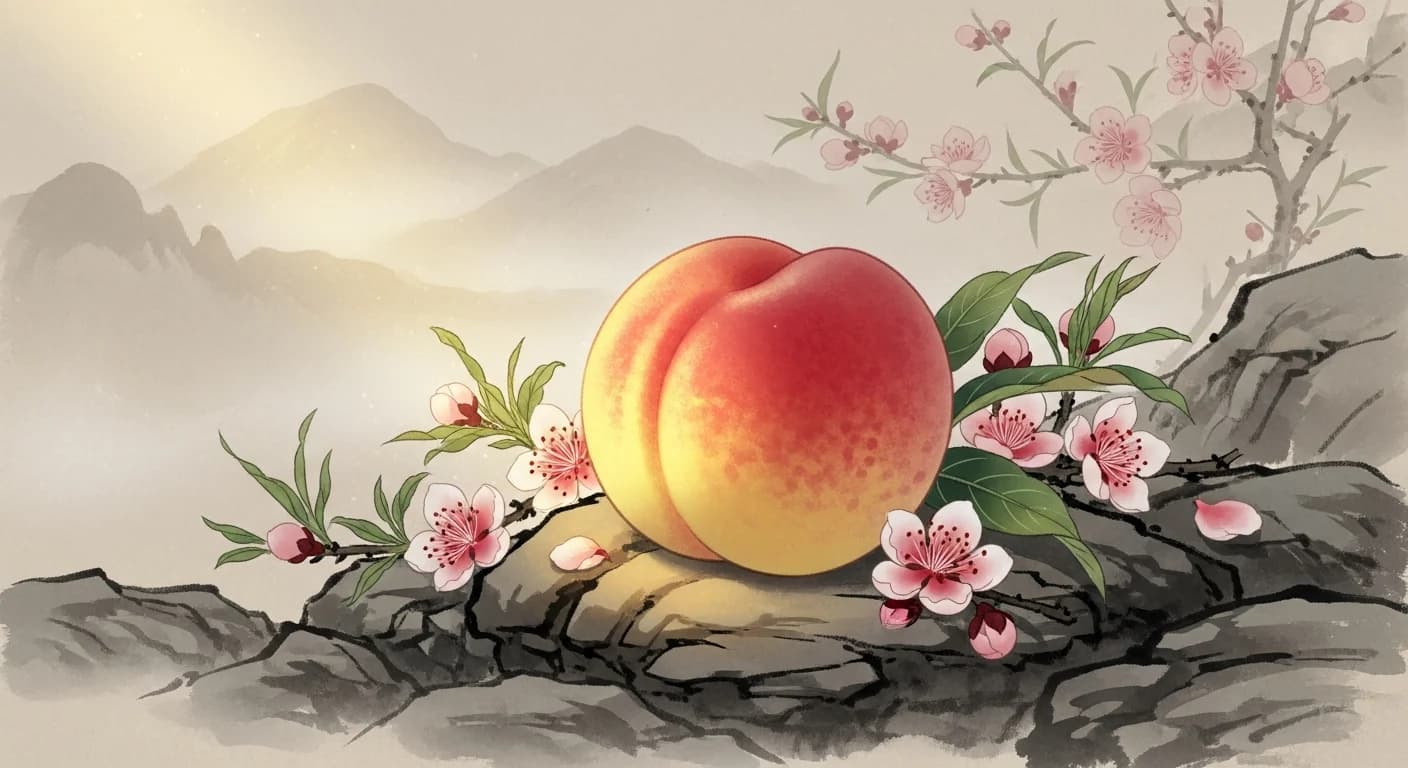
If there is one fruit that Korean dream tradition has elevated to near-mythic status, it is the peach. A peach taemong — dreaming of peaches in a conception context — is considered one of the most auspicious pregnancy dreams you can have, carrying thousands of years of symbolism about life, longevity, and blessing. But there is one thing worth knowing upfront: the condition of the peach in your dream matters enormously.
Ripe Peach Taemong — The Classic Auspicious Omen
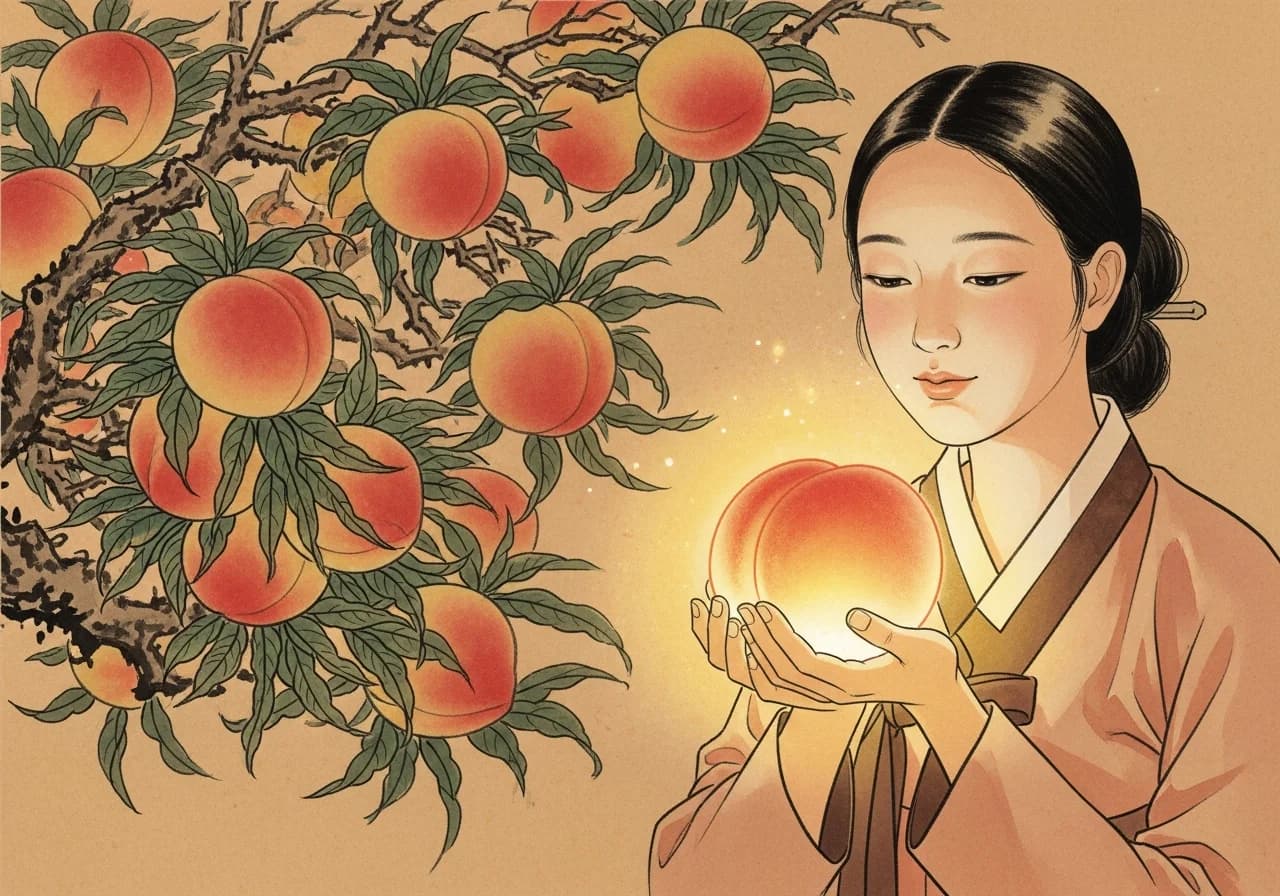
Dreaming of obtaining or eating a plump, beautifully ripe peach is one of the strongest auspicious taemong in Korean folk tradition. The peach has been a symbol of life, health, longevity, and blessings since ancient times, and dreaming of one signals that a new life will bring warmth and radiant energy into the entire household. The child is said to be exceptionally talented, intelligent, and beloved by those around them. In folk belief, the larger and more vivid the peach, the greater the fortune and ability the child will carry — with a peach falling from the sky interpreted as an omen of unexpected blessings and a special karmic connection.
Holding a Peach to Your Chest — The Daughter Dream
One of the most widely cited peach taemong interpretations is cradling or tucking a peach against your chest: this is traditionally read as a sign that a beautiful, sweet-natured daughter is on the way. The peach's associations with feminine grace and gentleness in Korean culture make it a natural symbol for female children. Receiving a peach as a gift in a dream also carries a wonderful meaning — the birth of a strikingly attractive or beautiful child — and suggests the family will receive help from benefactors in the years ahead.
Damaged Peach — A Caution Worth Heeding
Not all peach dreams are equally auspicious. Receiving an overripe, mushy, or partially rotten peach carries a cautionary message: the child may face frequent health challenges or illness. This is not a reason for alarm, but rather a signal to pay extra attention to prenatal care and the child's health after birth. In a non-pregnancy dream context, dreaming of rotten peaches or watching a peach fall and smash on the ground can warn of romantic difficulties, weakening finances, or the collapse of plans that had seemed promising.
Dream Variations
Holding Peach to Chest Taemong — Classic Daughter Sign
Cradling or holding a peach to one's chest in a dream is the most well-known peach taemong for a daughter. The peach's feminine, gentle symbolism connects it to female children in Korean folk tradition — this is one of the most widely cited peach taemong interpretations.
Ripe Peach Taemong — Most Auspicious Form
Obtaining or eating a beautifully ripe, vibrant peach is the most auspicious form of the peach taemong, promising the birth of a healthy, blessed, and talented child. The better the condition of the peach, the stronger and brighter the child's life energy is said to be.
Large Peach Taemong — Exceptional Talent and Fortune
The larger the peach in the dream, the greater the fortune and talent it foretells for the child. An impressively large, radiant peach symbolizes that the child will be exceptionally gifted — bright, wise, and a source of great fortune for the entire family.
Red Peach Taemong — Passion and a Son?
A dream featuring vivid red peaches symbolizes passion, love, and good fortune. In some Korean folk traditions, the red color's connection to 양기 (vital masculine energy) leads some to associate red peach dreams with the birth of a son.
Yellow Peach Taemong — Health and Gentle Temperament
Yellow peach dreams symbolize health, vitality, and abundance. Some interpretations link the soft, warm energy of yellow to the birth of a daughter, and suggest the child will have a gentle, sunny temperament.
White Peach Taemong — A Pure-Hearted Child
White peach dreams symbolize purity, unblemished character, and inner peace. As a taemong, this is interpreted as foretelling the birth of a child with a clear, gentle soul and an upright, pure character.
Picking Peach from Tree Taemong — Self-Made and Hardworking
Picking peaches directly from a tree signals that the dreamer is seizing opportunity with their own hands — a sign of incoming financial luck and success. As a taemong, it suggests the child will be hardworking, self-made, and destined to reap the fruits of their own efforts.
Eating Peach Taemong — A Beloved and Remarkable Child
Eating a peach with pleasure in a dream is a sign of improving health and incoming joy. As a taemong, it predicts the birth of a remarkable child who will be beloved by many — talented, warm, and destined for a happy life.
Multiple Peaches Taemong — Abundant Family Blessings
Seeing multiple peaches, or a tree laden with abundant peaches, suggests that blessings are about to arrive all at once — a strong omen of financial abundance. As a taemong, it heralds great family prosperity and the arrival of a child who will bring multiple forms of fortune.
Rotten Peach Dream — Health Warning
Seeing a rotten or damaged peach is an inauspicious sign. In a pregnancy dream context, it warns that the child may face frequent health challenges. In general dream interpretation, it signals trouble in romantic relationships, weakening finances, or fractures in relationships that once seemed solid.
Peach Blossom Taemong — A Beautiful Daughter
A dream of peach blossoms in full bloom is an auspicious sign of new beginnings, romantic luck, and joyful events. As a taemong, it is widely interpreted as foretelling a beautiful, graceful daughter. Peach blossoms falling and scattering, however, is read as a sign of farewells or endings.
Unripe Peach Taemong — A Spirited Daughter
Picking an unripe or green peach is sometimes interpreted as a taemong for a daughter with a distinctive, fashionable personality. In non-pregnancy dream contexts, it advises that the timing is premature — more preparation and patience are needed before goals can be realized.
Cultural Context
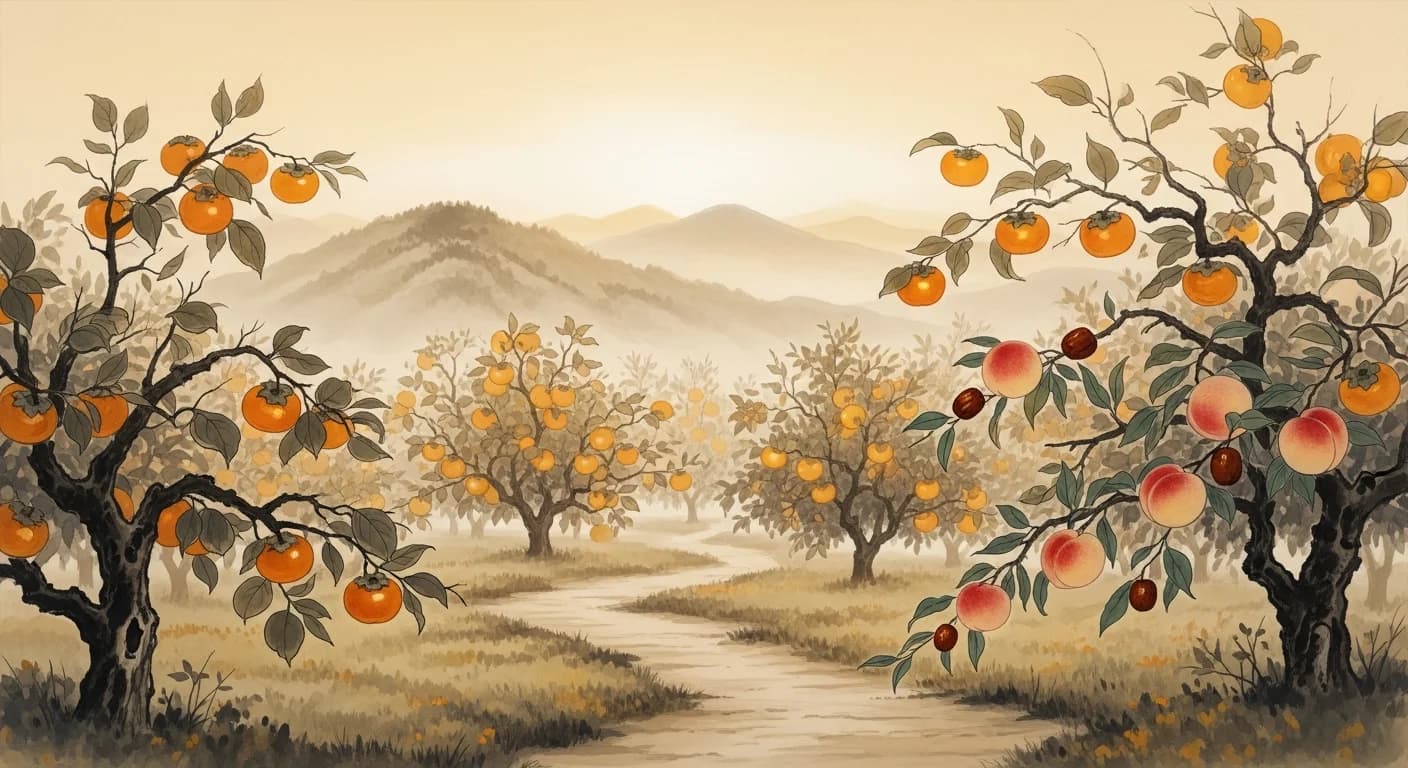
The peach holds deep symbolic roots in Korean and East Asian tradition as the fruit of immortality and longevity. The legend of the Western Queen Mother (Seowangmo, 서왕모) and her heavenly peach garden — where eating the celestial peach could grant eternal life — traveled from China to the Korean peninsula and became embedded in folk belief. In Joseon-era folk paintings, peaches frequently appear as longevity symbols alongside cranes and pine trees. Beyond longevity, peaches were believed to possess powerful evil-warding (byeoksa, 벽사) properties: branches of a peach tree, especially those growing eastward and charged with positive life energy (yanggi, 양기), were kept in homes or carved into protective amulets to drive away malevolent spirits. This same protective power means peaches are notably absent from Korean ancestral offering tables (jesang, 제사상), as placing them there was thought to repel ancestral spirits. The peach was also associated with feminine energy and fertility — appearing alongside jujubes at traditional wedding ceremonies to symbolize the prosperity of descendants. In conception dreams (taemong, 태몽), the peach concentrates all these meanings — life, health, longevity, and feminine grace — and has long been regarded in folk tradition as a sign of a daughter's arrival.
Western Psychological Perspectives
Reading the peach taemong through the lens of Western psychology opens up a fascinating parallel conversation with Korean folk tradition.
From a Freudian psychoanalytic perspective, the peach is a classic symbol. Its round, soft form and lush texture evoke femininity and the body, and acts of eating or receiving a peach in a dream can be read as unconscious expressions of longing — for intimacy, for abundance, for life itself. Freud categorized fruit dreams broadly as symbols of motherhood, fertility, and Eros, and the peach's particularly juicy, sensuous qualities reinforce this as an expression of the dreamer's desire for pleasure and vitality. In this reading, a peach taemong during pregnancy is the unconscious mind's rich, sensory expression of the body's deepest creative drive.
Jungian analytical psychology offers a different but equally resonant interpretation. The peach tree's cycle — from delicate blossom to ripe, golden fruit — represents the integration of opposites, the union of conscious and unconscious realms. Dreaming of harvesting or receiving a luminous peach activates what Jung would call the archetype of abundance, signaling that the dreamer's ego is coming into contact with a renewed source of life energy. There is a striking convergence here with Korean tradition: the peach's ancient symbolism of immortality and the Jungian concept of individuation both point to a journey toward wholeness and maturation.
Modern cognitive psychology and neuroscience frame peach taemong more pragmatically. Pregnancy causes significant hormonal shifts that intensify dream vividness and emotional depth. The frequent appearance of abundant, sweet food imagery during this period reflects both physical cravings and a psychological search for reassurance and comfort. The peach's bright colors and sweet taste are the unconscious mind's way of projecting a healthy, joyful future — a natural expression of hopeful expectation.
What is remarkable across all these frameworks is a consistent thread: the peach universally evokes life force and abundance. Korean folk tradition focuses outward — toward family, community, and the blessing of a new child. Western psychology turns inward — toward personal desire, psychological growth, and the integration of the self. Both perspectives honor the peach as a symbol of the most vital energies life has to offer.
Frequently Asked Questions
A peach taemong is not simply a good dream — it is one of the most layered and culturally resonant omens in the entire Korean conception dream tradition. Thousands of years of symbolism converge in a single fruit: immortality, life force, feminine grace, and the promise of a blessed new beginning. If you dreamed of a plump, luminous peach, Korean folk wisdom says the most exciting chapter of your family's story is about to begin. How ripe and radiant was your peach? In the old tradition, the answer tells you just how much joy is coming your way.