Phoenix Dream Meaning: Korean Dream Interpretation Guide
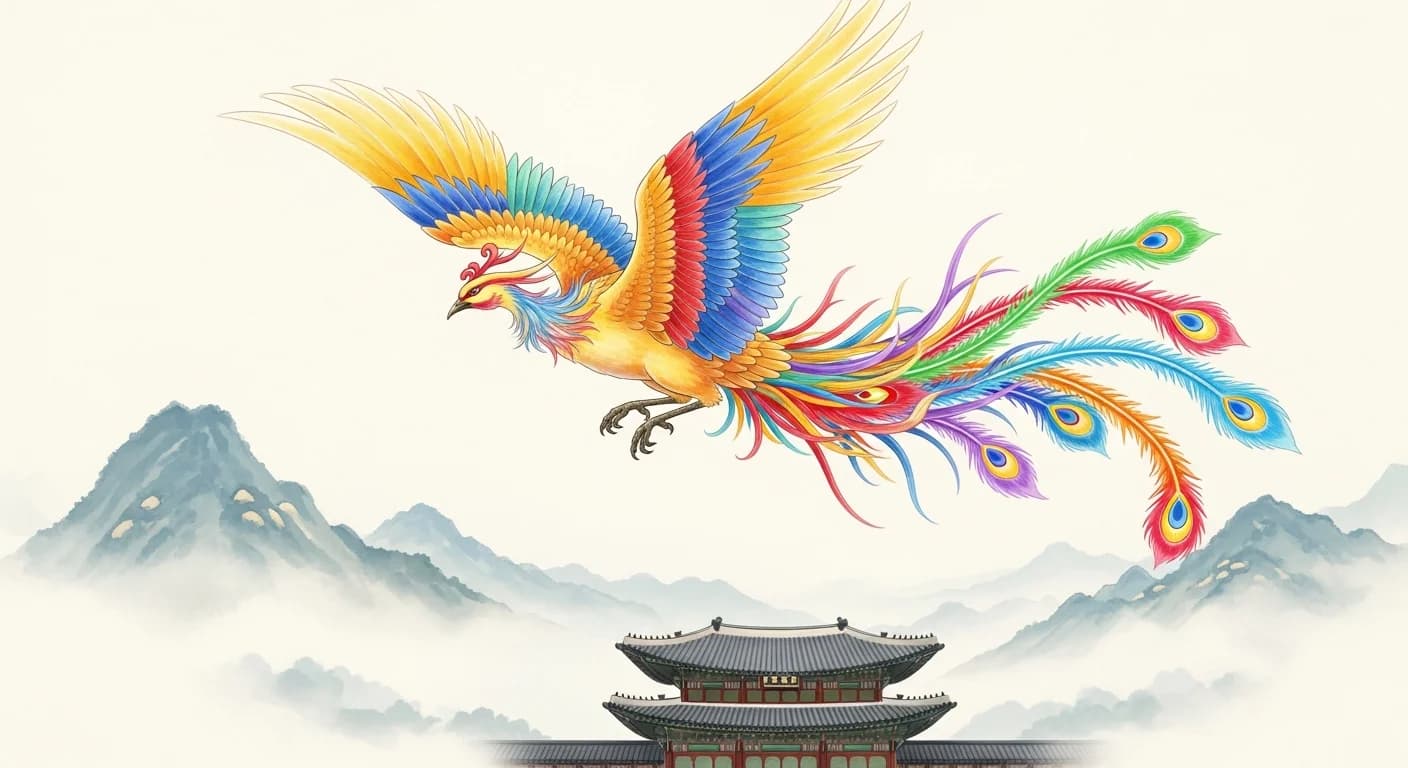
When a phoenix appeared in your dream, radiating brilliant five-colored light, you have encountered one of the most supremely auspicious omens in all of Korean dream interpretation. The 봉황 (phoenix) is a sacred divine bird that appears only when a virtuous ruler's governance brings peace to the land — and in dream tradition, its appearance signals that the most luminous turning point of your life is drawing near. Fame, wealth, noble connections, and even the birth of a genius child — let us walk through everything a phoenix dream can mean.
Phoenix Dreams — The Ultimate Auspicious Omen
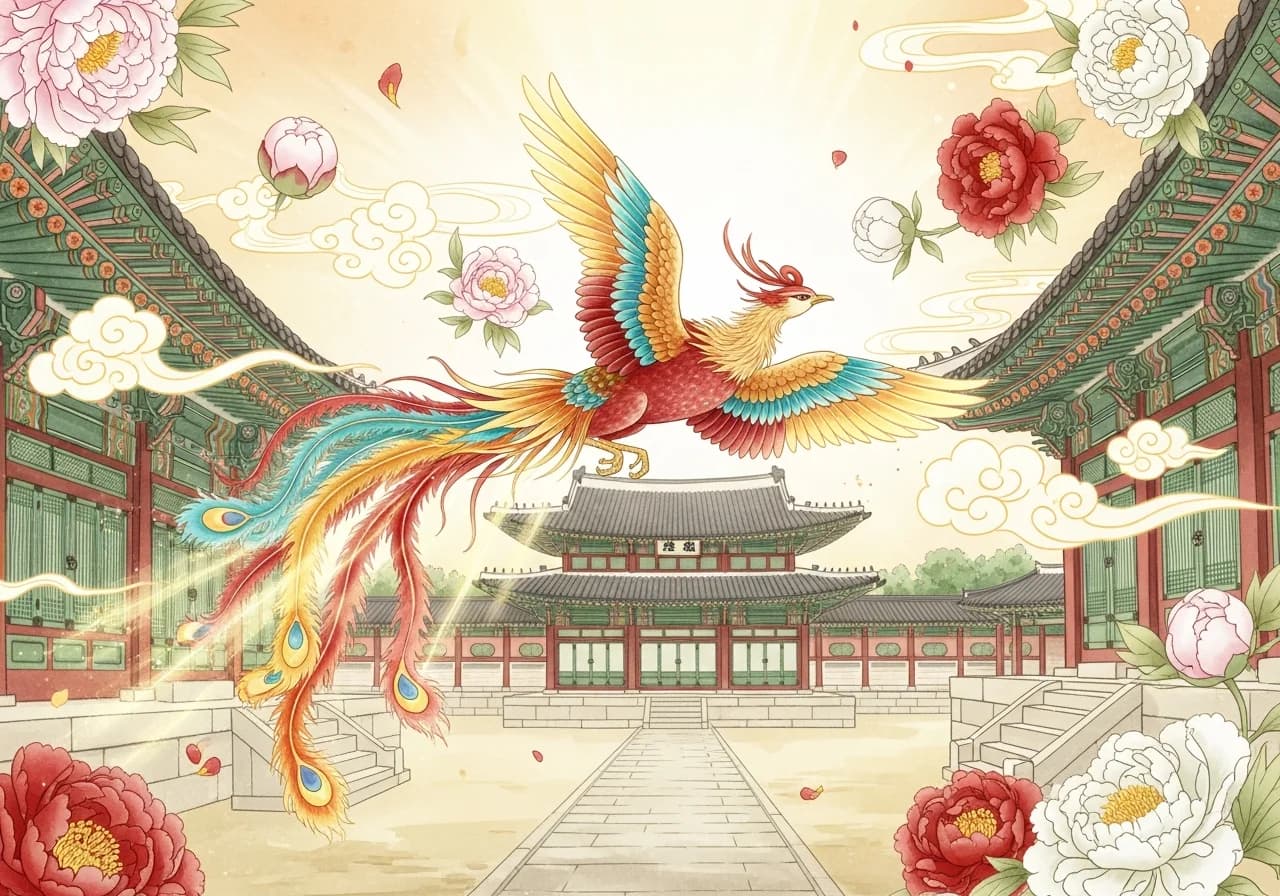
Phoenix dreams rank at the very pinnacle of Korean dream interpretation. A phoenix soaring with brilliant five-colored plumage foretells ascending to national leadership or achieving unrivaled fame and authority in politics, academia, or the arts. A phoenix flying into your home signals a joyous family occasion, the arrival of a distinguished guest, or honorable news — a sign that happiness and prosperity will settle in the household. Catching or cradling a phoenix represents acquiring great wealth and ascending to a position of leadership, while a phoenix singing beautifully from a tree symbolizes flourishing descendants and a family name that spreads far and wide. Riding a phoenix through the sky means meeting an ideal partner, gaining unexpected fortune, or achieving fame through scholarship and the arts.
When Phoenix Dreams Signal Caution
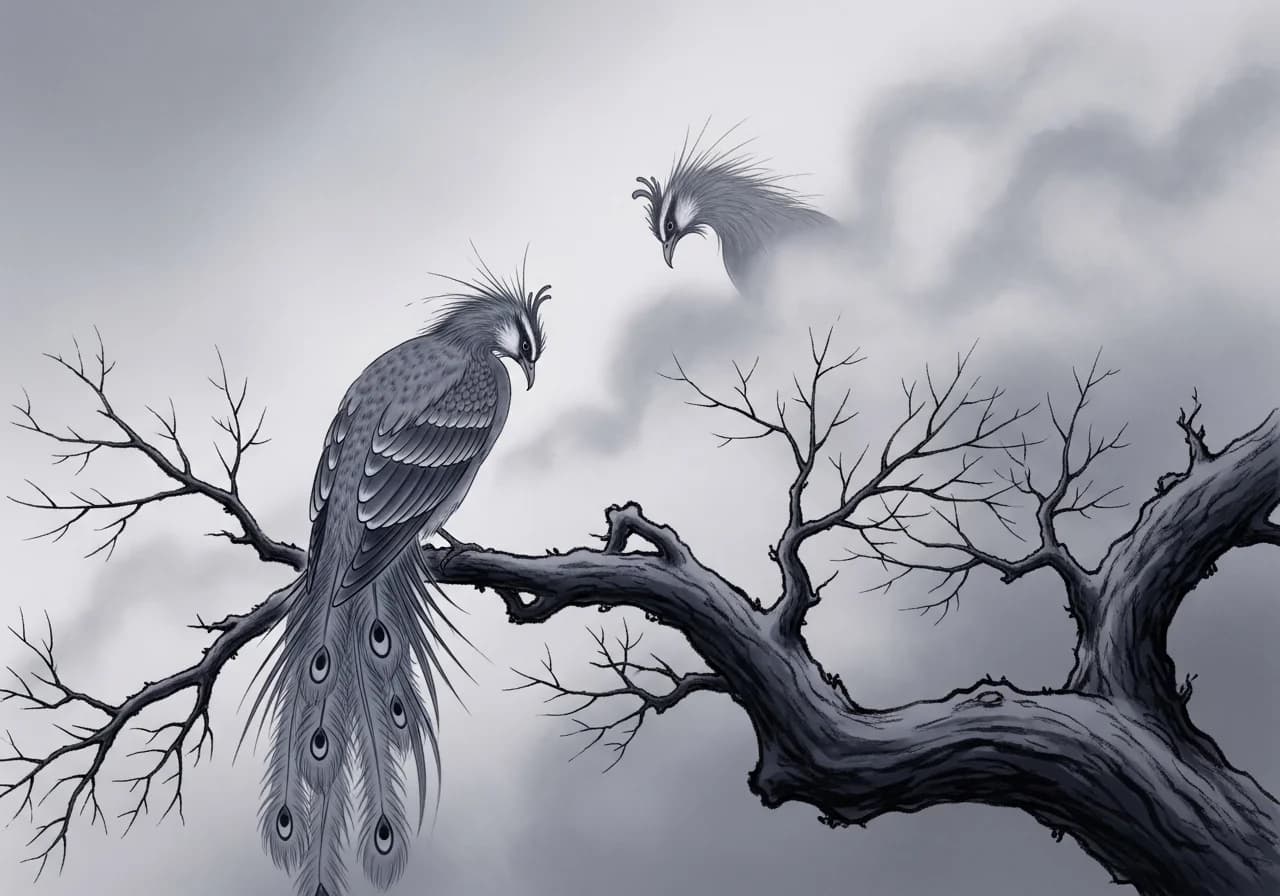
Inauspicious phoenix dreams are exceptionally rare, but they do exist. Seeing a wounded or dying phoenix may be interpreted as a warning that one's current status or fortune could weaken temporarily. A phoenix departing or fading away can suggest that opportunities or connections that have been building may briefly recede. However, these interpretations are uncommon — the overwhelming majority of phoenix dreams in Korean tradition carry auspicious meaning. Even a phoenix surrounded by flames carries a positive interpretation: rising through hardship to emerge stronger, like a firebird reborn from adversity.
The Phoenix as a Prenatal Dream (태몽)
A phoenix prenatal dream is considered the finest of all prenatal dreams in Korean tradition. When a phoenix appears in a prenatal dream, it signals that the child to be born will be a person of genius — someone who will grow into a great, world-renowned figure excelling in culture, martial arts, academics, or the arts. If a pair of phoenixes appears together (the male 봉 and female 황), it may suggest that two children will both grow into accomplished individuals. A phoenix holding a sacred jade orb or jewel in its beak is specifically interpreted as a sign that the child will become a celebrated celebrity, professional, or artist — someone whose brilliance will shine across all endeavors.
Dream Variations
Phoenix Soaring High Into the Sky
A greatly auspicious dream where social status rises sharply or a long-pursued goal finally comes to fruition. A turning point — promotion, exam success, or election victory — is near.
Phoenix Prenatal Dream (봉황 태몽)
A phoenix prenatal dream is considered the finest of all prenatal dreams, foretelling a child who will grow into a great person of genius, known to the world — excelling in both culture and martial arts, or leaving an unmatched mark in arts or scholarship.
Dreaming of a Pair of Phoenixes (봉과 황)
When the male (봉) and female (황) phoenixes appear together, it deepens marital harmony and family peace — or, as a prenatal dream, suggests two children who will both become accomplished individuals.
Phoenix Rising From Flames
A phoenix rising from flames symbolizes overcoming current trials and hardships like a firebird, emerging stronger — a dream foretelling a brilliant comeback after setbacks or failure.
Phoenix Perched on the Roof
A phoenix perched on roof tiles is an auspicious sign of family celebration, social advancement, and the arrival of distinguished guests. It signals a flourishing business and rising family prestige.
Touching or Stroking a Phoenix
Touching or stroking a phoenix symbolizes forming a precious bond or finding power, honor, and wealth within reach. It indicates the luck of meeting an unexpected patron or noble benefactor.
Phoenix Bringing Gifts or Seeds
A phoenix bringing miraculous seeds or gifts means meeting a noble helper who will provide crucial assistance, leading to a prosperous life and a decisive opportunity in business or study.
A Crane Transforming Into a Phoenix
A crane transforming into a phoenix symbolizes a figure from education, media, or culture entering politics or growing into an outstanding leader — leaping beyond one's field to a much larger stage.
Receiving an Object Engraved with a Phoenix
Receiving clothing, a vessel, or a seal engraved with a phoenix pattern hints at ascending to a position of authority or receiving official recognition from the state or an organization.
Cultural Context
The 봉황 (鳳凰, pronounced bong-hwang) is the supreme sacred bird in East Asian tradition, closely related to but distinct from the Chinese fenghuang. In Korea, it has developed into its own deeply rooted cultural symbol over millennia. Ancient texts describe it as appearing only in a nation governed by a virtuous ruler — an embodiment of the Five Virtues: benevolence (인), righteousness (의), propriety (예), virtue (덕), and trust (신), each represented by a different part of its body.
During the Joseon dynasty, the phoenix became the emblematic symbol of the queen consort: her robes were woven with phoenix brocade, gilt-stamped with phoenix motifs, and adorned with embroidered phoenix rank badges. The court music piece 봉황음 (Phoenix Chant), revised by scholar Yoon Hwe under King Sejong, praised virtuous governance, while the court dance 봉래의 (Phoenix Comes) depicted the phoenix descending to celebrate a sage king's reign. Goryeo celadon ceramics (고려청자) featured incised phoenix designs as marks of royal prestige.
In modern South Korea, the phoenix remains the official emblem of the presidency: the presidential seal depicts two phoenixes flanking a hibiscus flower, officially representing freedom, peace, and prosperity. This is fundamentally different from the Western phoenix myth, which centers on death and rebirth through fire. The Korean 봉황 has no intrinsic connection to fire and instead symbolizes virtuous governance, nobility, and auspiciousness.
Western Psychological Perspectives
Western psychology offers rich and complementary lenses through which to understand why phoenix dreams feel so significant and transformative.
From a Freudian perspective, the phoenix's brilliant plumage and soaring flight reflect repressed wishes for grandeur and ego expansion. Dreams of catching or riding a phoenix may symbolize desires for control and dominance, expressing unconscious power drives in symbolic form. Freud would likely interpret the phoenix's ascent as the dream-self's liberation from the constraints that hold ambition in check during waking life.
In Jungian psychology, the phoenix is a powerful archetypal image from the collective unconscious, connected to the completion of the Self and the individuation process. The phoenix represents the full realization of one's psychological wholeness — when combined with the Western fire-rebirth motif, it symbolizes the death and renewal of the ego, integration of the shadow, and holistic psychological growth toward one's most complete self.
Modern cognitive psychology interprets phoenix dreams as reflecting heightened self-efficacy and strong achievement motivation. These dreams often emerge at major life turning points, signaling that the unconscious mind has recognized one's readiness to make a significant leap forward. Researchers in dream psychology note that aspirational symbols like the phoenix tend to appear when a person has been building toward a goal and is nearing a threshold of action.
Across world cultures, phoenix-like birds universally represent rebirth, immortality, and excellence — Egypt's Bennu, Greece's Phoenix, China's Fenghuang, and Persia's Simurgh all share similarly auspicious status. What makes the Korean 봉황 unique is its emphasis on virtuous governance and royal authority rather than cyclical fire-death-rebirth, making it one of the purest symbols of legitimate greatness across all cultural dream traditions.
Frequently Asked Questions
The phoenix stands at the very summit of Korean dream symbolism — a luminous herald of fame, wealth, family prosperity, and extraordinary descendants. Whether your phoenix soared skyward, flew into your home, or appeared as a prenatal dream, the message is consistent: a brilliant turning point is within reach. Let the phoenix in your dream be a source of confidence and courage as you move forward. The sky it opened belongs to you.
Related Dreams
Dragon Dream Meaning — Korean Dream Interpretation Complete Guide
Dragon Ascending to Heaven Dream Meaning — Korea's Most Auspicious Omen
Eagle Dream Meaning: What Korean Dream Tradition Says About the Sky's Ruler

Bird Flying Dream Meaning

Hawk Dream Meaning: Symbol of Power and Ambition
Golden Dragon Dream Meaning: The Most Auspicious Omen in Korean Dream Interpretation