Pig Taemong: Korea's Most Auspicious Conception Dream, Fully Decoded
In Korean dream tradition, few omens carry the weight of a pig taemong — a conception dream featuring a pig. It is widely considered the single most auspicious sign a soon-to-be parent can receive, heralding a child born under the protection of the deity of material wealth. But here is the nuance that makes pig taemong so fascinating: the color, size, and behavior of the pig dramatically alter what the dream predicts — including a surprisingly detailed set of folk beliefs about whether the child will be a boy or a girl.
Why Pig Taemong Is the Gold Standard of Auspicious Conception Dreams
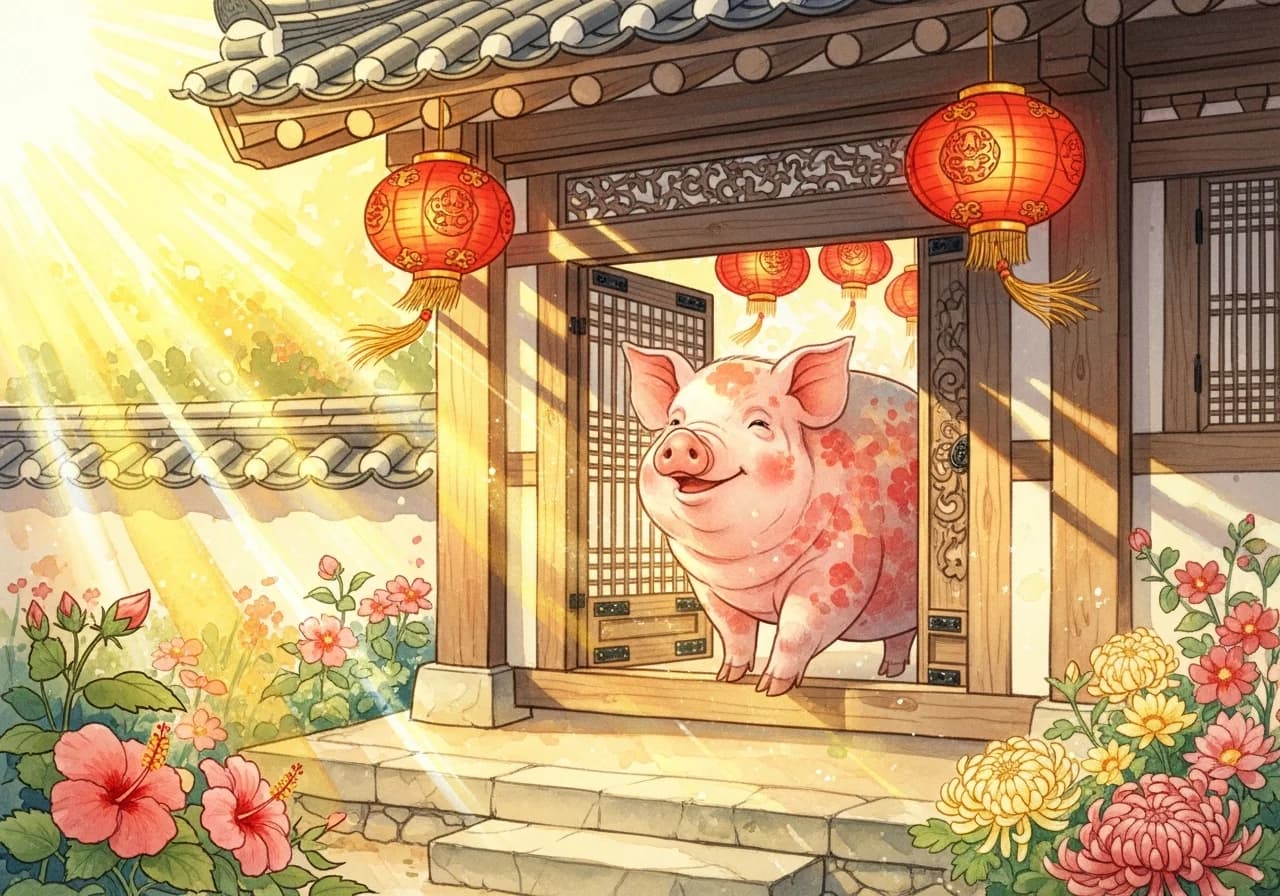
The pig occupies a singular position in Korean cultural symbolism. Its generous body represents material abundance; its prolific fertility embodies prosperity and continuation of the family line. Since ancient times, pork has been the offering of choice in ancestral rites and shamanistic gut ceremonies, making the pig a living channel between the human world and the realm of good fortune.
When a pig appears in a conception dream, this deep symbolic heritage floods into the interpretation. A large, plump, glossy pig in the dream is read as a powerful omen of a child who will thrive financially and be richly loved. The dream of a pig charging boldly into the family home is among the most celebrated taemong scenarios in all of Korean folk tradition — it predicts a child who will rise to wealth and high standing, and who will bring blessings to every member of the household.
Golden Pig Taemong: The Most Powerful Omen of All
If any pig taemong raises the excitement level in a Korean household, it is the golden pig dream. A pig radiating golden light is said to foretell not merely a financially comfortable life but an extraordinary one — the birth of a future celebrity, magnate, or widely admired public figure. Korean families who hear of a golden pig taemong often react with genuine awe, telling the expectant mother she is carrying a child destined for a spectacular life.
This belief intersects with the folk tradition surrounding the Year of the Golden Pig (a rare alignment in the Chinese zodiac cycle), when children born are believed to inherit exceptional luck. A golden pig taemong dream amplifies those associations to their maximum intensity.
Wild Boar Taemong: Intellect, Leadership, and a Strong Will

When the pig in the dream is not a domestic pig but a wild boar (멧돼지), the interpretation shifts in a distinctive direction. The wild boar is read as a symbol of a child with a brilliant mind, powerful leadership instincts, and an unstoppable drive. A charging wild boar in particular suggests a proactive, courageous, and strong-willed child — the kind who may rise to prominent positions in academia, government, or a respected field.
The wild boar's untamed nature is a double-edged quality in these interpretations: it promises greatness but also forewarns of a personality that will be difficult to direct. Korean grandparents sometimes joke that a wild boar taemong means the parents will have their hands full — but what those hands hold will be worth it.
Pig Taemong and Gender Prediction: Boy or Girl?
One of the most discussed aspects of pig taemong is its use in folk gender prediction. Korean tradition has developed a detailed set of associations based on the pig's appearance and behavior:
Signs of a boy: A black pig, a large and powerful pig, a wild boar, or a pig charging directly into the front of the house.
Signs of a girl: A white pig, a pink pig, or a piglet quietly slipping into the dreamer's bedding.
It bears repeating: these are folk beliefs with no scientific basis. The accuracy of taemong gender prediction is roughly 50-50 — exactly what chance alone would predict. Medical ultrasound remains the only reliable method. That said, the cultural tradition of discussing these interpretations is itself meaningful — it invites family participation and shared excitement around the pregnancy in a way that is genuinely lovely, whatever the outcome.
Dream Variations
White Pig Taemong
A white pig taemong foretells the birth of a pure, healthy child with strong intellectual gifts — someone likely to pursue a career in medicine, academia, or education. In folk tradition, the white pig is also commonly associated with the birth of a daughter.
Black Pig Taemong
A black pig taemong suggests the birth of a child with powerful leadership energy and natural charisma. This child may be destined to lead — in politics, business, or a major organization. Folk tradition typically reads the black pig as an omen of a son.
Golden Pig Taemong
The golden pig is the pinnacle of pig taemong. It foretells a child whose life will be defined by extraordinary wealth and fame — a future celebrity, entrepreneur, or cultural figure of renown. If you have this dream, expect your family to be very excited.
Pink Pig Taemong
A pink pig taemong foretells the birth of a child with deep emotional sensitivity and natural artistic talent. This child is said to have strong potential in entertainment, fine arts, or creative design — someone with an innate sense of beauty and feeling.
Large Pig Taemong
Dreaming of a large, plump, glossy pig is one of the clearest auspicious omens among pig taemong. The dream foretells a child who will grow up healthy and richly blessed. Korean tradition holds a simple principle here: the bigger and fatter the pig, the greater the child's destined fortune.
Pig Entering Home Taemong
A pig entering the family home is one of the most celebrated taemong scenarios in Korean tradition. It foretells the birth of a child who will achieve high social standing and material abundance — and who will bring that fortune back to the entire family as a blessing shared by all.
Piglet Taemong
A piglet taemong foretells a child blessed with strong financial fortune. Multiple piglets suggest a family destined for warm sibling bonds and an abundant household. A single piglet indicates an only child who is nevertheless exceptionally favored by luck.
Wild Boar Taemong
A wild boar taemong foretells a child with a brilliant, sharp mind and instinctive leadership. A charging boar amplifies this: it suggests a proactive, courageous, and highly determined child who may rise to scholarly distinction or high authority. Be prepared for a strong personality.
Embracing a Pig Taemong
Dreaming of embracing or holding a pig is an auspicious taemong foretelling the birth of a richly blessed and financially fortunate child. The child is said to grow up lively, spirited, and deeply beloved by the people around them — someone who draws warmth and loyalty naturally.
Multiple Pigs Taemong
A taemong featuring multiple pigs suggests a child who will be abundantly blessed and achieve notable social success. A whole herd of pigs entering the home is an especially powerful omen — it signals that multiple waves of good fortune are heading toward the family.
Cultural Context
The pig holds deep roots in Korean cultural life as a symbol of fortune (복, bok). Since ancient times, pork has been the indispensable offering in ancestral rites and shamanistic gut ceremonies — the pig was the animal most closely associated with calling in good fortune and appeasing the spirits who governed material wellbeing. Its plump body symbolized abundance; its prolific fertility represented the continuation and expansion of the family line.
In Korean folk religion and shamanism (무속), pigs were specifically connected to the deity of material wealth, and a pig taemong was understood as a sign that the incoming child had been placed under that deity's personal protection. This tradition has documented roots reaching back to the Samguk Yusa and other ancient Korean historical records, where taemong dreams are recorded as meaningful signs preceding the birth of notable historical figures.
Within yin-yang cosmology, the pig was considered to carry strong yang energy, which forged a particularly close folk association between pig taemong and the prediction of male children. The related belief that children born in the Year of the Golden Pig (a rare calendrical alignment) inherit exceptional luck has further reinforced the pig's enduring cultural status as the supreme bringer of fortune.
Today, pig taemong remains one of the most celebrated conception dreams in Korean society. Announcing a pig taemong to family members still reliably draws warm, enthusiastic reactions — a living thread connecting contemporary Korean families to centuries of folk tradition.
Western Psychological Perspectives
The pig carries strikingly different symbolic freight in Western psychological traditions compared to Korean taemong culture — a contrast that reveals how profoundly cultural context shapes the meanings we assign to dream images.
From a Freudian psychoanalytic perspective, the pig is often associated with the id's raw impulses — appetite, pleasure, and material desire in their least inhibited form. A pig appearing in a pregnancy dream could be interpreted as an unconscious expression of the wish for abundance surrounding the new arrival, or as the dreaming mind processing the seismic emotional weight of impending parenthood. In Freudian terms, taemong is less a supernatural prophecy than a form of dreamwork: hopes and anxieties about the child's future condensed into vivid symbolic imagery.
Jungian analytical psychology offers a more culturally convergent reading. For Jung, the pig is an archetype of abundance and earth — a symbol drawn from the collective unconscious that appears across many world traditions as a primal image of fertility and material completion. This directly overlaps with the Korean taemong tradition. Jung viewed pregnancy dreams as metaphors for individuation — the emergence of a new self — and the pig image in this framework may represent a nascent life arriving with extraordinary vital energy and potential.
Modern cognitive neuroscience notes that hormonal shifts during pregnancy reliably intensify dreaming, making imagery more vivid and emotionally charged. Striking cultural symbols like pigs may surface as the pregnant brain integrates absorbed cultural expectations and social narratives during sleep. Whether or not pig taemong holds predictive power, the ritual of sharing and discussing these dreams clearly serves a documented psychological function: it builds community around the pregnancy, strengthens family bonds, and channels collective hope and excitement in a socially constructive way.
Perhaps the most striking observation is simply this: in Korean culture, dreaming of a pig is among the most joyful omens imaginable. In Western symbolic tradition, the same pig dream might prompt reflection on greed or the shadow self. The image is identical; the meaning is entirely a product of the cultural lens through which it is read.
Frequently Asked Questions
Pig taemong stands at the very top of Korean conception dream tradition — a dream so consistently auspicious that hearing about one reliably brightens the mood of everyone in the family. Whether the pig is golden, large, entering the home, or nestled in your arms as a piglet, the tradition speaks with one voice: this child is arriving with remarkable fortune. If you've had a pig taemong, the long thread of Korean folk wisdom says there is every reason to celebrate.