Pulling Teeth Dream Meaning
Dreaming of pulling out a tooth is one of the most emotionally charged experiences the sleeping mind can produce — and in Korean dream tradition, it is rarely random. Unlike dreams where teeth simply fall out, actively pulling a tooth introduces an element of agency and deliberate choice. Whether this dream brings good news or a warning depends almost entirely on three factors: the condition of the tooth, whether blood is present, and how you feel the moment after the extraction.
Pulling a Rotten or Painful Tooth — A Strong Auspicious Omen

Extracting a tooth that has been rotten, aching, or troublesome in the dream is a powerful good omen. It signals that a long-standing problem, conflict, or financial blockage is finally on its way to resolution. The act of self-extraction represents personal decisiveness — a dream message that stepping up to deal with something directly will yield positive results. If the socket looks clean and healthy afterward, or if you feel a wave of relief, this amplifies the positive reading: not only is the problem being solved, but something new and better is taking its place.
Forcibly Pulling a Healthy Tooth with Heavy Bleeding — An Inauspicious Warning

When a healthy tooth is yanked out against resistance and the extraction produces heavy bleeding and intense pain, Korean dream tradition reads this as a serious warning. It may signal that a current plan or project is heading for sudden collapse, or that someone in your family could face a health crisis. This connects to the traditional concept of 혈광지재 (hyeolgwang-jijae) — misfortune marked by blood — which treats any bloody tooth dream as an omen requiring particular attention. Pulling an upper tooth forcibly warns of trouble involving a parent or superior; a lower tooth points to a child, subordinate, or junior.
The Tooth Won't Come Out or Breaks Mid-Extraction — Frustration Ahead
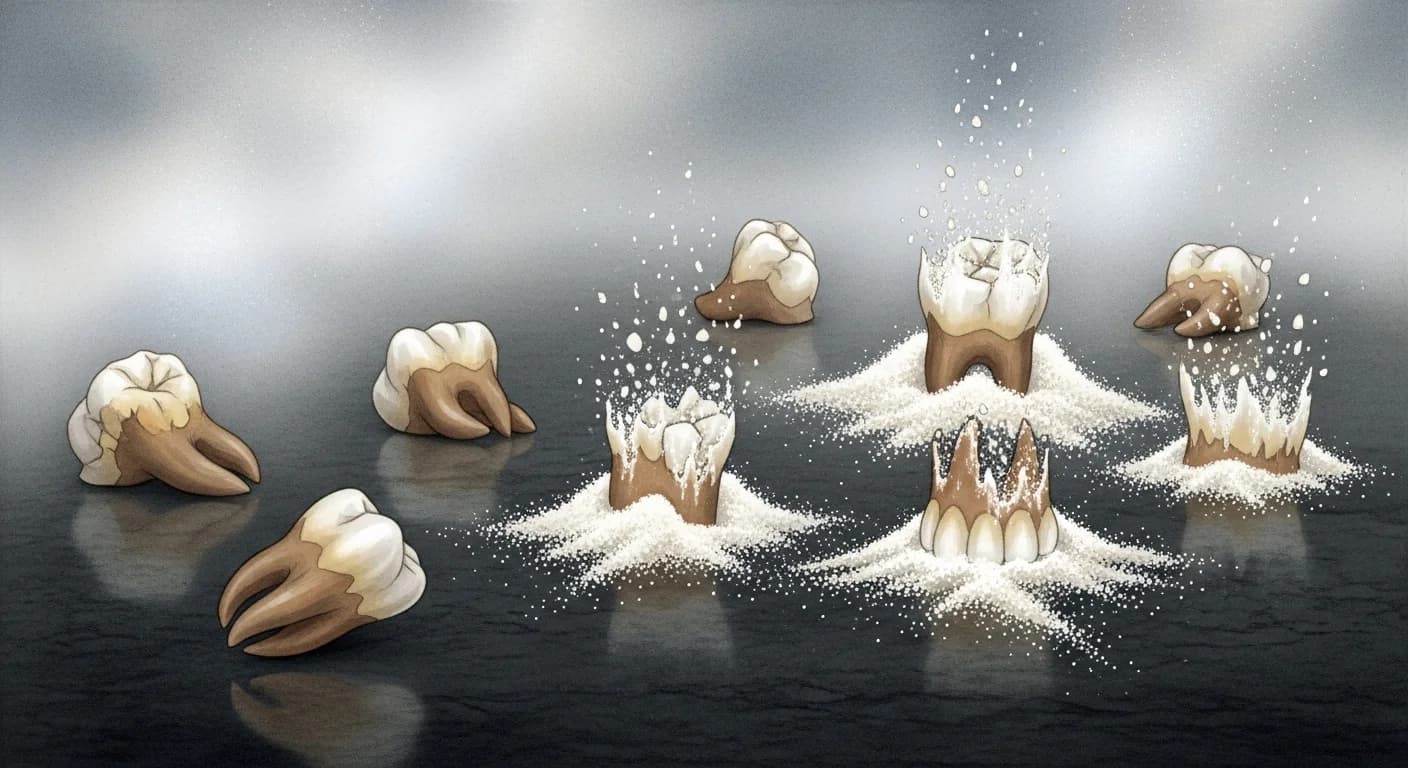
If you struggle to pull a tooth and it resists your efforts, or it breaks partway through, this signals that a problem you are actively trying to solve will not yield easily. Despite sustained effort, your goals may fall short or a conflict may escalate rather than resolve. A tooth that comes out only halfway or in fragments suggests an incomplete, unsatisfying resolution — partial progress that leaves the core issue unaddressed. The stronger your frustration within the dream, the more resistance you can expect in waking life.
A Dentist Pulling Your Tooth — Generally Auspicious
Having a dentist perform the extraction is generally read as a positive sign: an expert, mentor, or trusted person will step in to help resolve something you could not handle on your own. The more skilled and composed the dentist appears, the more decisive and effective that outside help will be. If the overall mood of the dream is calm and clinical, it may also simply reflect the mind processing current stress through a familiar imagery system — a form of psychological release rather than a literal prophecy.
Dream Variations
Pulling Your Own Tooth by Hand
Extracting your own tooth with your bare hands symbolizes decisive personal agency. It signals that the time has come — or is coming — to make a clear, self-directed decision about a long-standing issue, relationship, or situation. A clean, easy extraction bodes well for the outcome. A painful, difficult one warns that the decision ahead will carry an emotional cost.
Painless Tooth Extraction
A tooth that comes out easily and without pain is a positive sign — it suggests an obstacle or worry will dissolve more smoothly than expected, with less conflict than you feared. However, if a perfectly healthy tooth slides out with zero sensation or awareness, pay attention: it can serve as a quiet warning that something important is slipping away unnoticed while you remain emotionally detached.
Tooth Extraction with Heavy Bleeding
Heavy bleeding during a tooth extraction invokes the Korean concept of 혈광지재 — blood-marked misfortune — and is interpreted as a warning that a family member or close friend may soon face an accident, illness, or significant bad news. The greater the volume of blood in the dream, the larger the predicted misfortune. After this dream, heightened attention to the health and safety of your loved ones is advised.
Pulling Out a Rotten Tooth
Extracting a decayed or rotten tooth is a classic good omen in Korean dream interpretation. It signals the clean removal of something that has been festering — a toxic relationship, a chronic financial burden, or a long-unresolved conflict. The post-extraction sense of relief mirrors the relief you can expect in waking life. This dream is associated with purification and renewal: expelling the old to make genuine room for what is new.
Pulling an Upper Tooth
Upper teeth represent parents, superiors, older siblings, and mentors in Korean dream tradition. Pulling an upper tooth signals an impending change or separation in that relationship. If the extraction is smooth and clean, it points to a natural transition — a parting of ways that makes sense for everyone. If the extraction is painful or bloody, it warns of genuine trouble coming to that person.
Pulling a Lower Tooth
Lower teeth symbolize children, subordinates, juniors, and those in your care. Pulling a lower tooth forewarns of difficulty or separation involving someone in that role — a child's health concern, a team member's departure, or a junior's struggle. It is a dream that calls for checking in on the people who depend on you.
Pulling Someone Else's Tooth
Playing the role of dentist for someone else — pulling their tooth — signals that you are about to become a decisive factor in resolving their problem. A bloodless, easy extraction is an auspicious sign: your involvement will be welcomed and effective. If the process draws blood or meets resistance, it warns that the other person may face serious difficulty, and that even your best efforts may not fully protect them.
A Dentist Pulling Your Tooth
Dreaming of a dentist performing the extraction signals that professional help — from an expert, mentor, or trusted ally — will arrive to handle what you couldn't manage alone. The smoother and more confident the dentist's manner, the more effective that help will prove to be. An incompetent or clumsy dentist, however, warns that the help you're counting on may fall short of what the situation actually requires.
Cultural Context
In Korean folk dream tradition, teeth have long served as symbolic proxies for the people in a dreamer's life — each tooth representing a family member or member of one's social network. The general belief that 'dreaming of losing teeth brings household misfortune' has been passed down for centuries. However, the act of actively pulling a tooth sets this dream apart from passive tooth-loss dreams. In the Joseon-era tradition of mong-seo (dream interpretation texts), self-extraction was specifically read as a decisive act — 'to expel or resolve something of your own accord.' The key interpretive variables have remained consistent across centuries: the tooth's condition (healthy vs. rotten), the presence of blood (clean vs. bleeding), and the quality of feeling in the aftermath (relief vs. distress). Removing a rotten tooth was understood as an act of ritual purification — the symbolic expulsion of decay to make room for renewal. Bloody extractions, meanwhile, fell under the umbrella of 혈광지재 (blood-marked misfortune), making them among the most watched omens in the traditional canon.
Western Psychological Perspectives
Tooth-loss and tooth-extraction dreams rank among the most universally reported dream experiences across cultures and historical periods, suggesting they tap into deep archetypal anxieties shared by the human mind. Freud interpreted tooth dreams primarily through the lens of castration anxiety and sexual repression — the active pulling of a tooth representing the deliberate suppression or abandonment of something vital to the self. The pulling motion specifically points to themes of control, autonomy, and internalized aggression. Jung offered a different reading, framing tooth-extraction dreams as expressions of the individuation process — the conscious shedding of an outdated ego structure or a role the self has outgrown. Teeth symbolize ego-strength and the capacity to assert boundaries; voluntarily removing one signals readiness to release an old identity and move toward a more integrated selfhood. Modern sleep psychology treats tooth-pulling dreams primarily as stress responses. Research consistently shows that these dreams spike during periods of major life transition — career changes, relationship endings, relocation, significant loss. The active, irreversible nature of the pulling action reflects the psychological weight of decisions that cannot be undone. Across East Asian traditions, Chinese and Japanese dream interpretation mirrors the Korean framework: teeth symbolize family and relational bonds, and extraction dreams signal impending changes in those bonds. Japanese tradition specifically frames pulled teeth as severed fate-threads — relationships deliberately ended rather than lost by accident.
Frequently Asked Questions
A tooth-pulling dream can be a powerful good omen or a meaningful warning — and the difference comes down to three things: the tooth's condition, whether blood appears, and how you feel in the moments after. A clean extraction of a rotten or aching tooth, especially one followed by a sense of relief, is telling you that a long-standing burden is about to lift. A forceful, bloody extraction of a healthy tooth is asking you to pay attention to the people you care about. Above all, this dream is a call to awareness: something in your life requires a decisive choice, and the dream is showing you, in vivid symbolic terms, what kind of outcome your current approach is pointing toward.