Running But Not Moving Forward: Dream Meaning & Korean Interpretation
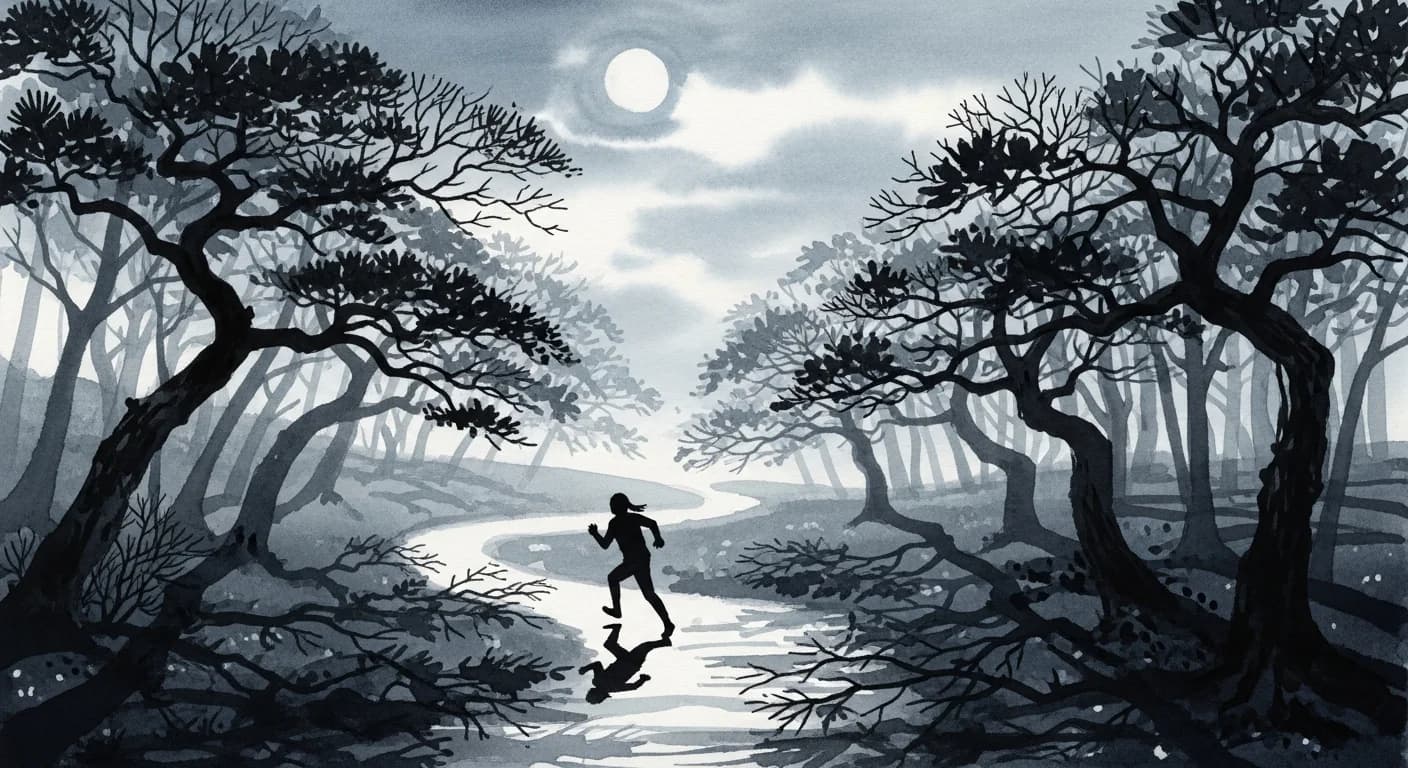
If you dreamed of sprinting with every ounce of effort — legs pumping, breath sharp — yet finding yourself exactly where you started, Korean dream tradition has a name for this: 허사수고 (虛事受苦), futile labor and suffering. This is one of the most recognizable inauspicious dream (흉몽) types in Korean folk interpretation, signaling that sincere effort may not yield the results you expect in the near future. But here's the nuance worth knowing — the same 'running without moving' dream carries very different warnings depending on whether your legs feel heavy, whether you're being chased, or whether you're simply running in agonizing slow motion.
Career and Work Fortune: Running in Place
In Korean dream interpretation (해몽), running without gaining ground is most directly associated with career stagnation. Despite your genuine hard work, the promotion or significant advancement you are hoping for is unlikely to materialize soon. At best, lateral moves — a department transfer, a role change — may occur, but a genuine breakthrough is not on the horizon.
The dream's message is less about fate and more about method. If running harder isn't closing the distance, the question becomes whether you're running in the right direction at all. This is a prompt to reassess your strategy rather than simply increase effort. Pause, review, and consider what obstacles may be hiding in plain sight.
Financial Fortune: The Slow-Motion Run
Running in agonizing slow motion despite maximum exertion points to a period of financial frustration. Your investment of time, money, or energy may produce disappointing returns. Business ventures risk underperforming expectations, and financial strain may become more visible in the weeks ahead.
Korean dream tradition interprets slow-motion running as a sign that external currents are working against you — not just that you're slow. Expanding investments or making large financial decisions during this period is inadvisable. A defensive posture — reviewing your finances, reducing unnecessary expenses, and building reserves — is wiser than pushing for aggressive gains.
Being Chased While Unable to Run: Pressure and Crisis
Being pursued by someone or something while your body refuses to obey is the most urgent variation of this dream. It signals intense psychological pressure from waking life — a demanding superior, a threatening competitor, or overwhelming responsibility from which there seems to be no escape. The dreamer may be pushed into situations that exceed their current capabilities.
In the Korean shamanic (무속) tradition, a body frozen in flight was sometimes seen as evidence of external spiritual interference or an immovable force bearing down. In practical terms, the dream warns that you cannot handle this alone. Seeking support, confronting the source of pressure directly, and not continuing to defer difficult conversations will be more effective than trying to run harder.
Heavy, Immovable Legs: Health and Family
When your legs feel like lead in a dream — too heavy to lift no matter how hard you try — Korean dream interpretation takes this as a warning about health, for yourself or a family member. All current endeavors risk coming undone simultaneously, suggesting a challenging period ahead on multiple fronts.
If you have been experiencing extreme fatigue in waking life, or have been neglecting your health in the pursuit of goals, this dream is worth taking seriously. Schedule that check-up you have been postponing. Pay closer attention to the health of people close to you.
Sluggish Running as Inner Reflection
Not every 'running without moving' dream is purely ominous. Some Korean interpreters view the dream of frustratingly slow movement as an invitation from the unconscious to stop and take stock. Are you running toward goals that are genuinely yours, or toward expectations imposed by others? Is the pace you are keeping sustainable?
The emotional tone of the dream matters greatly. If the feeling was frustration rather than fear, the dream may be less a warning and more a gentle nudge toward recalibration — a prompt to ask whether running harder is actually the answer.
Dream Variations
Dream of Running in Place
Running in place with no distance covered is a classic image of career stagnation. Despite clear effort, meaningful advancement — a promotion, a breakthrough project, a decisive win — remains out of reach. At best, lateral movement occurs. The dream suggests that this is a period for consolidation and strategic rethinking rather than aggressive pursuit of goals.
Dream of Being Chased While Unable to Run Forward
Being chased but unable to flee is the most alarming variation. Overwhelming pressure from powerful people or forces in waking life is indicated — an authority figure, a competitor, or a looming responsibility. The dreamer is likely being pushed beyond their current capacity and needs support from others rather than attempting to manage alone.
Dream of Heavy, Unresponsive Legs
Legs too heavy to lift in a dream signal concern for health — potentially your own or a family member's. Ongoing plans and projects risk comprehensive failure. If fatigue has been an issue recently, this dream is a strong prompt to prioritize recovery and attend to physical health before pushing further.
Dream of Running in Slow Motion
Running at maximum effort but moving in agonizing slow motion warns of financial frustration and the risk of falling behind on important matters. The gap between effort and results is the core theme. A change of strategy, method, or timing is more effective now than simply increasing the intensity of current efforts.
Dream of Running into a Blocked Path
Running and suddenly hitting a wall or blocked path warns that an unexpected obstacle will arise in a current plan or project. The disruption may come from relationships, business dealings, or unforeseen circumstances. Preparing backup plans and maintaining flexibility will reduce the impact when the blockage appears.
Dream of Collapsing from Exhaustion While Running
Collapsing mid-run reflects extreme physical and mental depletion in waking life. The dream warns of health deterioration from overwork, and may also signal approaching financial difficulties. The message is unambiguous: rest is not a luxury right now, it is a necessity. Recovery must come before any further push.
Cultural Context
In Korean traditional dream interpretation (해몽), the act of running carries a strong symbolic charge — it represents willpower and directed effort toward a goal. The dream's omen is determined entirely by its outcome: whether forward progress is achieved. Running swiftly and freely is a good omen (길몽) predicting achievement, while running that produces no movement has historically been associated with 허사수고 (虛事受苦) — futile labor and suffering — a firmly inauspicious classification.
In Korean shamanic tradition (무속), a body that refuses to obey in a dream was sometimes attributed to interference by wandering spirits (잡신) or to an overwhelming external force exceeding the dreamer's power to resist. This framing made the dream particularly alarming in traditional contexts, as it implied the problem was beyond individual will. Consulting a shaman or trusted elder was a common response.
From a modern physiological standpoint, the experience of being unable to run properly is rooted in muscle atonia — the natural suppression of voluntary muscle movement during REM sleep, caused by the brainstem releasing inhibitory neurotransmitters. The brain sends motor signals, but the muscles cannot act on them, producing the vivid mismatch of effortful straining with zero movement. Korean dream culture has long interpreted this physiological sensation through an ominous lens: if the body cannot move, the spirit or fortune is being obstructed.
Today, this dream type is one of the most discussed in Korean online dream communities (꿈해몽 커뮤니티), widely recognized as a classic stress dream reflecting workplace pressure, the growing gap between ambition and achievable reality, and the early warning signs of burnout.
Western Psychological Perspectives
Western psychology offers several illuminating frameworks for understanding why this dream is so universal — and what it may be telling you.
From a Freudian perspective, dreaming of running without moving forward is interpreted as motor inhibition caused by the ego's failure to reconcile repressed drives. Freud saw the body's refusal to obey in dreams as a case of frustrated wish-fulfillment — the id's desire to move toward a goal being actively blocked by the superego's censorship. The dreamer has something they strongly want in their unconscious, but internal conflict or guilt is preventing forward movement. The dream gives symbolic form to the tension between repressed desire and the demands of social reality.
Jung's analytical psychology reads this dream as an encounter with an archetypal obstacle on the path of individuation — the lifelong process of becoming who one truly is. The act of running represents the conscious ego's drive toward the deeper Self, while the inability to advance symbolizes resistance from the 'threshold guardian' archetype or the Shadow. For Jung, the dream signals that unconscious contents not yet integrated by the dreamer — emotions denied, talents unexplored, fears avoided — are actively obstructing growth. The motif is universal: the hero frozen before a defining trial, called to face what cannot be outrun.
Modern sleep science provides the most concrete explanation. During REM sleep, the brainstem releases glycine and GABA to inhibit spinal motor neurons, preventing the body from physically acting out dream movements. The brain fires signals to run; the muscles receive no effective command. This neurological mismatch is experienced as extreme resistance or paralysis within the dream. Psychological research has further established that this dream type correlates strongly with chronic stress, performance anxiety, and elevated cortisol — occurring significantly more often when individuals feel a loss of control or agency in their waking circumstances.
Where Korean tradition frames this dream as a practical warning about real-world outcomes, Western psychology frames it as an invitation for self-examination. Both traditions converge on the same core insight: something is blocking forward movement, and the answer lies not in running harder, but in understanding what — internally or externally — is holding you in place.
Frequently Asked Questions
Dreaming of running without moving forward is uncomfortable — but it carries a message worth hearing. Korean tradition calls it 허사수고: effort that goes unrewarded. But both Eastern and Western perspectives agree that the response is not to run harder. Pause. Check your direction. Ask what obstacles you may have been avoiding. Seek support when the burden exceeds what you can carry alone. Rest when your body and mind are sending warnings. The fact that this dream reached you is already a form of guidance — use it wisely.