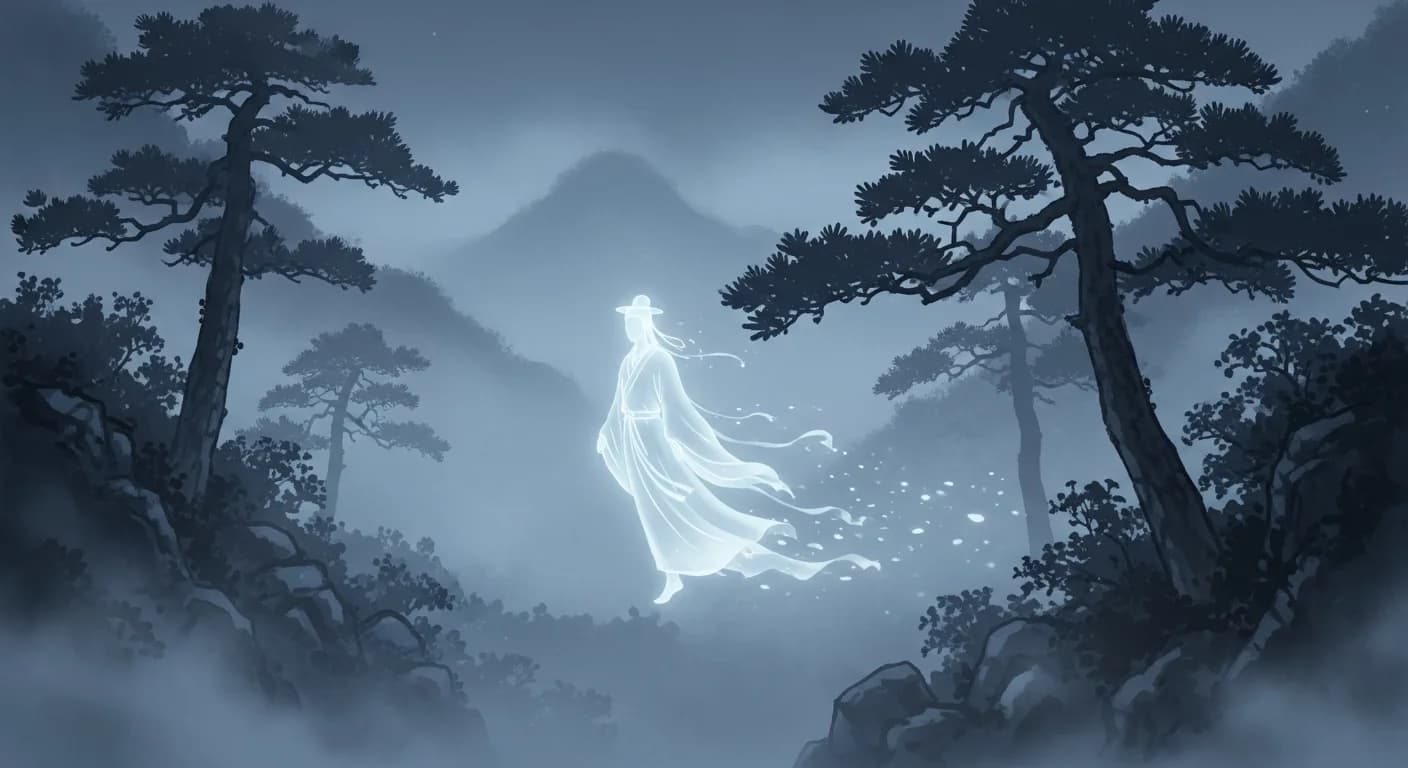
Ghost Dream Meaning — What Korean Dream Interpretation Reveals
Ghost dreams in Korean tradition are far more nuanced than a simple bad omen. Defeating a spirit in your dream is one of the strongest auspicious signs in the entire canon — signaling career advancement and the end of long-running hardship. The twist? Even being killed by a ghost flips to good fortune. But everything hinges on one thing: what actually happened inside the dream.
Auspicious Ghost Dream Interpretations
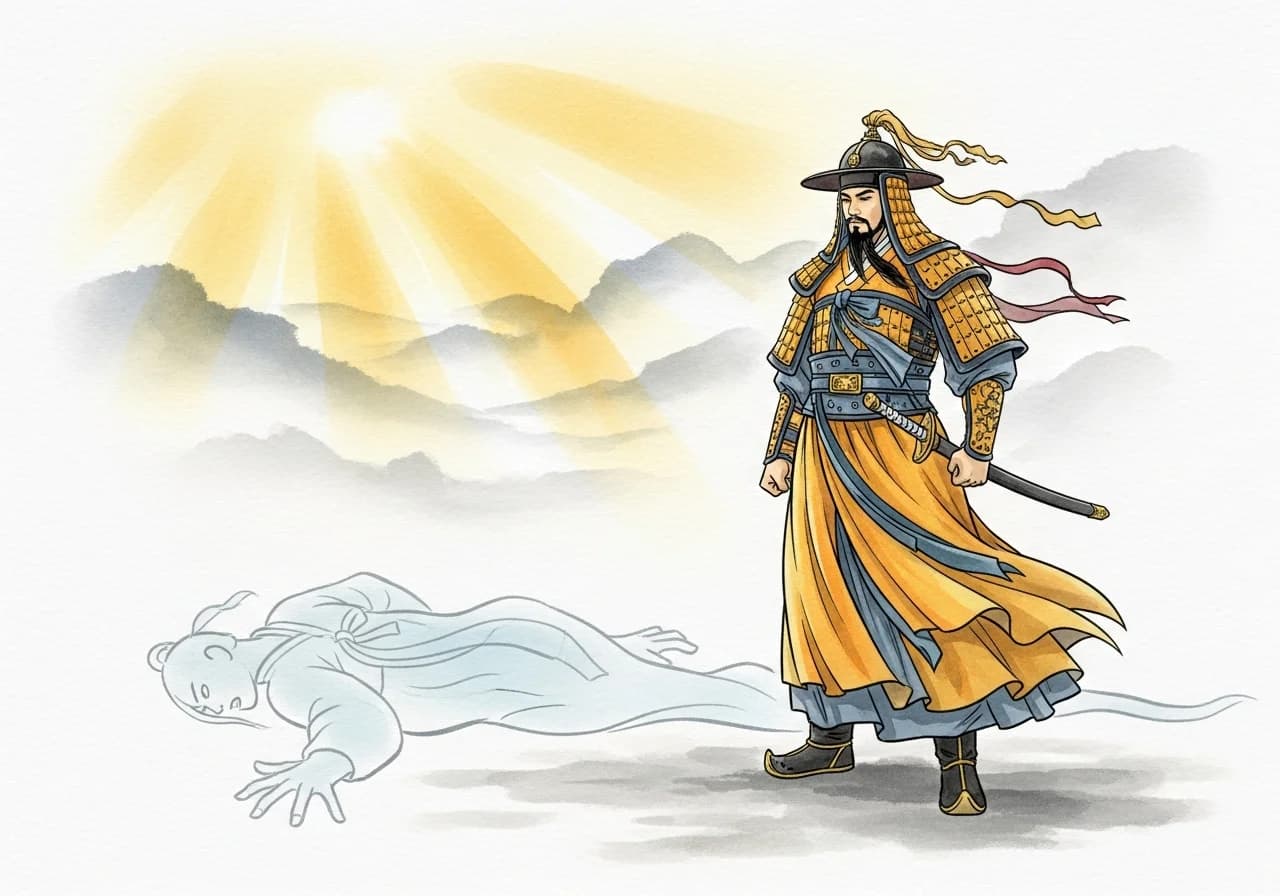
Fighting a spirit and winning is one of the most powerfully auspicious dream outcomes in Korean folk interpretation. It signals the end of a prolonged difficulty — a career promotion for those in employment, unexpected business success for entrepreneurs, and recovery of health for those who have been unwell. Traditional interpretation goes further: defeating the ghost (or yin energy) with yang force can signify extended longevity and incoming great fortune.
Perhaps the most surprising reading: being killed by a ghost in a dream is also auspicious. Death in a dream symbolizes the end of one phase and the beginning of another. In Korean dream interpretation, this signals a complete reversal of a difficult current situation, with an unexpected helpful figure (귀인) appearing to offer a way out. Successfully escaping from a pursuing ghost carries a similar positive charge — it is read as a victory omen, predicting that you will outmaneuver rivals in competition, examination, or business.
Becoming a ghost yourself in the dream is another auspicious variant. It suggests rising financial fortune or the acquisition of a position of leadership and influence within your organization — the dreamer stepping into a position of power and emerging stronger from current challenges.
Inauspicious Ghost Dream Interpretations
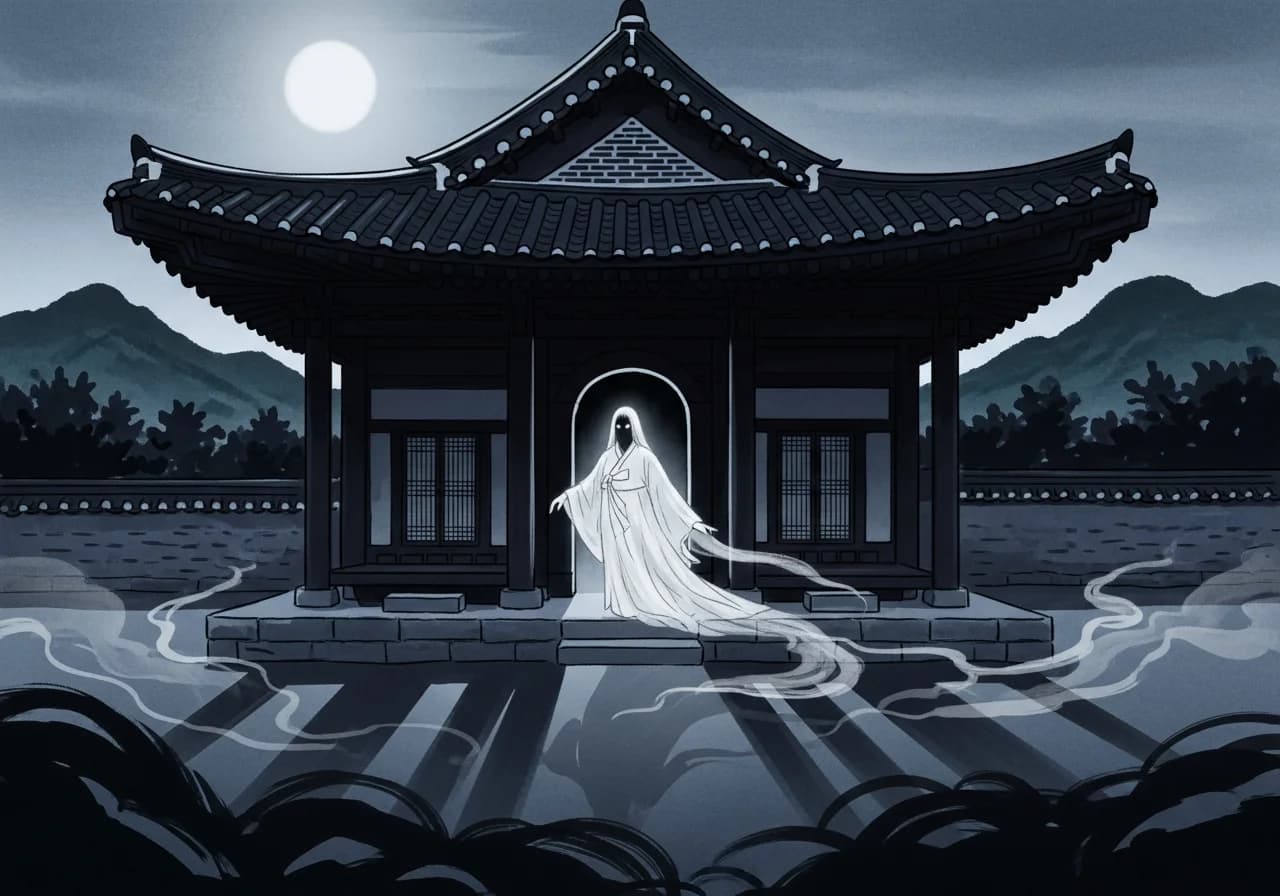
A ghost entering your home is one of the clearest warning dreams in this category. It signals misfortune entering the household — a family member's health may deteriorate, or disputes, deception, or financial conflict may emerge within the family. If you experience this dream, it is worth paying close attention to household health and financial matters.
A spirit grabbing your head or dragging your body warns of mental instability, severe headaches, or risk of accidents. This dream also cautions against becoming entangled in dubious or suspicious dealings — exercise heightened discernment in your daily interactions. A ghost calling your name or speaking directly to you carries a similar warning: sudden illness or an unexpected accident may be approaching. Attend to health check-ups and practice physical caution.
Being chased and caught by a ghost suggests an inescapable situation approaching — financial hardship, legal entanglement, or a deeply complicated interpersonal conflict that will be difficult to exit. If you were caught in the dream rather than escaping, take extra care with financial agreements, contracts, and the intentions of people around you.
Context-Dependent Ghost Dream Interpretations
Some ghost dreams resist a clear verdict and turn entirely on atmosphere. Conversing calmly with a ghost is the most nuanced example. If the ghost is gentle and the exchange feels comfortable, it signals improving relationships and a promising new connection entering your life. If the conversation feels uneasy or suspicious, it warns of a deceptive person operating within your close circle.
Holding a ghost's hand is a deeply introspective dream image. It represents a confrontation with hidden or repressed emotions — feelings you have been reluctant to acknowledge in waking life. This can signify reconciliation with a suppressed aspect of yourself, or it can point to unresolved emotional business within a close relationship. If this dream visits you, it may be worth setting aside some honest, quiet time for self-reflection.
Dream Variations
Female Ghost (처녀귀신) Dream
Dreaming of a female ghost (처녀귀신), typically depicted in white robes with long black hair, warns of wounds or conflict in relationships. Betrayal or unexpected disappointment from someone close may be approaching — it is a prompt to reassess trust in your interpersonal circle.
Child Ghost Dream
A child or baby ghost in a dream foretells petty but persistent friction and gossip in interpersonal relationships. While not a crisis omen, it warns of minor but ongoing annoyances that can erode social standing and create cumulative relational fatigue.
Ancestral Spirit Dream
A deceased ancestor or family member appearing as a ghost forewarns of significant family matters ahead. This is understood primarily as a cautionary omen — pay close attention to the health and household affairs of your family, as something important may be shifting.
Defeating a Ghost Dream
Defeating a ghost in combat is among the most auspicious ghost-related dream outcomes in the Korean tradition. It promises clear resolution of long-standing problems and positive results across multiple life domains — career advancement, business success, and recovery from illness.
Chased by a Ghost Dream
Being chased by a ghost reflects a psychological desire to escape a pressing real-life problem or source of stress. Traditional Korean interpretation also reads it as a health or accident warning. The crucial distinction: successfully escaping flips the omen to auspicious (victory over rivals), while being caught makes it inauspicious (inescapable difficulty).
Ghost Entering Your Home Dream
A ghost entering your home warns of misfortune entering the household sphere — a family member's health, the household's finances, or relationships within the home may face difficulties. The home as a protected space being breached is the central symbolic image.
Killed by a Ghost Dream
Being killed by a ghost is paradoxically auspicious in Korean folk dream interpretation. The dream signals a dramatic reversal of current hardships, with an unexpected helpful figure appearing to resolve your difficulties — one of the more counter-intuitive positive omens in this tradition.
Sexual Encounter with a Spirit (귀접몽) Dream
Dreaming of sexual contact with a spirit (귀접몽) is classified as a strongly inauspicious omen in traditional Korean interpretation, warning of diminishing vitality and declining physical and mental health. Modern psychology interprets the same imagery as a symbolic expression of repressed desires or dissatisfaction within an intimate relationship.
Laughing Ghost Dream
A laughing ghost, despite its apparently cheerful surface, is an inauspicious omen warning of conflict and disputes with others. It suggests you may become the subject of gossip or find yourself drawn into an unexpected confrontation — be mindful of what you say and to whom.
Weeping Ghost Dream
A weeping ghost foretells financial hardship, family discord, or misfortune befalling an elder family member. The deep grief expressed by the spirit mirrors an impending sorrow in waking life — the dream carries a tone of mournful warning.
Conversing with a Ghost Dream
The meaning of this dream shifts entirely with atmosphere. A comfortable, amicable conversation signals positive problem-solving and resolution ahead. An uneasy or suspicious exchange, by contrast, warns of a deceptive person in your inner circle — someone whose intentions do not match their words.
Cultural Context
The concept of spirits (귀신) in Korean tradition is a layered blend of shamanism (무속신앙), Confucianism, Buddhism, and Taoism. In shamanic belief, spirits divide into two broad categories: properly-venerated ancestral souls who become protective household deities, and 'won-gwi' (원귀) — restless spirits who died in anguish, injustice, or without proper burial rites, and now wander the living world causing misfortune. Historical records from the Goguryeo and Samhan periods document communal shamanistic festivals held in the fifth and tenth lunar months to honor these spirits. The mudang (shaman) traditionally mediates between spirits and the living, and rituals such as the 'jinogigut' and 'ssitgimgut' ceremonies are still performed today to release a spirit's lingering grief. In this worldview, a ghost appearing in a dream was not merely a horror — it was understood as the spirit using the dream state as a communication channel, delivering warnings, blessings, or unfinished messages to the living.
Western Psychological Perspectives
In Freudian terms, the ghost in a dream is a personification of repressed guilt, unresolved grief, or suppressed desires rising from the unconscious. When a deceased loved one appears as a spirit, Freud would interpret this as incomplete mourning work — the ego still clinging to an attachment that conscious thought has tried to suppress. The ghost is the dream-censor's transformation of a raw emotional truth the dreamer is not yet ready to confront directly. Freud called dreams the 'royal road' to the unconscious, and the ghost is perhaps its most vivid gatekeeper.
For Jung, the ghost figure represents an archetypal manifestation of the Shadow — the unintegrated, unconscious dimension of the self. Running from a ghost symbolizes ongoing avoidance of one's own denied inner truths, whereas engaging with the spirit calmly represents progress in the individuation process. Jung believed that communications from 'spirits' in dreams are genuine statements from the unconscious psyche, and that confronting these images — rather than fleeing them — is essential for psychic wholeness.
Modern psychology and neuroscience interpret ghost dreams primarily as the brain's emotional processing machinery at work. During REM sleep, the amygdala activates to reprocess fear, anxiety, and stress accumulated during waking hours, generating threatening or uncanny imagery. Ghost dreams appear more frequently in people experiencing PTSD, chronic anxiety, or recent bereavement. Importantly, research on 'visitation dreams' — where deceased loved ones appear as spirits — suggests these can have a genuinely therapeutic function, supporting grief processing and maintaining a meaningful ongoing bond with the lost person.
What is remarkable is how Korean folk interpretation and Western psychology, despite their very different frameworks, converge on a shared insight: the ghost in your dream is pointing toward something unfinished. Whether that unfinished thing is an ancestral communication, a suppressed emotion, or a neurological reprocessing loop — the dream is asking you to pay attention.
Frequently Asked Questions
Ghost dreams occupy a uniquely rich place in Korean dream interpretation — neither simply good nor bad, but deeply context-dependent. The outcome within the dream is the interpretive key: victory over a spirit signals triumph over hardship, while a ghost entering your home warns of household trouble. Rather than reacting with fear, approach these dreams as honest dispatches from your own unconscious — messages worth reading carefully. Both Korean tradition and Western psychology agree on this much: whatever ghost visited you last night, it is pointing toward something in your waking life that deserves your attention.