Stabbing Dream Meaning — Auspicious Fortune or Urgent Warning?
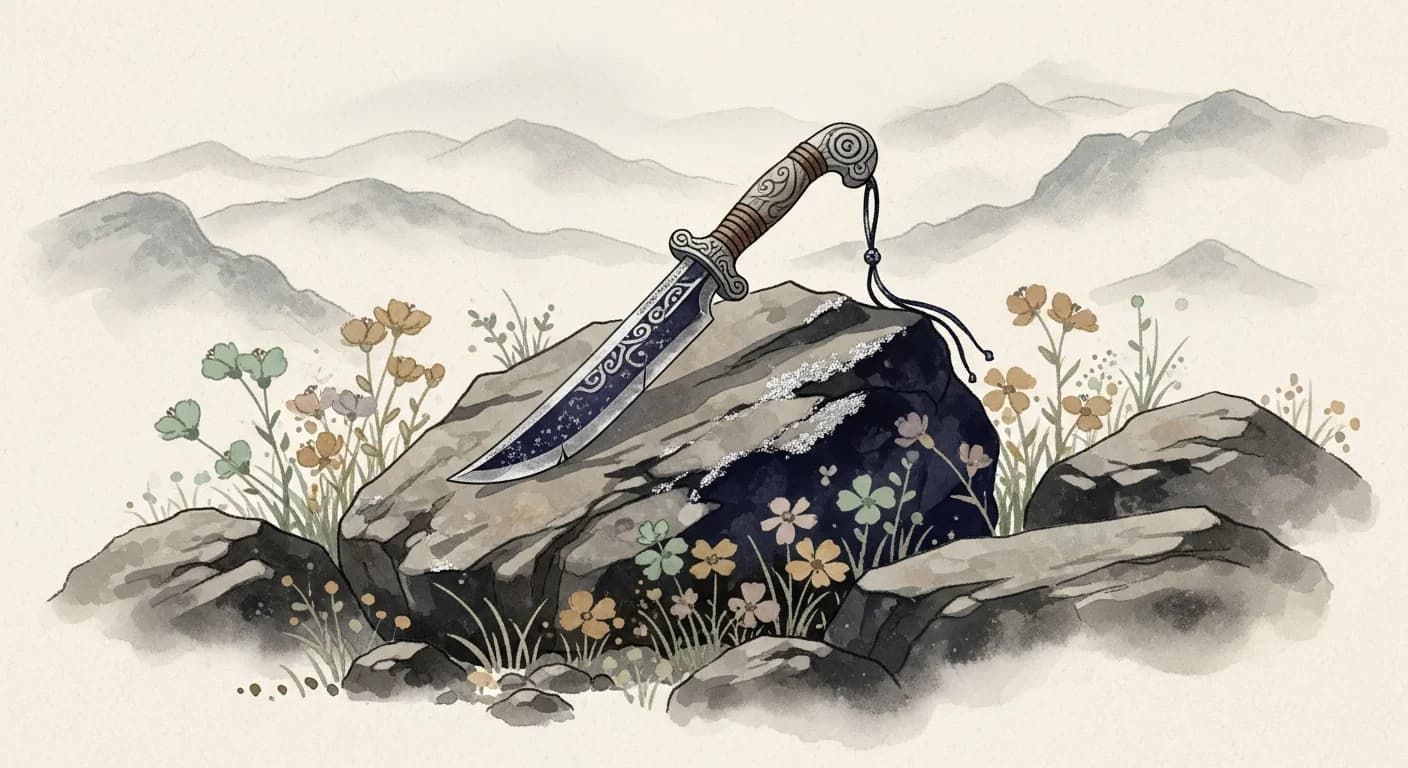
If you dreamed of stabbing someone last night and woke up unsettled, Korean dream tradition has something surprising to tell you: the knife is rarely about violence. In Korean shamanic ritual, the sacred knife (신칼) has long been used to drive out evil spirits and divine divine will — making the blade a symbol of decision, purification, and transformation rather than mere aggression. But here's the nuance — whether this dream is a powerful omen of wealth or a sharp warning about a relationship fracture depends entirely on one thing: did blood appear, and who did you stab?
Auspicious Signs: Defeating an Enemy and Seeing Blood

Dreaming of stabbing an adversary or overcoming an obstacle with a knife symbolizes decisive power and strong will to defeat competitors and achieve your goals in waking life. Whether facing career rivalry, a business competitor, or a long-standing personal obstacle, this dream signals you are gathering the strength to break through. The presence of blood is particularly significant in Korean dream tradition. Blood symbolizes vitality and wealth — the more blood flows, or the more it gets on the dreamer's own body, the stronger the omen of incoming financial gain or a breakthrough. This is one of the most recognized wealth-luck (재물운) dream patterns in Korean folk interpretation. The pinnacle of this category is dreaming of stabbing with a golden knife. Gold represents supreme authority and achievement, making this a powerful foreshadow of unexpected major success, a once-in-a-lifetime opportunity, or a rise in status or influence.
Inauspicious Warning: When the Victim Won't Fall
When your victim doesn't die but instead rises and chases you, the dream shifts into warning territory. Korean interpretation reads this as a sign that a plan or project currently in progress may fail at the very last stage — just when you thought you had it wrapped up. It can also mean that a conflict you believed resolved will resurface and continue to hold you back. Stabbing a family member or spouse is another inauspicious pattern. This does not reflect any real violent impulse; rather, it surfaces suppressed family conflict or an unconscious desire for independence that has been building beneath the surface. The dream is urging honest communication before the rift deepens further. Stabbing without any blood appearing signals that expected results will not materialize — a prompt to review current plans or projects for weaknesses before it is too late.
Neutral Signal: Stress, Boundaries, and Decisive Change
Stabbing a stranger or work colleague in a dream does not necessarily predict specific fortune — good or bad. More often, it is the subconscious releasing pent-up stress or unresolved tension accumulated in daily life. The knife in a dream also symbolizes decision and change: its appearance can signal that a significant life choice or turning point is approaching, and it is time to act. If this dream recurs, treat it as an internal alarm worth examining — not a dark omen, but a message that something in your waking life needs attention and action.
Wealth Luck: The Crucial Role of Blood
In Korean dream interpretation, blood is one of the primary symbols of wealth and life force. A stabbing dream where blood flows abundantly — especially if it reaches the dreamer's own body — is categorized as a strong wealth-luck dream. Business owners, investors, or anyone pursuing a financial goal who has this dream can take it as an encouraging sign. Conversely, a stabbing with no blood at all warns that anticipated rewards will not come, and it may be wise to revisit and stress-test any financial plans currently in motion.
Relationships: Who You Stab Tells the Story
The identity of the person you stab in the dream maps directly onto where tension is running in your waking relationships. Stabbing a boss or coworker reflects suppressed anger over power imbalance or unfair treatment at work — a signal to address workplace conflict before it festers. Stabbing a partner indicates unspoken dissatisfaction that needs expression before the relationship deteriorates. Stabbing a friend is one of the paradoxes of Korean dream interpretation: it is often read as auspicious, suggesting desired outcomes are on the way — while also hinting at an unconscious undercurrent of competition or emotional distance worth examining.
Dream Variations
Stabbing Someone Who Is Attacking You
This reflects a strong self-protective instinct. It suggests that you are developing the strength to defend yourself against real-life threats, pressures, or people who seek to harm you. Generally considered an auspicious dream pointing toward a positive outcome in a defensive or challenging situation.
Stabbing a Family Member in a Dream
This does not reflect violent intent — it surfaces accumulated family conflict or an unconscious desire for greater independence. Korean tradition reads it as a warning sign that open, honest communication is needed to repair and maintain the relationship before tensions solidify.
Stabbing a Spouse or Romantic Partner
Unspoken dissatisfaction or conflict within the relationship is about to break the surface. A clear warning that the bond may deteriorate if feelings are left unexpressed — an invitation to initiate an honest conversation with your partner sooner rather than later.
Stabbing a Boss or Coworker
Reflects suppressed frustration over workplace stress, unfair treatment, or a sense of powerlessness within a professional hierarchy. The dream is a cue to proactively address conflicts at work — whether through direct conversation, seeking support, or reconsidering your situation altogether.
Stabbing an Enemy or Nemesis
An auspicious dream. You will overcome a rival or bring a long-standing conflict to resolution in waking life. If the enemy falls, expect a rise in status or the acquisition of new authority or influence. A green light for important challenges ahead.
Stabbing a Stranger
Accumulated stress or pent-up grievances have reached a threshold. It also signals that a significant new decision or life change is overdue — the subconscious is pushing for action. Take stock of what has been left unaddressed in your daily life.
Stabbing an Animal
Represents an attempt to control or suppress instinctual urges and primal impulses. You may be in a period of grappling with raw inner energy — figuring out how to channel it constructively rather than letting it drive impulsive behavior.
Stabbing and Seeing a Lot of Blood
Blood symbolizes vitality and wealth. The more blood appears — and especially if it reaches your own body — the stronger the auspicious sign of incoming financial gain or the resolution of a major problem. One of the most favorable dream outcomes in Korean interpretation.
Stabbing but No Blood Appears
Expected results or rewards will not materialize as planned. A sign to carefully review current projects or plans for gaps and weaknesses before committing further resources. Course-correction now is better than disappointment later.
Stabbing a Friend
Paradoxically interpreted as auspicious in Korean tradition — desired outcomes will be achieved and good fortune will arrive. At another level, it may also reflect an unconscious sense of competition or growing emotional distance from the friend, worth examining with honest self-reflection.
Stabbing with a Golden Knife
A golden knife symbolizes supreme authority and achievement. This is a powerful auspicious omen: an unexpected major opportunity or breakthrough success is on its way. If you are facing an important challenge or decision, this dream signals confidence and forward momentum.
Stabbing Someone and Feeling Regret
Reflects real-life guilt about having hurt someone through words or actions. The dream is signaling that sincere apology or meaningful effort toward reconciliation is needed — and that taking the first step will carry genuine weight.
Cultural Context
In Korean folk tradition, the knife transcends its function as a mere tool and stands as a deeply rooted symbol of warding off evil (벽사, byeoksa) and sacred authority. The ritual knife (신칼, shinkal) used by shamans (무당, mudang) during gut ceremonies is one of the most revered implements in Korean shamanism — employed alongside bells and mirrors to drive out malevolent spirits and discern the will of the gods. In Jeju Island's foundational shaman narrative, the 초공본풀이 (Chogong Bonpuri), knives form part of the 삼멩두 — a sacred trio of objects tied to creation mythology itself. This enduring sacred character means that in Korean dream interpretation, a knife almost never simply signifies violence. It is culturally read as a symbol of decisive action, spiritual purification, and transformative change. The recurring folk motif of a hero defeating evil with a blade — embodying the triumph of justice over wrongdoing — feeds directly into the tradition of interpreting dreams of vanquishing an enemy with a knife as highly auspicious omens. Traditional Korean homes also once placed knives at doorways or within the home as protective charms against malevolent spirits — a practice that further underscores the knife's role as guardian and boundary-keeper in the Korean cultural imagination.
Western Psychological Perspectives
Western psychological frameworks offer a fascinating counterpoint to the Korean folk interpretation of stabbing dreams — illuminating different layers of the same nocturnal image.
Freud interpreted sharp penetrating objects such as knives and daggers as phallic symbols representing male sexuality and aggressive drives. In this reading, dreaming of stabbing is the unconscious releasing repressed aggression or sexual impulse — an eruption in dream language of impulses that are suppressed or redirected in waking life. For Freud, a recurring stabbing dream would point to unresolved libidinal tension or immature emotional processing demanding attention.
Jung took a broader and arguably richer view. He interpreted stabbing dreams as a confrontation with the Shadow Self — the unconscious, unacknowledged aspects of the psyche that include aggression, rage, and dark desires ordinarily kept out of conscious awareness. Rather than treating this as purely pathological, Jung saw the encounter as potentially transformative. Within his concept of individuation — the lifelong process of becoming a psychologically whole person — meeting the Shadow directly and integrating it is not a failure but a necessary and courageous step. The discomfort of the dream, in Jungian terms, is a sign of psychological growth in motion.
Modern clinical psychology takes a more pragmatic approach: stabbing dreams are primarily understood as responses to real-life stress, feelings of powerlessness, or a sense that personal boundaries have been violated. The dream symbolically enacts the desire to reclaim control or establish emotional boundaries. Critically, modern research consistently finds no meaningful correlation between this dream type and any violent intent in waking life — a reassuring finding for anyone alarmed by the content of their own dream.
Comparing Eastern and Western perspectives reveals a striking cultural difference in what the knife is understood to be measuring. Western frameworks tend to look inward — at repression, the shadow, emotional boundaries. Korean dream tradition looks outward as well, using the presence or absence of blood as a divination tool for material fortune: wealth, health, success. The same dream, read through two cultural lenses, becomes two different — and equally meaningful — conversations with the self.
Frequently Asked Questions
A stabbing dream is rarely what it appears on the surface. Beneath the alarming imagery lies a rich symbolic language — one that Korean tradition has decoded for centuries. Whether the dream is pointing toward incoming wealth, urging you to address a fracturing relationship, or simply reflecting the accumulated pressure of daily life, the knife in your dream is asking for your attention. If blood flowed, take it as encouragement. If it didn't, take it as a prompt to review your plans. And if the dream left you with unease, let that be the beginning of a conversation — with yourself, or with someone you trust. Dreams don't demand action; they invite reflection.
Related Dreams
Being Stabbed Dream Meaning — Complete Korean Interpretation Guide

Dream of Killing Someone — Korean 해몽 Meaning, Good Omen or Bad?

Fighting Dream Meaning — Why Korean Dream Tradition Says Fighting Is Often Good News
Punching & Hitting Dream Meaning — Korean Dream Interpretation Guide

War Dream Meaning — What Korean Dream Interpretation Reveals About Your Inner Battle
Being Chased Dream Meaning