Storm Dream Meaning — Korean Interpretation of Typhoon & Storm Dreams
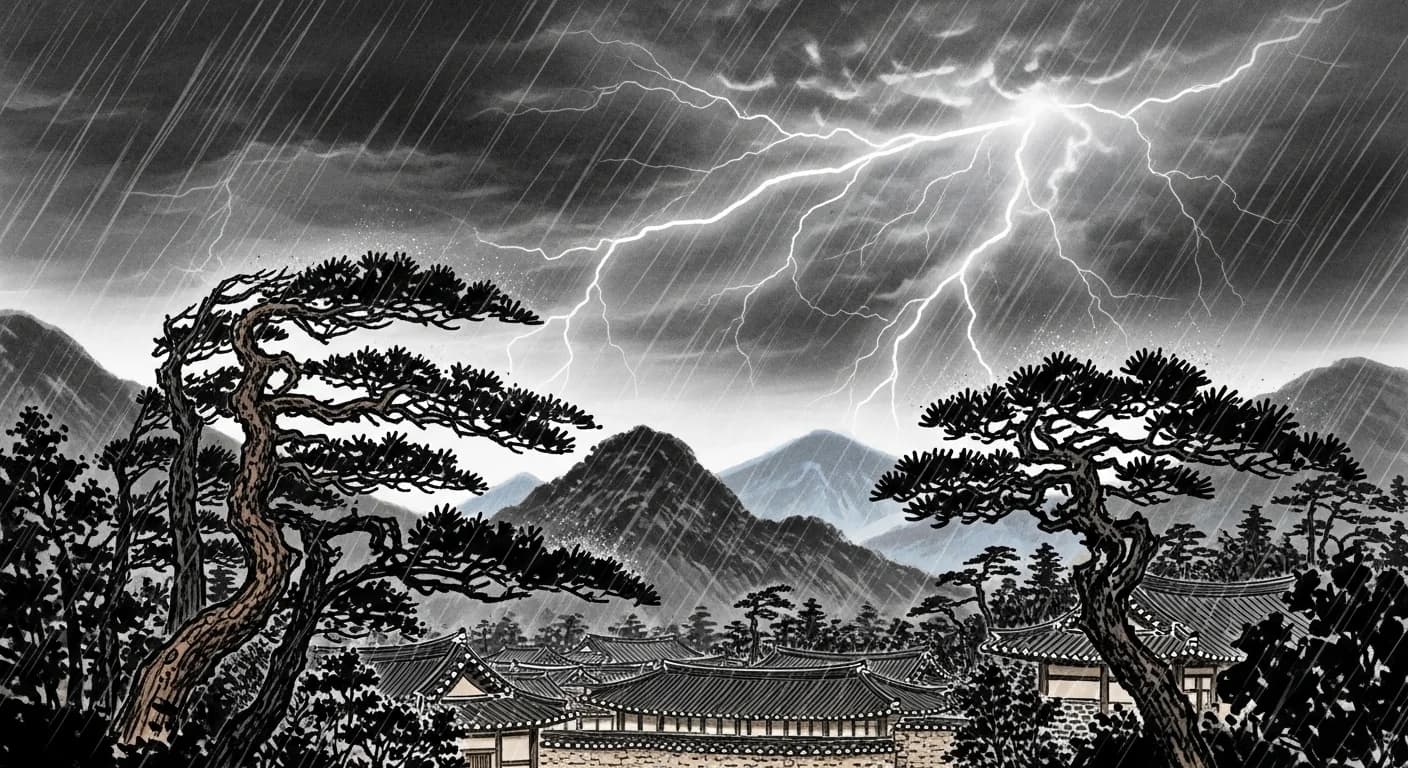
In Korean dream interpretation, a storm dream is rarely just a bad omen — it's a fork in the road. Whether the storm signals a great turning point or an incoming trial depends almost entirely on how it unfolded in your dream. There's one question that cuts through everything: when the gale was at its most ferocious, did you run, or did you stand your ground? That single detail is the master key to unlocking what your dream is telling you.
When a Storm Dream Is a Good Omen
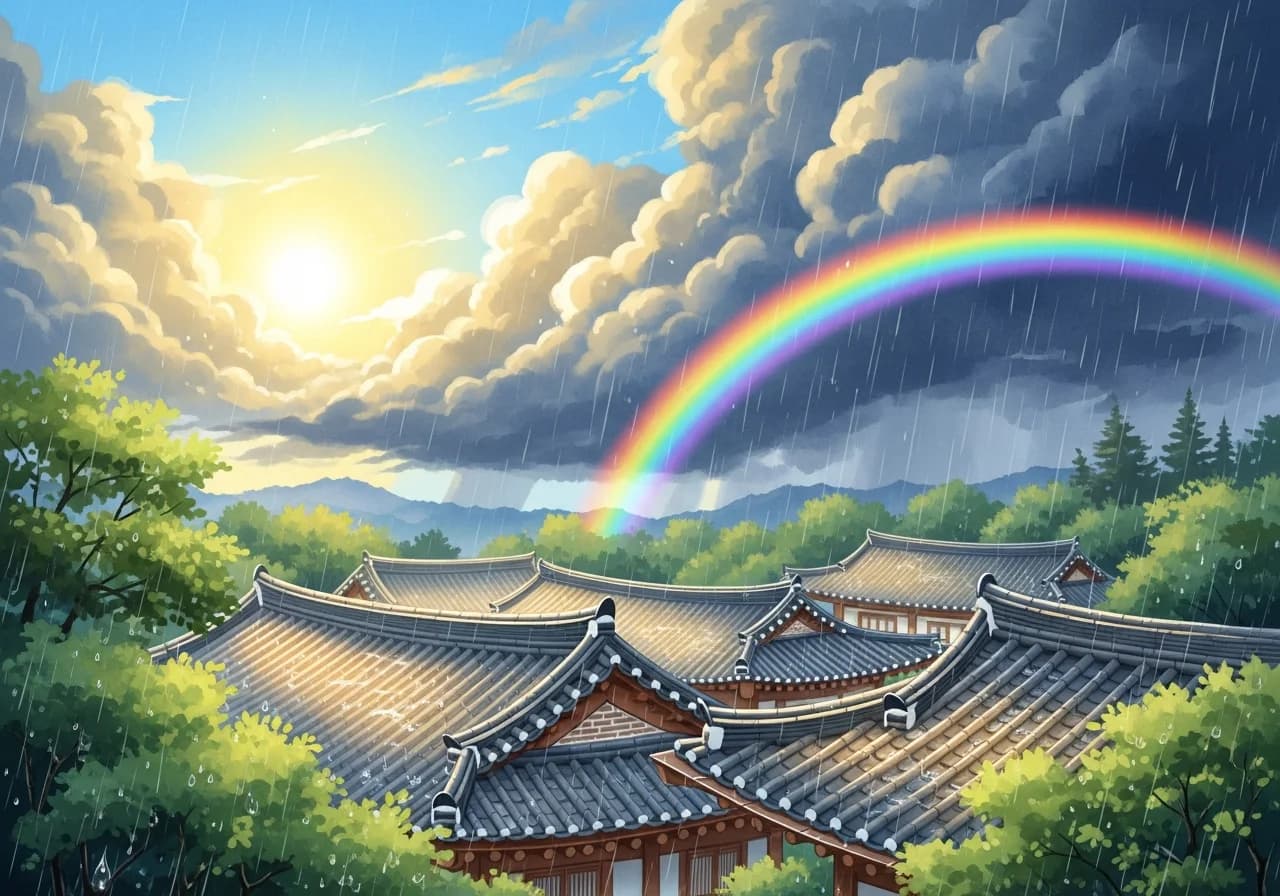
A storm that suddenly calms or gives way to clear blue skies is one of the most classically auspicious dream signs in Korean tradition. It signals that long-blocked matters will finally resolve, burdens will lift from your mind, and fortune is shifting decisively in your favor. If a rainbow appears alongside the clearing sky, it is an especially strong sign — blessings and good news are very close.
Dreaming of pressing through a storm head-on, or watching your house stand completely unmoved while the gale howls around it, is equally auspicious. These images represent formidable inner willpower and the capacity to overcome real-life crises. Your subconscious is affirming that you have what it takes to endure. Rescuing another person in a storm carries the same positive reading — it suggests that collaboration and community support will prove to be the key to navigating your current challenges.
Standing on storm debris after the storm has passed is also a good omen. Rather than a symbol of destruction, it signals new beginnings — the hardship is behind you, and you are about to emerge from it stronger and renewed.
When a Storm Dream Is a Warning
Being caught in a ferocious, terrifying storm with no escape is a strongly inauspicious dream in Korean folk interpretation. It warns that your social or financial foundations may be shaking, and cautions against accidents, illness, or monetary loss in the near term.
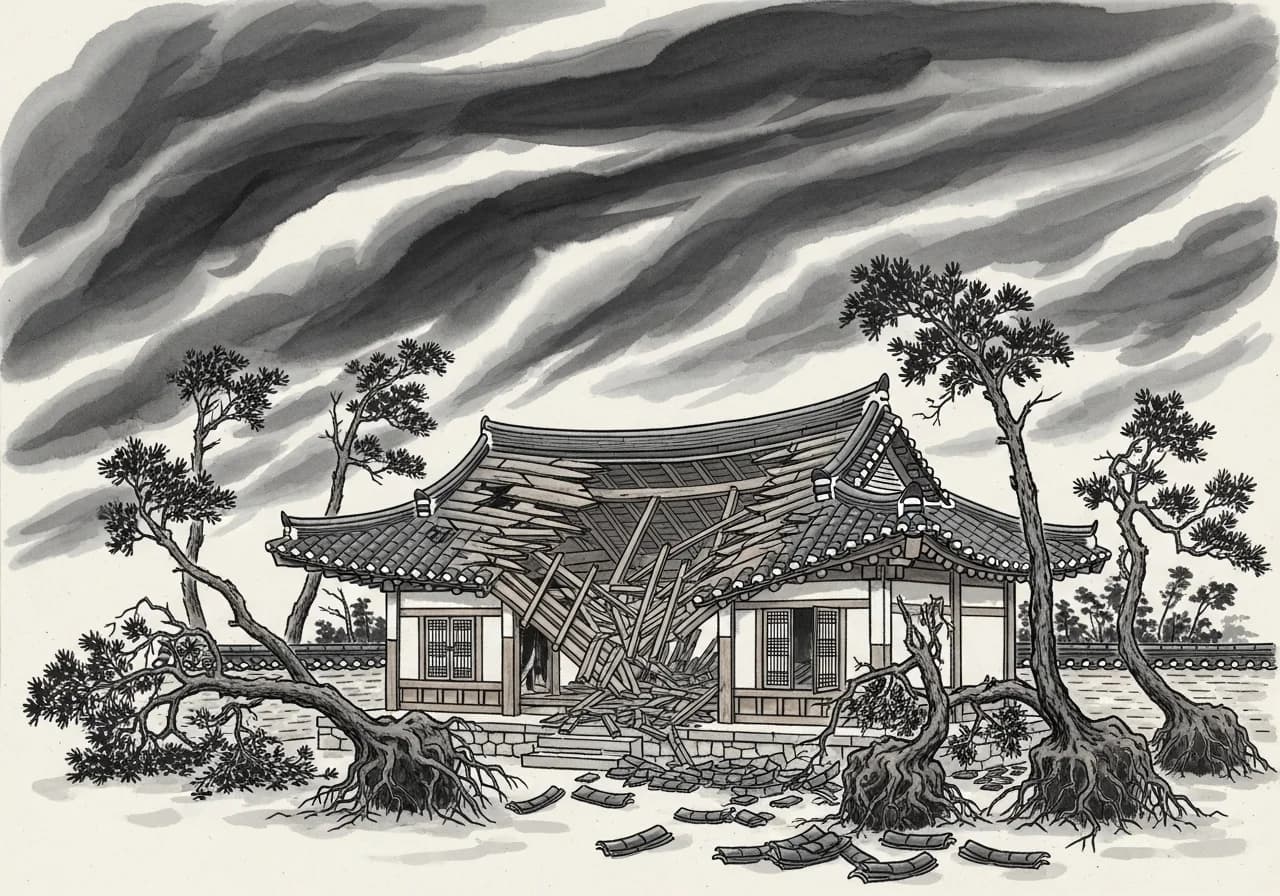
A house collapsing or severely damaged by a typhoon is one of the most significant warning images — it suggests that family relationships or financial security are under serious threat, and may foreshadow family discord, health problems in a loved one, or an impending financial crisis. Trees torn out by the roots carry a similar message: someone who has been a pillar of support in your life may leave, or a key foundation — a partnership, a contract, a financial arrangement — is about to crumble.
An endless storm with rain that will not stop is another inauspicious sign, warning that unexpected difficulties will pile up and plans will be repeatedly derailed. Getting lost in a storm reflects real-life confusion — a loss of purpose and direction that calls for careful reassessment of the choices currently guiding your life.
Neutral Transitions: Being Swept Away
Being carried off to an unfamiliar place by a storm represents a neutral transition rather than a disaster. It signifies a shift away from your current circumstances — a new environment, a new role, or an unexpected change of scene — that need not be inherently negative. The key question is how it felt: were you terrified, or strangely calm?
Walking through a storm without being knocked down also falls into this category. It reflects that you are confronting an overwhelming real-life situation directly, and if you felt resolute rather than afraid during the dream, the outcome can be read as positive.
Lightning blazing across the sky during a storm tilts the reading toward auspicious — a difficult problem resolved in an instant, or sudden good news arriving out of nowhere. Loud thunder rolling through the dream may signal the coming of recognition or a major achievement.
Dream Variations
Typhoon Approaching Dream
A massive typhoon bearing down on you is an inauspicious warning of major upheaval ahead. Business owners should be cautious about failed deals or financial loss; employees should watch for instability in their position.
Clear Sky After Storm Dream
Skies clearing after a storm is one of the most classically auspicious dream signs — hardship gives way to peace, and a new turning point or opportunity is imminent. If a rainbow appears, blessings and good fortune are very near.
House Destroyed by Storm Dream
A house collapsing or severely damaged in a storm warns that your family relationships or financial foundation may be under serious threat. It may foreshadow family discord, health concerns for a loved one, or an impending financial crisis.
Trees Uprooted in Storm Dream
Trees torn out by the roots in a storm signal that someone who has been a pillar of support in your life may leave, or that a key foundation will crumble. Beware of major financial losses or the breakdown of an important contract or partnership.
Surviving a Storm Dream
Surviving a storm or safely sheltering from it is an auspicious dream affirming that you have the inner resilience to overcome current challenges. It symbolizes your capacity to endure and recover from adversity.
Whirlwind or Tornado Dream
A whirlwind or tornado signals sudden, unpredictable change. Evading a whirlwind — hiding behind a stranger or successfully escaping — is auspicious and suggests smooth progress ahead, but being swept up by one warns of sudden obstacles causing setbacks.
Unending Storm or Nonstop Rain Dream
An unending storm, with rain that simply will not stop, is an inauspicious omen warning of business difficulties, potential bankruptcy, or family and social troubles. Unexpected incidents may pile up and plans will be hard to execute.
Storm with Lightning and Thunder Dream
Lightning illuminating the storm in all directions is auspicious — it suggests a difficult problem will be resolved at once and good news is on its way. Loud thunder in the dream may also signal the coming of fame or a major achievement.
Lost in a Storm Dream
Getting lost in a storm reflects real-life confusion and a sense of lost direction or purpose — an inauspicious sign that suggests you should slow down and carefully reassess the choices and goals currently guiding your life.
Rescuing Someone in a Storm Dream
Rescuing someone in a storm is auspicious — it signals an opportunity to help others in crisis and suggests that working together with others will be the key to overcoming hardship.
Standing on Storm Debris Dream
Standing on the debris left after a storm passes is an auspicious sign of new beginnings after hardship. You will emerge from difficult times stronger and with a fresh start ahead.
Cultural Context
In Korean tradition, dreams have been regarded as meaningful omens since the Three Kingdoms period, with records in the Samguk Yusa documenting their prophetic significance. Dream interpretation is closely tied to Korean shamanism (무속 신앙), where natural forces — especially wind — were understood as the movements of spirits or divine messengers. In the Five Elements (오행) cosmology, wind is associated with the Wood element, symbolizing change, movement, and upheaval. As an agrarian society, Korea feared storms as destroyers of crops and livelihoods, which is why storm dreams are predominantly inauspicious in traditional interpretation. However, the image of skies clearing after a storm beautifully embodies the Korean proverb 고진감래 ('sweetness comes after bitterness'), transforming the dream into a powerful symbol of fortune arriving after long hardship. In shamanic belief, wind sometimes carried messages from ancestral spirits, meaning storm dreams could be divine warnings sent directly to the dreamer.
Western Psychological Perspectives
From a Freudian perspective, storm dreams represent the explosive eruption of repressed emotions — particularly rage, anxiety, or uncontrolled drives — breaking through the unconscious mind's censorship. The storm becomes a dream-distortion of intense feelings that the waking mind suppresses. Freud's view that dreams protect sleep suggests that a storm this vivid signals especially powerful repressed content that cannot be fully contained.
In Jungian analytical psychology, a storm symbolizes the clash between the ego and the Shadow, or the eruption of vast energies from the collective unconscious that destabilize the dreamer's psychological structure. It represents the unavoidable turmoil of the Individuation process — the dismantling of an outgrown ego in order to rebuild a more integrated Self. The clear sky after the storm, viewed through a Jungian lens, signals the completion of psychological integration and renewal.
Modern cognitive psychology and neuroscience interpret storm dreams as reflections of stress, anxiety disorders, or unresolved emotional conflict. The brain uses sleep to reprocess emotional material not fully handled during the day — workplace stress, relational conflict, or unexpressed anger — and externalizes these as the vivid imagery of storms. From a cognitive-behavioral therapy (CBT) perspective, the intensity of a storm dream may correlate with catastrophic thinking patterns or an exaggerated appraisal of real-life threats.
The key difference between Eastern and Western readings is that Korean folk interpretation treats storm dreams primarily as concrete omens of external events — disasters, turning points, or fortune shifts — while Western psychology reads them as metaphors for the dreamer's internal emotional landscape. Yet both traditions share the hopeful message that a storm's end signals renewal and fresh beginnings.
Frequently Asked Questions
The heart of any storm dream lies in how it ended. A ferocious storm bringing destruction is a warning to prepare and be cautious — but a storm you pressed through, or one that cleared to reveal brilliant blue sky, is a powerful omen that your life is approaching a meaningful turning point. Every storm ends. And in Korean tradition, what comes after is always worth holding on for. Whatever message your dream carried, receiving it wisely — and taking one steady step forward in your waking life — is the best interpretation of all.