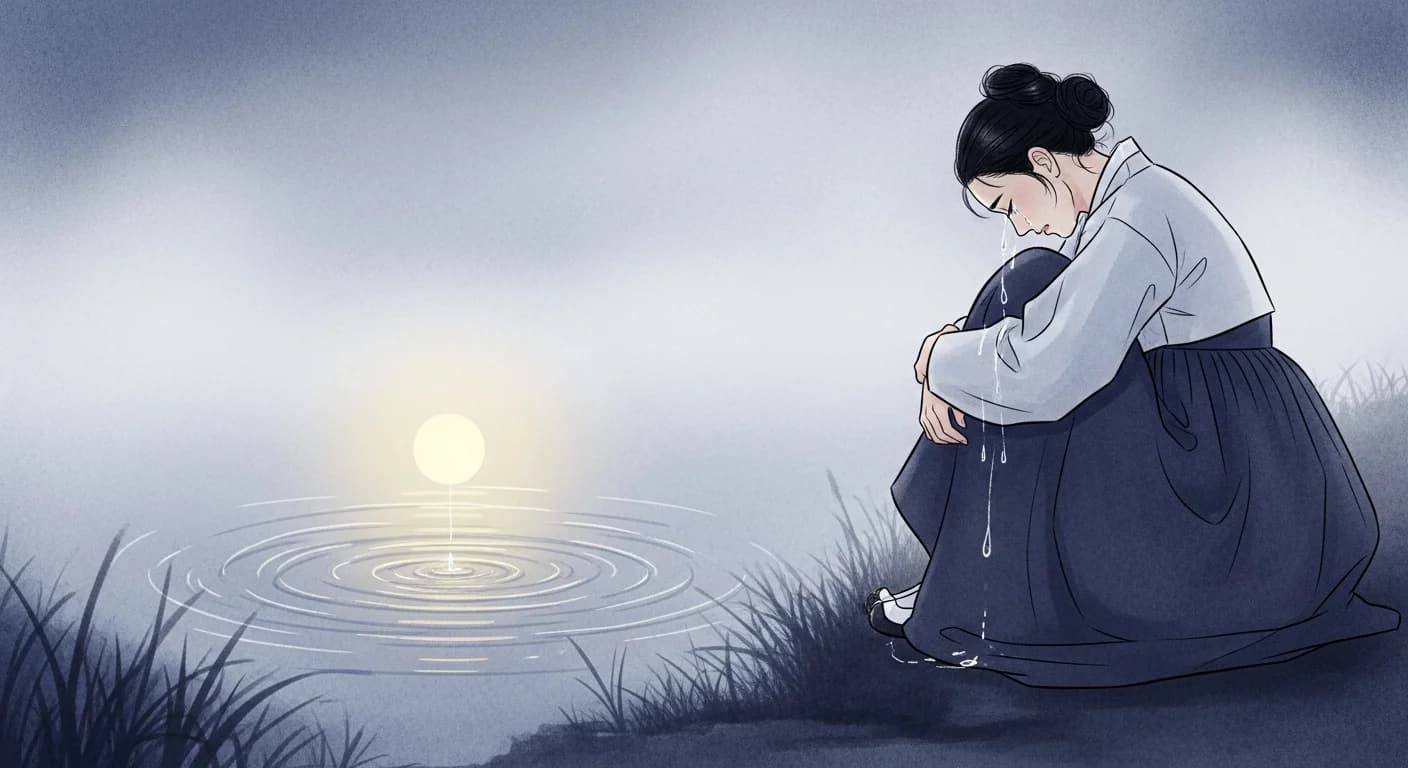
Tears Dream Meaning — What Does Crying in a Dream Mean?
If you woke up from a dream where you were sobbing uncontrollably, Korean dream tradition has surprising news: that may be one of the luckiest dreams you can have. In Korean 꿈해몽 (dream interpretation), audibly crying with real tears is a powerful auspicious omen — the louder and more tearful, the greater the fortune on its way. Here's the twist, though — if the crying in your dream produced no actual tears, the interpretation flips entirely into a warning.
Audible Sobbing Dreams — A Major Auspicious Omen

In Korean dream interpretation, crying loudly with tears is considered one of the most powerful good omens a dream can carry. The more intense the crying and the more tears that flow, the greater the fortune expected. This dream signals that long-suppressed emotions have finally been released and a meaningful new beginning is on the horizon. Stalled projects may finally move forward; unexpected good news may arrive. When crying occurs together with family members — especially in the context of a parent's death — it foretells elevated social status or significant material wealth coming to the family.
Tears of Joy — Emotional Fulfillment Incoming
Crying tears of joy in a dream is a clear auspicious sign predicting upcoming joy, deep satisfaction, or even a mysterious experience in waking life. Beyond simple good luck, this dream points to emotional completeness — the sense that inner healing has finished and you are ready to receive what you have been hoping for. Dreaming of tears born from remorse or sincere reflection is also considered auspicious: it signals that your efforts and sincerity will be recognized by others, with good news expected to follow.
Crying Without Tears — A Warning to Heed
Going through the motions of crying — making sounds of grief — but producing no actual tears is an inauspicious dream in Korean tradition. It represents emotional inauthenticity, a state where inner pain cannot find genuine release. This is interpreted as a harbinger of disaster or misfortune approaching. Wiping tears with a handkerchief also carries a cautionary meaning: it reveals inner sorrow and distress, and suggests you may soon find yourself in a difficult situation requiring you to make emotional appeals or petitions to others.
Someone Else Crying — It Depends Who
When another person cries in your dream, the identity of that person dramatically changes the meaning. An unfamiliar woman crying foretells absolute bad luck. A romantic partner crying warns of inevitable separation or a serious rift in the relationship. A parent crying in a dream about their death, however, is considered auspicious for the whole family — foretelling improved social standing or accumulation of wealth. Dreams of suppressed crying — seeing someone unable to let their tears out — warn of serious emotional or mental stress ahead.
Dream Variations
Uncontrollable Sobbing Dream
Sobbing beyond all control in a dream cuts both ways. If the crying reaches full catharsis — a complete emotional release — great fortune is predicted to follow. But if the dream carries a feeling of being trapped in grief with no way out, it suggests you may find yourself in a difficult, stuck situation in waking life with no clear path forward.
Tears of Joy Dream
Dreaming of crying from pure happiness is a strong auspicious omen predicting upcoming joy, fulfillment, or a memorable experience in real life. It symbolizes the completion of emotional healing and suggests that something long hoped for is drawing near.
Tears of Blood Dream
Shedding tears of blood in a dream is a nuanced warning: things may begin well but turn difficult toward the end. Projects or relationships that start promisingly may encounter unexpected obstacles at the finish line. The dream advises preparing contingency plans and staying vigilant through to completion.
Crying Without Tears Dream
Audibly crying but producing no tears is one of the clearer inauspicious dreams in Korean interpretation. It warns of coming misfortune or disaster, and symbolizes blocked emotional expression — pain that cannot find authentic release. After this dream, pay careful attention to health and key relationships.
Someone Else Crying Dream
The meaning shifts entirely based on who is crying. An unknown woman crying signals bad luck; a lover crying warns of separation; a parent crying predicts worry and concern. Crying together with family, however, can be auspicious — foretelling shared good fortune. The key detail to remember from the dream is exactly who was weeping.
Crying with a Deceased Person Dream
Weeping alongside someone who has died is a meaningful and ultimately positive dream. It symbolizes the healing of old emotional wounds and unresolved grief — a signal that long-suppressed sorrow is finally being released. This dream suggests emotional liberation and psychological readiness for a new beginning.
Crying Alone in Hiding Dream
Hiding to cry alone reflects emotional isolation and a fear of showing vulnerability to others. It warns that inner pain is being suppressed rather than expressed. This dream may be pointing toward a need to open up to someone trusted and seek the connection or support that has been lacking.
Tears Becoming a River Dream
When tears overflow and become a river or flood in a dream, it is considered a powerful auspicious omen of wish fulfillment and emotional abundance. Desires long held back are predicted to finally be realized, and positive change — particularly around finances or personal goals — may be on the way.
Crying Then Laughing Dream
Transitioning from crying to laughter within the same dream is a hopeful sign. It signals the completion of emotional recovery and the turning of a difficult chapter into a happier one. In waking life, this often corresponds to a period of hardship giving way to genuine relief or joy.
Wiping Tears with a Handkerchief Dream
This dream surfaces underlying sorrow and emotional heaviness from the unconscious mind. It suggests that a difficult situation requiring emotional appeals or petitions to others may be approaching. The handkerchief — wiping rather than releasing — symbolizes the suppression of genuine feeling rather than its resolution.
Cultural Context
In traditional Korean dream interpretation, tears carry sacred significance far beyond a simple sign of sadness. In Korean shamanic belief (musok sinang), tears represent communion with the spirit world — during the intense process of receiving divine possession (naerim), visible tears are considered a sign of spiritual purification (jeongwha), a cleansing that opens the channel between the human and the divine. Korean folk tales are rich with stories of wrongfully deceased spirits (wongwi) who express their han — a uniquely Korean concept of deep-rooted resentment and grief — through tears, framing tears as the language of the soul itself rather than mere physiology. The Confucian tradition added another layer: the adage that 'a man should cry only three times in his life' meant tears were strongly associated with emotional restraint. This is precisely why crying in dreams held such weight — it was seen as a rare and significant psychological event, the breaking free of emotions too long held captive. Audible, genuine tears in a dream, then, meant that the purification was real and complete — and in Korean tradition, that completeness is the very foundation of good fortune.
Western Psychological Perspectives
Western psychology arrives at strikingly similar conclusions to Korean tradition when it comes to tears in dreams, though through very different routes.
Freud viewed dream tears as an outlet for repressed libido — emotional impulses blocked from conscious expression that find their way out through the dream state. Tears are seen as a socially acceptable form of sublimation for deeper sexual or aggressive energy. Extreme dream weeping — blood tears, torrential sobbing — represents powerful unconscious desires attempting to break through the surface of awareness.
Jung took a broader view, reading tear dreams as part of the individuation process — the lifelong psychological journey toward wholeness. Tears in dreams signal that the feeling function is being activated, and that the dreamer is engaged in reconciling with the shadow archetype, integrating the repressed parts of the self. In this framework, painful crying dreams are not pathology but a psychological rite of passage: the inevitable discomfort of becoming more whole. The parallel to Korean tradition is remarkable — both see genuine tears as a sign of authentic inner work being completed.
Modern neuroscience has added a concrete biological dimension. During REM sleep, the brain reprocesses emotional memories — and dreaming of crying is now understood as a neurobiological stress-regulation mechanism, the brain's way of processing emotional load that was not resolved during waking hours. Research has shown that experiencing emotions in dreams actually reduces neural reactivity to those emotions, meaning that crying in a dream may genuinely improve emotional regulation in waking life.
Across cultures, the symbolism of dream tears shows remarkable consistency. Chinese dream tradition views crying in a dream as auspicious — a sign of longevity and happiness. Japanese interpretation connects tear dreams to purification (kiyome), like spring rain preparing soil for new growth. Western folk tradition has long spoken of a 'baptism of tears' — inner transformation marked by release. The common thread running through all these traditions is unmistakable: tears represent the truest form of emotional expression, and their appearance in dreams signals that something real is being processed, healed, or revealed.
Frequently Asked Questions
Tears in dreams are rarely just residue from a stressful day. Whether you woke up from a flood of sobbing that left you feeling oddly at peace, or from a strange, tearless grief that unsettled you, your dreaming mind was sending a signal worth paying attention to. The good news: most crying dreams in Korean tradition carry genuine fortune. If your tears flowed freely, something good is coming. And if they didn't — treat it as a gentle nudge to look honestly at what you've been holding back.
Related Dreams
Laughing Dream Meaning — When It's Good Fortune and When It's a Warning
Sadness Dream Meaning — Why Korean Tradition Says Tears Bring Good Fortune

Blood Dream Meaning — Why Korean Tradition Says This Is a Wealth Omen

Rain Dream Meaning — Korean Interpretation from Fortune to Warning
Eyes Dream Meaning — Insight, Judgment, and the Windows of the Soul