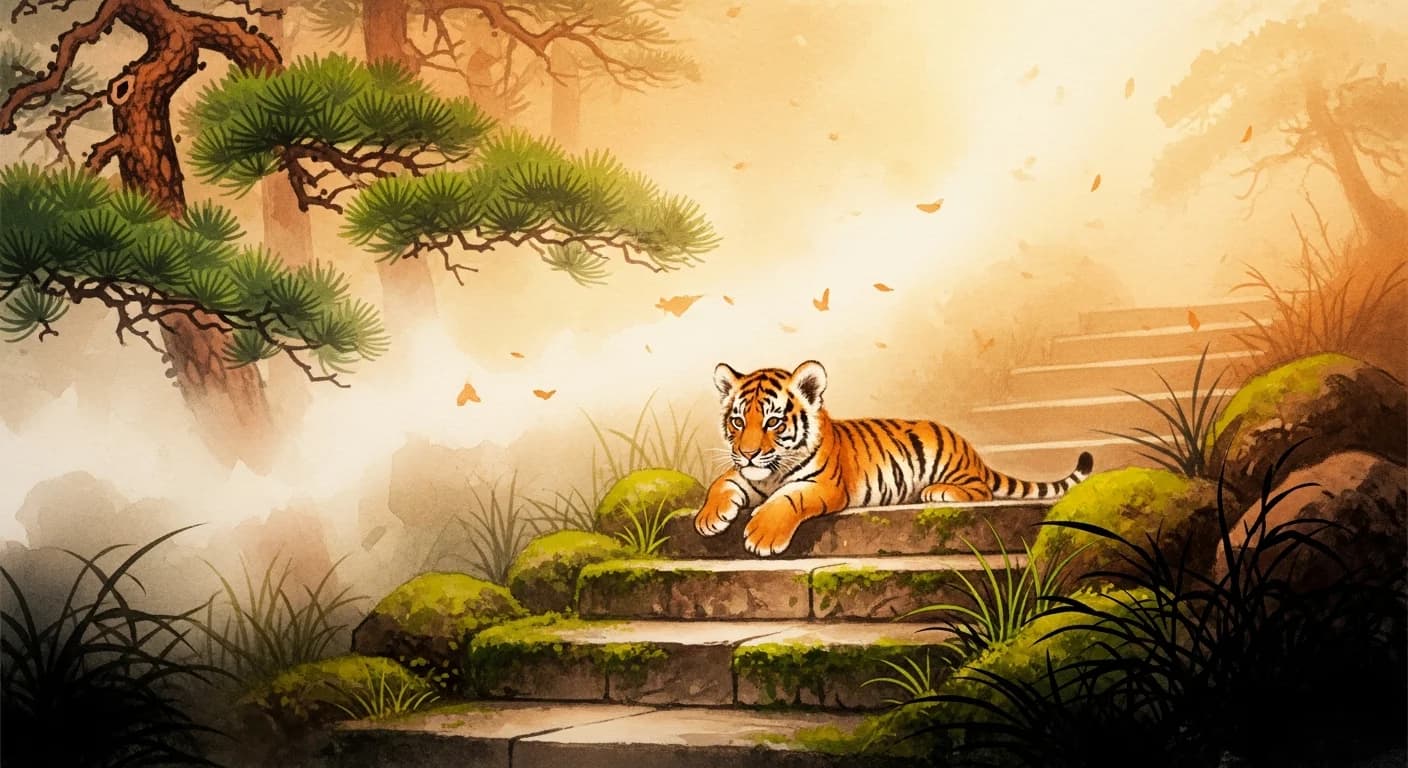
Tiger Cub Dream Meaning — What Korean Tradition Says
If you dreamed of holding a tiger cub last night, Korean dream tradition has a compelling message for you: something with enormous growth potential has just entered your life. The tiger is Korea's national spiritual symbol — a guardian deity, a herald of kings and heroes — and its cub represents that same mighty force in its earliest, most charged form. Here's the nuance worth knowing: everything hinges on what the cub was doing in your dream.
The Core Symbolism of Tiger Cub Dreams
In Korean dream interpretation (꿈해몽), an adult tiger typically symbolizes power, authority, and accomplished strength. The tiger cub shifts that focus: it represents potential not yet revealed, a force still gathering itself before it fully emerges. Think of it as the concentrated energy of the tiger in its purest, most promising state.
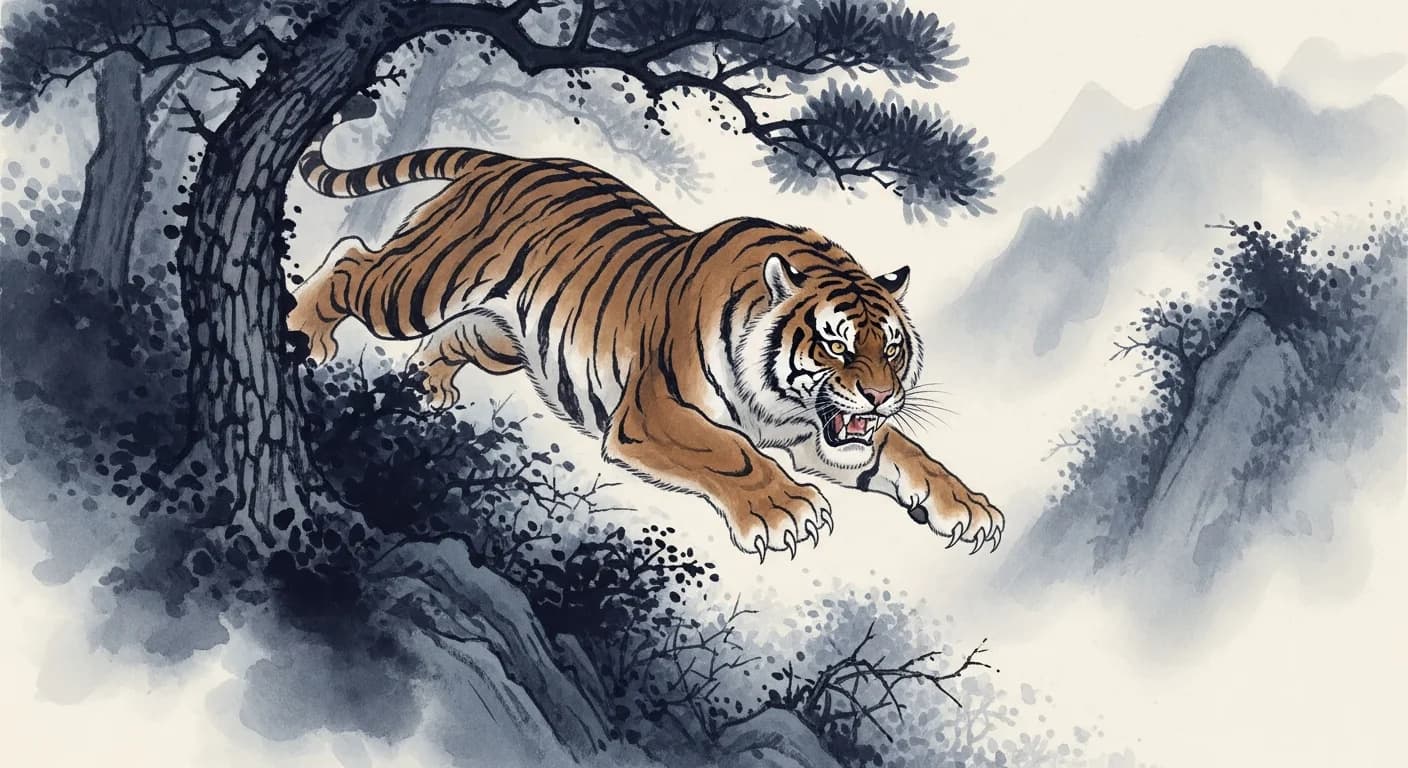
The tiger holds a unique cultural status in Korea — it appears in the national founding myth, serves as a guardian in shamanic tradition, and ranks among the twelve zodiac animals as a symbol of courage and leadership. The cub, as the birth stage of this archetype, carries associations with new beginnings, hope, and things not yet fully formed but certain to become remarkable.
Auspicious Tiger Cub Dreams (길몽)
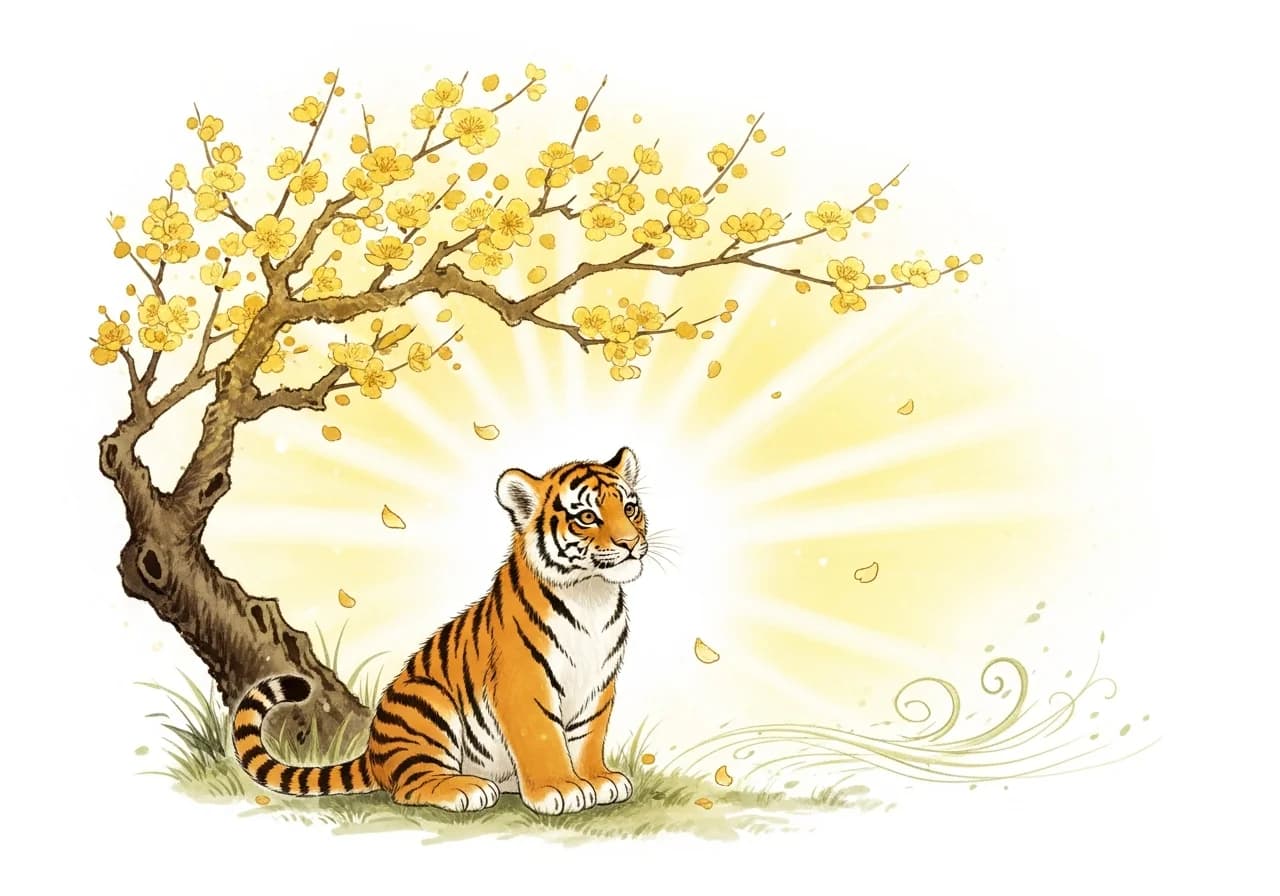
Dreams of receiving, holding, or caring for a tiger cub fall firmly in the auspicious category (길몽) of Korean dream interpretation. They signal that a modest beginning — a new project, a budding relationship, a quiet idea — will grow into something formidable. The key message is not to underestimate what looks small right now.
Financial luck features strongly here too. Catching a tiger cub or bringing one into your home in a dream is traditionally interpreted as a sign of unexpected gains or windfalls arriving from surprising sources. Opportunities may seek you out rather than the other way around.
Multiple tiger cubs take the meaning further: good fortune arriving on several fronts simultaneously. In business, finance, and relationships all at once. Witnessing a mother tiger giving birth to cubs carries the same expansive energy — whatever you're building is on a trajectory of steady, compounding growth.
Tiger Cub Dreams as Pregnancy Omens (태몽)
The most powerful context for a tiger cub dream in Korean tradition is as a pregnancy omen — called 태몽 (taemong). These are vivid, memorable dreams believed to reveal the nature and destiny of an unborn child, and a tiger cub is one of the most prized 태몽 symbols.
Historically, dreaming of a tiger has been considered a foretelling of the birth of kings, generals, and great figures. Records from the Joseon dynasty (1392–1897) describe tiger dreams preceding the births of military heroes and distinguished scholars. A tiger cub dream for a pregnant woman today carries the same interpretation: the child will grow to be a natural leader, someone of significant social influence and strength of character.
A white tiger cub elevates the omen to extraordinary levels. The white tiger (백호, Baekho) is one of the four sacred guardian spirits in Korean cosmology, associated with divine protection and destiny. A white tiger cub pregnancy dream foretells a child born with rare, innate gifts — someone whose path will be truly remarkable.
When Tiger Cub Dreams Warn (흉몽)

Not all tiger cub dreams are auspicious. If the cub in your dream was dying, sick, or lost — if you watched it fade or couldn't find it — the dream shifts into inauspicious territory (흉몽).
This version warns that something you've been nurturing and investing in — a plan, a hope, a relationship still in its early stages — may not reach its potential. The loss here is specifically of something not yet fully grown, which is why the warning carries a particular sting. The dream calls for heightened attention and care toward whatever feels fragile or unfinished in your waking life.
A tiger cub that growls or tries to scratch occupies more neutral ground. It suggests a challenge that looks more dangerous than it actually is — a conflict still in its early, manageable stages. The message is one of measured caution rather than alarm: you have the resources to handle this if you don't let it intimidate you.
Dream Variations
Dream of Receiving a Tiger Cub
Being given a tiger cub or finding one to keep is a strongly auspicious omen. For a pregnant dreamer, this is one of the clearest 태몽 signs — foretelling a child who will rise to great heights in society. For others, it predicts exceptional outcomes that will exceed your current expectations in whatever you're working toward.
Dream of Holding or Cradling a Tiger Cub
Cradling a tiger cub signals that a meaningful connection or significant opportunity is entering your life, bringing with it a protective and powerful energy. This dream suggests you are becoming a safe harbor for something extraordinary. As a pregnancy dream, it specifically indicates the coming birth of a spirited, strong-willed child with deep inner resilience.
Dream of Multiple Tiger Cubs
Several tiger cubs in one dream represent good fortune arriving across multiple areas at once. Auspicious developments in business, finances, and relationships are all indicated simultaneously — a particularly optimistic sign for anyone with several ongoing projects or ambitions that need to flourish together.
Dream of a White Tiger Cub
The white tiger cub is an exceptional omen even by tiger cub standards. In Korean cosmology, the white tiger (백호) is a sacred guardian deity, one of the four directional spirits. Dreaming of a white tiger cub carries connotations of divine blessing and a fated greatness. As a pregnancy dream, it foretells a child born with extraordinary, innate abilities and an unusual destiny.
Dream of a Tiger Cub Following You
A tiger cub choosing to follow you is a powerful sign that a high-potential person or opportunity is aligning with you on its own terms — you don't have to chase it. This dream suggests the arrival of a helpful benefactor (귀인 in Korean culture, meaning a person who appears and helps change your fortune) or that others are beginning to recognize and follow your natural leadership.
Dream of Playing with a Tiger Cub
Playing joyfully with a tiger cub reflects harmonious relationships in your environment. New beginnings are unfolding smoothly. The ease and happiness in this dream suggest that whatever is starting — a project, a relationship, a new chapter — is developing in a natural, unforced way that will grow into something genuinely rewarding.
Dream of a Tiger Cub Dying
Watching a tiger cub die is a warning that something promising may be cut short before it reaches maturity. The dream specifically calls attention to endeavors or relationships that are still fragile and need more care. The advice is practical: give more attention to whatever feels like it's struggling, before the loss becomes real.
Dream of a Mother Tiger with Her Cubs
A mother tiger watching over her cubs is a symbol of powerful, protective nurturing. The dream foretells family well-being and the healthy development of those in your care — whether children, students, or team members. For business owners, the mother-cub pairing can also signify stable growth and the emergence of someone who will carry on your work.
Cultural Context
The tiger's place in Korean culture is unlike almost any other animal symbol in the world. Korea was once so densely populated with Siberian tigers that the peninsula was nicknamed 'the land of tigers.' In the founding myth of Dangun (단군신화), a tiger and a bear compete to become human through a trial of endurance — the bear succeeds, the tiger does not. This myth places the tiger at the very origin of Korean identity, symbolizing a power that is real but not yet fully tamed.
In the shamanic tradition that predates Buddhism and Confucianism in Korea, the tiger serves as the messenger of the Mountain God (산신), the most revered deity in Korean folk religion. Mountain shrines throughout Korea feature paintings of the Mountain God accompanied by a tiger — a cosmic guardian keeping evil at bay. The folk painting tradition (민화) depicts tigers alongside magpies, their fearsome energy balanced by the magpie's cheerful luck-bringing presence.
In the Korean zodiac (십이지), the Tiger holds the third position (인, Yin), and tiger-year individuals are traditionally believed to carry inborn courage, resolve, and an instinct for leadership. The tiger cub, as the origin point of all this symbolism, concentrates these associations into a single image of pure possibility — the great force that hasn't yet shown what it will become.
Western Psychological Perspectives
Western psychology offers a fascinating set of lenses through which to read tiger cub dreams, each revealing a different layer of what the unconscious might be processing.
From a Freudian perspective, tigers in dreams represent suppressed aggressive drives and raw primal energy — the id in its most untamed form. The tiger cub softens this: it is primal energy in its earliest, not-yet-fully-conscious state. The ego is beginning to recognize the power of instinctual forces for the first time. Dreams of cradling or bonding with a tiger cub may represent a psychological attempt to reconcile with — rather than repress — those instinctual drives, to domesticate them into something workable.
Jung's analytical psychology takes a different, and perhaps more apt, angle. The tiger is a powerful archetype from the collective unconscious — it embodies the transformative forces of nature and the raw energy of the Self. A tiger cub signals the awakening of a new aspect of the Self, or the earliest stage of individuation (Jung's term for the lifelong process of becoming fully oneself). Encountering this not-yet-formed being in a dream represents first contact with creative potential that has been dormant — and suggests that accepting and integrating this energy is where psychological growth now lies.
Modern cognitive psychology and neuroscience frame tiger cub dreams as a fairly common type among people on the threshold of major life transitions. The brain processes incoming opportunities and their corresponding responsibilities symbolically during sleep. Such dreams appear disproportionately around pregnancy, parenthood, career pivots, and the launch of significant new ventures. Neuroscience adds another layer: the sight of small, vulnerable young animals activates the brain's caregiving circuitry, flooding the dream with emotional urgency.
What's striking is how closely East and West converge here despite very different frameworks. Korean tradition reads the tiger cub as an external omen — fortune arriving, greatness being born. Western psychology reads it as an internal signal — potential awakening, new energy emerging from within. Both arrive at the same core insight: something powerful that has been waiting is just now beginning to stir.
Frequently Asked Questions
A tiger cub dream is one of the most hopeful symbols in the Korean dream tradition. Whether it arrives as a pregnancy omen heralding a remarkable child, as a sign that your new venture will grow beyond your expectations, or as a reminder that powerful potential is gathering around you — the core message is worth sitting with: something extraordinary is in its beginning stages. Treat what's young and growing in your life with the care it deserves, and give it time to become what it's meant to be.
Related Dreams

Tiger Dream Meaning — Korea's Most Powerful Dream Symbol
White Tiger Dream Meaning — The Sacred Guardian in Korean Dream Interpretation
Lion Dream Meaning: Decoding the Symbol of Authority and Courage

Baby Tiger Dream Meaning: The Korean Interpretation of Latent Potential

Riding a Tiger Dream: Korean Dream Interpretation
Tiger Attacking Dream Meaning (Korean Interpretation)