Wandering Dream Meaning — What Korean Dream Tradition Says About Getting Lost
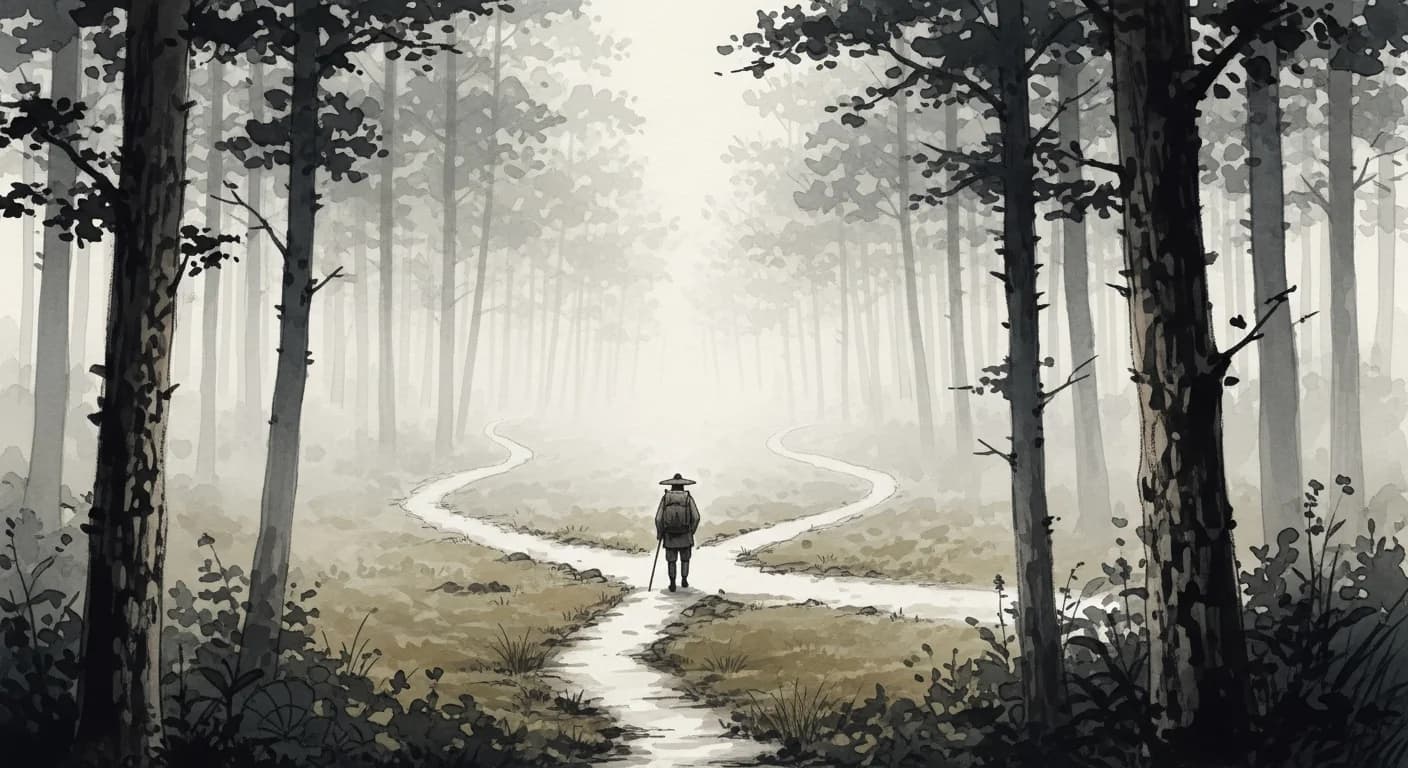
If you spent last night's dream lost and wandering with no path in sight, your unconscious mind has something important to tell you. In Korean dream tradition (해몽), the road — 길 — is one of the most loaded symbols there is, representing life's direction, fate, and destiny itself. Losing that road in a dream has carried a specific warning for over a thousand years of Korean dream culture. But here's the thing — a wandering dream isn't automatically bad news. The entire meaning hinges on how it ends.
The Core Meaning of Wandering Dreams
In Korean dream interpretation, wandering dreams most commonly signal disorientation, anxiety, and a loss of direction in real life. They reflect a psychological state in which the dreamer feels unable to find their footing — in career, family, or relationships. When you wander without finding a way out, the dream is interpreted as a warning that plans may go awry and challenges may intensify. This is particularly true when the wandering takes place in darkness, rain, or a suffocating maze-like setting. In 해몽 (Korean dream reading), context matters enormously — not just the symbol, but the feeling, the setting, and crucially, the outcome.
When Wandering Dreams Are Auspicious (길몽)
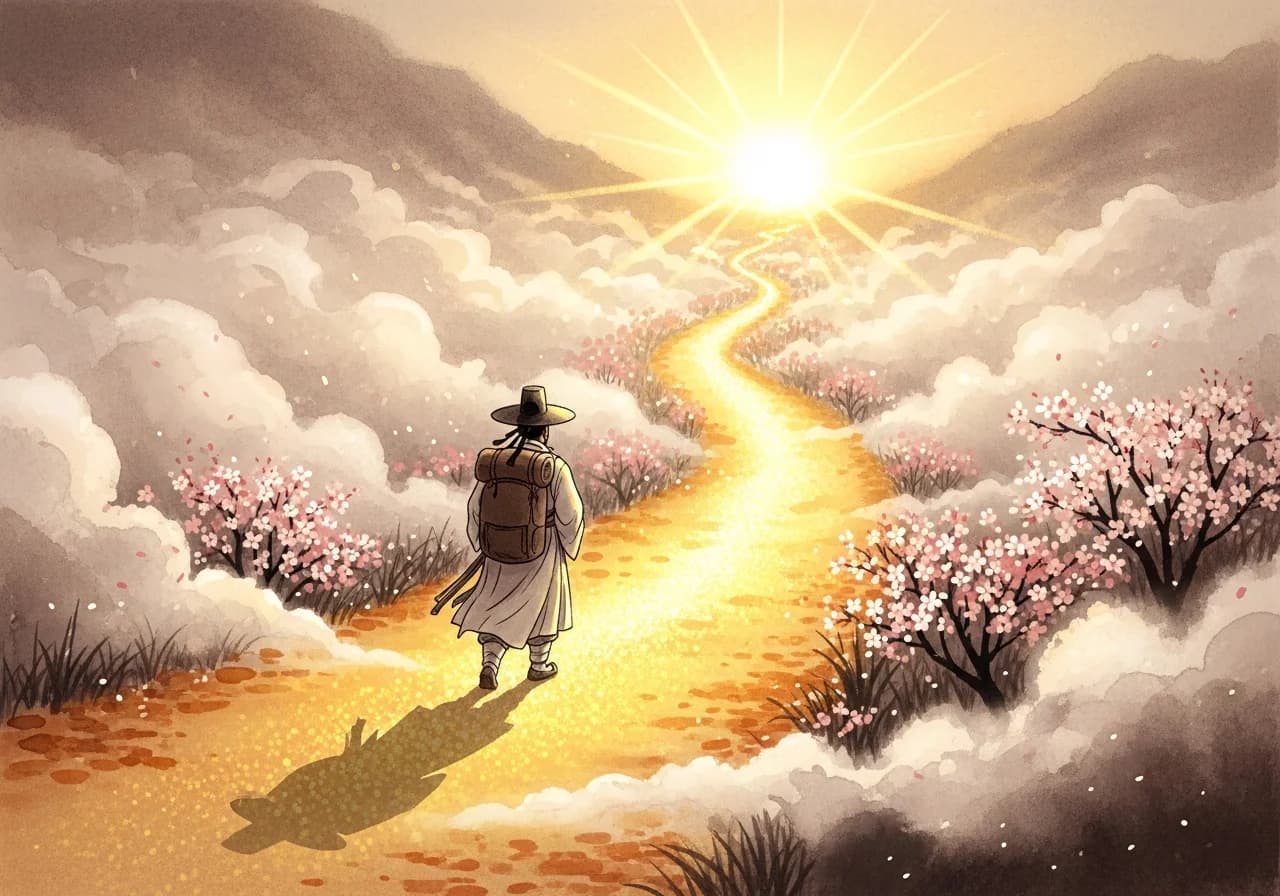
Korean dream tradition distinguishes sharply between 길몽 (auspicious dreams) and 흉몽 (inauspicious dreams), and wandering dreams can go either way. If you wandered but ultimately found your way, that is a strong auspicious sign — a sign that current confusion will give way to growth and new possibilities. Even more promising: if someone appeared and showed you the way, this heralds the arrival of a 귀인 (a benefactor figure) who will help you break through a stuck situation in waking life. Dreaming of wandering in an unfamiliar place is also generally read as auspicious — the anxiety is real, but so is the potential waiting on the other side of it. Mountain wandering falls in the same category: since mountains symbolize aspirations and goals, getting lost on one signals that perseverance will eventually lead to meaningful achievement.
When Wandering Dreams Are Inauspicious (흉몽)
Several varieties of wandering dreams carry cautionary interpretations. Wandering in complete darkness warns of clouded judgment and plans falling apart. Getting lost in heavy rain foretells unexpected conflict or family discord. Being unable to find one's way home suggests domestic tensions are deepening. Lost in a forest or jungle, your efforts may go unrecognized and relationships may cool. Wandering in a desert carries a specific warning about workplace isolation or betrayal — though, interestingly, if you discover an oasis or escape the desert in the dream, it flips to an auspicious sign of problem resolution. Getting lost while driving a car warns that a current business venture is losing direction.
Recurring Wandering Dreams: What the Repetition Means
When wandering dreams come back night after night, Korean dream interpreters and modern psychologists agree: something in your waking life demands attention. This pattern is understood as the unconscious issuing an increasingly urgent call for self-examination. Are you in a role that no longer fits? Have you been avoiding a decision? Do you feel disconnected from your own goals? Recurring lost dreams are among the most commonly reported by people navigating major life transitions — changing careers, ending relationships, or facing the disorientation of midlife change. The repetition is the signal that the underlying issue hasn't been addressed.
Dream Variations
Wandering in darkness dream
Wandering in complete darkness warns of clouded judgment and plans going awry. It reflects peak mental confusion, signaling the need for rest and inner recalibration.
Wandering in a forest dream
Wandering in a forest foretells unrecognized efforts and distancing relationships. If the dream includes escaping the forest, it suggests eventual growth after hardship — the dense trees symbolize both obstacle and future potential.
Wandering through a city dream
Wandering through an unfamiliar city signals upcoming life changes — career shifts, relocation, or identity confusion. It can also symbolize the process of discovering a new version of oneself.
Unable to find the exit dream
Being trapped in a building or maze without an exit reflects feeling stuck in a real-life situation — financially, professionally, or relationally. This dream is common during periods of feeling genuinely trapped with no clear way forward.
Wandering in an unfamiliar place dream
Wandering through a completely unknown place is generally interpreted as auspicious in Korean tradition — current anxiety is real, but new opportunities lie ahead for those who persevere through the disorientation.
Wandering at school or workplace dream
Getting lost in a familiar school or workplace reflects difficulty finding one's role in that environment, or a subconscious wish to escape. This dream may signal burnout or a lack of belonging that needs to be examined.
Wandering lost in the rain dream
Getting lost in the rain is an inauspicious dream warning of unexpected disaster or family conflict. Emotionally challenging times may be approaching, and open communication with loved ones is advised.
Wandering lost together with a romantic partner dream
Wandering alongside a romantic partner warns that the relationship is gradually growing distant. It signals a need for increased communication and deliberate effort to restore closeness.
Getting lost on a mountain dream
Wandering on a mountain is generally auspicious. Mountains symbolize higher aspirations and goals, so even if direction feels unclear now, perseverance will lead to growth and achievement.
Wandering lost in a desert dream
Wandering in a desert warns of workplace isolation or betrayal. However, discovering an oasis or escaping the desert transforms the dream into an auspicious sign of resolution and positive redirection.
Getting lost while driving a car dream
Getting lost while driving warns that a current business venture or life plan is losing direction. It reflects insufficient confidence in current endeavors and cautions against potential financial loss.
Cultural Context
In Korean traditional dream interpretation, the concept of 'gil (길, road or path)' is a core metaphor for life's journey, fate, and direction. Since the Three Kingdoms period, dream divination has been woven into Korean culture, and dreaming of wandering has long been interpreted as losing one's life direction or receiving a warning of hardship ahead. Historical dream texts (몽서) from the Joseon dynasty recorded wandering dreams as omens of professional setbacks or family discord. Conversely, finding one's way out or receiving help while lost was considered auspicious — a sign of fortune reversing after hardship, a concept captured in the Korean idiom 전화위복 (轉禍爲福, turning misfortune into blessing). In contemporary Korea, wandering dreams are among the most commonly reported by people facing career transitions, job changes, or major life decisions — and they are understood as the unconscious signaling a need to recalibrate one's direction.
Western Psychological Perspectives
Western psychology offers a rich complement to Korean dream tradition's interpretation of wandering. From a Freudian perspective, dreaming of wandering represents suppressed desires or unresolved conflicts emerging from the unconscious. The inability to find one's way symbolizes frustrated wishes or thwarted goals, while darkness and maze-like settings may point to repressed anxieties and inner prohibitions. Freud viewed dreams as 'the royal road to the unconscious,' so recurring wandering dreams suggest there may be something in waking life the dreamer is avoiding — a conversation not had, a decision not made, a desire not acknowledged.
Jung offered a more constructive lens. He interpreted wandering dreams as part of the individuation process — the psyche's long journey toward becoming a whole, integrated self. The wandering ego represents the Hero or Seeker archetype, navigating through the unconscious to retrieve lost aspects of the self or confront the Shadow. Jung himself dreamed of wandering through a wilderness before discovering a chapel following a near-death experience, understanding this as a profound inner journey. In Jungian terms, wandering is not failure — it is initiation. The confusion and disorientation are exactly what precedes the breakthrough.
Modern psychology primarily frames wandering dreams as signals of stress, burnout, or identity confusion. Adlerian psychology connects them to losing one's life center or having destabilized goals. Sleep researchers note that these dreams may also arise as the brain reorganizes memories and experiences when adapting to new environments — the brain literally learning new maps. Across cultures, the interpretation converges: Western dream symbolism's 'wanderer' archetype — echoing Odysseus, the biblical Israelites, the pilgrim on the road — represents not failure but transformation. Aimlessness, in the end, is how most great journeys begin.
Frequently Asked Questions
A wandering dream may feel unsettling when you wake, but it carries a genuine message worth sitting with. Korean dream tradition and Western psychology agree on the core: your unconscious is asking you to pay attention — to your direction, your choices, and what you may be avoiding. The dream's ending is your clearest clue. Find the path in the dream, and you are being promised a way through. Still lost when you wake? That is your invitation to start looking.