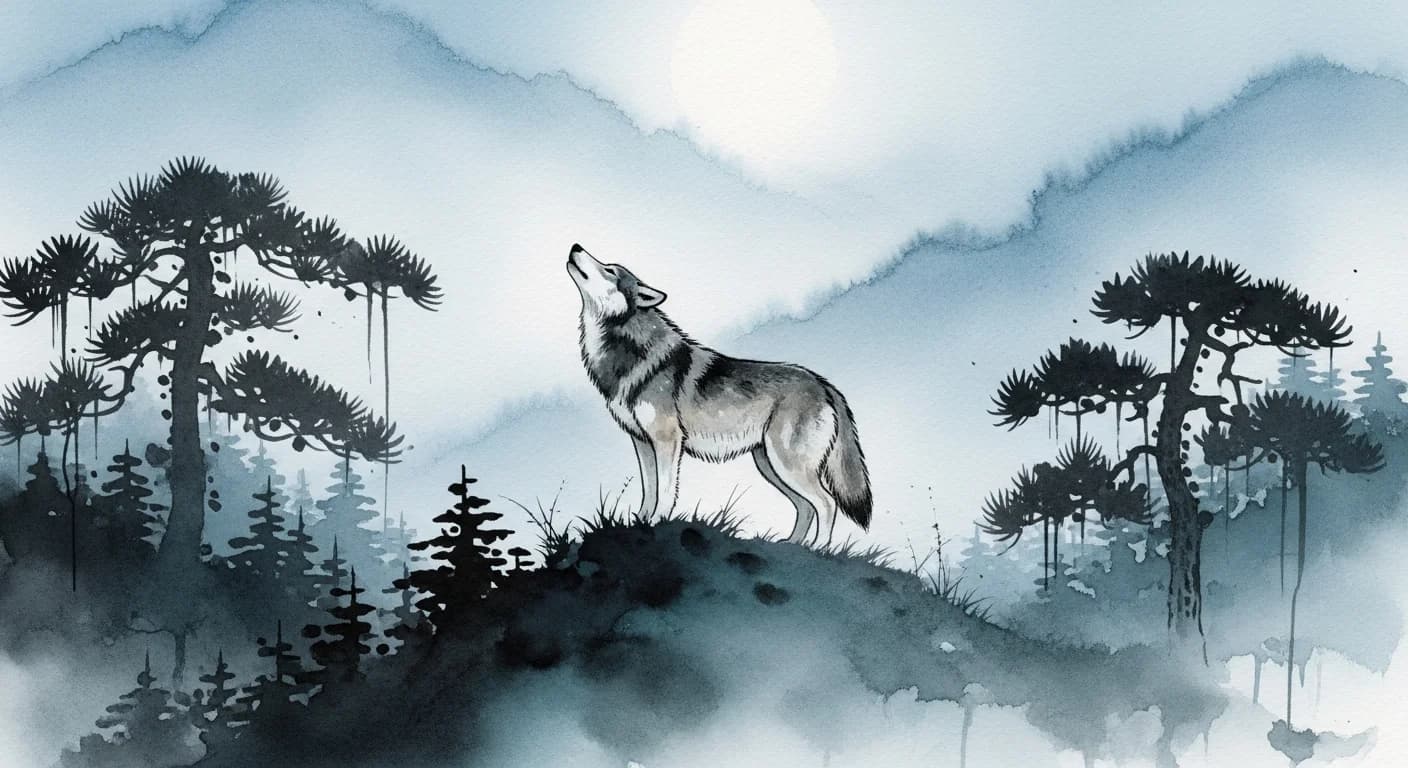
Wolf Dream Meaning in Korean Interpretation — Warning, Power, and Victory
If a wolf looked at you in last night's dream, how it looked back at you changes everything. Korean dream tradition has long read the wolf as a sharp-eyed warning — a signal to check for threats hiding in plain sight. There is a striking twist though: dreams where you overpower or ride the wolf flip entirely into auspicious territory, foretelling formidable strength and decisive victory.
Auspicious or Inauspicious? The Situation Decides
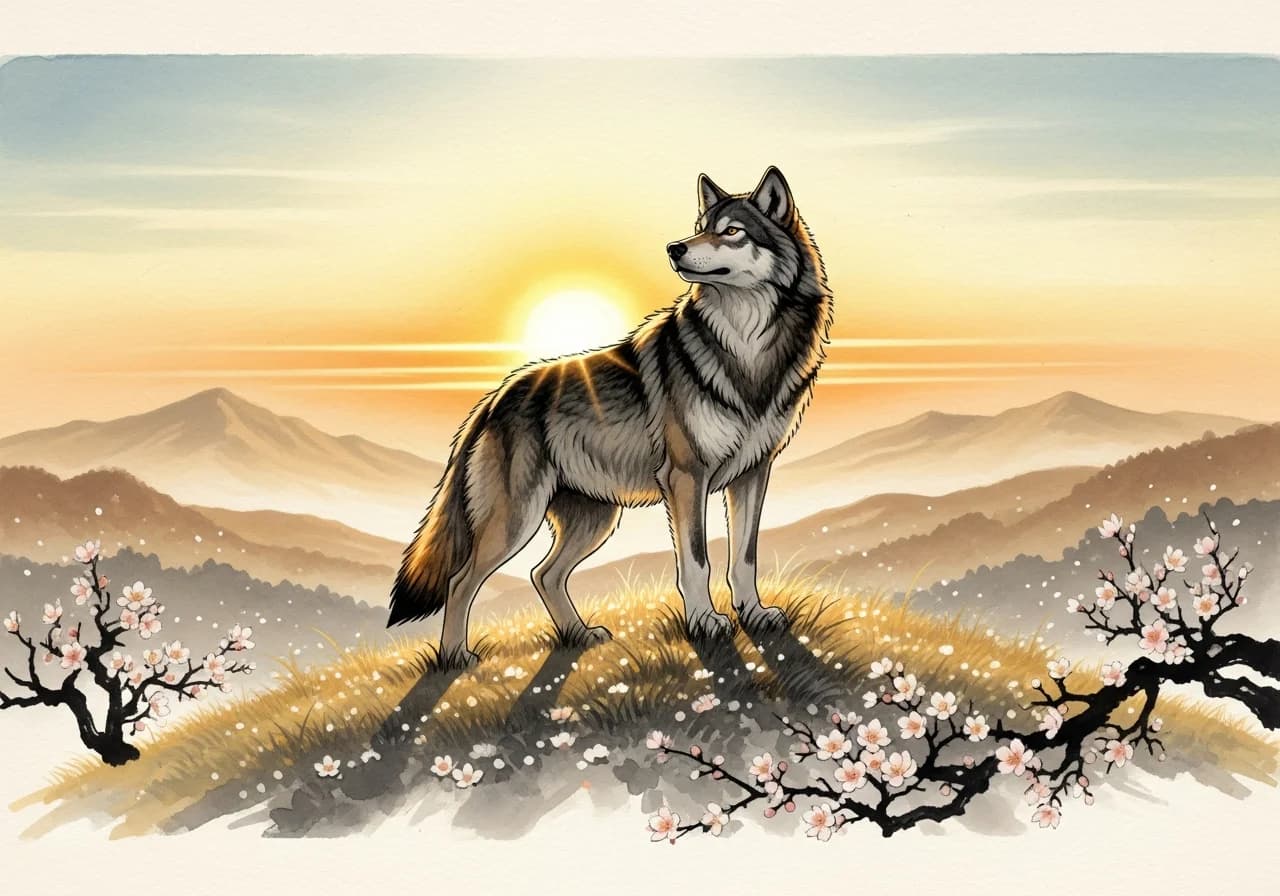
Wolf dreams do not fall neatly into one category. The same animal can signal a serious threat or a major triumph depending entirely on what happens in the dream. Being attacked or chased reads as a warning of real-world danger; subduing or riding the wolf transforms it into a symbol of power and success. Korean dream interpreters pay close attention to the dreamer's emotional state, the wolf's behavior, and — crucially — how the dream ends. Overwhelming fear with no resolution points toward inauspicious; a moment where you overcome that fear shifts the reading toward auspicious.
Inauspicious Wolf Dreams — Hidden Enemies and Betrayal
A wolf lunging at you, entering your home, or cornering you is one of the clearest inauspicious omens in Korean dream tradition. It warns of people who present a friendly face while harboring harmful intentions — a workplace colleague who is undermining you, a business partner acting in bad faith, or an unexpected threat from someone in your trusted circle. A wolf pack chasing you is an even stronger warning: adversaries or complications may converge from multiple directions at once. If the wolf broke into your home and threatened your family in the dream, pay particular attention to possible conflicts within the household or interference from an outside party.
Auspicious Wolf Dreams — Triumph Over Powerful Opposition
Killing or completely subduing a wolf ranks among the strongest auspicious omens in Korean interpretation. It foretells decisive victory over a powerful rival or persistent obstacle — the kind of win that may arrive as final success in fierce competition, resolution of a legal dispute, or the sudden end of a long-standing worry. Riding a wolf or running freely alongside one is equally auspicious: it signals that you will seize control even in a difficult situation and steer it to your desired outcome. This dream often precedes a promotion into leadership or a major turning point in business.
The White Wolf — Sacred Wisdom and New Beginnings
A white wolf appearing peacefully carries special significance. In Korean tradition, white is the color of the sacred and the pure, so a white wolf is read as a being of raw strength combined with clean, benevolent energy. Encountering one on the eve of a major decision is a clear signal to trust your instincts and move forward. This dream can also mark the beginning of a period of spiritual growth or personal renewal. Note that even a white wolf that attacks is not automatically auspicious — the color softens but does not erase the threat-reading if the animal's behavior is aggressive.
Dream Variations
Dream of Being Chased by a Wolf
This dream warns that someone in your waking life is threatening or seeking to harm you — a workplace rival, a hidden enemy, or the resurgence of a past conflict. Successfully escaping means you will navigate the danger; being caught suggests a difficult stretch ahead. The more intense the fear in the dream, the more seriously Korean interpreters take the warning.
Dream of Being Bitten by a Wolf
Being bitten warns of betrayal by a trusted person or unexpected loss. The bitten body part carries meaning: a bite on the hand suggests financial or business loss; a bite on the foot signals blocked plans or impeded movement. Closely re-examine your current close relationships — something may not be as it appears.
White Wolf Dream
A white wolf appearing without aggression is an auspicious sign, combining raw power with sacred wisdom. Expect an important insight or positive turning point soon. This dream encourages you to trust your intuition and step into a new beginning without hesitation — a signal of purification and spiritual growth.
Black Wolf Dream
A black wolf can represent unacknowledged inner fears, suppressed anger, or behavior that is unknowingly disturbing those around you. In Korean dream tradition, dark-colored animals frequently carry ominous connotations — this dream may warn of a hidden adversary or someone plotting against you quietly in the background.
Wolf Pack Dream
A peaceful wolf pack is an auspicious sign of collective strength — you may gain a solid support network or find genuine power through collaboration. A threatening or charging pack, however, warns of multiple adversaries or coordinated difficulties converging on you simultaneously. If you have been feeling pressure from several directions in waking life, this dream deserves careful attention.
Dream of a Howling Wolf
Hearing a wolf howl or witnessing howling is an inner warning signal. Your intuition may be alerting you that something important is being overlooked. Pay closer attention to the details of your situation and examine decisions carefully before acting. The howl can also symbolize loneliness or a suppressed need to express deep emotion.
Dream of Riding a Wolf
Riding a wolf means you are commanding something powerful and dangerous — a strong sign that you will take full control of a tough rival or complex situation. This dream heralds a period of peak leadership and decisive momentum, with positive forward movement expected across business, career, and personal goals.
Dream of Killing a Wolf
Killing a wolf is a strongly auspicious omen foretelling the removal of a persistent threat or powerful obstacle. Decisive victory in competition, resolution of a legal matter, or the end of a long-standing worry — a pivotal turning point is near. This is one of the clearest positive wolf dreams in Korean interpretation.
Wolf Pregnancy Dream (태몽 Taemong)
A wolf as a pregnancy omen (태몽) predicts a child who will be strong, independent, and naturally suited to leadership. A dignified, non-threatening wolf suggests the child will be determined and forge their own path. If the wolf was aggressive or menacing in the dream, some interpreters read it as a caution to pay careful attention to health during the pregnancy rather than a prediction about the child's character.
Dream of Taming a Wolf or a Gentle Wolf
Taming a wolf or encountering an unusually gentle one suggests you will be entrusted with a challenging new responsibility. It can also mark a period of personal growth in which you learn to channel your own fierce drive productively. A difficult relationship may improve, or an unexpectedly favorable collaboration may materialize.
Dream of Eating Wolf Meat
This is the symbolic act of defeating a powerful adversary and absorbing their strength as your own. Eating wolf meat in a dream portends decisive victory in fierce competition — and even greater power gained through that victory. A pivotal winning moment in business or career is near.
Cultural Context
In Korean folk tradition, the wolf was long known as '이리' (iri) — a native word used throughout classical tales and folk stories. The modern term '늑대' (neukdae) only became standardized in the modern era, so traditional folklore almost always refers to the creature as iri. As a forest predator that preyed on livestock and occasionally threatened people, the wolf was firmly established as an object of fear and wariness in village life. The expression 'like a pack of iris (wolves)' described greedy groups preying on the weak. Unlike the tiger — revered in Korean shamanism as a messenger of the mountain spirit (산신령) — the wolf in folk tradition typically appeared as a target of exorcism rituals (벽사) rather than a sacred guardian. The contrast with the dog was sharp: dogs were loyal household protectors, while wolves were wild forces beyond the boundary of human society that threatened it from outside. This cultural history explains why wolf dreams lean so strongly toward inauspicious interpretation in the Korean tradition. The Korean wolf (a Gray Wolf subspecies native to the peninsula) was last observed in the wild in the early 1960s and declared effectively extinct when the final captive individual died at Seoul Grand Park Zoo in 1997.
Western Psychological Perspectives
Western psychological traditions approach wolf dreams with considerably more nuance than simple fear, reading them as windows into the deeper layers of the psyche.
From a Freudian perspective, the wolf represents repressed aggressive drives and primal desires. Being chased by a wolf reflects fear of one's own uncontrolled instincts, or unconscious dread of external authority. Freud's landmark case study, 'the Wolf Man,' analyzed the wolf as a symbol of castration anxiety and ambivalent feelings toward the father — demonstrating just how much psychological weight the animal could carry in the dreaming mind.
Jungian psychology reads the wolf as a powerful expression of the Shadow archetype — that part of ourselves we have suppressed because social life demands it. The wolf embodies instinctual energy, wildness, and raw impulse that the conscious mind has pushed aside. Dreams of taming or running with a wolf are interpreted as the process of Shadow integration: creatively reclaiming the wild energy within as part of individuation. From a Jungian standpoint, meeting the wolf in a dream is less something to fear and more an invitation to encounter the unacknowledged self.
Modern psychology links wolf dreams primarily to real-world stress, perceived threat, and social pressure. Workplace competition, relational conflict, or situations that feel out of control may find expression through the image of a wolf. Dreams of coexisting with or overpowering a wolf suggest a psychologically healthy engagement with one's stressors rather than avoidance.
Across world cultures, the wolf carries a strikingly dual symbolic identity that mirrors the Korean tradition's own ambivalence. In Western European fairy tales — Little Red Riding Hood, The Three Little Pigs — the wolf is a malevolent predator. In Norse mythology, Fenrir is the apocalyptic wolf destined to swallow the world at Ragnarok. Yet many Native American traditions revere the wolf as a sacred symbol of wisdom, leadership, and communal protection. In Roman mythology, the she-wolf that nursed Romulus and Remus represents nurturing power and the very founding of civilization. The Korean reading — where overcoming the wolf brings exceptional fortune — resonates with this latter tradition of the wolf as a figure whose power, once mastered, confers extraordinary strength.
Frequently Asked Questions
A wolf dream is rarely just about fear. Whether it arrives as a sharp warning of hidden threats or as a bold forecast of power and victory, the wolf in your dream is speaking directly to your current circumstances. Reflect honestly on how the dream unfolded — what the wolf did, how you responded, and how it ended. That clarity is the real value of the dream, and it belongs entirely to you.
Related Dreams
Dog Dream Meaning in Korean Tradition — Color, Behavior, and What It All Means

Tiger Dream Meaning — Korea's Most Powerful Dream Symbol
Bear Dream Meaning — Rooted in the Dangun Myth and Korean Shamanic Tradition
Fox Dream Meaning: What Does a Fox in Your Dream Signify?

Dream of Being Chased by a Dog (개에게 쫓기는 꿈) — Korean Interpretation
Lion Dream Meaning: Decoding the Symbol of Authority and Courage