Anxiety Dream Meaning — What Korean Dream Interpretation Reveals
An anxiety dream is rarely just a bad dream. It carries the most urgent message your unconscious is trying to send you right now. And here's the thing — whether it ends up as a good omen or a warning depends entirely on one detail: how the fear resolved itself inside the dream.
Auspicious: When the Anxiety Dream Ends in Triumph
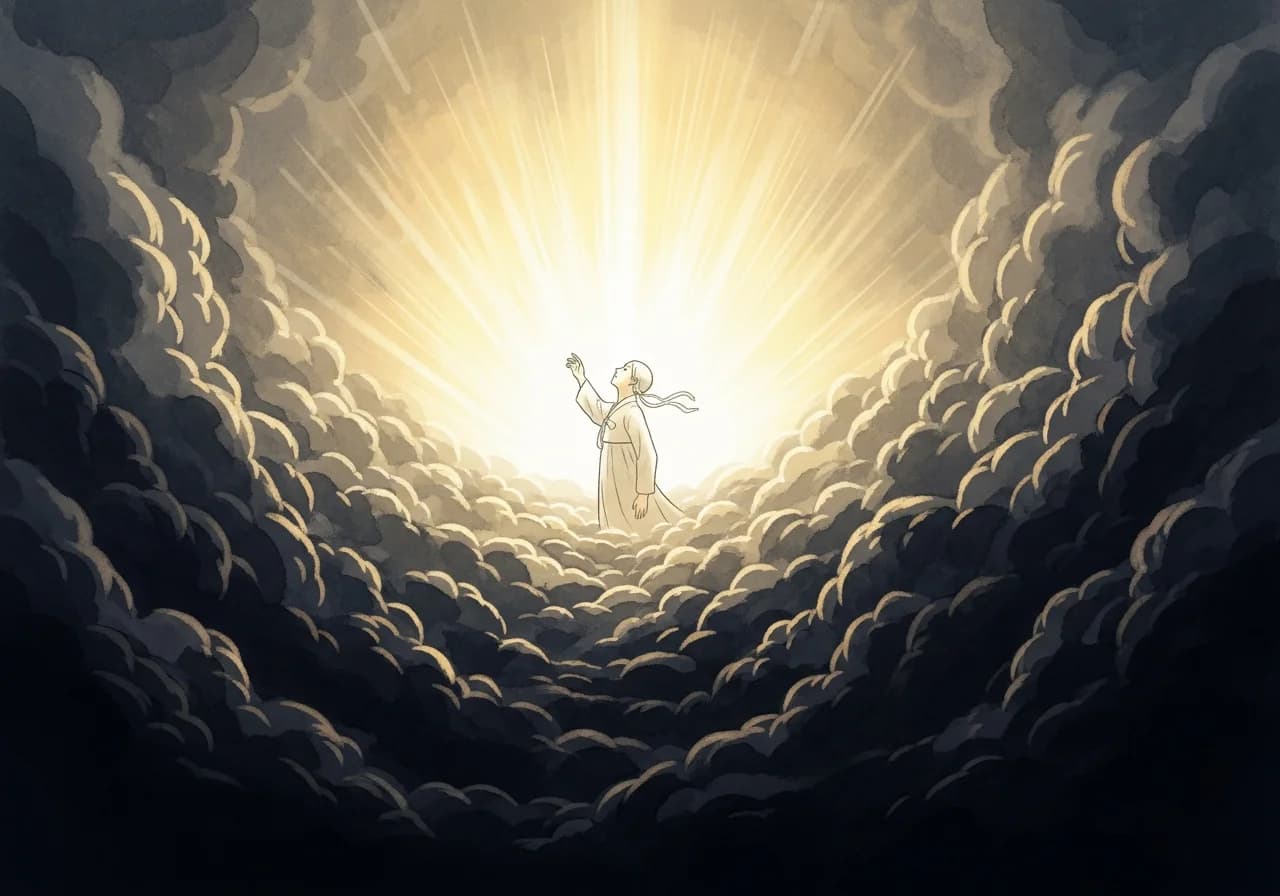
If you successfully escape or overcome the threatening situation inside your anxiety dream, Korean tradition reads this as a strongly auspicious omen. Running from danger and reaching safety, facing a terrifying figure and standing your ground, or finding a way out of a trap — all of these endings signal that you carry the inner strength to overcome real-life difficulties. Long-standing problems that felt intractable may finally begin to resolve. In Korean dream lore, the greater the fear you faced and conquered in the dream, the greater the corresponding achievement in waking life. This is the principle of 'dreams mean the opposite of their content' working in your favor.
Inauspicious: Trapped in the Anxiety Without Escape
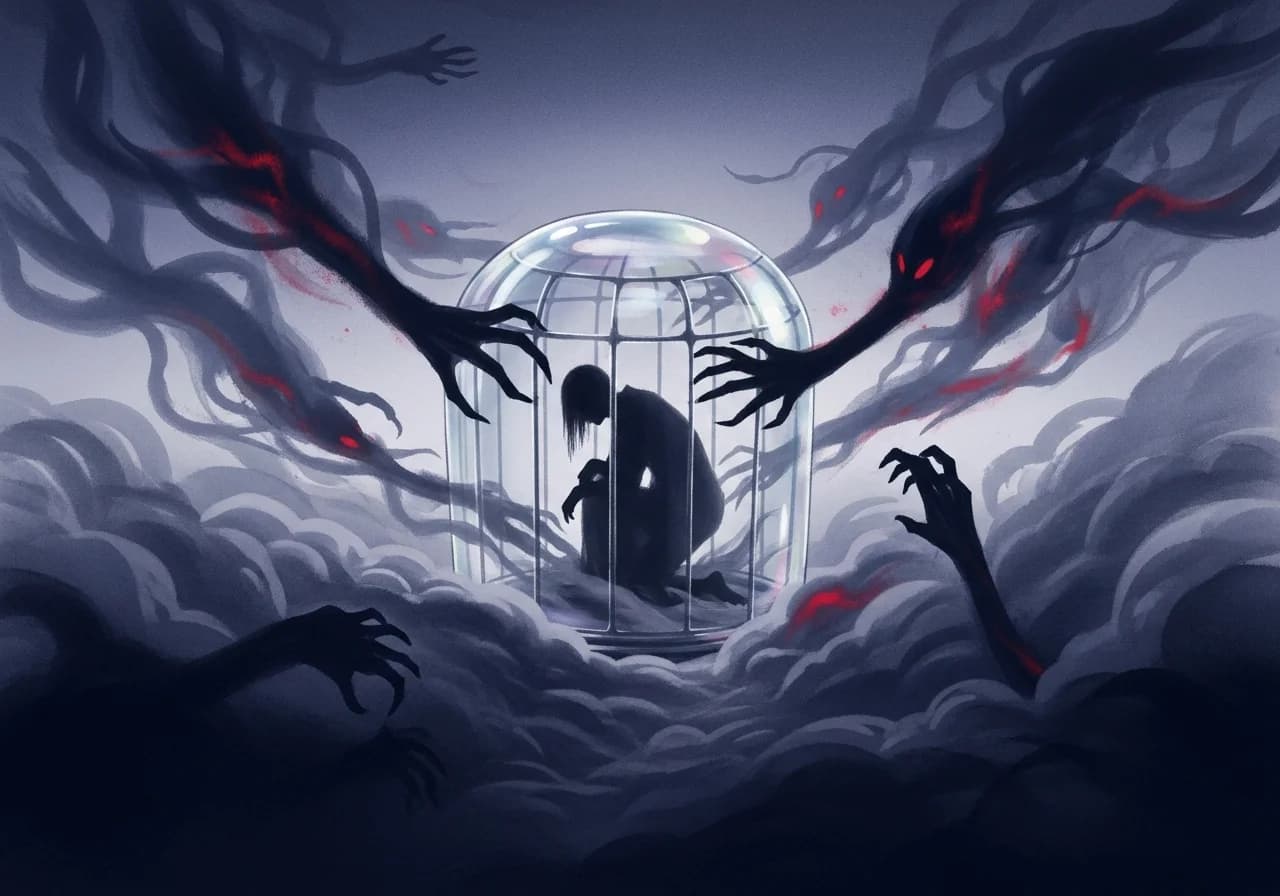
If you are endlessly chased, trapped without any escape, or jolt awake in terror without having resolved the threat — this leans toward an inauspicious omen. It signals that psychological pressure has reached a breaking point, or that a critical problem in waking life is being actively avoided rather than confronted. Tensions in relationships, work, or study that have been suppressed for too long may be approaching a rupture. If this same anxiety dream recurs night after night, Korean tradition treats it as an urgent warning: there is something in your life that demands direct attention, not avoidance.
Neutral: The Anxiety Dream as an Inner Signal
Many anxiety dreams carry a neutral, informational message rather than a clear good or bad omen. The beloved Korean proverb '꿈보다 해몽이 좋다' — the interpretation is better than the dream — captures this perfectly: what you do with the dream matters more than the dream itself. Taking time on the morning after an anxiety dream to honestly survey your current stressors can transform an unsettling night into a genuine turning point. If the dream is the unconscious flagging a source of anxiety, learning to read that signal clearly is already the beginning of change.
Dream Variations
Being Chased Dream Meaning
Being chased is one of the most universal anxiety dream types, and in Korean interpretation, the pursuer's identity is key. A supernatural chaser — ghost, monster, or shadow figure — suggests unfavorable circumstances in your environment that you haven't yet perceived clearly. A human pursuer points to interpersonal or social pressure. The outcome determines the omen: successfully escaping is auspicious, meaning you can resolve the underlying problem; being caught is inauspicious, a warning to act before things worsen.
Exam Failure or Late to Exam Dream Meaning
Dreaming you fail an exam or arrive too late to sit one is among the most commonly reported anxiety dreams worldwide. In Korean tradition, this is not prophetic of actual failure — it reflects the psychological weight of current responsibilities and the expectations placed on you. Interestingly, Korean dream interpretation can read exam failure in a dream as auspicious: the anxiety itself may be the very force that sharpens your focus and motivates greater effort in reality.
Falling Dream Meaning
Falling from a height in a dream represents the fear of losing control or experiencing a sudden collapse of stability. In Korean dream tradition, guided by the principle that dreams often mean the opposite, a falling dream can be read as an auspicious sign of an imminent leap forward or new opportunity. Waking up before hitting the ground is often interpreted as narrowly averting a crisis in real life.
Recurring Anxiety Dream Meaning
When the same anxiety dream returns night after night, Korean tradition treats this as a serious signal rather than random noise. It strongly suggests an unresolved emotional issue or underlying trauma that hasn't been addressed in waking life. Rather than dismissing it, the traditional advice is to treat the recurrence as a pointed reminder: there is a life matter that cannot be postponed any longer.
Trapped and Can't Escape Dream Meaning
Dreaming of being trapped — locked in a room, stuck in a confined space, unable to move — reflects feelings of powerlessness or a suppressed desire to break free from a constraining situation. Korean interpretation classifies this as inauspicious, symbolizing restriction and lack of agency. It is read as a prompt to examine the relationships or circumstances in your waking life that may be suffocating growth or personal freedom.
Running From Danger Dream Meaning
A dream of desperately fleeing a dangerous situation is entirely determined by its outcome. Successful escape signals auspiciousness — you have what it takes to overcome the difficulties currently facing you. Being caught, or failing to escape, warns that the underlying problem may escalate unless confronted directly and soon.
Scary Ghost Appearing in a Dream Meaning
Dreams featuring terrifying ghosts or supernatural presences are typically inauspicious in Korean tradition, suggesting invisible obstacles or forces working against you in waking life. However, the interpretation shifts dramatically if you speak with the ghost calmly or succeed in driving it away — both are considered auspicious, symbolizing the ability to confront and neutralize hidden problems.
Cultural Context
In Korean folk tradition, an anxiety dream — described by the evocative phrase '꿈자리가 사납다' (the dream-place is fierce) — has long been treated as a significant omen rather than mere noise. In ancient Korea, dreams were understood as messages transmitted by deities or the spirits of ancestors, and frightening or anxious dreams were interpreted as divine warnings urging attentiveness to waking life. Shamanic (무속) practice developed a set of folk rituals specifically to counteract the negative energy of bad dreams: sprinkling salt at the front doorway upon waking, refraining from telling anyone about the dream before noon, or airing out bedding in direct sunlight to dispel lingering dark energy. A core operating principle of Korean dream interpretation holds that dreams frequently signal the opposite of their surface content — so an anxiety dream may paradoxically foretell an opportunity or turning point. The beloved proverb '꿈보다 해몽이 좋다' (the interpretation is better than the dream) encapsulates the Korean understanding that one's response to a difficult dream ultimately shapes its real-world impact more than the dream content itself.
Western Psychological Perspectives
Western psychology has long viewed anxiety dreams as one of the most informative windows into the inner life. Freud interpreted them as moments when repressed desires break past the ego's censorship mechanism in disguised form. The threats and terrors of an anxiety dream, in his framework, represent forbidden unconscious wishes erupting into awareness; the anxiety itself is the ego's response to those unacceptable impulses. Being chased or trapped may therefore signal an internal war with drives the dreamer is unwilling to consciously acknowledge.
Jung took a different but equally rich view: anxiety dreams are the Shadow archetype — the dark, suppressed dimension of the personality — forcing its way into conscious awareness. The threatening figures in an anxiety dream are projections of aspects of the psyche the dreamer has refused to integrate. Far from being purely negative, Jung saw these dreams as the unconscious compensating for a dangerous imbalance in the conscious personality. The frightening entity is an invitation: confronting and integrating what feels most threatening is the very engine of individuation, Jung's term for the journey toward psychological wholeness.
Modern neuroscience reframes anxiety dreams through the lens of sleep biology. During REM sleep, the brain actively reprocesses negative emotions and unresolved stress accumulated during the day, and this emotional housekeeping frequently generates fearful dream content. Research has found that moderate-level anxiety dreams actually enhance emotional regulation and lower next-day stress levels — the brain using dream-space as a low-stakes rehearsal space for difficult emotions. Severe, recurrent nightmares that cause abrupt awakening, however, are associated with PTSD, anxiety disorders, and chronic stress, and are worth discussing with a mental health professional.
Where Western psychology reads anxiety dreams as dispatches from the inner world, Korean tradition tends to read them as messages from outside forces — ancestors, fate, or the spirit world. Yet both converge on the same practical wisdom: an anxiety dream is not something to dismiss, but an invitation to honest self-reflection.
Frequently Asked Questions
An anxiety dream is the unconscious speaking at full volume about what matters most right now. If you overcame the fear inside the dream, trust that same strength to carry you through whatever is pressing on you in waking life. If you didn't escape — take that as a clear, firm nudge to face what you've been avoiding. As the Korean proverb puts it, the interpretation is better than the dream: the meaning you choose to carry forward from an anxious night will shape what comes next more than the dream itself ever could.