Nightmare Dream Meaning — What Korean Tradition Says About Bad Dreams
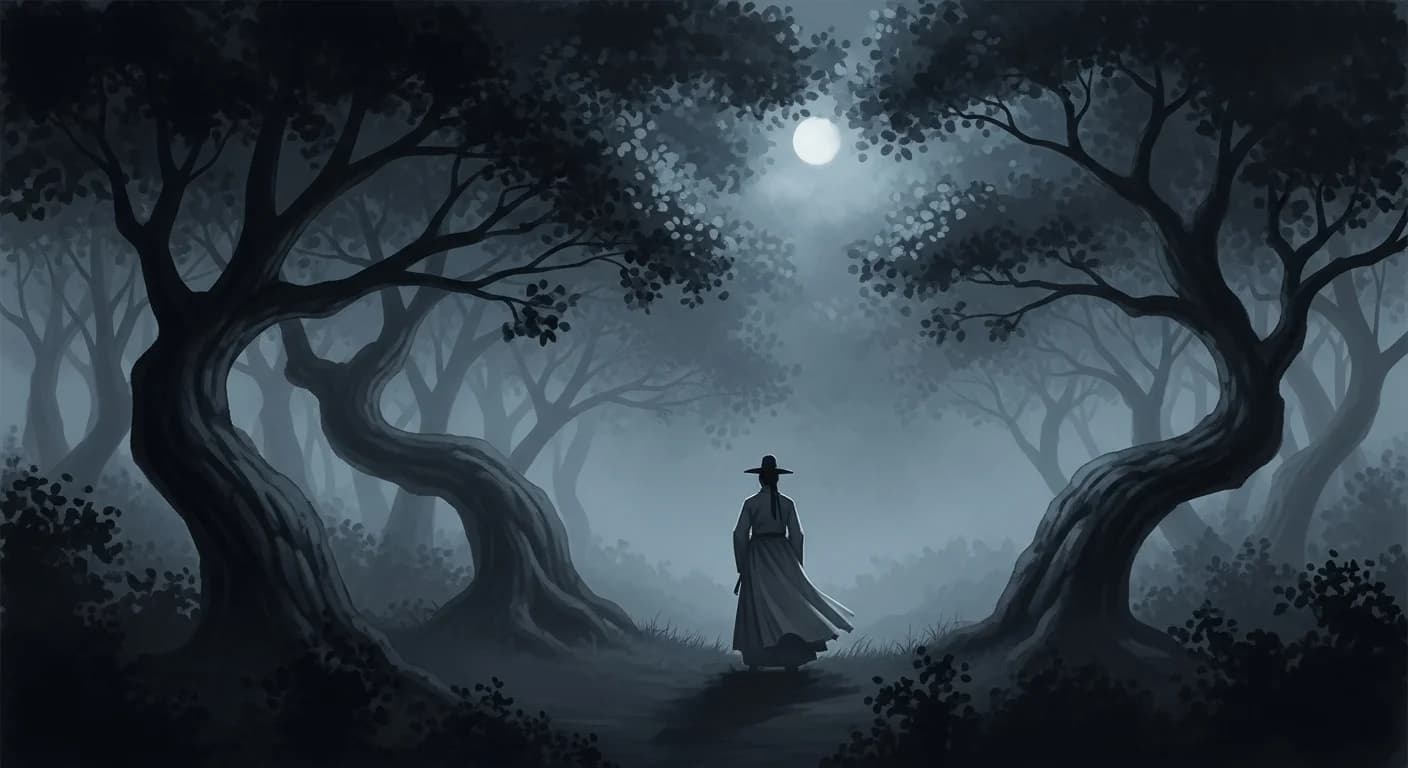
If you woke up last night drenched in cold sweat from a terrifying dream, Korean tradition has a surprisingly hopeful take: that nightmare might actually be good news. Korean folk dream interpretation has followed the 'reversal principle' (역몽, yeongmong) for centuries — the belief that the more frightening the dream, the greater the fortune awaiting you in waking life. But here's the nuance that changes everything: not all nightmares are treated equally. Whether you escaped the ghost, got caught, or found yourself unable to move can flip the interpretation completely — and knowing which type of nightmare you had is the key to reading it correctly.
When Nightmares Are Auspicious — The Reversal Principle

In Korean 꿈해몽 (dream interpretation), the reversal principle (역몽) is one of the most fundamental interpretive frameworks. The idea — that dream experiences appear reversed in waking reality — was widely held among commoners throughout the Joseon Dynasty and remains deeply embedded in Korean dream culture today.
The most powerfully auspicious nightmare is one in which the dreamer fights and defeats a ghost or malevolent spirit. Despite the terrifying content, such a dream symbolizes restored health, extended lifespan, and the inner strength to overcome real-life obstacles. Even a drawn-out battle with no clear winner is read positively as a sign of robust vitality.
Waking from a nightmare with rapidly fading fear is also considered an omen of reversal. The intensity of the in-dream fear is thought to correspond to the magnitude of the real-life blessing on its way. Many Koreans, after a terrifying nightmare, would say: 'Something good must be coming today' — actively using the reversal principle as a lens for optimism.
When Nightmares Are Inauspicious — Warnings to Take Seriously
The reversal principle does not apply universally. Korean tradition identifies specific nightmare patterns that function as genuine warnings rather than auspicious reversals.
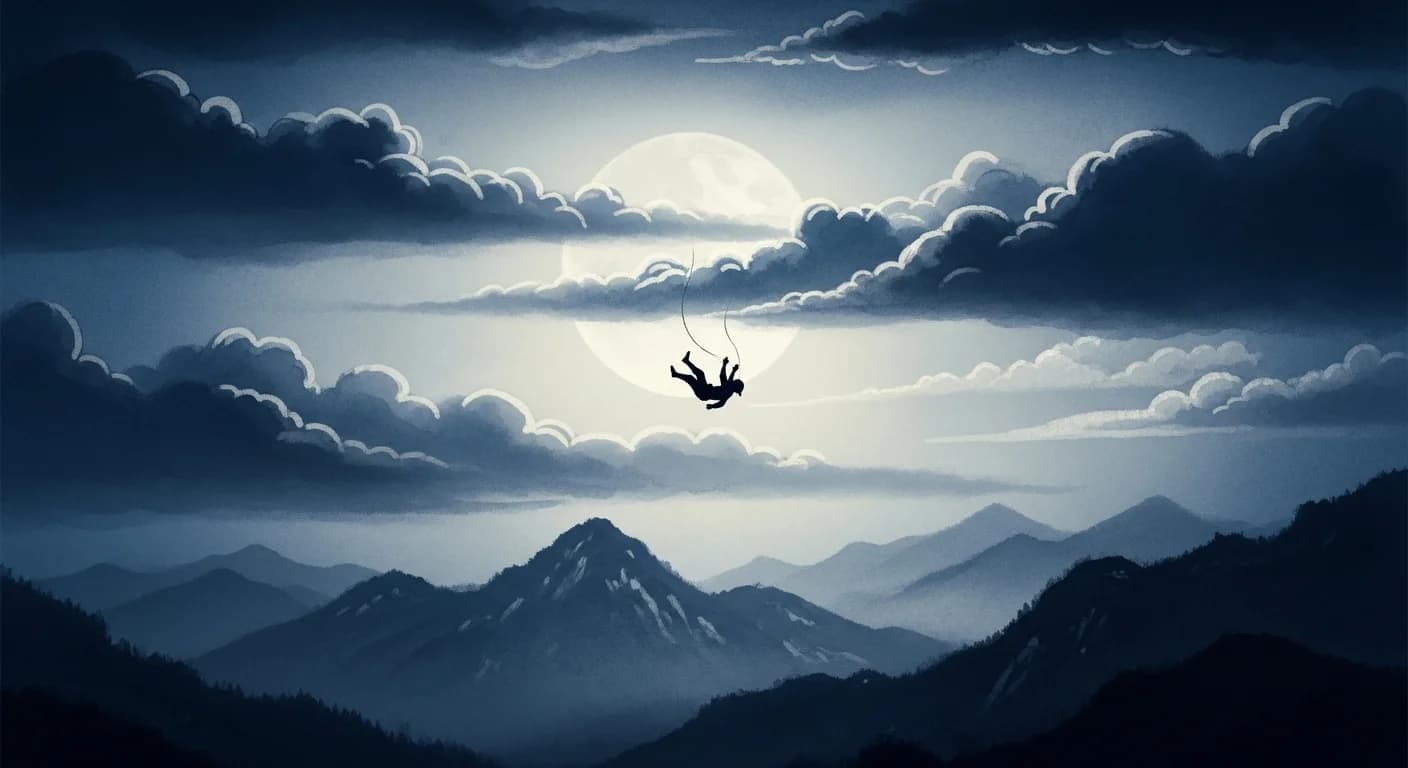
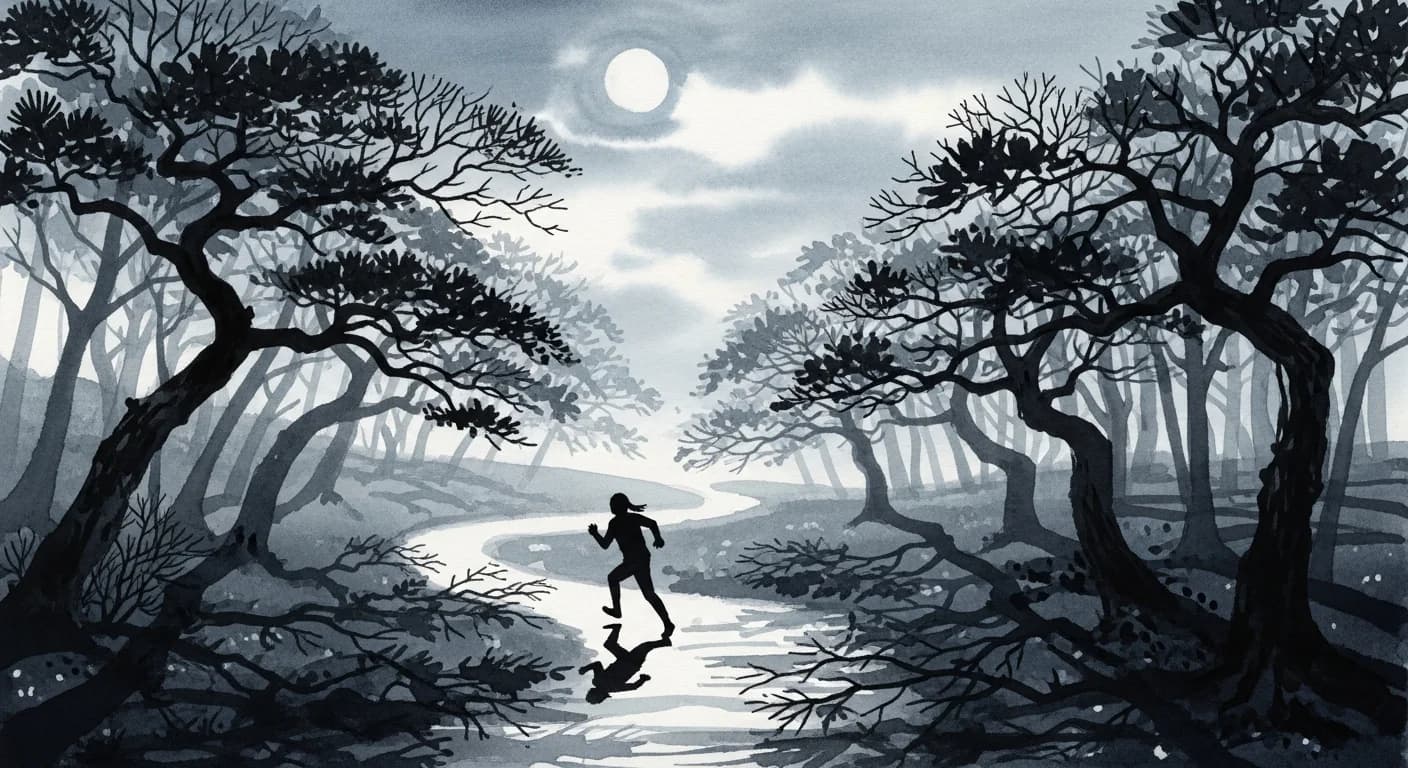
Being chased by a ghost or demon and ultimately being caught is interpreted as a warning of health deterioration and obstacles in business. Successfully escaping suggests the inner strength to avoid the danger; being caught shifts the reading to an inauspicious omen. Falling from a great height and striking the ground warns of social humiliation or a fall in status or reputation.
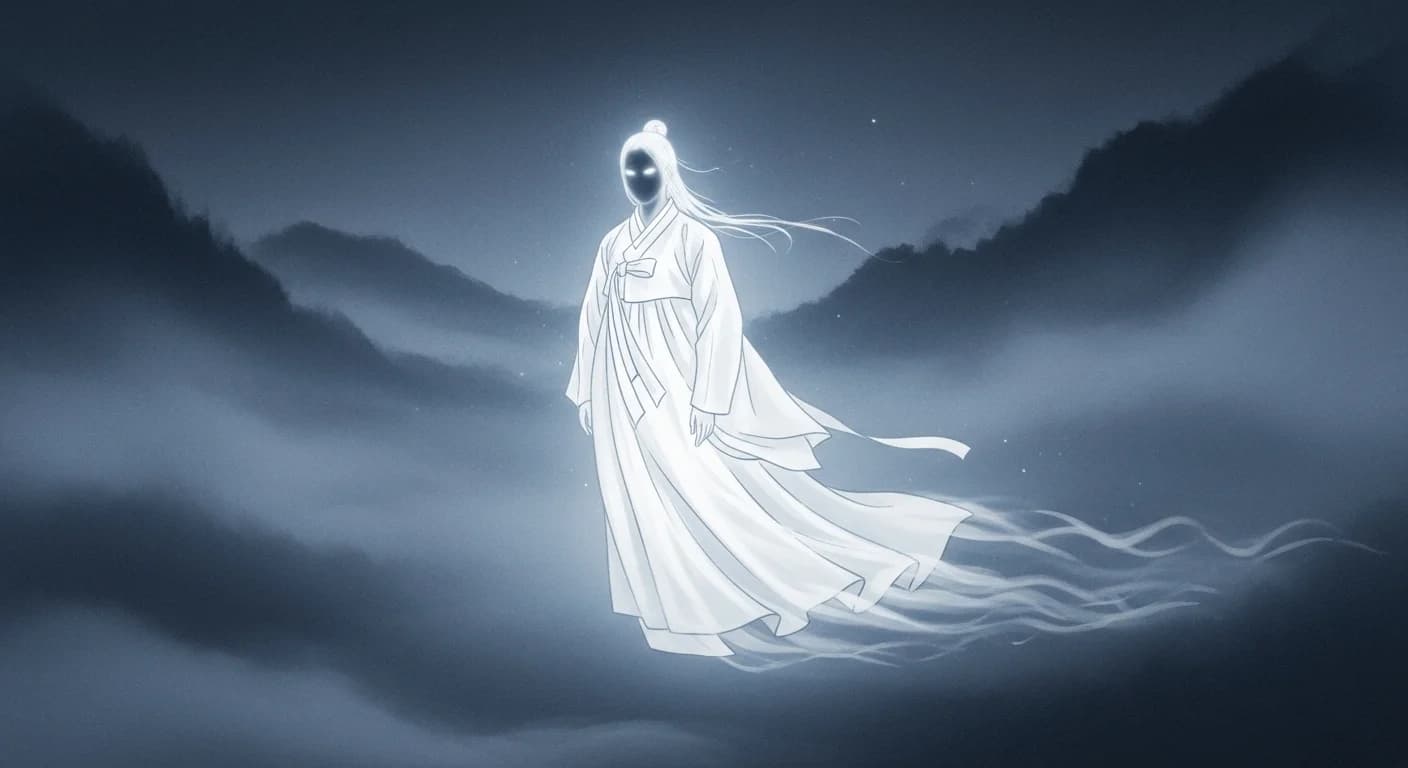
The most seriously regarded nightmares involve water spirits (물귀신 — the souls of those who drowned) pulling the dreamer down, and the deceased leading the dreamer away. In Korean folk belief, both of these are treated as direct warnings of water-related accidents or physical danger, prompting traditional advice to avoid rivers and the ocean for a period of time.
Sleep paralysis nightmares — where the dreamer cannot move and feels a presence pressing down — were attributed in folk tradition to malevolent spirits or ancestral energies, and were treated as harbingers of serious illness. Modern interpretation reads them as indicators of extreme stress and disordered sleep demanding immediate attention.
Neutral Nightmares — A Mirror of Your Current State
Not every nightmare carries prophetic weight. Anxiety nightmares — failing an exam, being late for an important event, getting lost in an unfamiliar place — are understood in Korean 해몽 not as omens of specific misfortune but as mirrors of the dreamer's current psychological state.
These nightmares surface unresolved real-life tensions: performance anxiety, interpersonal conflict, or the stress of major life transitions such as a job change, relocation, or important exam. They are better received as invitations for self-reflection rather than ominous predictions.
Recurring nightmares of the same theme carry a particularly insistent message: the unconscious mind is repeatedly surfacing a specific issue that demands conscious attention. Keeping a dream journal and tracing the connection between recurring themes and waking circumstances can help identify the root cause.
Dream Variations
Nightmare of Being Chased by a Ghost
Being pursued by a ghost or evil spirit in a dream signals unresolved psychological conflict or a real-life problem the dreamer is actively avoiding. Escaping or defeating the ghost indicates the inner strength to overcome the challenge; being caught warns of health deterioration and setbacks in ongoing endeavors.
Nightmare of Falling from a Great Height
Falling nightmares reflect wounded pride and fear of failing to meet goals. Waking before impact suggests the dreamer will avert the crisis; actually hitting the ground in the dream is an inauspicious sign warning of social humiliation or a decline in status or position.
Recurring Nightmare Meaning
A recurring nightmare indicates the unconscious mind repeatedly surfacing an unresolved task or unprocessed emotion. The higher the frequency, the greater the underlying psychological tension. Keeping a dream journal, connecting recurring themes to waking circumstances, and — if recurrence persists for several weeks — consulting a mental health professional are all recommended steps.
Sleep Paralysis Nightmare Meaning
Sleep paralysis nightmares are viewed in Korean folk tradition as a serious health warning, reflecting extreme depletion of physical and mental energy. Folk belief attributed the experience to malevolent spirits pressing down on the sleeper. Scientifically, sleep paralysis occurs when REM-phase muscle paralysis overlaps with the moment of waking consciousness — typically triggered by severe stress, irregular sleep patterns, and sleep deprivation.
Nightmare of Dying
Dying in a nightmare is paradoxically one of the more auspicious nightmare types in Korean tradition. The death of the self symbolizes the close of an old chapter and the opening of a new one, often associated with improving finances, health, and relationships. The exception is being murdered or unable to escape — this warns of external pressure or betrayal in personal relationships.
Nightmare of Being Seized by a Water Spirit
Nightmares involving a water spirit (the soul of someone who drowned) seizing and pulling the dreamer are taken very seriously in Korean folk belief as a direct warning against water-related accidents, particularly drowning. People who have this dream are traditionally advised to avoid rivers and the sea and exercise caution for a period of time.
Nightmare of Failing an Exam
Exam failure or being unprepared in a nightmare typically appears when the dreamer faces high-stakes evaluation or performance pressure in waking life. Rather than predicting a specific misfortune, this nightmare reflects current anxiety and perfectionist pressure. Building adequate preparation and seeking support from others are the practical responses.
Nightmare of Fighting and Defeating a Ghost
Despite its frightening content, a nightmare in which the dreamer successfully fights and defeats a ghost is classified as an auspicious dream in Korean tradition — symbolizing restored health, extended longevity, and the eventual triumph over hardship. Even an inconclusive battle with a ghost is read positively as an indicator of robust life force.
Cultural Context
In Korean culture, dreams have been treated as divine messages or portents of the future since the Three Kingdoms period (57 BCE – 668 CE). The Samguk Yusa — a 13th-century collection of historical and legendary accounts — records dream interpretation as central to royal decision-making and assessments of fortune. Shamanistic myths such as Bari Gongju and Jeseok Bonpuri present dreams as channels through which deities communicate their will to the living.
Nightmares — called 'mongjio (夢兆)' in traditional usage — were received not merely as unpleasant sleep disturbances but as warnings from the spirits, ancestors, or natural forces about approaching calamity or danger. Sleep paralysis nightmares and water spirit dreams were taken seriously enough to prompt practical precautions: avoiding travel on the day after the dream, wearing protective charms (부적), or consulting a mudang (shaman) for a ritual cleansing.
At the same time, the 'reversal principle' (역몽) runs deeply through Korean popular culture: the more terrifying the dream, the better the fortune awaiting in waking life. This optimistic counterweight coexisted with the warning interpretation, creating a distinctive dual framework — the same nightmare could be read as either a warning or a harbinger of blessing, depending on its specific content and the dreamer's circumstances.
Western Psychological Perspectives
Western psychology offers a rich parallel lens for understanding nightmares — one that converges with Korean tradition in surprising ways despite starting from very different premises.
Sigmund Freud explained nightmares as failures of the 'dream work' mechanism. Normally, the unconscious disguises repressed desires and fears through symbolic distortion, allowing them to surface as tolerable dream content. When this censorship fails — when the repressed material is too charged to be disguised — raw, undisguised anxiety erupts directly into the dream as a nightmare. The terror of the nightmare is, in Freud's model, the shock of an unconscious impulse or buried guilt breaking through to awareness. His student Ernest Jones further argued that nightmares arise from a collision between a powerful wish and an equally powerful repression.
Carl Jung took a different path. He interpreted nightmares as appearances of the 'Shadow' archetype — the dark, unacknowledged aspects of the self that have been excluded from conscious identity. When the Shadow has not been integrated, it erupts in dreams as monsters, ghosts, or relentlessly pursuing figures. For Jung, nightmares are not problems to be avoided but urgent invitations to confront and integrate the disowned parts of the self. The more frequently a nightmare recurs, the more insistently the Shadow is demanding recognition. From this perspective, the Korean folk figure of the ghost chasing the dreamer and Jung's Shadow archetype describe strikingly similar psychological phenomena through different cultural vocabularies.
Modern neuroscience explains nightmares as products of amygdala hyperactivation combined with reduced prefrontal cortex inhibition during REM sleep. As the brain processes emotional memories and attempts to extinguish fear responses, it can inadvertently simulate intense fear experiences as vivid nightmares. Clinically, recurring nightmares are strongly associated with PTSD, depression, and anxiety disorders. Image Rehearsal Therapy (IRT) — training the dreamer to consciously rewrite the nightmare's narrative — has proven effective in reducing nightmare frequency.
The contrast between Korean tradition and Western psychology is illuminating: where Korean 해몽 assigns nightmares external significance (divine warning, ancestral message, reversal omen), Western psychology turns the lens inward, reading them as products of the individual's own unconscious architecture. Yet both traditions agree on one crucial point: nightmares are not random noise, but meaningful signals demanding attention.
Frequently Asked Questions
Nightmares are not just frightening sleep experiences — they are meaningful messages from the unconscious, interpreted through centuries of Korean folk wisdom and confirmed by modern psychology alike. If you defeated the ghost or escaped the danger, embrace the reversal principle and look forward to better things ahead. If you were caught, experienced sleep paralysis, or keep returning to the same nightmare, treat it as a genuine call to tend to your health and inner life. Whatever form the nightmare took, paying attention to what it's trying to tell you is the first step toward a better tomorrow.