Becoming Ugly Dream Meaning & Interpretation
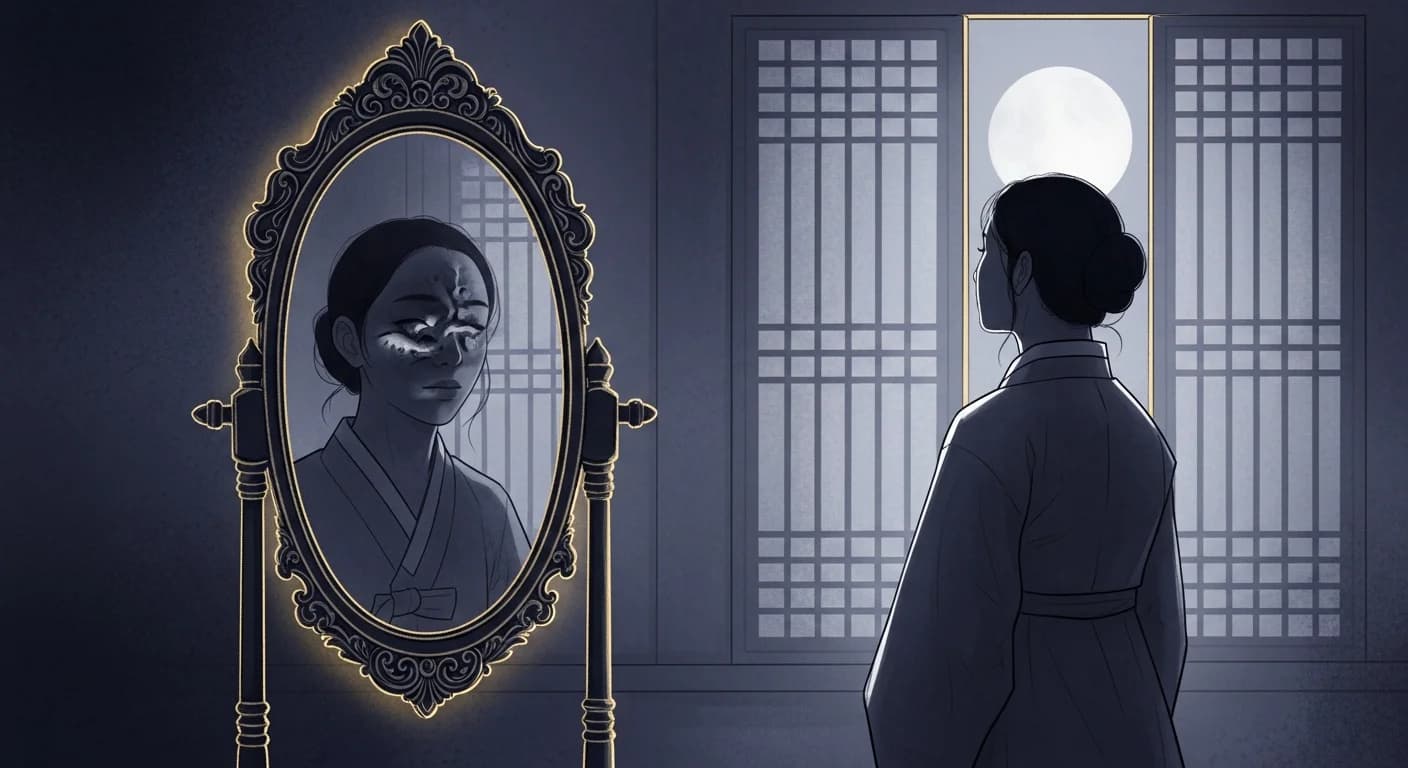
Glancing into a dream mirror only to find a stranger staring back — it is a jolt that lingers long after waking. In Korean dream interpretation, the face is far more than an aesthetic detail; it is the embodiment of one's 'chemyeon' (體面) — social dignity, honour, and reputation all wrapped into a single symbol. A face turning ugly or disfigured in a dream has for centuries been read as a powerful warning that one's standing in the world may be under threat. But context is everything, and the same dream can carry very different messages depending on how the transformation unfolds.
Inauspicious: Threat to Reputation and Social Standing
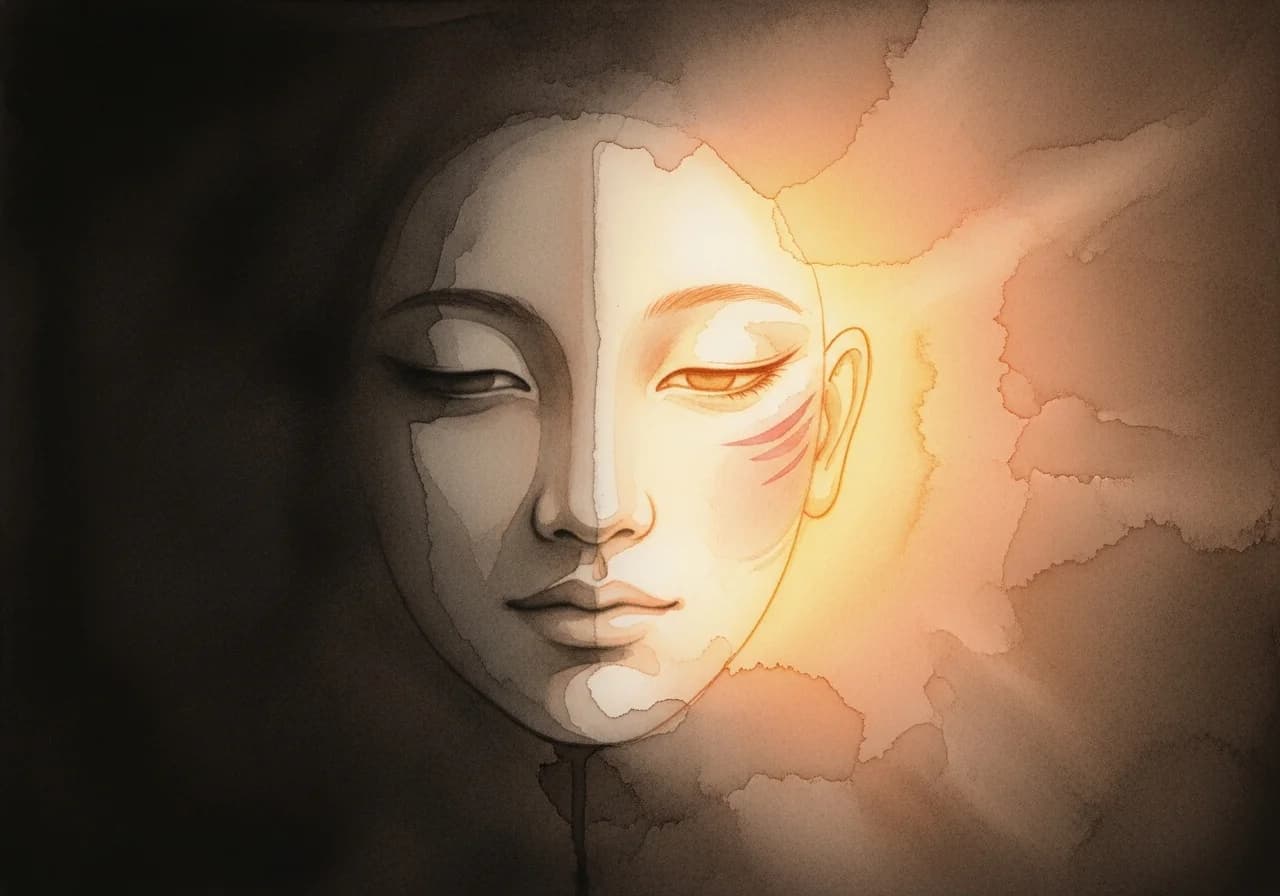
The most common reading of a face-turning-ugly dream is inauspicious. Seeing your face suddenly become disfigured in a mirror warns of damage to your social standing or public image. You may make an embarrassing mistake at work, be misunderstood in a relationship, or find yourself perceived in an unflattering way by others at a critical moment. In a culture where 'chemyeon' underpins social bonds, this dream signals that the very foundation of your public self may be vulnerable. Dreams of scars forming on the face carry a similar warning — particularly before important exams or presentations, they urge thorough preparation and measured conduct.
Inauspicious: Eroding Self-Esteem and Mental Fatigue

Dreaming of skin suddenly roughening, aging rapidly, or a face becoming distorted reflects cumulative stress and mental exhaustion that has reached a tipping point. This is the psyche surfacing a burnout warning before the body does. A warped or deformed face can also signal that interference from a romantic partner or business associate threatens to derail an important project. If this dream visits you during a particularly pressured season of life, treat it as an urgent prompt to slow down and reassess your boundaries.
Auspicious: Reversal and Recovery
Not every face-transformation dream is a warning. If an ugly face in the dream reverts to normal — or transforms into something more radiant than before — this is a classic reversal dream (역전몽), foretelling that a current period of difficulty will be overcome and self-confidence restored. Think of it as the unconscious reminding you that trials are temporary and that something better awaits on the other side.
Neutral: Identity Shift and New Beginnings
If you watched your face change gradually in the dream and felt neither distress nor resistance, the interpretation shifts toward neutral territory. This version of the dream symbolises an evolving identity or a shift in life direction — adapting to a new role, environment, or self-concept. Viewed this way, the change is not a loss but a transformation, and the calm with which you receive it in the dream reflects your readiness to grow.
Dream Variations
Face Turning Ugly in a Mirror Dream
Seeing an ugly reflection of yourself in a mirror heightens the anxiety theme. Mirrors in Korean dream tradition represent self-perception and social projection. This variation signals that excessive worry about how others see you is generating real waking-life stress — a prompt to recalibrate your self-image and resist over-investing in others' opinions.
Skin Worsening or Breaking Out Dream
Dreaming of a severe acne breakout or dramatically worsening skin warns that careless words or reckless actions may attract negative attention. It also suggests that unresolved interpersonal conflict or health concerns may come to the surface soon. This dream urges mindfulness in how you present yourself and prompts a check-in on your physical wellbeing.
Face Suddenly Aging Like an Elderly Person
Rapid aging of the face in a dream is one of the strongest burnout signals in Korean dream lore. Mental and physical fatigue has reached its limit — rest is not optional, it is urgent. If you have been pushing through exhaustion, your unconscious is sending a clear message to step back before your body forces the break.
Face Becoming Deformed or Distorted
A grotesquely deformed face in a dream is a psychological expression of identity confusion — a sense that external pressures are distorting your authentic self. It warns against losing your footing in business dealings or compromising your values under relational pressure. Reconnecting with your core identity and setting firm boundaries is the prescription this dream offers.
Another Person's Face Becoming Ugly
When someone else's face turns ugly in your dream, the focus shifts outward — to that relationship. This variation suggests an erosion of trust or an impending disappointment from someone close. It encourages honest appraisal of where loyalty and reliability actually stand in key relationships.
Scars Appearing on the Face
Scars forming on your face point to potential failure in professional or academic endeavours, or a socially embarrassing incident. Before a major presentation or exam, this is an especially pointed warning. Thorough preparation, careful speech, and restrained conduct are the antidotes this dream prescribes.
Becoming Uglier After Plastic Surgery
This striking variation — attempting an improvement only to make things worse — warns that a forced or hasty transformation may backfire. A business pivot, relationship change, or personal reinvention that is driven more by anxiety than readiness risks worsening your situation. Patience and realistic planning are advised before making major changes.
Cultural Context
In Korean traditional dream interpretation, the face is not merely a physical feature — it is the concentrated symbol of a person's 'chemyeon' (體面), the Confucian concept of social dignity, honour, and reputation. In a society where chemyeon has historically governed the fabric of social relationships, a dream in which the face becomes ugly or damaged is considered a serious omen: one's standing, credibility, or social network may be at risk in waking life. Records of dream divination (mong-jeom, 夢占) from the Joseon dynasty explicitly linked the condition of the face to fortune — a bright, luminous face foretold success and advancement, while a darkened or disfigured face signalled impending misfortune or disgrace. Folk custom prescribed specific warding rituals after such dreams: sprinkling salt on the body or eating red bean porridge (팥죽) to dispel bad energy before it could manifest in reality.
Western Psychological Perspectives
Western psychology interprets dreams of becoming ugly as expressions of anxiety surrounding self-image, social identity, and the fear of rejection — themes that cross cultural boundaries with remarkable consistency.
From a Freudian perspective, a face turning ugly in a dream is understood as a manifestation of unconscious self-loathing and repressed shame. Freud argued that the ego's gap from the ego-ideal — the idealised version of oneself — finds symbolic expression in dreams. A disfigured face encodes the deep-seated fear of being fundamentally unlovable or unworthy of acceptance. The distorted reflection is the unconscious holding up a mirror to inadequacy the waking mind refuses to acknowledge.
Jungian analytical psychology offers a more nuanced and ultimately more hopeful reading. In Jung's framework, the face represents the Persona — the social mask worn in public life. A dream in which the Persona cracks or distorts signals either its collapse or the emergence of the Shadow archetype: the repository of disowned traits, fears, and impulses. Crucially, Jung would not read this as wholly negative. The surfacing of the Shadow is a necessary stage of individuation — the lifelong process of becoming one's true Self — and confronting what the Persona conceals is the precondition for genuine psychological wholeness.
Modern cognitive psychology and dream research frame appearance-distortion dreams as reflections of social anxiety and diminished self-efficacy. In the contemporary landscape, where social media relentlessly curates and compares physical appearance, this type of dream is reported with increasing frequency. Cognitive behavioural therapists use such dreams as entry points for exploring the inner critic — the internalised voice of harsh self-judgment — and for building self-compassion and self-acceptance as countermeasures.
Cross-culturally, the face-change dream carries universal resonance. Chinese traditional dream interpretation treated the face (面) as a direct index of destiny — a darkening face presaged disaster. Western folklore associated disfigurement in dreams with bad omens and coming change. From ancient Rome to modern Seoul, dreams about the face mirror a fundamentally human anxiety: the terror of being seen as diminished, unworthy, or unrecognisable to those whose regard we need.
Frequently Asked Questions
A dream of your face turning ugly is, above all, a prompt for self-reflection. Most commonly it warns of reputational vulnerability, eroding self-esteem, or the approach of public embarrassment — but the emotional tone and ending of the dream are equally important. A dream that ends in recovery or calm acceptance carries the seeds of growth rather than catastrophe. After such a dream, take stock of your conduct, relationships, and stress levels — and remember that the unconscious speaks in symbols, not verdicts. The awareness it sparks is itself an advantage.