Blood on Hands Dream Meaning (꿈해몽)
If you woke up from a dream of blood staining your hands, Korean dream tradition may have surprisingly good news for you—vivid, crimson blood on the hands is one of the stronger omens for financial gain and professional success. In Korean folk interpretation (꿈해몽), blood represents both life-force and wealth circulating through the world, and the hands symbolize labor, skill, and contract. That combination is a powerful signal for hands-on achievement. But here's where it gets nuanced—the color of the blood and whether it could be washed off completely change whether this is an auspicious or cautionary dream.
Auspicious (길몽): Vivid Red Blood on Your Hands

When bright, vivid red blood appears on your hands in a dream, Korean dream tradition reads this as a strong omen of financial prosperity and achievement. The logic is deeply rooted in folk symbolism: just as blood circulates through the body sustaining life, money circulates through the economy sustaining prosperity. Blood on the hands specifically points to success through your own work and skill—business ventures, creative projects, contract signings, or any endeavor that requires hands-on capability. If you have a major project underway or an important deal in progress, this dream suggests the outcome will be favorable.
Auspicious (길몽): Someone Else's Blood on Your Hands
Another person's blood staining your hands may feel unsettling at first glance, but in Korean dream interpretation this is generally an auspicious omen—it represents another person's energy, resources, or fortune flowing toward you. Expect unexpected help, gifts, or a situation where someone else's success creates opportunity for you. For professionals, this might mean a senior colleague's support opening a new door; for entrepreneurs, it could signal a partnership or investment arriving from an unlikely source.
Inauspicious (흉몽): Dark or Murky Blood That Won't Wash Off
When the blood in your dream is dark, murky, or blackish-red—and especially if it refuses to wash off no matter how hard you try—the interpretation shifts significantly. This dream reflects unresolved guilt, lingering moral conflict, or psychological burdens from past actions that haven't been addressed. The motif of blood that cannot be cleansed echoes the Korean shamanistic ritual called ssitgim-gut (씻김굿), a ceremony of purification for grievances and unfinished spiritual business. The fact that the cleansing fails in the dream suggests something in waking life still needs to be confronted and released.
Inauspicious (흉몽): Cutting Your Hand on a Knife
Blood resulting from a wound—particularly from a sharp object like a knife—carries a different symbolic weight than blood that flows or stains naturally. This kind of dream warns of business disputes, competitive friction, or unfavorable outcomes in negotiations or contracts. The severity of the wound and the amount of blood signal how serious the conflict may be. If you have an important business decision or negotiation ahead, this is a prompt to review the terms carefully and avoid hasty commitments.
Neutral: Calmly Washing Blood Off Your Hands
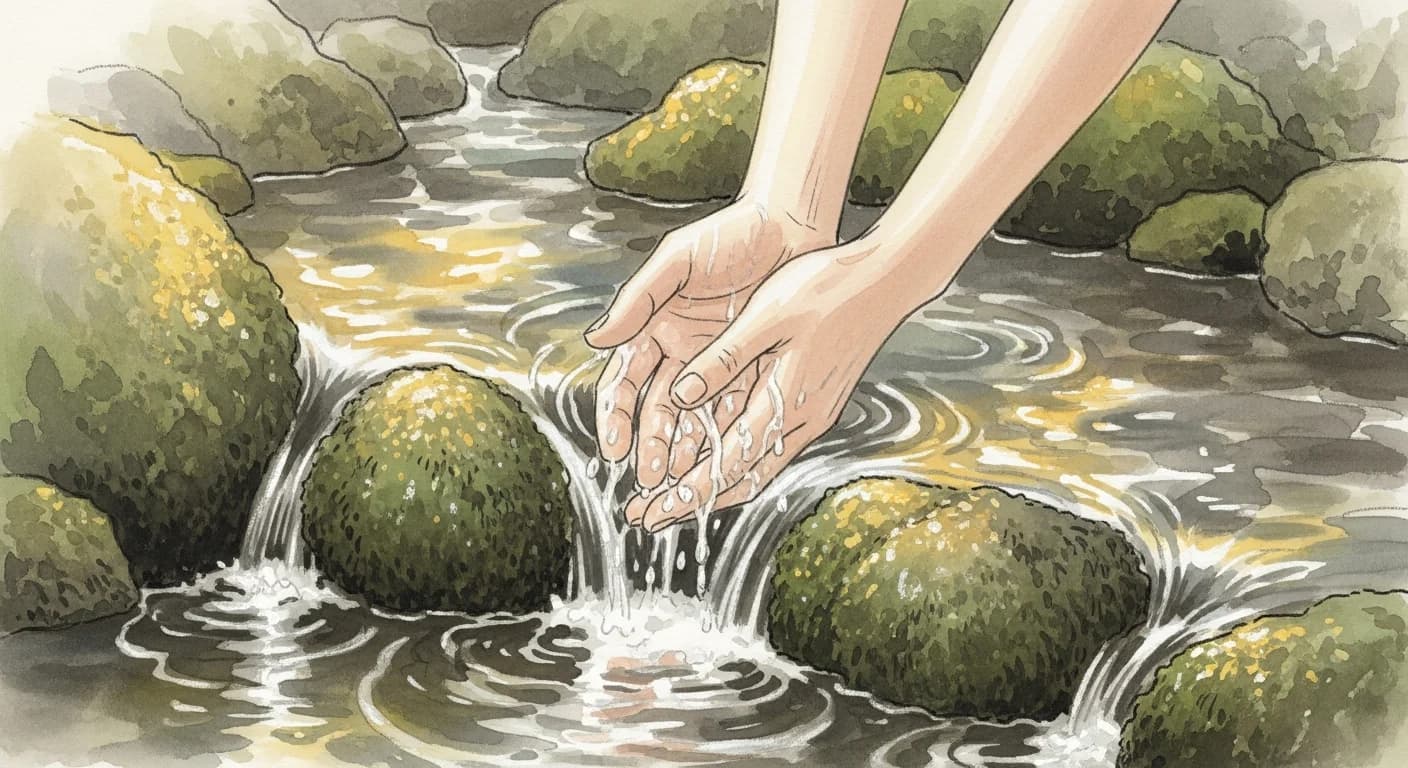
If the dream showed blood on your hands but you calmly and successfully washed it away, this is a symbol of self-cleansing and fresh beginnings. Whatever difficulty or conflict you're currently facing, you have the inner strength to resolve it on your own terms. This imagery parallels the purification rituals of Korean shamanism, and here the successful completion of the act signals that renewal is genuinely within reach.
Dream Variations
Your Own Blood on Your Hands
Blood from your own body staining your hands means the rewards you seek will come through your own effort and sacrifice. Hardship is ahead, but it is purposeful—this is a 'no pain, no gain' omen promising that your perseverance will pay off in tangible ways.
Another Person's Blood on Your Hands
Someone else's blood transferring to your hands signals a windfall tied to that person's help, collaboration, or resources. Unexpected good fortune arrives through another's generosity or their success creating an opening for you.
Blood That Won't Wash Off
Indelible blood on your hands is a classic symbol of unresolved guilt or deep-seated moral conflict. It is a call to acknowledge what has been left unaddressed—whether an apology owed, a relationship in need of repair, or a decision whose consequences you haven't fully accepted.
Bright Red Blood on Hands
The more vivid and crimson the blood, the stronger the auspicious signal. Vivid red blood means strong vitality and robust financial fortune, with excellent prospects across business ventures, investments, and creative projects.
Dark or Murky Blood on Hands
Dark or blackish-red blood is a health and moral warning. It signals psychological exhaustion, unaddressed health concerns, or ethical issues piling up beneath the surface. Time to review your relationships and current business dealings with honest eyes.
Large Amounts of Blood Covering the Hands
The quantity amplifies the omen in whichever direction the dream leans. If the blood was vivid and the emotional tone was calm, expect extraordinary financial gain. If the blood was dark and the mood was fearful, the dream warns of deep entanglement in a serious conflict.
Wiping Blood Off Another's Hands
Cleaning blood from someone else's hands symbolizes selfless devotion. Your generosity and sacrifice on behalf of others will build lasting trust and a positive reputation that pays dividends over time.
Cutting Your Hand on a Knife
A knife wound causing blood is a pointed warning about disputes in business or negotiations. Review contractual terms carefully before committing, and watch for competitive threats from rivals.
Cultural Context
In Korean traditional dream interpretation, blood simultaneously carries two core symbolic meanings: life-force (생명력) and wealth (재물). The logic is elegantly simple—just as blood circulates through the body to sustain life, money circulates through the economy to sustain prosperity. When blood flows or stains in a dream, money is said to flow toward the dreamer. The hands hold special significance as the body's primary symbol of labor, skill, and contract—making blood-stained hands a direct omen of success in hands-on work: business, creative pursuits, trade.
In Korean shamanistic (무속) tradition, blood was a liminal substance crossing the boundary between the human and the divine. Ritual offerings involving blood were acts of prayer for abundance and purification, and blood appearing in dreams could signal a divine response or a fateful message from the spirit world. Dreams in which blood resulted from harming another person—especially through intentional violence—were classified as inauspicious, warning of karmic consequence (업보).
Color symbolism is central to the interpretation. Vivid, bright red blood signals vitality and wealth. Dark, murky, or blackish-red blood represents illness, decline, or moral debt. Washing blood from your hands in a dream is a purification symbol that mirrors the ssitgim-gut (씻김굿) ritual—a shamanistic ceremony of cleansing and atonement for accumulated grievances. When the washing succeeds, the dream promises renewal; when it fails, unfinished inner business still awaits.
Western Psychological Perspectives
In Western psychological tradition, blood on hands is one of the most archetype-laden symbols in the human psyche. Freudian analysis connects blood to repressed aggression, forbidden desire, and the weight of guilt. Blood on the hands that cannot be washed off signals the surfacing of suppressed impulses or moral conflicts the ego refuses to confront—the imagery Lady Macbeth made famous: 'Out, damned spot.' From this lens, such a dream is an invitation to acknowledge what has been buried rather than ignoring it further.
Jungian analytical psychology reads the symbol differently. Blood represents psychic energy and transformation, while the hands are the instrument through which the individual acts upon the world. Blood staining the hands reflects the conversion of inner energy (libido) into action, creation, or change in the external world. For a dreamer engaged in creative or transformative work, this imagery can indicate the activation of creative potential or a meaningful encounter with the Shadow—the unacknowledged aspects of personality that, when integrated, fuel authentic expression and growth.
Modern psychology takes a more grounded view: blood on the hands is a metaphor for involvement and accountability. These dreams frequently arise when someone is processing the consequences of a real decision, feeling responsible for an outcome, or wrestling with the ethics of a situation they're entangled in. The emotional tone of the dream matters—fear suggests unresolved anxiety about consequences, while calm or even satisfaction suggests a growing sense of agency and ownership over one's choices.
Cross-culturally, the contrast is striking. Where Western tradition (amplified by Shakespeare and Christian iconography) reads bloody hands almost exclusively as guilt and inescapable sin, Korean folk interpretation takes an economic view: blood is life-force and wealth, and the dream is assessed through the clarity of the blood and the emotional mood rather than through a moral lens. Some Indigenous African and American traditions offer yet another frame—a hunter or warrior's blood-stained hands as marks of courage and survival skill. The variation reminds us that blood is one of the richest and most contested symbols in the human dream vocabulary.
Frequently Asked Questions
Blood on hands in a dream is far more layered than it might first appear. The color, source, and emotional tone each shift the meaning dramatically—from potent financial omen to a call for moral reckoning. What stays constant is this: the dream is asking you to pay attention to your hands, your work, and what you are building or leaving unresolved. Whether the signal is auspicious or cautionary, it is always pointing somewhere worth looking.