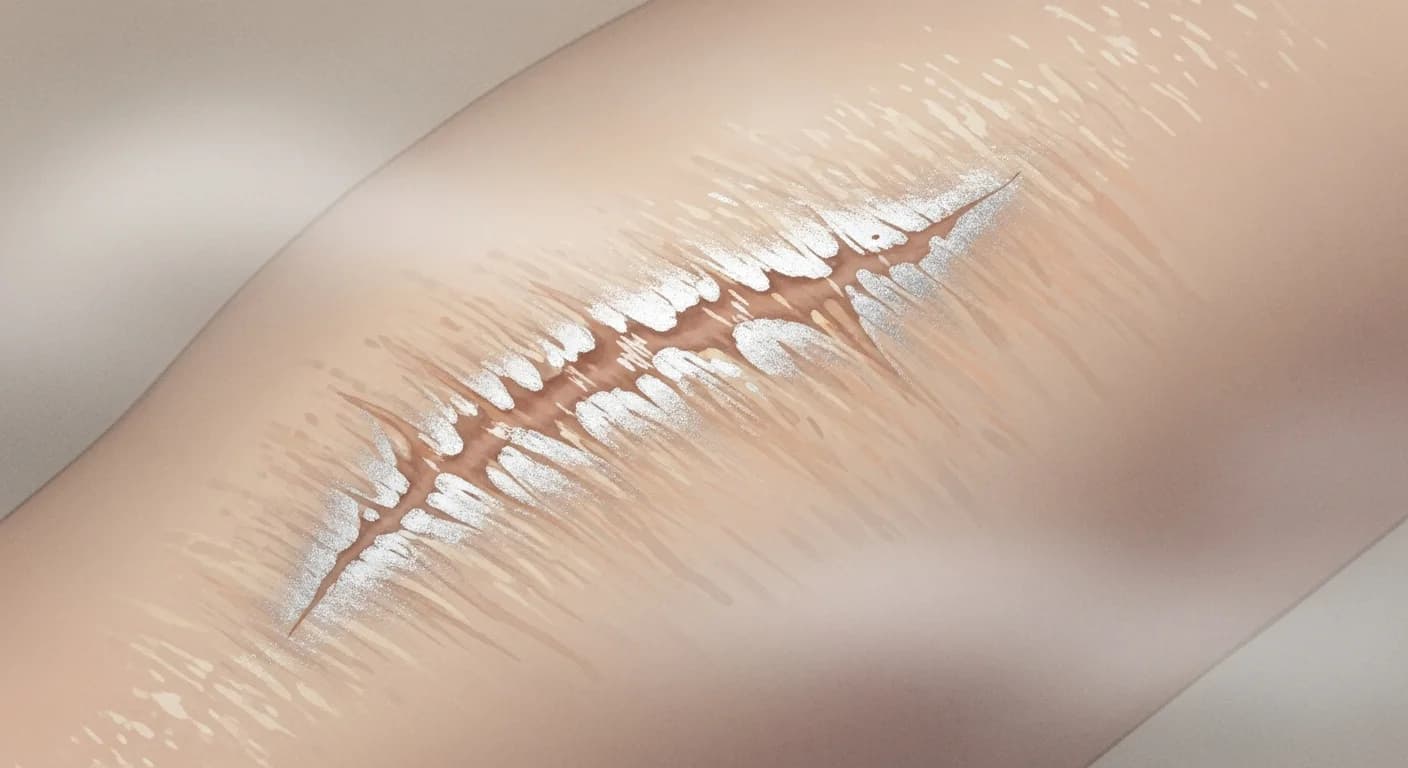
Bruise Dream Meaning — Hidden Wounds and Inner Signals
If you dreamed of getting a bruise last night, Korean dream tradition sees it as your subconscious surfacing something you've been holding inside — unhealed emotional wounds, suppressed feelings of inferiority, or long-carried trauma. The bruise's uncanny quality of looking fine on the surface while damaged underneath makes it a perfect symbol for inner pain that we don't show the world. In Korean folk dream interpretation, where each body part corresponds to a domain of life, the location of the bruise is everything. Here's the fascinating twist — some folk traditions actually read bruise dreams as lucky signs of accumulating good fortune, making this symbol more nuanced than it first appears.
Bruise Dreams: Mostly Inauspicious, But Read the Details

In traditional Korean dream interpretation (해몽), bruise dreams are generally classified as inauspicious (흉몽). The logic is rooted in the nature of a bruise itself — it is internal vascular damage that looks normal on the surface but is quietly bleeding beneath. Korean folk dream tradition maps this quality directly onto hidden psychological wounds: unspoken emotional pain, deeply buried inferiority complexes, or suppressed feelings we can't bring ourselves to acknowledge.
The more vivid and painful the bruise in the dream, the stronger the warning. Dreams featuring a sharply defined, deeply blue bruise accompanied by pain foreshadow potential betrayal by a trusted person or an unexpected, jarring event in the near future. These dreams nudge you to review your closest relationships with clearer eyes.
When a Bruise Heals in Your Dream — A Lucky Sign
Not all bruise dreams carry bad news. If you watched a bruise fade, lighten, or vanish entirely in your dream, Korean tradition reads this as auspicious (길몽). The disappearing bruise signals that inferiority complexes and emotional wounds that have long weighed you down are finally beginning to resolve. Self-confidence is being restored, and a genuine fresh start is on the horizon.
Some folk traditions take an even more optimistic angle, interpreting the act of getting a bruise in a dream as a sign that blessings earned through virtuous conduct are accumulating. This paradoxical reading — physical harm as spiritual gain — aligns with a broader Korean folk belief that suffering can be a prelude to transformation. A mild, light bruise (as opposed to a dramatic dark one) is most associated with this lucky reading.
Financial and Health Implications
Bruise dreams also connect to wealth and career luck in Korean interpretation. A bruise on the legs, which symbolize life's economic foundation, warns of a period of financial instability — shakier income, potential monetary losses, or harm from unverified investments. If this dream arrives around the time you're considering a major financial decision, proceed with extra caution.
From a health perspective, bruise dreams often serve as a warning of mental overload. The mind — not the body — may be approaching exhaustion. The dream is a signal to create space for genuine rest, emotional release, and self-care before the fatigue compounds further.
Dream Variations
Dream of a bruise on your face
The face symbolizes your social self — how others perceive you. A bruise here reflects extreme complexes and inferiority regarding your public image. Mental fatigue from long-accumulated worries has peaked, and there is a heightened risk of emotional hurt in your relationships. Practicing genuine self-compassion and investing in trustworthy relationships are recommended steps right now.
Dream of a bruise on your leg
Legs represent life's economic and physical foundation in Korean body symbolism. A bruise here hints at weakening financial luck — instability in income, potential losses, or dangers from unverified investments. After this dream, reducing unnecessary spending and avoiding impulsive financial moves is advised.
Dream of a bruise on your arm
Arms symbolize capability and action. A bruise on your arm reflects recent unfair treatment or emotional injury from someone around you. It may also signal that your abilities are being ignored or that you're in an environment that suppresses your full potential. Seeking a space where your strengths can flourish freely is the core message.
Dream of a bruise on your neck
The neck represents communication and self-expression. A bruise here conveys the pressure of being forced into situations against your will. Take time to review whether your current direction genuinely reflects your own wishes — and consider pausing anything that feels coerced.
Dream of bruises all over your body
Bruises covering the entire body deliver a message to acknowledge and confront the accumulated negative emotions within — jealousy, resentment, inferiority. This is better understood not as a pure bad omen but as a call for self-reflection and inner healing. The pain of the dream mirrors the pain of facing what we've been avoiding, but on the other side of that confrontation is genuine recovery.
Dream of a bruise healing and disappearing
A clear lucky dream: inferiority and wounds that have long held you back are healing. Confidence is returning, and a new beginning is near. Use this dream as encouragement to revisit goals or projects you had set aside out of self-doubt.
Dream of getting bruises from a fight
This reflects emotional exhaustion and stress from real-life conflict or confrontation. Friction with people around you may be intensifying. The dream's counsel: maintain calm, rational judgment and resist the pull toward emotional reactions that could escalate things further.
Dream of getting a bruise from a fall
A warning that unexpected mistakes or failures may wound your pride. Slow down anything you've been rushing, and proceed with deliberate care. Right now, accuracy matters more than speed.
Dream of seeing bruises on someone else
Someone in your life is struggling or needs support. Pay attention to the people around you and reach out proactively — a small gesture of care can mean more than you realize to someone quietly going through a hard time.
Dream of a bruise on your chest
Emotional wounds from past relationships have not yet fully healed. Old heartbreak or memories of betrayal may still be shaping your emotional responses in the present. The dream invites you to practice genuinely letting go of what no longer serves you.
Cultural Context
Korean folk body symbolism operates on a principle of correspondence: each body part represents a specific domain of life, and any abnormality in that part reflects a corresponding issue in that life domain. Legs represent economic stability, the face represents social reputation and relationships, arms represent capability and productivity, and the neck represents communication and self-expression.
The bruise is particularly rich as a symbol because of its dual nature — presenting a normal appearance on the surface while harboring internal damage. This quality became the foundation for bruise dreams representing hidden inner wounds: complexes, trauma, and suppressed emotions that are difficult to surface outwardly. Koreans have long practiced interpreting bodily signals in dreams as messages about health and fortune, and this principle of bodily correspondence remains deeply embedded in the culture.
The paradoxical folk view — that a bruise dream can signal incoming good fortune — reflects a broader theme in Korean traditional thought: that suffering and physical change can be preludes to positive transformation rather than simple misfortune.
Western Psychological Perspectives
Western psychological traditions offer several complementary lenses for understanding bruise dreams, each illuminating a different dimension of the symbol.
From a Freudian standpoint, bruises in dreams represent the externalization of repressed impulses or unconscious guilt. The bruise translates latent self-punishing desires — or an unconscious belief that one has transgressed — into the tangible language of bodily damage. Freud believed dreams were disguised expressions of what the conscious mind refuses to acknowledge; the bruise is that refusal made visible. The specific location of the bruise might also point toward unconscious conflicts tied to the associations Freud drew between body zones and drives.
Jungian psychology reads bruise dreams as evidence of a collision with the Shadow — the cluster of negative traits, impulses, and unacknowledged aspects of the self that the ego pushes aside. A bruise is the wound left by that internal clash. Rather than treating this as purely negative, Jung's framework positions the dream as a call within the Individuation process: do not flee from your shadow side. Integrate it. The discomfort of the bruise in the dream is the discomfort of growing into a more complete self.
Modern cognitive psychology and sleep science take a more clinical view. Dreams involving bodily harm typically reflect the brain's nightly processing of stress, self-esteem damage, and interpersonal conflict. A bruise dream may arise because unhealed emotional wounds or a persistent sense of being treated unfairly are finding expression during REM sleep. Current research links this type of dream to the brain's emotional regulation and trauma-processing systems — treating it less as prophecy and more as the mind's attempt to metabolize pain.
Cross-culturally, bodily injury in dreams consistently carries meanings of vulnerability and change. Western folk traditions often read skin discoloration or damage as omens of caution. Traditional Chinese dream interpretation similarly connects specific body parts to corresponding domains of fortune — a system that parallels Korean body correspondence principles strikingly. Across all these traditions, the bruise dream converges on one central meaning: invisible inner wounds that have not yet been given the attention they need.
Frequently Asked Questions
Bruise dreams are uncomfortable to experience, but they carry one of the more honest messages the dreaming mind can send. Whatever has been quietly aching beneath the surface — in your relationships, your self-image, your finances — is asking for attention. Take note of where in the body the bruise appeared; Korean tradition suggests that location is a direct pointer to the life domain most in need of care. And if the bruise in your dream was fading or gone by morning, take that as a real sign: the healing has already begun.