Can't Speak Dream Meaning — The Silent Scream and What It's Telling You
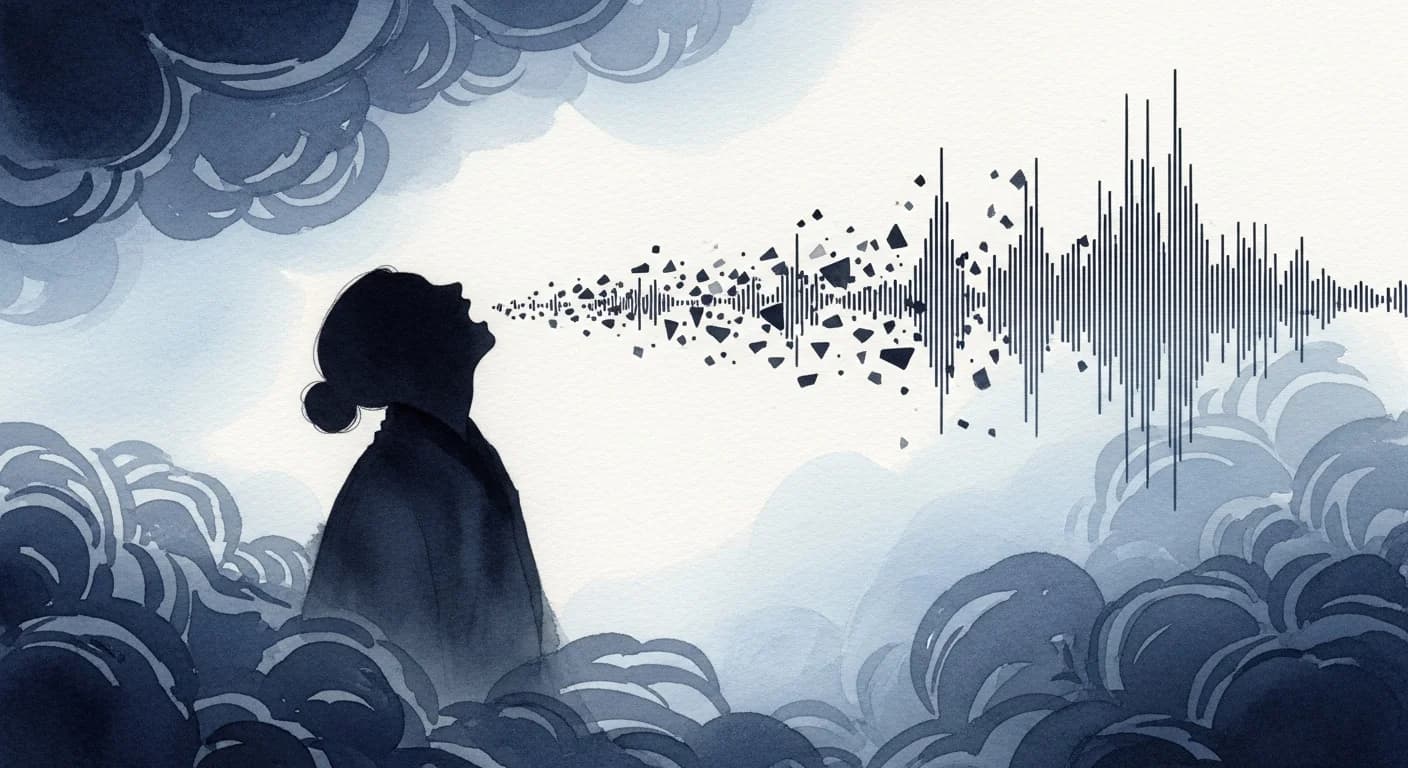
You open your mouth to scream and nothing comes out — just silence where your voice should be. In Korean dream tradition (꿈해몽), losing your voice in a dream is a significant inauspicious omen (흉몽), signaling that something in your waking life is being suppressed or blocked. Here's what makes this dream fascinating: the louder you're trying to scream in the dream, the more urgently your unconscious mind is demanding to be heard in real life.
The Inauspicious Meaning of the Can't-Speak Dream

When you try to speak in a dream and absolutely no sound comes out, Korean dream interpretation classifies this as a clear inauspicious omen. It points to deep-seated frustrations with your current environment or relationships — frustrations that have been building with no outlet. Whether it's words you've been swallowing around a difficult boss, emotions you've suppressed in a relationship, or opinions you've been afraid to voice at home, this dream is their emergence.
The screaming-with-no-sound variation is especially striking. Beyond its sheer nightmare quality, it carries a specific symbolic weight: the inability to call for help in a crisis. This dream often appears when you're facing real difficulties and feel unable to reach out — whether due to pride, circumstance, or the fear that no one will listen anyway. It can also reflect genuine social isolation that has gone unaddressed for too long.
A third form involves trying to deliver important words to someone but failing entirely. If this dream arrives before a job interview, major presentation, or critical conversation, your unconscious may be flagging insufficient preparation or a crisis of confidence. The message is direct: get ready, and get your thoughts in order before the real moment comes.
The Neutral Reading — A Call to Improve Communication
Not every voice-loss dream signals disaster. When your voice fades mid-sentence rather than disappearing entirely, it suggests a plan or project may hit interference — but also invites you to look at how you communicate and whether you could do it better.
Dreaming of a faint whisper rather than complete silence is actually a step up. It means some form of self-expression is happening, just not enough. You're getting through, but barely. Korean dream tradition sees this as an encouraging push: you have a voice, now use it more fully. People who have this dream are often in situations where they advocate for themselves timidly when they could do so boldly. The dream is pushing you toward that boldness.
Relationships and Career — Practical Implications
The can't-speak dream carries concrete warnings for relationships and professional life. In relationships, it often surfaces when important feelings have gone unsaid for too long — the slowly widening distance between two people who stopped really talking. It can warn of an impending misunderstanding that, if left unchecked, may damage the connection significantly.
Professionally, this dream before a high-stakes event is your unconscious filing a concern. Your ideas may not be getting the credit they deserve, or you may be holding back at moments when speaking up would change your trajectory. The actionable response is practical: clarify your core message in advance, rehearse the key points, and remind yourself that your voice belongs in the room. This dream isn't a verdict — it's a pre-game warning.
Dream Variations
Screaming But No Sound Comes Out Dream
One of the most archetypal nightmare scenarios: screaming with everything you have and producing total silence. This represents helplessness under extreme stress or fear — the feeling of being trapped in an uncontrollable situation with no way to signal for help. It frequently co-occurs with sleep paralysis, which is a normal REM sleep phenomenon where consciousness partially awakens while the body remains temporarily unable to move. If this dream recurs without sleep paralysis, it's time to look honestly at what in your waking life has left you feeling this isolated.
Trying to Speak But Voice Won't Come Out Dream
The everyday version of the voice-loss dream — just trying to have a normal conversation and producing nothing. This typically reflects accumulated frustration with people or situations you've been unable to confront: the things you want to say to a boss, a parent, a partner, that have been sitting unsaid for weeks or months. After having this dream, it's worth asking yourself: what's the one conversation you've been putting off? Starting it — even imperfectly — often resolves the dream.
Losing Your Voice Entirely in a Dream
Suddenly discovering your voice is simply gone — not strained, not blocked, but absent — touches something deeper than communication. In Korean and Jungian symbolism alike, the voice represents the self. Losing it entirely signals a fear about your capacity to express who you are, particularly in a context where your identity or adequacy is being tested. This dream often accompanies major life transitions where self-confidence is fragile.
Only Able to Whisper in a Dream
A whisper where a full voice should be is a specific message: you're advocating for yourself, but not enough. Lack of confidence or a habitually passive approach may be the pattern keeping you from getting what you want. This is among the more actionable dream variations — it doesn't signal crisis, but a clear direction: speak up, stand your ground, and trust that your full voice is more than welcome.
Voice Coming and Going in a Dream
Inconsistent voice in a dream maps to inconsistent communication in waking life — assertive in some contexts, completely withdrawn in others. Social anxiety or context-dependent confidence is the common thread. You may notice that around certain people or in certain environments, you become a different, quieter version of yourself. The dream is asking you to identify those patterns and start bridging the gap.
Speaking But No One Listens Dream
Your voice works — people just don't react. This is a dream about invisibility and dismissal rather than voicelessness itself. It reflects a sense of being overlooked in your group, workplace, or social circle: the feeling that your contributions don't register, your opinions don't land, your presence doesn't shift anything. It often accompanies burnout or the long-simmering frustration of not being recognized for genuine effort.
Stuttering or Stumbling Over Words in a Dream
Wanting to speak clearly and producing only fragments or stumbles signals pre-event anxiety around a specific upcoming challenge — a speech, an interview, a difficult conversation. Your unconscious is flagging that your thoughts aren't organized enough yet, or that confidence needs reinforcing before the real moment. The prescription is preparation: organize your key points, practice them out loud, and let the rehearsal build the confidence the dream is worried you lack.
Being Forced Into Silence in a Dream
Someone or something actively stopping you from speaking takes the dream from internal struggle to external power imbalance. This reflects oppressive dynamics in waking life — a controlling boss, a domineering family relationship, or a social environment where dissent is punished. If you regularly dream of being silenced by an authority figure, it may be time to examine the health of that relationship and whether your personal boundaries need reinforcing.
Cultural Context
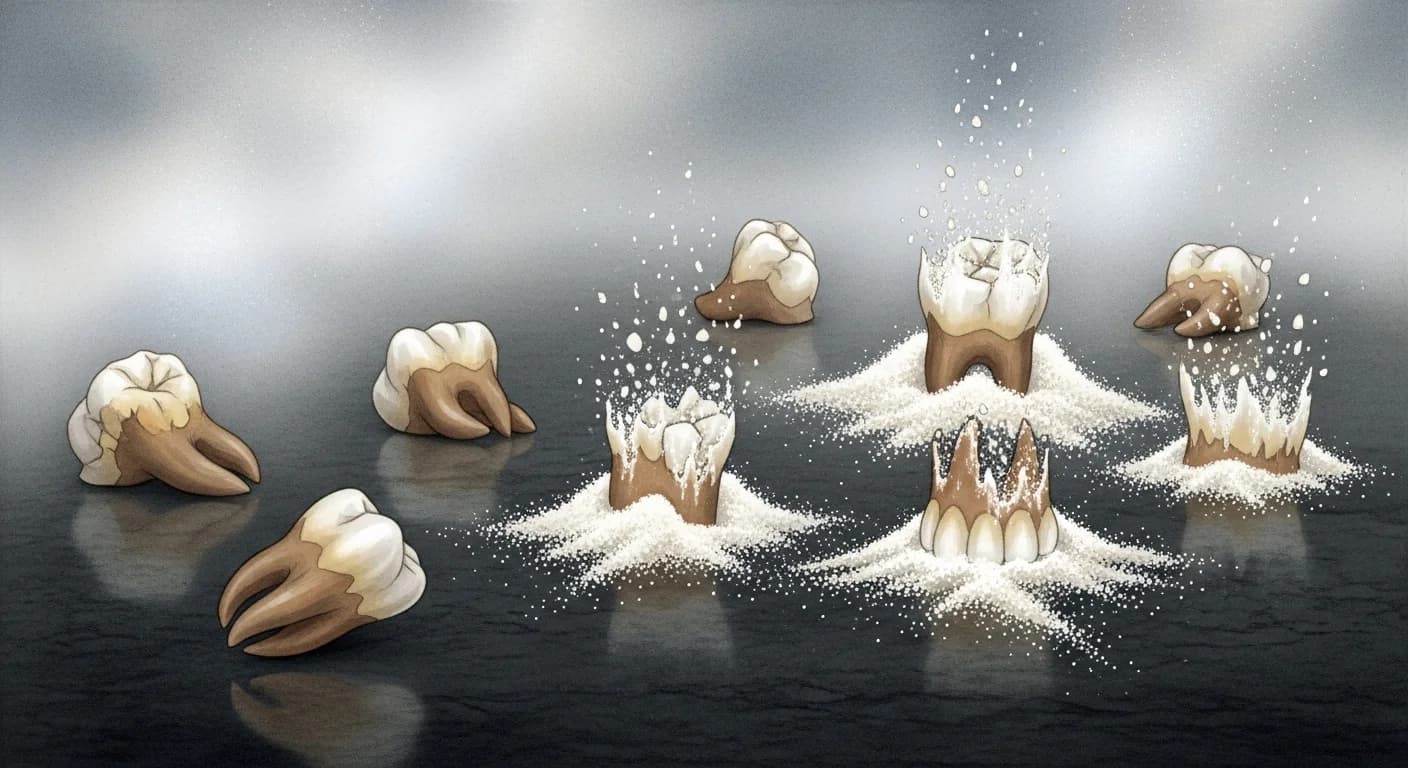
Korean traditional dream interpretation treats voice and language as carriers of vital energy (기운/氣運), not merely communication tools. When speech fails in a dream, it was historically read as a sign that one's life force was obstructed or that fate was under blockage. In shamanistic tradition, having one's speech sealed was interpreted as divine punishment for transgression — the expression '언문이 막혔다' (the speech-door is sealed) was treated as an omen of serious misfortune. Shamanistic rituals called gut were performed to release the blockage and restore the flow of energy.
This dream also connects to 화병 (Hwa-byung), a uniquely Korean psychosomatic syndrome arising from the long-term suppression of emotions — grief, resentment, frustration that cannot be expressed without social cost. When the mouth is sealed in a dream, it is understood as the body's last resort to surface what the waking mind has buried. Historically, this dream was documented especially among women in Joseon-era society, who had structural barriers to voicing opinions or complaints. The cultural recognition of this dream's cause — and the ritual response of creating ceremonial space to finally speak and be heard — reflects a deep traditional understanding of what happens when voice is denied for too long.
Western Psychological Perspectives
Western psychology approaches the can't-speak dream from several compelling angles. Freud interpreted dream paralysis and inability to act as the superego suppressing the id's impulses — the voice going silent represents desires, anger, or forbidden feelings that the moral mind refuses to let out. Things you want to say but cannot — to an ex-partner, a parent, a boss — find their expression (or non-expression) in the dream as literal voicelessness. For Freud, the intensity of the silence corresponds to the intensity of the suppression.
Jung brought a different lens. Losing one's voice in a dream relates to the Shadow archetype — the parts of the self that remain unacknowledged or unintegrated. The Shadow is demanding expression; the voicelessness is its frustrated call. This may also connect to the Anima or Animus — the contrasexual qualities within each person that society may discourage from finding expression. Jung viewed such dreams as part of the individuation process: finding your voice in the dream world is part of the larger work of becoming a whole person.
Modern cognitive-behavioral psychology links the can't-speak dream to anxiety disorders, social phobia, and PTSD. It shows up with notable frequency during periods of high interpersonal stress, before major social events, and during workplace conflicts. Research in sleep science identifies a neurological component: the dream frequently co-occurs with sleep paralysis, a normal REM-cycle phenomenon in which the brain partially awakens while motor signals are still suppressed. The perceived voicelessness in this state is neurologically real, not just symbolic.
Cross-culturally, the loss-of-voice dream is one of the most universal nightmare themes documented by researchers. In Greek mythology, the nymph Echo — stripped of her own voice, left able only to repeat others' words — provides the archetypal Western image. Chinese traditional dream interpretation links the mute dream to failed negotiations and broken contracts. In Vedic Indian tradition, speech is sacred (connected to Brahma, the creator), making its loss in a dream a significant spiritual omen. In Japan, the same experience is frequently reported alongside kanashibari (金縛り), the Japanese term for sleep paralysis — being unable to cry out in a terrifying situation.
Frequently Asked Questions
The can't-speak dream is uncomfortable by design — it's your unconscious doing what your waking self has been unwilling to do: making noise about something that matters. Whether it's pointing to suppressed frustration, a relationship where your voice has gone unheard, or a looming challenge you haven't prepared for, the dream's message is consistent: the silence in the dream is asking for sound in real life. The good news is that the next move is entirely yours.