Cow Dream Meaning — Korean Dream Interpretation Complete Guide
If a cow wandered through your dream last night, Korean dream tradition has some genuinely good news for you. In Korean 해몽 (dream interpretation), the cow is one of the most powerful symbols of incoming wealth — rooted in centuries of agrarian culture where a single cow represented an entire household's fortune. Government lottery statistics even back this up: animal dreams, especially cows and pigs, are the most commonly reported by first-prize winners. But here is the nuance — not every cow dream promises riches. Whether the cow was walking in or walking out makes all the difference between a fortune dream and a warning.
Auspicious Cow Dreams: Signs of Wealth and Success
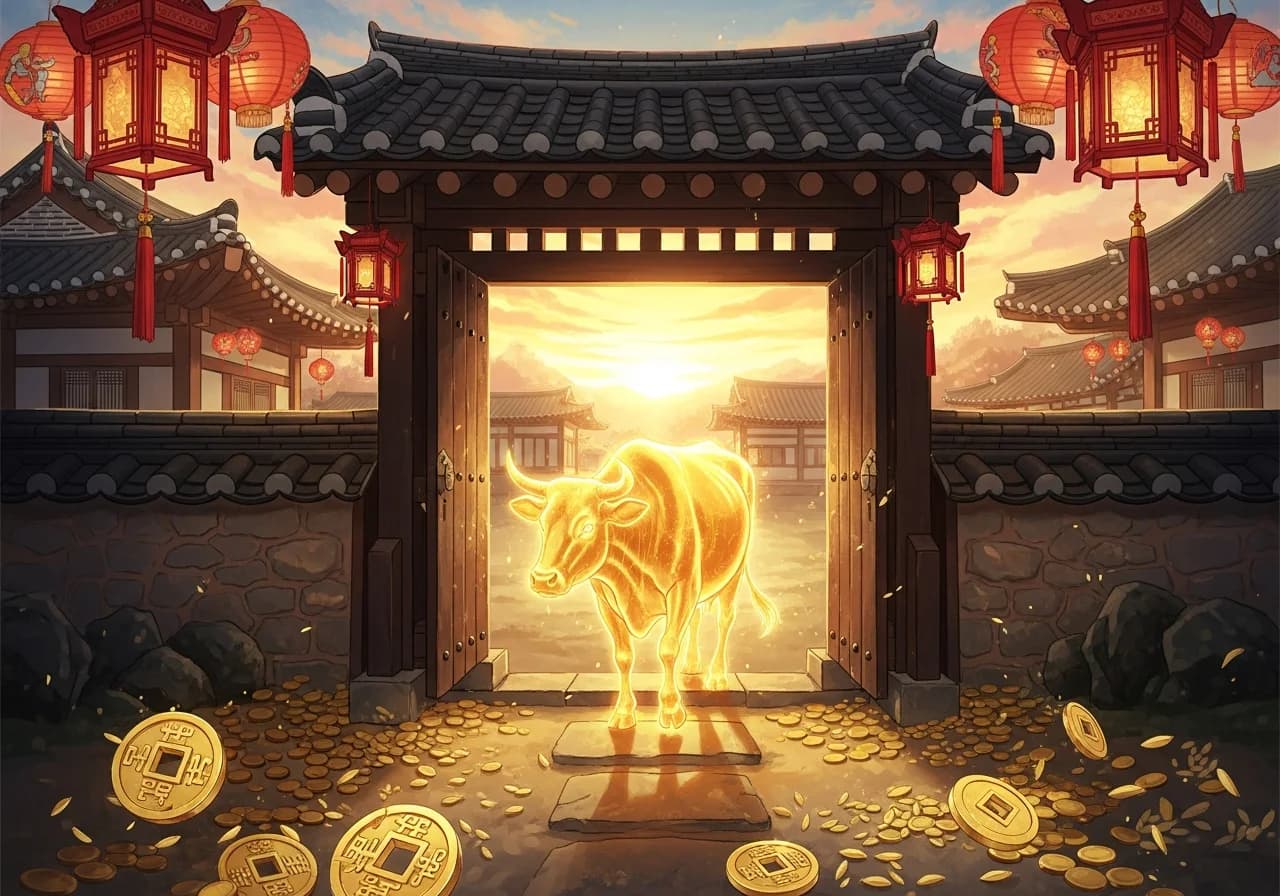
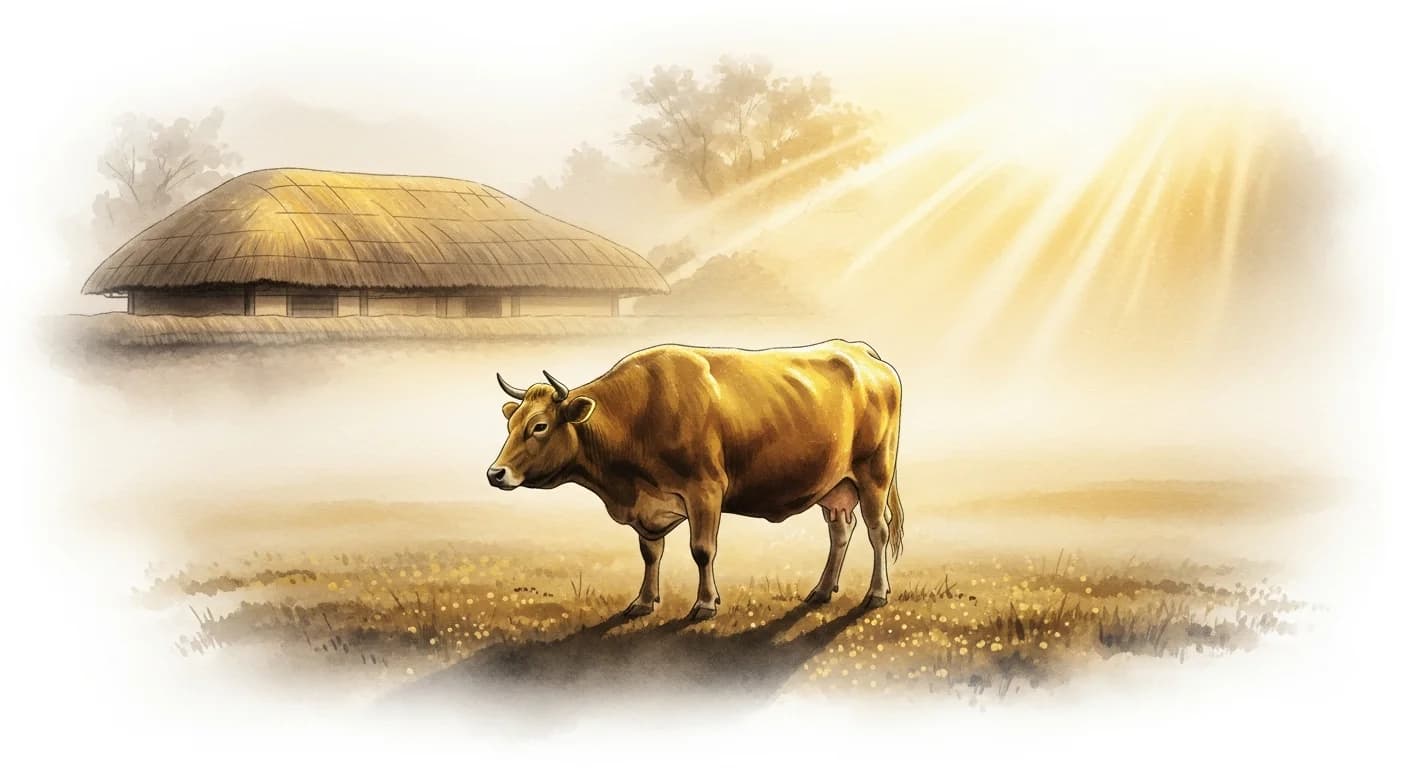
The most powerful auspicious cow dream in Korean tradition is a cow entering your home. In a society where cattle were the primary measure of wealth, a cow walking through the front gate was the clearest possible symbol of fortune arriving at your doorstep. A yellow-brown cow (누렁소) or a golden, lustrous cow entering through the gate is considered the pinnacle of this dream — predicting not just financial gain but family harmony as well. A cow and calf entering together adds yet another layer, specifically forecasting a thriving business.
Riding a cow or sitting on one signals that your current endeavors are on track and social recognition is coming your way. This image — you astride a powerful animal, moving forward — reflects a sense of mastery and momentum in waking life. A cow giving birth is another top-tier auspicious dream, foretelling a cascade of good events and new sources of wealth; for business owners, it often signals expansion or new revenue streams opening up.
Perhaps the most counterintuitive entry in Korean dream interpretation: killing or slaughtering a cow is actually a good sign. The logic is rooted in agrarian reality — slaughter produces food, sustenance, and material gain. In dream symbolism, it means that long and difficult efforts are finally bearing fruit. Even if the dream felt disturbing, Korean tradition classifies it firmly as auspicious.
Inauspicious Cow Dreams: When to Pay Attention
The clearest warning in cow dream interpretation is a cow escaping or leaving the home. Just as an entering cow signals wealth arriving, a departing cow warns that wealth, opportunity, or good fortune may be slipping away. If you have been working toward something important, this dream is a nudge to double-check your plans.
Seeing a dead cow carries heavier symbolism — Korean tradition interprets it as a warning of household misfortune or difficulties ahead for a family member. It is a signal to prioritize the health and wellbeing of people close to you. An angry bull or cow charging at you warns of unexpected conflict or strong external pressure coming in waking life. The advice here is to examine your relationships, particularly at work, and brace for friction rather than confrontation.
Being bitten by a cow is a warning about carelessness — specifically, the kind of loss that comes from not paying close enough attention to details. If you have a significant contract, investment, or financial decision on the horizon, this dream is telling you to review everything one more time before signing.
Wealth and Fortune: Why Cow Dreams Are Korea's Lucky Lottery Dream
The connection between cow dreams and financial fortune runs deeper than superstition. During the Joseon dynasty (1392–1897), a single ox was worth roughly as much as a house. Losing a cow meant losing your livelihood; gaining one meant sudden prosperity. This economic reality burned itself into Korean cultural consciousness, and that association has carried unbroken into modern dream interpretation.
The lottery statistics are striking: a Korean government lottery commission survey of first-prize winners found that animal dreams — cows and pigs together — were reported by 27% of winners, the single largest category. This is why many Koreans who dream of a cow entering their home or a golden cow will buy a lottery ticket the next day. It is a tradition that bridges folk belief and everyday hope.
Of course, dream interpretation is cultural tradition, not financial advice. But the symbolism resonates precisely because it connects to something real: cows in Korean history were the reward for hard, sustained effort. A dream about a healthy, thriving cow still carries that emotional weight — a reminder that effort eventually becomes abundance.
Health and Family Meanings
Beyond wealth, cow dreams carry meaning for health and family life as well. A cow giving birth can signal good news related to pregnancy or a new addition to the family. A healthy, well-fed cow appearing in a dream is often interpreted as a positive sign for the health of the dreamer or their family members, while a thin or sickly cow suggests paying closer attention to health.
Being chased or bitten by an angry cow may reflect elevated stress or tension in close relationships. Korean interpretation sees this as a prompt to improve communication within the family or resolve lingering conflicts before they escalate.
Cow Pregnancy Dreams (태몽): What Kind of Child Will Be Born?
In Korean tradition, a 태몽 (pregnancy omen dream) is a vivid, memorable dream that foretells the birth and character of a coming child. Cow 태몽 are considered highly auspicious. A bull dream traditionally forecasts a strong, devoted, and upright son. A white cow dream suggests the birth of a scholar, artist, or distinguished figure. The finer the cow — healthy, lustrous coat, well-formed horns — the more exceptional the forecasted child. A cow and calf entering the home together is considered one of the best pregnancy dreams, predicting a safe delivery and a healthy, thriving baby.
Dream Variations
Yellow or Brown Cow Dream (누렁소 꿈)
The 누렁소 — Korea's classic yellow-brown native cattle — is the quintessential symbol of wealth in Korean dream tradition. Dreaming of a 누렁소 is one of the strongest wealth-luck omens, predicting a significant rise in financial fortune. If the cow is walking toward your home or through your gate, the symbolism is especially direct: prosperity is heading your way. Many Koreans consider this a signal to try their luck with a lottery ticket.
White Cow Dream (흰소 꿈)
A white cow in a dream carries sacred and exceptional associations. As a pregnancy dream, a white cow traditionally foretells the birth of a scholarly or noble-spirited child. In ordinary dreams, it signals that something extraordinary and positive is approaching — a stroke of rare good fortune, or a development with a distinctly pure and honorable quality to it.
Bull Dream (황소 꿈)
A powerful, healthy bull dream is a symbol of strength, persistence, and proportional reward — you will get out what you put in, and then some. It is particularly favorable for those with important projects, job applications, or promotions on the horizon. However, if the bull is angry and charging at you, the interpretation reverses: that is a warning of conflict and external pressure coming your way.
Black Cow Dream (검은소 꿈)
A black cow is one of the more context-dependent dream symbols in Korean interpretation. The emotional tone of the dream is the determining factor: if the dream felt uneasy or threatening, it warns of financial loss or the arrival of someone who may cause discord; if it felt peaceful and calm, it hints at unexpected gains instead. Pay attention to how you felt when you woke up — that feeling is the key to interpretation.
Calf Dream (송아지 꿈)
A young calf represents new beginnings, potential, and doors of opportunity opening. It is a particularly good sign for new ventures, creative projects, career changes, or any fresh start. A calf following its mother carries additional meaning as a pregnancy dream, predicting a smooth birth and a healthy baby.
Cow Entering the House Dream
This is the most directly auspicious cow dream in Korean tradition. A cow walking into your home represents fortune physically flowing into your life. A cow and calf entering together amplifies this — predicting both growing wealth and a booming business. The directness of this symbol is part of its power: in agrarian Korea, this dream had literal and immediate meaning, and that resonance has not faded.
Riding a Cow Dream
Riding a cow — sitting astride one and moving forward — signals that important current endeavors will come to successful completion, and that social status and recognition will follow. The image of being in control of a powerful, productive animal reflects a sense of productive mastery in your waking life. Look for your efforts to be acknowledged.
Killing a Cow Dream
Despite first appearances, slaughtering or killing a cow is classified as auspicious in Korean dream tradition. The symbolism draws from agrarian reality: the act of slaughter is what produces food, sustenance, and material value. In dream language, it means that long-accumulated effort is at last coming to fruition. If this dream felt disturbing, take comfort — Korean tradition reads it as a clear good sign.
Cow Giving Birth Dream
A cow giving birth is an auspicious dream on multiple levels: household celebrations, growing wealth, and new opportunities all follow. In business contexts it specifically signals new revenue streams or expansion. It also carries strong associations with pregnancy and new family members arriving safely.
Being Bitten by a Cow Dream
A dream of being bitten by a cow is a warning about inattentiveness leading to loss. If you have important financial decisions, contracts, or agreements coming up, this dream is urging you to read the fine print and trust nothing unverified. It may also warn of being too trusting of someone in your immediate circle.
Cow Pregnancy Dream (태몽)
In Korean belief, a vivid dream about a cow around the time of conception or early pregnancy is interpreted as a 태몽 — a prophetic pregnancy dream. A bull foretells a son who is upright and strong; a white cow predicts a scholarly or distinguished child. The healthier and more radiant the cow, the more exceptional the predicted qualities. A cow with a calf entering the home is considered the best possible pregnancy dream, promising safe delivery and a flourishing baby.
Eating Beef Dream
Eating well-cooked beef in a dream generally symbolizes taking in profit and material gain — a straightforward auspicious sign. Eating raw beef, however, introduces a cautionary note: it may signal upcoming friction or conflict with people around you. The preparation and condition of the meat is the interpretive clue.
Bull Chasing You Dream
An angry bull charging or chasing you in a dream warns of unexpected conflicts, strong opposition, or difficult external pressure heading your way. It is a prompt to examine workplace dynamics and interpersonal tensions. But if you faced the bull and subdued it in the dream, the interpretation flips to auspicious — you will overcome the challenges ahead.
Cultural Context
The cow's central place in Korean dream interpretation has deep historical roots. For thousands of years, Korean agrarian society measured household wealth in cattle. During the Joseon dynasty, unauthorized slaughter of cattle was punishable by 100 strokes of the cane — reflecting just how economically vital, and socially protected, these animals were. Before spring planting, Korean farmers erected clay ox figures in their courtyards and performed rituals invoking good harvests, weaving the cow into the cycle of hope and seasonal renewal.
In Korean Buddhist tradition, the 심우도 (Simushido, or Ten Ox-Herding Pictures) use the ox as the central metaphor for the spiritual journey. The ox represents one's own Buddha-nature or true self — the quest to find and tame the ox is the quest for enlightenment. This elevated the cow from a mere economic symbol to a profound spiritual one, representing the highest aspiration a person could pursue.
In Korean shamanism (무속 신앙), cattle were among the most honored sacrificial offerings at major rituals. Cow bones and hides were considered sacred instruments of connection between the human and spirit worlds. The bull in particular was associated with the birth of sons in pregnancy dreams (태몽), with a strong, healthy bull predicting an upright and devoted son who would honor the family name.
All of this accumulated meaning explains why, even in 21st-century South Korea, a dream about a cow still prompts people to buy lottery tickets. The economic weight of cattle may have shifted from literal farmyard reality to symbolic resonance, but the core association — cow equals prosperity and effort rewarded — remains vivid in Korean cultural memory.
Western Psychological Perspectives
Western psychological traditions approach the cow dream with a completely different — but equally rich — set of interpretive frameworks, and the contrast with Korean tradition is illuminating.
In Freudian psychoanalysis, the cow is above all a maternal symbol. As the archetypal milk-giving animal, it connects the dreamer to their relationship with their mother, early nurturing experiences, and the fundamental human need for care and nourishment. Freud saw cow dreams as potentially expressing unconscious longing for oral comfort or gratification — needs from early childhood that were never fully resolved. He also associated cows with femininity and fertility, suggesting that such dreams may reflect deeper tensions or desires related to femininity or female relationships in the dreamer's life.
Carl Jung took a wider view. For Jung, the cow is a classic expression of the Great Mother archetype — one of the most ancient and universal patterns in the collective unconscious. This archetype encompasses nourishment, protection, stability, abundance, and the earth itself. When a cow appears in a dream, Jung would see it as the dreamer making contact with the feminine principle (anima) within themselves. Particularly during periods of inner transformation — what Jung called the individuation process — a cow dream may signal that the dreamer is beginning to integrate shadow aspects of the maternal complex, moving toward psychological wholeness.
Modern cognitive psychology and neuroscience offer a more grounded perspective: cow dreams may simply reflect the brain processing financial anxieties, practical responsibilities, or concerns about stability. Symbols associated with wealth and nourishment tend to appear with increased frequency when people are navigating major financial decisions or life transitions. The brain essentially uses familiar cultural symbols — in Korea's case, cows — to represent the economic preoccupations of waking life.
What is striking about the cross-cultural comparison is that both Korean tradition and Western psychology converge on the cow as a symbol of abundance and fundamental security, yet they approach it from opposite directions. Korean dream interpretation looks outward — what is the cow signaling about incoming wealth, pregnancy, and social events? Western psychology looks inward — what does the cow reveal about the dreamer's relationship with their own mother, their dependency needs, or their path toward self-integration? Both perspectives are worth holding together. A dream is, after all, both a cultural artifact and a deeply personal communication from the unconscious.
Frequently Asked Questions
In Korean dream interpretation, the cow stands as one of the most enduring symbols of wealth, prosperity, and the reward for patient effort. A cow entering your home, a golden cow, or a cow giving birth are among the strongest auspicious signs you can encounter in a dream. On the other side, a fleeing cow or a dead cow calls for attentiveness and care. The details matter enormously — the cow's color, direction, condition, and the emotional tone of the dream together paint the full picture. Whether you woke up feeling lucky or uneasy, your cow dream is carrying a message worth paying attention to.