Pig Dream Meaning in Korean Culture — Good Luck or Warning?
If you dreamed about a pig last night, Korean dream tradition has very good news for you — pigs rank alongside dragons as the twin peaks of fortunate dream omens, and are considered one of the most powerful symbols of incoming wealth and prosperity. This belief runs deep: for thousands of years, Koreans have associated pigs with financial windfall so strongly that it became a living tradition to buy a lottery ticket the morning after a vivid pig dream. That said, one thing is worth knowing before you celebrate — not every pig dream is a lucky one. A pig that bites you, escapes your grasp, or appears dead carries very different warnings. Read on to find out exactly what your dream means.
Auspicious Pig Dreams — Signs of Wealth and Fortune

The most celebrated pig dream in Korean tradition is a pig entering your home (돼지가 집에 들어오는 꿈). This is considered a major auspicious omen (대길몽) signaling unexpected wealth, thriving business, and a string of happy events — think promotions, contract wins, lottery luck, or weddings. Catching or seizing a pig in your dream is equally auspicious: it means you will grasp an opportunity and achieve your goals, whether that is passing an important exam, closing a business deal, or meeting a life-changing mentor. Holding a piglet in your arms is one of the most beloved pregnancy omens (태몽) in Korean culture, foretelling a talented, prosperous child. Even outside of pregnancy, a piglet dream signals the start of a meaningful new opportunity or relationship. Generally speaking, any dream in which the pig appears healthy, vigorous, and plentiful — a large herd, a pig carrying treasure, or a pig freely moving toward you — points to a period of rising fortune and family prosperity.
Inauspicious Pig Dreams — When to Pay Attention
While most pig dreams bring good news, Korean dream interpretation (해몽) identifies several important warning patterns. Being bitten by a pig is a signal that someone in your circle may be targeting your assets or interests. Legal disputes, financial losses, or a breakdown of trust in a close relationship are possible outcomes — so exercise caution in financial transactions and contracts. Watching a pig escape from its pen while failing to catch it symbolizes missed opportunities, financial leakage, or even betrayal. A dead pig or killing a pig in a dream warns of family troubles, obstacles to ongoing projects, or health concerns — this is a time to slow down rather than push forward aggressively. Eating pork in the dream is traditionally read as an inauspicious sign indicating you may soon find yourself involved in tedious, draining, or unfulfilling work. If your pig dream fell into any of these categories, treat it as a prompt to review your finances and personal relationships carefully.
Pig Dreams, Lottery Tickets, and Korean Fortune Culture
The connection between pig dreams and lottery tickets is one of the most charming living traditions in Korean folk culture. Ask almost any Korean adult and they will know someone who once dreamed of a pig, bought a lottery ticket, and won something. The specific dream patterns most strongly associated with financial luck are: a pig entering your home, a golden pig appearing, or a large herd of pigs arriving together. In Korean, the folk etymology that links the word for 'pig' (돼지 / 돝) to the sound of the word for 'money' (돈) reinforces this cultural association at the level of language itself. It is worth noting that this is a tradition of hopeful engagement with fate — not a guarantee — and the delight comes from participating in a belief system that frames the future with optimism rather than anxiety.
Pig Pregnancy Dreams (돼지 태몽)
In Korean culture, certain vivid dreams experienced during pregnancy — or even before conception — are called 태몽 (taemont, or conception dreams) and are believed to reveal the character and destiny of the child to be born. Pig pregnancy dreams are among the most auspicious of all. Holding a piglet, dreaming of a golden pig leaping into your arms, or seeing a large, healthy pig approach you gently are all considered excellent 태몽. The child is said to be blessed with wealth, talent, and the potential to become a person of great influence. Traditionally, pig 태몽 were associated with the birth of a son — but a pink or rosy female pig dream is said to foretell a clever, fortunate daughter. A wild boar 태몽 signals a strong-willed, leadership-oriented child.
Health and Relationships
While pig dreams are primarily associated with financial fortune, they also carry signals for health and relationships. A fat, healthy, and calm pig appearing in your dream suggests your physical health is strong or recovering well. Conversely, a sick, injured, or dead pig is a prompt to pay closer attention to your body — avoid overexertion, risky investments, or aggressive expansion of any kind. On the relationship front, being bitten by a pig warns of possible betrayal from someone you trust, while receiving a pig as a gift or playfully interacting with a pig in a dream signals that a helpful benefactor or a deepening meaningful relationship is on the horizon.
Dream Variations
Golden Pig Dream Meaning
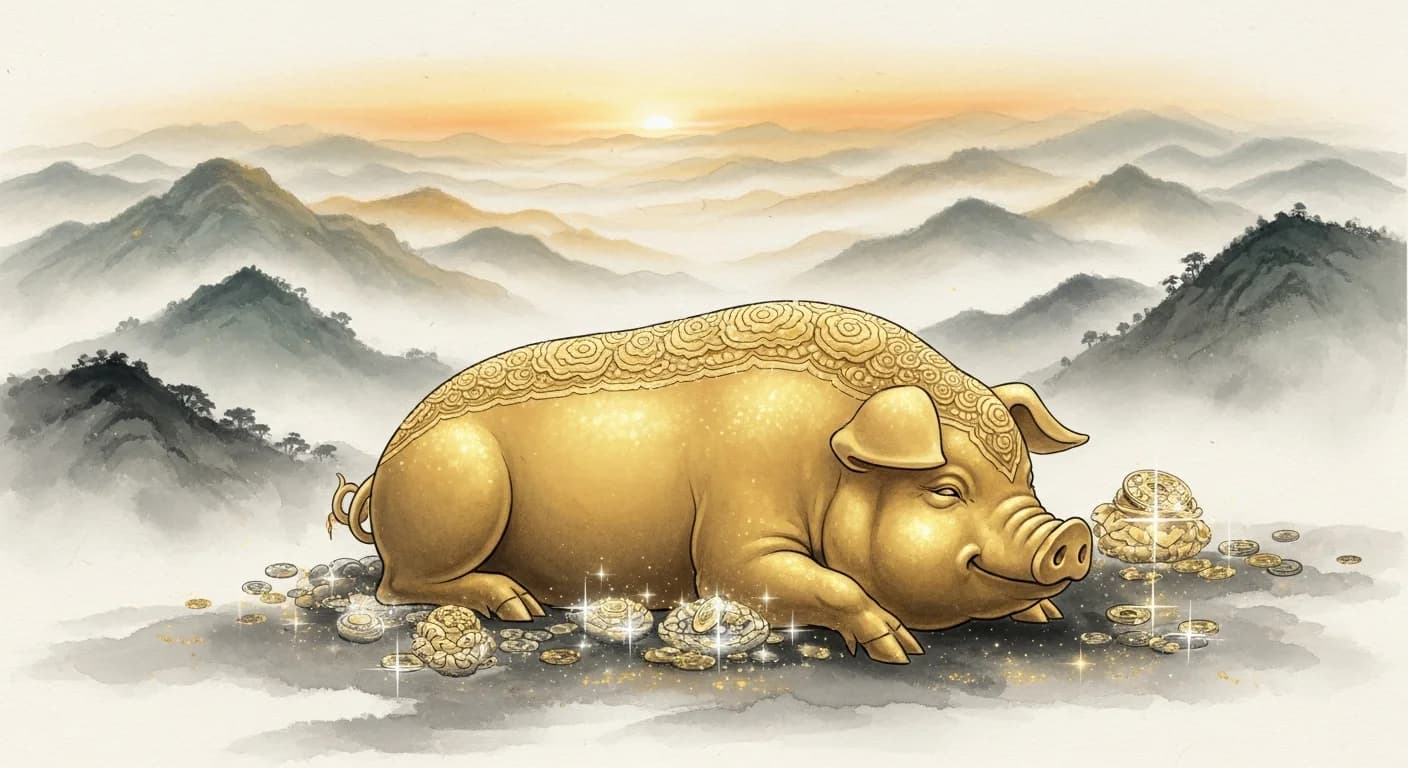
A golden pig is the supreme auspicious omen among all pig dreams. It foretells extraordinary business success and immense, lasting wealth. The omen grows even stronger if the golden pig enters your home or carries a jewel. As a pregnancy dream, it signals the birth of a heavenly-blessed child of exceptional talent and fortune.
Black Pig Dream Meaning
Do not mistake the dark color for bad luck — in Korean dream tradition, a black pig is a major auspicious sign. It signals a big surge in financial fortune and career advancement. As a pregnancy dream, it points to the birth of a son with strong vitality and natural leadership. The exception: if the black pig is aggressively charging at you, this is a caution to watch your words and actions.
White Pig Dream Meaning
A white pig dream is auspicious, particularly for career and social standing. It foretells recognition, promotion, and a rise in status at work. The pig's pure, radiant energy also suggests a noble encounter or an opportunity connected to honor, scholarship, or artistic achievement may be approaching.
Pig Entering Your Home Dream Meaning
One of the most celebrated pig dreams in Korean tradition. A pig walking into your home signals unexpected wealth, business prosperity, and a string of happy life events — promotions, contract wins, weddings, or lottery luck. If the pig is golden, the omen is amplified into lasting family prosperity and great honor.
Catching a Pig Dream Meaning
Catching or seizing a pig in a dream means you will successfully grasp an important opportunity. Exam success, business achievement, or a life-changing meeting with a mentor or benefactor are all likely. The larger the pig you catch, the more significant the achievement is interpreted to be.
Being Bitten by a Pig Dream Meaning
A warning dream: someone near you may be targeting your assets or interests. Legal disputes, financial losses, or a crack in a trusted relationship are all possible. Review your finances, contracts, and close relationships with care — this is not a time for financial risk-taking.
Piglet Dream Meaning
An auspicious dream of new beginnings. As a pregnancy dream, a piglet foretells a talented, sociable child full of potential. As a general dream, it signals modest but certain gains — a new opportunity, income stream, or meaningful relationship taking root in your life.
Herd of Pigs Dream Meaning
Multiple pigs appearing together signals family-wide prosperity and abundant blessings. Unexpected windfalls, an inheritance, or a large-scale business success may be approaching. The more pigs in the dream, the more generously fortune is said to arrive.
Wild Boar Dream Meaning (Korean Interpretation)
A wild boar in a dream represents powerful vitality, raw drive, and determination. Catching a wild boar suggests achieving a major goal — passing a competitive exam, securing an important right, or breaking through a long-standing obstacle. As a pregnancy dream, it points to a bold, strong-willed child with natural leadership. If the boar is charging at you aggressively, a formidable competitor may be entering your life.
Eating Pork Dream Meaning
The one clearly inauspicious pig dream in Korean tradition. Eating pork in a dream warns that you may soon find yourself stuck in tedious, draining, or unrewarding work. An anticipated project or role may turn out to be duller or more frustrating than expected. Take it as a signal to reassess where you are directing your energy.
Pig Pregnancy Dream (태몽) — Gender and Meaning
Pig pregnancy dreams are among the most auspicious in Korean culture, traditionally associated with sons who will be blessed with wealth and talent. A golden pig 태몽 hints at a child of exceptional future influence. A wild boar 태몽 suggests boldness and leadership, while a pink or rosy female pig points to a clever, fortunate daughter.
Dead Pig Dream Meaning
A cautionary dream signaling potential family troubles or obstacles to ongoing plans. Take extra care of your physical health and avoid pushing projects or investments aggressively forward. This is a period for consolidation and careful management rather than bold new ventures.
Cultural Context
In Korean folk tradition, the pig has occupied the highest tier of auspicious dream symbols for thousands of years — ranked alongside the dragon as the twin peaks of lucky omens. This deep symbolic association has multiple roots. In the five-elements (오행) cosmological system, the pig corresponds to water, the source of all life and renewal. The pig's extraordinary fertility — producing large litters — reinforced its connection to abundance and family prosperity generation after generation. In Korean shamanism (무속 신앙), pigs were recognized as sacred animals of the earth deity (지신), and any major shamanistic ritual (굿) or village ceremony (동제) required a pig as the central sacrificial offering. This practice dates at least to the Goguryeo era (37 BCE–668 CE), with the Samguk Sagi — Korea's oldest official history — recording seasonal rites in which pigs and deer were offered to Heaven and the mountains. Today the tradition lives on in the pig-head ceremony (돼지머리 고사) performed at business openings and important undertakings. A popular folk etymology further cements the association: the word for pig (돼지, historically 돝) sounds similar to the Korean word for money (돈), linking the two at the level of language itself.
Western Psychological Perspectives
Western psychology approaches pig dreams from a very different cultural starting point — and the contrast is illuminating. From a Freudian psychoanalytic perspective, dreaming of a pig may represent the emergence of repressed drives or unfulfilled desires through dream imagery. In Western cultural tradition, pigs are symbolically linked to indulgence, excess, and bodily pleasure, so Freud would likely read a pig dream as a signal from the id — the primal, instinct-driven layer of the psyche — manifesting suppressed material desires or cravings for sensory experience. The more threatening or unpleasant the pig appears in the dream, the more intense the underlying repression is thought to be.
Jung viewed dream animals as archetypal energies rising from the collective unconscious. In Jungian terms, the pig can symbolize the Shadow archetype — the desires and instincts we suppress to maintain our social persona. Crucially, Jung did not see the Shadow as purely negative: it is an energy requiring integration rather than rejection. If the pig in your dream appears peaceful, plentiful, and welcoming, a Jungian analyst might interpret this as a positive sign that you are reconciling with your instinctual self and moving toward psychological wholeness, or individuation.
Modern cognitive science and neuroscience take a more pragmatic view, understanding pig dreams as the brain's overnight processing of waking-life preoccupations with wealth and security. People under financial stress or focused on economic goals are statistically more likely to encounter wealth-related imagery during sleep — and for Koreans, the culturally learned symbol of that wealth is the pig. Researchers in contemporary dream science tend to emphasize that the emotional residue you carry after waking (relief, excitement, anxiety, dread) is often more diagnostically meaningful than the specific content of the dream.
Perhaps most striking is the cross-cultural contrast: in Korean and broader East Asian tradition, the pig is the supreme omen of wealth and good fortune, while Western and biblical cultures often cast it as a symbol of greed, gluttony, or spiritual uncleanliness. The pig dream may be the clearest example in the world of how identical imagery carries opposite meanings depending entirely on the cultural lens through which it is viewed.
Frequently Asked Questions
In Korean dream tradition, few symbols carry the weight and cultural resonance of the pig. A healthy, vibrant pig dream — especially one where the pig enters your home, shines golden, or arrives in abundance — is one of the clearest signals that wealth, opportunity, and good fortune are moving in your direction. But as with all dream interpretation, the details matter: a biting, escaping, or dead pig carries important warnings worth heeding. Whether you approach this as a living cultural tradition or a psychological mirror of your waking hopes and fears, the pig dream is a remarkable window into the values Korean culture places on family, prosperity, and a life well-lived.