Dancing Dream Meaning — Joy, Freedom, or a Warning in Disguise?
Of all the vivid dreams the mind can conjure, few match the dynamism of dancing. In one reading it is the most joyful of omens, the body's way of broadcasting that good things are coming. In another, it is a quiet but sharp warning about how you carry yourself in the world. What makes Korean dream interpretation of dancing especially fascinating is the deep cultural weight dance carries — for centuries, it was not entertainment but a sacred act linking humans to the spirit world. The question is not simply whether you danced, but how, where, with whom, and whether the dance felt like freedom or compulsion.
Auspicious: Joyful Dance and the Promise of Good Fortune
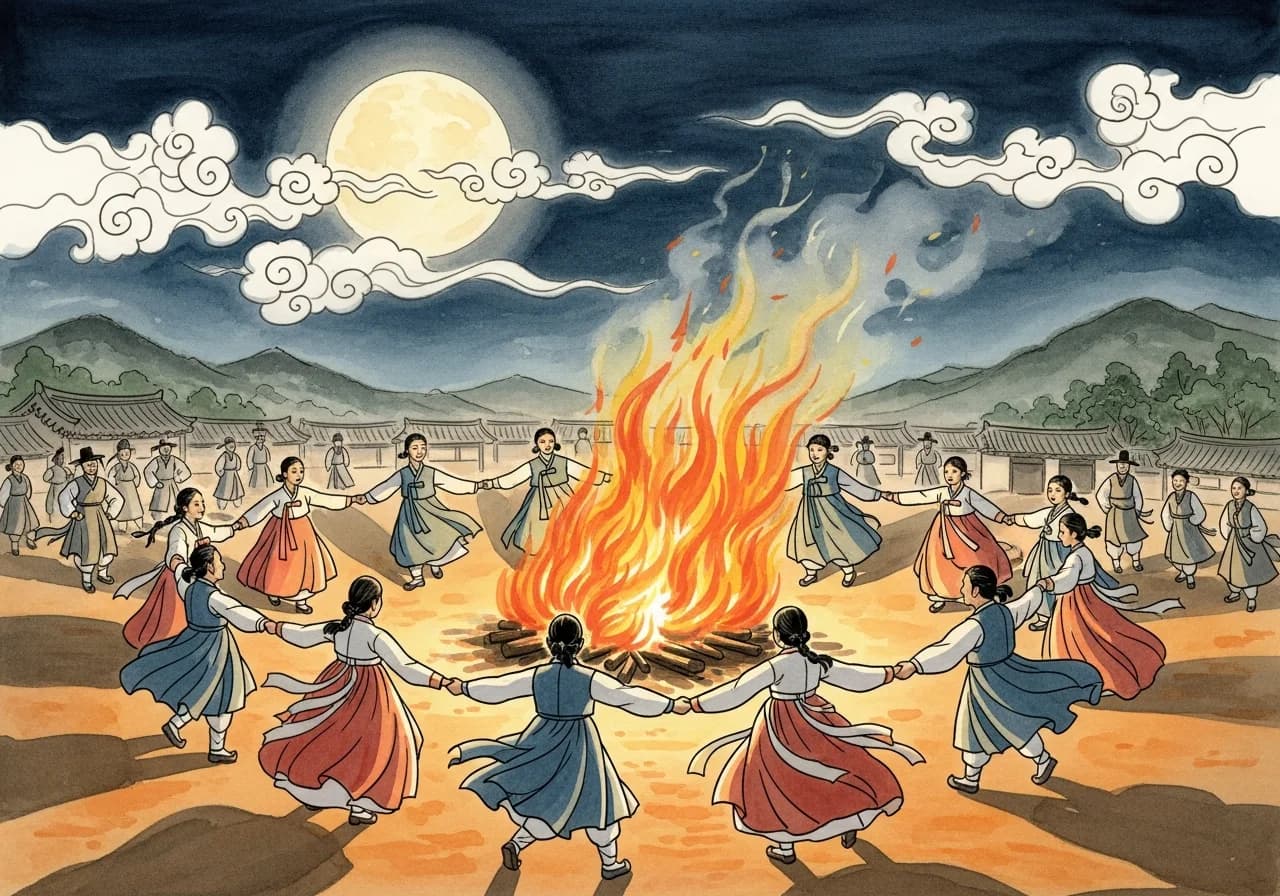
Dancing joyfully and energetically in a dream is a strong auspicious sign that passionate efforts in waking life will bear fruit and bring welcome news. The more people involved — the more the dream resembles a communal celebration — the more powerful the omen of achieving your goals with the support of those around you. A dream that evokes the circle dance of Ganggangsullae, where many join hands under the harvest moon, symbolizes collective harmony and shared achievement.
Dreaming of a shaman (무당, mudang) dancing powerfully during a gut (굿) — the traditional Korean shamanic ceremony — is counted among the finest auspicious omens in Korean folk interpretation. The shaman's dance is not performance; it is a sacred act of summoning spirits, appeasing them, and channeling divine will through the body. To witness or participate in this dance in a dream is to receive the blessing of spiritual protection: difficulties will resolve, and joyful events lie ahead.
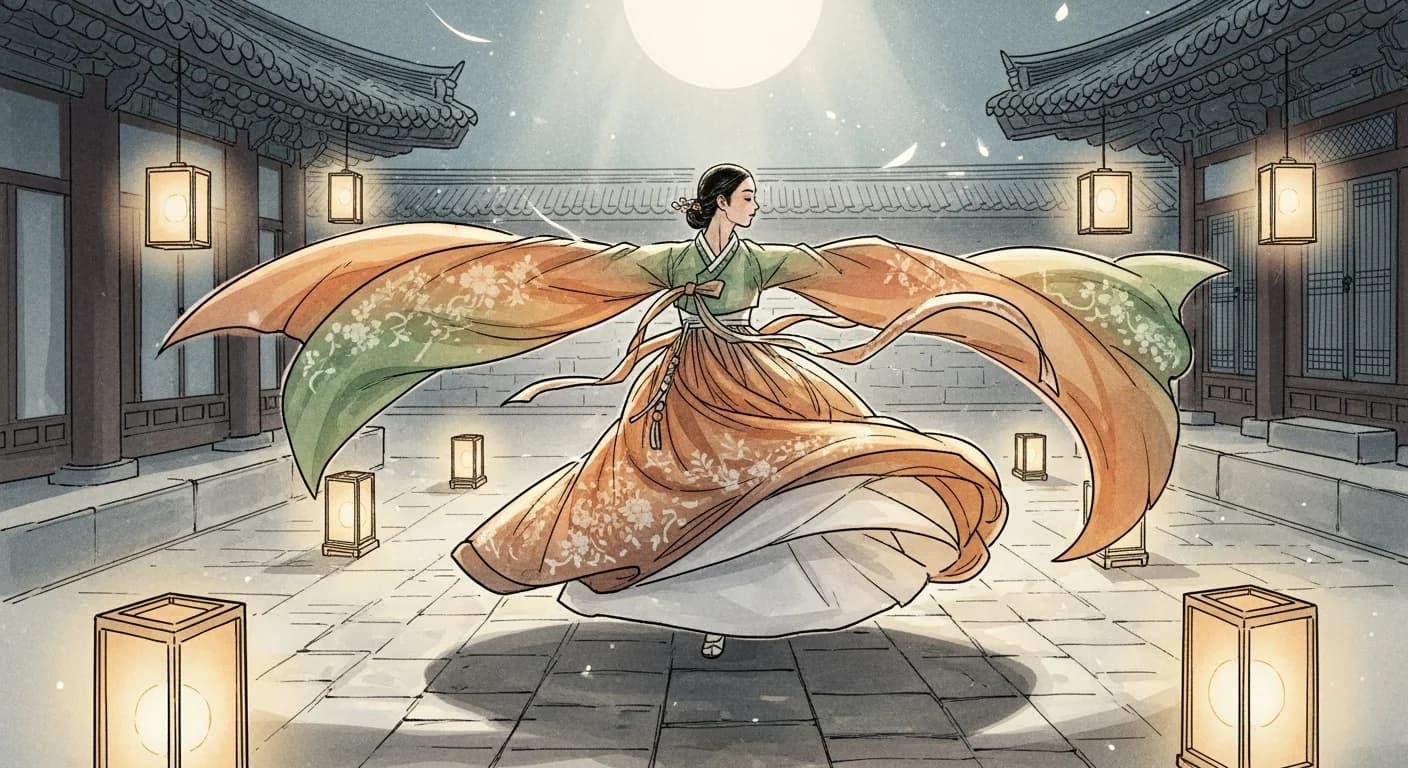
Dancing in traditional attire — particularly splendid hanbok — also carries good omens. It suggests you will soon participate in a culturally meaningful event or an auspicious gathering, and that recognition and praise from those around you are on the way.
Inauspicious: When the Dance Becomes a Warning
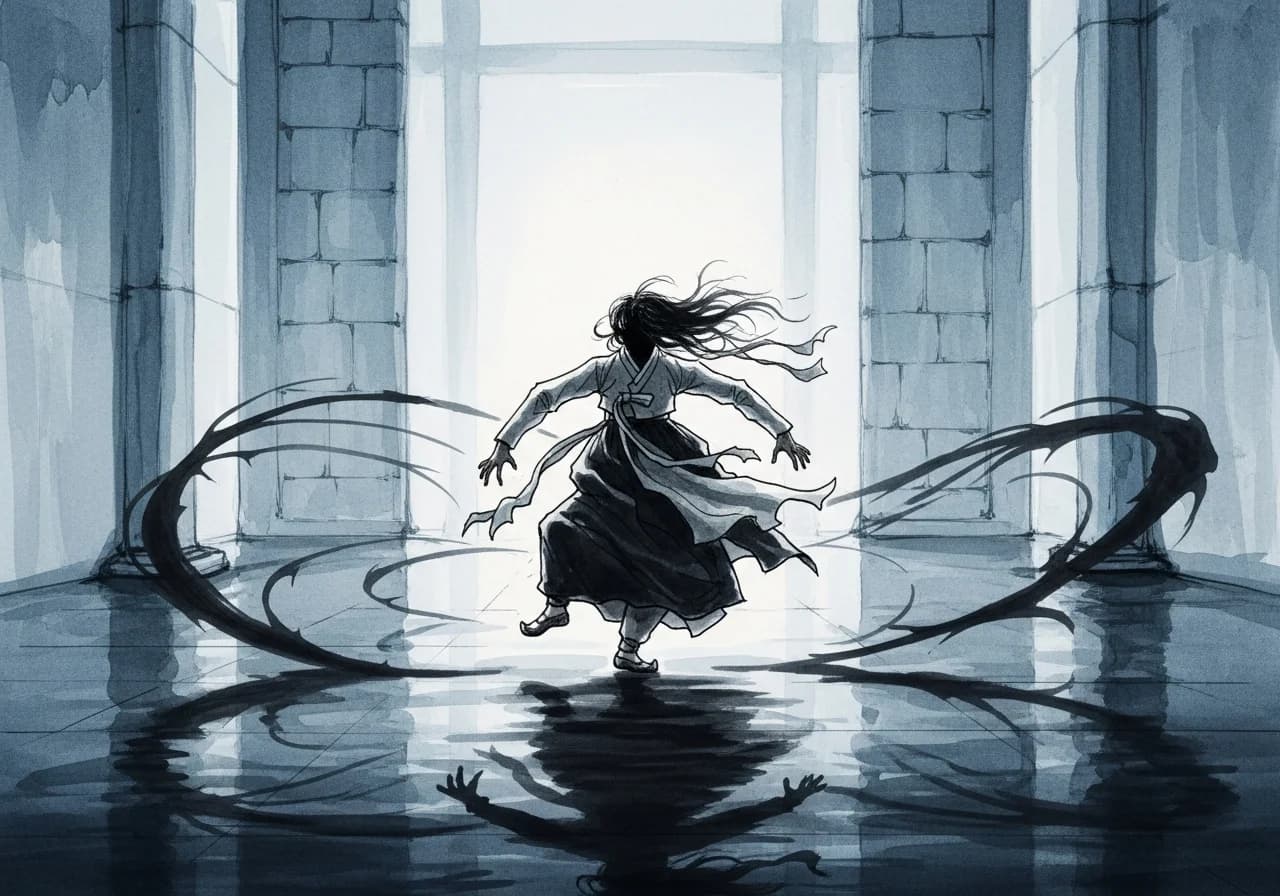
Dancing alone on a stage or in a public space carries a caution. It reflects a desire to showcase your abilities and assert your presence — but Korean folk interpretation warns that excessive self-display can invite jealousy, rivalry, and gossip from others. Actions meant to make you stand out may spark unexpected conflict; a period of humility and careful conduct is advised.
Dancing very fast or frantically — unable to stop — may serve as a physical warning. The dream may be your body signaling that you are pushing too hard. Slow, irregular, or awkward dancing points to discord and misunderstandings in personal relationships.
Secretly watching others dance without joining them is also worth noting. It can reflect a pattern of suppressing what you truly want, a longing held quietly out of reach, or an unhealthy attachment to the past. Your unconscious mind may be asking you to step onto the floor.
Love and Relationships: The Rhythm of Connection
Dancing with a romantic partner or someone you are drawn to reflects readiness for a relationship to begin or deepen. When the dance flows naturally — bodies in sync, steps matching — it is an auspicious sign of relationship harmony and development. When it is awkward, when you cannot find the rhythm together, the dream may be surfacing underlying tension or anxiety in that connection. Pay attention to who your partner was and how the dance felt: these details carry the real message.
Career and Fortune: How Well You Dance Matters
Dancing skillfully and gracefully in a dream is an auspicious omen that your abilities will be recognized in waking life and that projects you are pursuing will reach a successful conclusion. Praise and support from colleagues or peers are likely incoming. Conversely, stumbling and struggling through a dance suggests you may encounter unexpected obstacles in work or business, or that your confidence in your own abilities is wavering. If you are dancing joyfully and good news arrives within the dream itself, treat it as a strong signal that a long-awaited opportunity is finally approaching.
Dream Variations
Dancing Alone Dream
Dancing alone to music in the privacy of your own space signals psychological stability and genuine satisfaction with your current life. You may find your productivity improving or encounter a new romantic interest. The key distinction is setting: dancing alone at home suggests peaceful self-sufficiency, while dancing alone in a public place can reveal anxiety about how others perceive you, or a lack of confidence in social situations.
Dancing With Someone Dream
An omen of harmonious relationships or the beginning of a new romantic connection. Dancing smoothly together is auspicious; awkward or uncomfortable dancing hints at relational friction that may need to be addressed. The identity of your partner — lover, colleague, stranger — shifts the meaning, so try to recall who was there and how the dance between you felt.
Dancing Skillfully Dream
Dancing with skill and grace in a dream is an auspicious sign that your abilities will be recognized and endeavors you are pursuing will come to a successful conclusion. You are likely to receive genuine praise and support from those around you in the near future.
Dancing Awkwardly or Poorly Dream
Stumbling through a dance or feeling unable to keep up reflects a lack of confidence or underlying anxiety in waking life. It may suggest you are facing a situation where you want to perform well but feel inadequate, or that social awkwardness and misunderstandings are creating friction in your relationships. This dream can be a gentle invitation to be kinder to yourself.
Dancing on Stage Dream
This dream reflects a strong desire to showcase your abilities and make your mark. If the audience responds well and applause fills the dream, it is an auspicious sign. If you stumble, become the subject of laughter, or feel exposed and vulnerable, the dream warns that excessive self-display may be inviting jealousy or damaging your social standing. Careful, humble conduct is advised in the period following this dream.
Traditional Korean Dance Dream / Dancing in Hanbok Dream
Dancing in hanbok or performing traditional Korean dance in a dream suggests pride in your cultural roots and the likelihood of participating in a meaningful event or auspicious gathering. It is also interpreted as a sign that bonds with family or community are deepening. The more vivid the colors of the hanbok and the more beautiful the dance, the stronger the auspicious energy.
Dancing Ecstatically or Joyfully Dream
This is one of the most positive variations. It signals that pent-up energy and long-suppressed emotions are finally finding release. Good news long awaited may be arriving, or a problem that has been weighing on you will at last be resolved. The freer and more exhilarating the dance feels, the greater the expected joy.
Shaman Dancing Dream
Dreaming of a mudang (Korean shaman) dancing powerfully during a gut ceremony is a very auspicious omen. It signals that joyful events are ahead and that ongoing affairs will proceed smoothly. The shamanic dance in Korean belief is a sacred act of mediation between the human and spirit worlds; witnessing it in a dream means you are under spiritual protection and that hardships will be resolved.
Dancing in the Rain Dream
Dancing in the rain hints that joy and happiness you have long been waiting for will finally arrive. The image of dancing through rain rather than sheltering from it symbolizes resilience — the spirit of maintaining a positive attitude even amid adversity. If you are smiling in the dream while rain falls around you, a turning point from a difficult period toward brighter days is near.
Dancing at a Wedding Dream
While seemingly celebratory, this dream can carry a note of caution. It may warn of intensified competitive feelings or a tendency to measure your own life against others. It calls for genuinely celebrating others' happiness while remaining focused on your own path. Whether the dance felt joyful or obligatory is the key: genuine joy points to relational harmony; feeling forced or uncomfortable reflects social pressure or comparison anxiety.
Cultural Context
In Korean culture, dance has long been recognized as far more than entertainment — it is a sacred ritual act with deep roots in shamanic tradition and communal ceremony. In the shamanic faith (무속신앙, musok sinang), the shaman's dance serves four sacred functions: summoning spirits (청신), entertaining and appeasing them (오신), sending them off (송신), and expelling malevolent forces (축귀). The shaman acts as a living bridge between the divine and human worlds, and the dance is the mechanism of that crossing — not a performance, but an embodiment of spiritual will.
The most iconic of these ceremonies is the gut (굿), an elaborate ritual in which the mudang (shaman) dances, sings, and enters states of ecstatic communion with spirits on behalf of a community or family. Witnessing or participating in such a dance in a dream is interpreted as direct evidence of divine protection and blessing.
Beyond shamanism, communal dance in Korean tradition has always been tied to collective prayer and celebration. Ganggangsullae — women joining hands in a great circle under the harvest moon — was both a seasonal ritual and a symbol of community unity. Cheoyongmu, one of Korea's royal court dances, was originally performed to expel disease and evil spirits. The farmers' percussion tradition (nongak) incorporates dynamic, swirling dance as an invocation of a good harvest.
In Joseon-era dream texts, bodily movement in dreams was understood to mirror the dreamer's real-world momentum: light, energetic movement was auspicious; labored or awkward movement signaled trouble ahead. This interpretive logic — the quality of the dance reflecting the quality of one's fortunes — remains central to contemporary Korean dream interpretation today.
Western Psychological Perspectives
Western psychology has long been interested in the significance of movement and dance in dreams, and the findings resonate in surprising ways with Korean folk tradition.
From a Freudian perspective, dancing in dreams can be interpreted as symbolic expression of repressed desires — particularly sexual impulses or the pleasure drive. The rhythmic, coordinated body movement and physical closeness with a partner that dance involves may represent wish fulfillment for intimacy that is suppressed in waking life. For Freud, the manifest content of the dream (dancing) serves as a disguise for its latent content (unconscious desire).
Carl Jung offered a more expansive and largely positive reading. For Jung, a dancing dream symbolizes the harmonious integration of conscious and unconscious elements of the psyche. Dance in dreams represents the reconciliation of the persona (the outer self we present to the world) with the shadow (repressed aspects of self) and the anima or animus (the inner image of the opposite gender). Slow, graceful dancing signals subtle inner harmony; vigorous, exhilarating dance points to the release of powerful archetypal energy. Jung regarded the dancing dream as one of the positive symbols that can emerge during the individuation process — the lifelong journey toward becoming a whole, integrated self.
Contemporary psychology frames dancing dreams through the lens of self-expression, social connection, and creativity. From a positive psychology standpoint, freely dancing in a dream functions as an unconscious healing mechanism — the mind releasing stress and restoring emotional equilibrium through symbolic movement. Anxiety-laden dancing, by contrast, may surface social anxiety, perfectionist tendencies, or fear of judgment by others.
Across world cultures, the parallels to Korean tradition are striking. In Native American cultures, dancing in a dream can signal a spiritual calling or divine sanction. In many African traditions, it represents healing and community cohesion. Ancient Egyptians and Greeks regarded dance as a form of divine communication. In Jewish mystical tradition, dreaming of dancing symbolizes the fulfillment of joy and the answering of prayer. Like Korea's shamanic mudang dance, shamanic traditions globally use ecstatic dance as the primary mechanism for entering trance and crossing into the spirit world. This cross-cultural universality suggests that the dancing dream is not merely a product of individual psychology — it is one of the deepest archetypal languages humans share.
Frequently Asked Questions
A dancing dream is rarely just a dream. It is your unconscious speaking in the most visceral language available — movement, rhythm, the feeling of a body fully alive or awkwardly constrained. If your dance was joyful and free, look ahead with genuine anticipation. If it was anxious, compelled, or solitary in the wrong way, it may be time to listen more carefully to what your inner life is trying to tell you. Pay attention to the type of dance, who was with you, and above all the emotional quality of the experience — these three details will take you much further than the dream's surface image alone.