Dead Horse Dream Meaning — When Vital Force Comes to a Stop
If a dead horse appeared in your dream last night, Korean dream tradition treats that image with real gravity — the horse is one of the most powerful symbols of financial fortune and vital energy in Korean folk belief, so finding it lifeless is never a trivial sign. A cultural detail worth knowing: Korean shamanism even used horses in rituals to carry disease and misfortune out of the village, which means a dead horse can carry two very different readings depending on context. That interpretive split is where this dream gets interesting — the same image can be a sharp warning or an auspicious turning point, and the emotional tone you felt is the key to telling them apart.
The Inauspicious Reading — A Warning About Momentum
When the dead horse in the dream was healthy and powerful before dying — especially when the discovery comes as a shock — Korean dream tradition reads this as a strong inauspicious omen (흉몽). The horse embodies financial fortune, drive, and business success in Korean folk symbolism. Its sudden death warns that a venture moving forward with confidence may hit an unexpected wall. If you are currently weighing a major contract, investment, or career move, this dream is a signal to slow down and reassess rather than charge ahead.
A particularly sharp variant is the dead horse that emits a foul smell or appears severely decomposed. This goes beyond general misfortune — it specifically warns of a dangerous rival or betrayal within your inner circle. Someone in your professional or personal life may be working against you. After this dream, extra caution around contracts, partnerships, and what you share with colleagues is well-advised.
The Auspicious Reading — Hardship Finally Departing
Korean shamanic tradition held that horses were sacred vehicles for removing calamity from the community — most vividly in the 마마배송굿 ceremony, where the smallpox deity was placed on a horse and sent out of the village. This belief directly shapes one reading of a dead horse dream: if the horse in the dream was already sick, weakened, or struggling, its death can mean it has carried away the bad energy along with it.
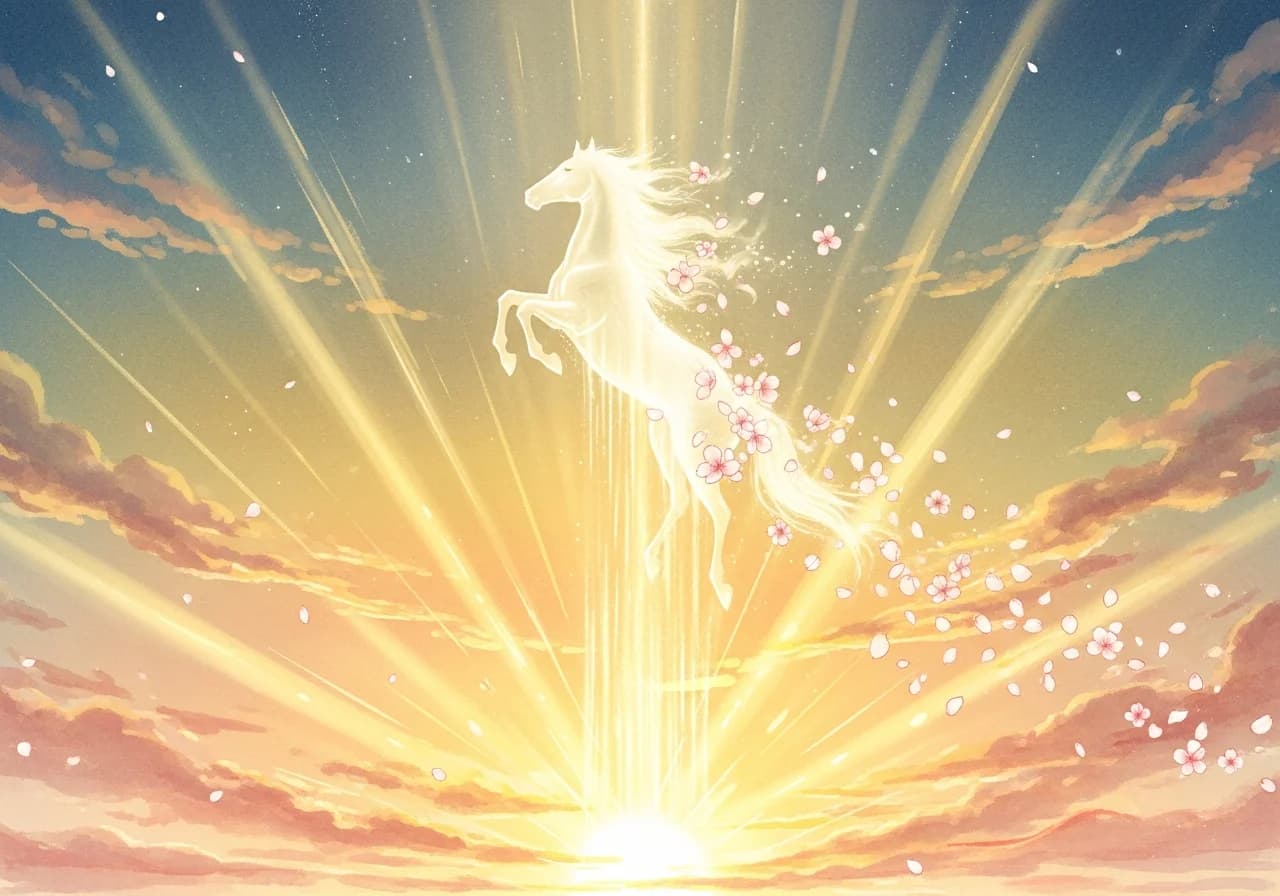
If you have been living through chronic illness, financial hardship, or a long-running conflict, and the dead horse dream felt calm or even strangely peaceful rather than shocking, this auspicious interpretation likely applies. The most explicitly positive variation is dreaming of carefully and respectfully burying a dead horse — this is unambiguously good, symbolizing the proper closure of past failures and genuine readiness for a new chapter.
Financial and Career Implications
The link between a dead horse and declining financial fortune is one of the most firmly established readings in Korean dream tradition. The folk equation of horse with money is ancient and deep-rooted, so a dead horse can directly signal financial loss or a narrowing of opportunity. If you are planning a large investment or business expansion, this dream is worth taking seriously as a prompt to build in more safeguards and review the terms thoroughly before committing.
For employees, the dream may signal unexpected setbacks in performance reviews, promotions, or key projects. Taking a proactive rather than reactive approach — identifying weak points and addressing them now — is the best response. If the dream carries a transitional rather than warning quality, it may indicate a temporary dip in financial flow before conditions stabilize.
What the Dream Says About Relationships and Energy
Beyond finances, a dead horse dream can carry a message about relationships and personal energy. If the dream evoked the image of a specific relationship, the unconscious may be registering that something vital has gone out of that connection — that it is approaching its natural conclusion or has already passed the point of no return.
This dream also appears frequently during periods of burnout or deep exhaustion, when the psyche reaches for the most powerful symbol of collapsed energy it knows. In that case, the dead horse is a portrait of your own depleted reserves — and the message is straightforward: you need genuine rest before you can move again.
Dream Variations
Dream of Seeing a Dead Horse
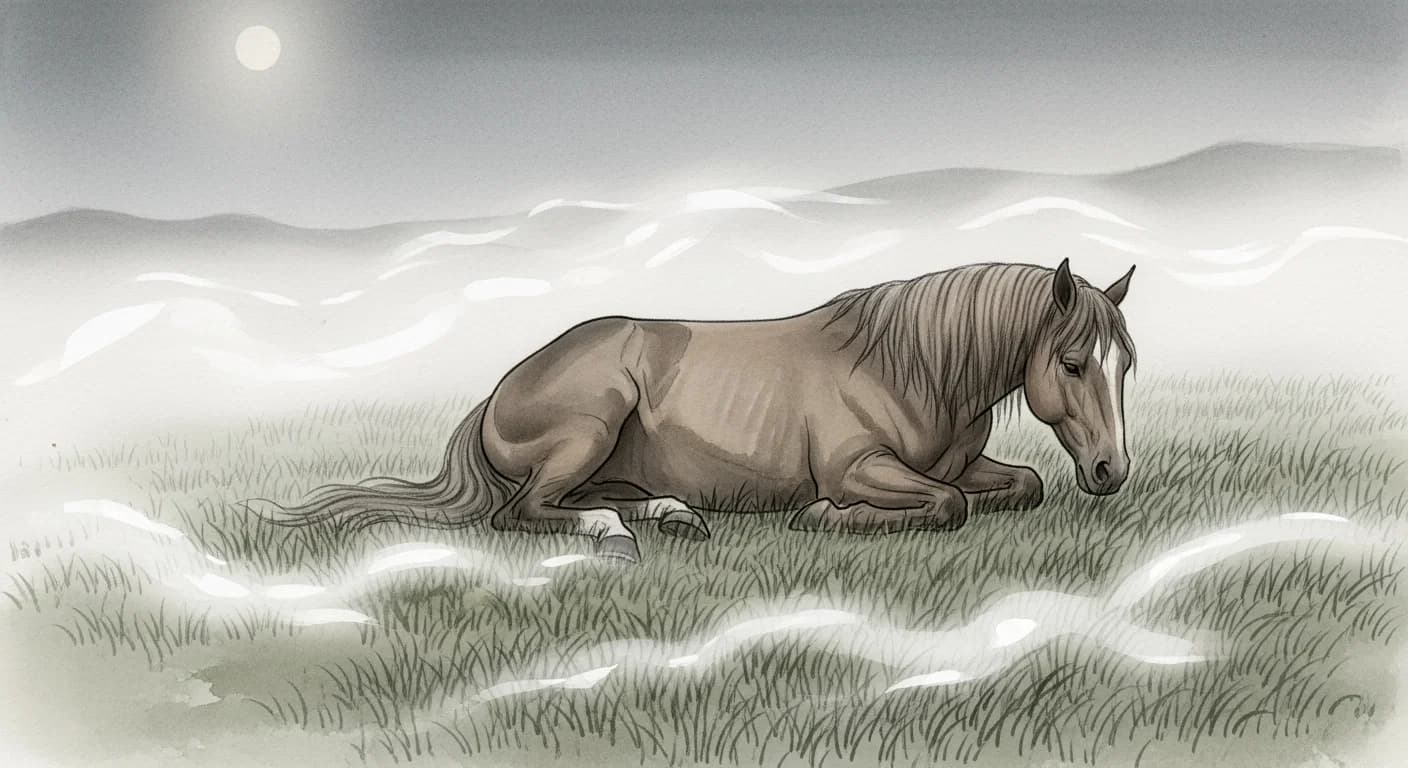
Simply discovering a dead horse lying in a road or field is an inauspicious sign in Korean dream tradition. It warns that an ongoing project or plan may stagnate or fail to deliver expected results. Watch for declining financial luck and opportunities slipping away.
Dream of a Dead White Horse
The white horse is one of the most auspicious animals in Korean symbolism — embodying purity, good fortune, and prosperity. Finding it dead is therefore a particularly sharp inauspicious omen: a significant blessing or rare opportunity may be slipping from your grasp. Before an important exam, promotion, or major opportunity, this dream calls for thorough preparation and measured judgment.
Dream of a Dead Black Horse
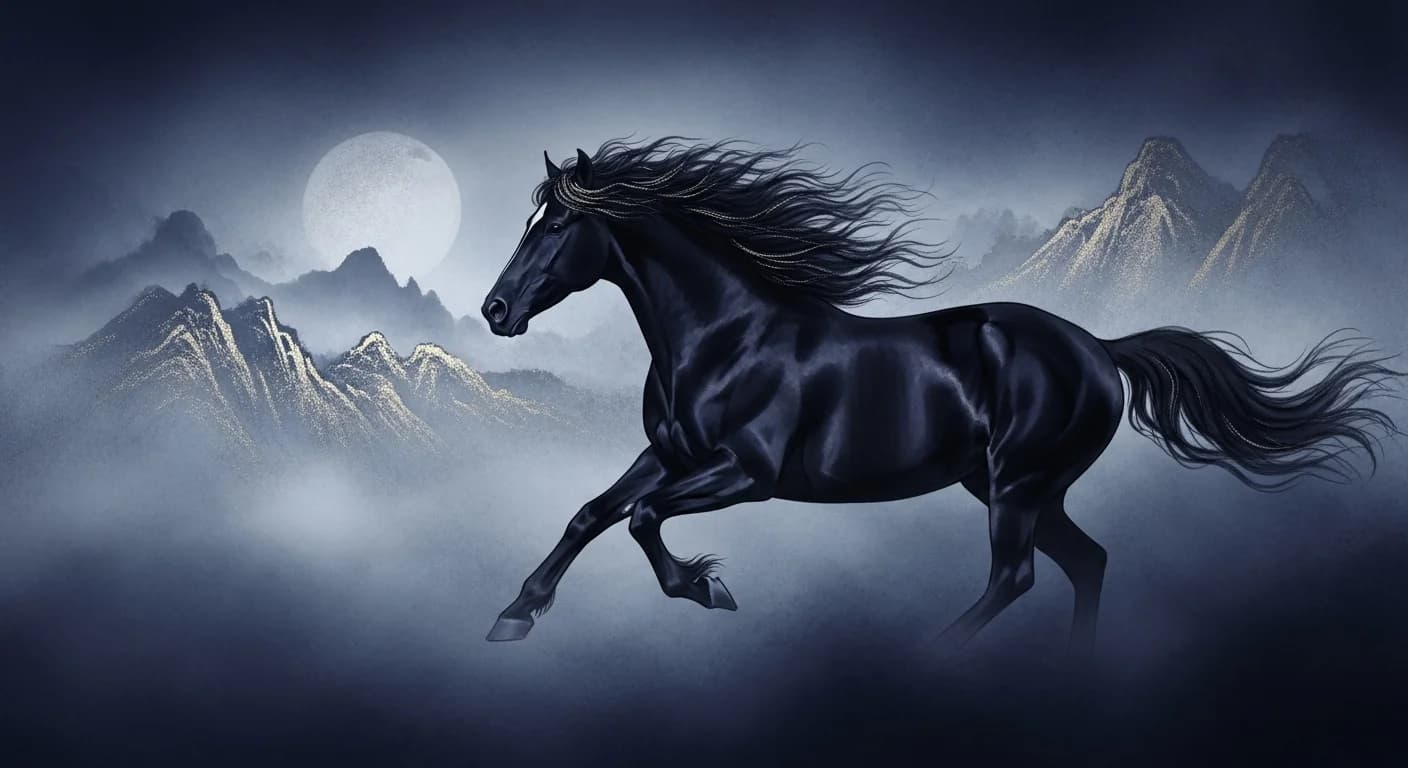
Black horse symbolism cuts both ways. A dead black horse can be read as auspicious in some traditions — dark or threatening energy has been expelled — or inauspicious in others, warning that your ability to navigate problems with finesse has been undermined. The emotional feeling during the dream is the deciding factor.
Dream of a Horse Dying
Watching a horse in the process of dying suggests a current situation or relationship is deteriorating gradually. Unlike finding a horse already dead, this dream indicates there is still time to intervene and take corrective action. Prompt response can significantly limit the damage.
Dream of Touching or Approaching a Dead Horse
Moving toward or touching a dead horse in a dream is a positive psychological sign — it reflects the courage to confront a difficult situation directly rather than avoid it. This dream suggests that by facing the fear head-on, a genuine new beginning becomes possible.
Dream of Burying a Dead Horse
Carefully burying a dead horse is among the most auspicious variations of this dream. It symbolizes properly laying past failures and losses to rest, and arriving at genuine readiness for new ventures or goals. Long-running difficulties will be cleanly resolved, bringing peace of mind and a fresh start.
Dream of Multiple Dead Horses
Multiple dead horses appearing in a single dream amplify the inauspicious reading considerably — this warns of widespread collapse across several areas simultaneously: multiple projects failing, multiple relationships in crisis, or a general financial downturn. An urgent review of both key relationships and financial standing is called for.
Dream of a Dead Horse with Blood
A dead horse that is also bleeding warns of serious financial or emotional harm coming through betrayal or conflict with someone close. Business partners and colleagues who have access to sensitive information or resources warrant particular scrutiny after this dream.
Dead Horse as a Pregnancy Omen (태몽)
Horse dreams are among the most recognized pregnancy omens (태몽) in Korean tradition — a galloping horse is a celebrated sign. A dead horse appearing in a pregnancy context is uncommon and generally not read as auspicious. Rather than treating it as a pregnancy omen, it is better interpreted as a signal for the expectant mother to prioritize rest and take care of her health.
Cultural Context
In Korean traditional culture, the horse was far more than a working animal — it was a sacred being traversing the boundary between heaven and earth, and between the living world and the spirit realm. Known as the '천마' (heavenly horse), it embodied vital energy, wisdom, and loyalty, and stood as one of the foremost animals associated with wealth and success. Korean shamanism (무속신앙) assigned horses a central ritual role: shamans invoked horses as divine mounts for spirits, and in ceremonies such as the 마마배송굿, the smallpox deity was symbolically placed on a horse and sent away from the village — the horse carrying disease and misfortune out of the community. This belief shaped dream interpretation: a sick or exhausted horse dying was sometimes seen as the horse having taken bad luck with it, making the dream auspicious. A powerful horse found suddenly dead, by contrast, was read as a strong inauspicious omen. In the Korean zodiac, the horse (午) corresponds to due south and the midday hours; horse years are associated with dynamism and daring. The depth of horse symbolism in Korean culture is reflected in the National Folk Museum of Korea publishing a dedicated 218-entry dictionary on horse symbolism alone.
Western Psychological Perspectives
Western psychology offers a rich counterpoint to Korean folk tradition when it comes to the dead horse dream. Sigmund Freud viewed the horse as representing repressed instinctual drives and powerful psychic energy. A dead horse in a dream can therefore reflect the suppression or complete exhaustion of that drive energy — an unconscious expression of frustrated or abandoned ambitions. Drawing on his famous 'Little Hans' case, where the horse was linked to the father figure, Freud might also read a dead horse as symbolizing the dissolution of authority or dominant power in the dreamer's life.
Carl Jung took a broader view. For Jung, the horse was a collective unconscious archetype representing life energy — libido in its widest sense — and the instinctual layer of the psyche that connects us to our animal nature. A dead horse dream may indicate a serious depletion of vital or creative energy, or signal its suppression beneath conscious awareness. Within Jung's individuation process, however, the death of the horse takes on a potentially transformative meaning: the necessary end of an old identity or role, making space for a more integrated self to emerge. Jung saw death in dreams less as an ending and more as a prerequisite for genuine transformation.
Modern psychology frames the dead horse dream more pragmatically: the brain processing the loss — or the fear of losing — something significant. These dreams tend to emerge during periods of blocked ambition, failed goals, or severe burnout, when the psyche reaches for the most powerful symbol of collapsed momentum it can find. The emotional response you had within the dream mirrors real-world anxiety levels and serves as useful diagnostic data — a prompt to examine what is draining your energy right now.
Across cultures, a striking common thread emerges: both Korean folk tradition and Western psychology treat the image of a powerful animal that should be running lying still as a signal that something vital has been cut short. The specific framing differs — financial ruin versus inner depletion, shamanic omen versus unconscious processing — but the core intuition is shared.
Frequently Asked Questions
A dead horse dream is one of the more striking symbols the dreaming mind can produce — and Korean tradition gives it the weight it deserves. Whether it arrives as a warning about business and finances, or as a quiet signal that a long-running struggle is finally over, the dream is worth sitting with. If it is a warning, you now have time to prepare. If it marks a turning point, the next chapter is already beginning. Either way, even the stillest horse in a dream is the start of something moving.