
Dead Tiger Dream Meaning — Liberation or Omen of Decline?
If you woke up with the image of a dead tiger still vivid in your mind, your subconscious may be delivering a message worth paying attention to. In Korean dream tradition (해몽), the tiger is not merely a wild animal — it is a mountain deity, a divine messenger, and a symbol of primal force. That makes a dead tiger one of the most layered images you can encounter in a dream. Here's the twist, though — whether this dream is a powerful good omen or a warning of decline depends entirely on one thing: did you kill the tiger yourself, or did you simply stumble upon it already dead?
Auspicious Reading: Conquering Fear, Claiming Freedom
When you are the one who defeats the tiger in the dream — slaying it yourself — Korean dream interpretation classifies this as a strong auspicious omen (길몽). It signals the end of a long struggle: whatever difficulty, adversarial force, or oppressive situation has been weighing on you is finally being overcome. If you have been navigating a tough negotiation, fierce competition, or a draining personal conflict, this dream suggests that the tide is turning in your favor. The emotional quality matters too: if you felt relief, calm, or a sense of quiet triumph upon seeing the dead tiger, the dream reflects inner liberation — your unconscious declaring that you are no longer held back by fear.
Inauspicious Reading: A Warning of Declining Energy
On the other hand, discovering a tiger that is already dead — without having any role in its death — carries a more cautionary meaning in traditional Korean interpretation. The tiger represents vigorous life force and abundant energy. A tiger that has lost that vitality can warn of a temporary downturn in fortune: stalled momentum in business, efforts that fail to bear fruit, or a loss of authority and influence. If the dream came with a mood of unease, gloom, or heaviness, it is worth taking stock of where you may be overextending — and giving yourself time to recharge before making major decisions.
The Transition Reading: One Chapter Closing, Another Beginning
Beyond strict auspicious or inauspicious categories, the dead tiger often symbolizes a life transition — the powerful ending of one phase and the threshold of something new. People commonly report this dream when leaving a long-held job, closing out a significant relationship, or completing a major life project. The tiger that once dominated the landscape of your life — intense, alive, commanding — has reached its end. This is the unconscious acknowledging that chapter and signaling readiness to begin the next. If the dream felt less frightening and more solemn or quietly expectant, this transitional reading fits best.
Dream Variations
Dream of killing a tiger
Killing a tiger in a dream is a classic strong auspicious omen in Korean tradition. Accumulated hardships will be resolved, long-desired goals will finally be achieved, and obstacles that have blocked your path will be cleared. This dream is closely associated with success in exams, business negotiations, and competitions — expect recognition and reward after a period of sustained effort.
Dream of beating a tiger to death
Beating a tiger to death signals that success is arriving after significant personal effort. Unlike simply killing a tiger, this variation emphasizes the hard-won nature of the victory — skills and perseverance that have long been developing are finally being seen and recognized by others. Promotion, awards, and public acknowledgment are common associated outcomes.
Dream of finding a dead tiger
Passively discovering a tiger that is already dead — without having played any role in it — is often classified as an inauspicious sign. Korean dream tradition reads this as a warning of declining fortune: energy slows, efforts may stall, and power or influence may weaken temporarily. The heavier the emotional atmosphere in the dream, the more the warning applies.
Dream of a tiger slowly dying
Watching a tiger die gradually suggests that a current threat or difficulty is in the process of being resolved — not instantly, but steadily. This is a hopeful reading: if you maintain patience and keep going, the situation will eventually turn in your favor. The slow process itself mirrors the gradual easing of whatever pressure you face.
Dream of touching a dead tiger
Reaching out to touch or approaching a dead tiger closely is an auspicious dream that speaks to courage. You are directly facing and moving through a fear or threat that once felt insurmountable. It signals the growth of inner bravery and suggests that you now have the strength to confront head-on what has been intimidating you in waking life.
Dream of receiving a dead tiger's pelt
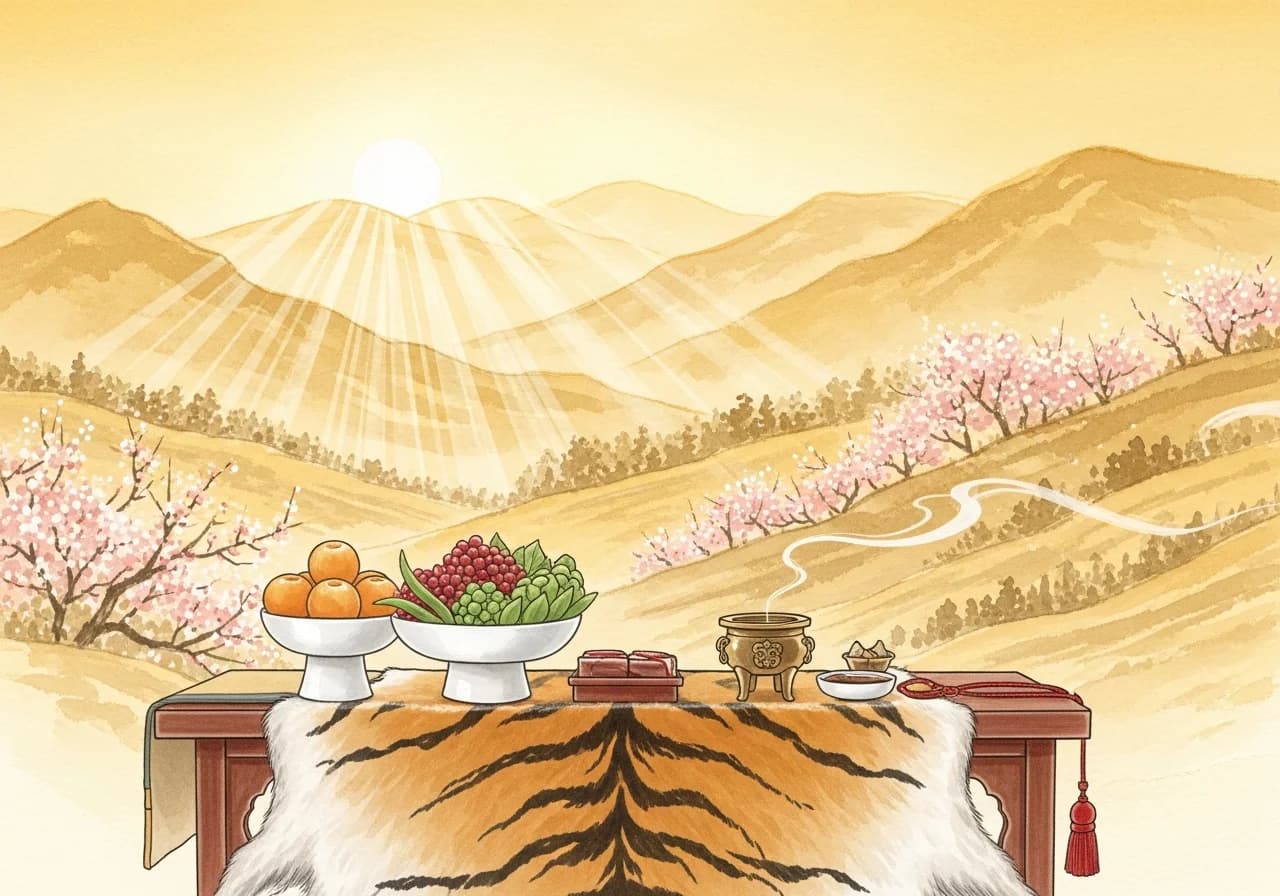
Obtaining or possessing the skin of a dead tiger in a dream traditionally symbolizes the acquisition of wealth or authority. In Korean folk culture, a tiger's pelt was among the most precious and powerful objects imaginable — an emblem of both material value and formidable strength. Expect a significant opportunity or material gain to come into your hands.
Dream of a dead tiger appearing with a deceased ancestor
When a dead tiger appears alongside an ancestor who has passed away, Korean interpretation reads this as a cautionary omen that multiple difficulties may arrive at once. The combination of two powerful symbolic presences — both 'dead' in the dream space — signals a period requiring heightened vigilance across all areas of life: health, finances, and relationships alike.
Dream of a dead white tiger (baekho)
The white tiger (baekho 백호) is a sacred guardian among Korea's four directional deities, protecting the west. A dream of a living white tiger is one of the most powerfully auspicious dreams possible. A dead white tiger carries the inverse warning: sacred protective energy is weakening, and an important transition is at hand. Pay extra attention to physical and mental health during this period, as spiritual defenses may be temporarily lowered.
Cultural Context
The tiger occupies a unique place in Korean cultural history that goes far beyond its role as a predator. In the Dangun creation myth — the founding story of Korea — a tiger and a bear are tasked with undergoing trials to become human. While the bear succeeds, the tiger does not, and this story has shaped the symbolic meaning of the tiger for millennia: noble, powerful, but ultimately separate from the human world. In Joseon-era folk paintings (minhwa), tigers are often depicted with wit and playfulness, serving as household guardians that ward off evil spirits. In shamanic practice (musok sinang), the tiger is considered the messenger of the mountain spirit (sanshin), and a tiger appearing in a dream was understood as a direct divine communication. Within this rich tradition, a dead tiger carries layered meaning. If the tiger was a threat in the dream, its death means liberation. If it was a protector, its death signals the loss of that protection. Traditionally, tiger imagery was placed at the entrance of homes to guard through the year — so the decay of that guardian figure held real spiritual weight for those who held these beliefs.
Western Psychological Perspectives
Western psychological approaches to the dead tiger dream arrive at some fascinating conclusions that both overlap with and diverge from Korean tradition.
From a Freudian perspective, the tiger typically represents repressed aggression and primal instinctual drives — the raw, untamed energy that civilization asks us to suppress. A dead tiger may indicate that these aggressive impulses have been subdued or exhausted. Freud would see this as the ego successfully managing the id's demands, though he would also caution that over-suppression of instinct eventually leads to psychological deadness and listlessness. The absence of energy, not just its control, becomes the concern.
Jung's analytical psychology offers a richer reading. The tiger is a prime expression of the Shadow archetype — the dark, undomesticated aspect of the self that holds both destructive and creative power. A dead tiger can signify the completion of a confrontation with the Shadow: the process Jung called individuation, whereby the conscious self integrates and transforms rather than merely suppresses its darker energies. In this light, the dead tiger is not a loss but a milestone — evidence of genuine psychological maturation. The wild force has been met, acknowledged, and integrated.
Modern cognitive neuroscience takes a more grounded view. Powerful threat figures losing their power in dreams often correspond to periods when real-world stressors are genuinely diminishing. The brain uses dream states to process and recalibrate emotional responses to threats; a once-terrifying symbol appearing helpless or dead may simply reflect the nervous system's recognition that the threat has passed.
Perhaps most thought-provoking is the cross-cultural divergence: Korean tradition tends to read a dead tiger as the loss of protective power, while Western psychology tends to read the same image as the end of oppression and the beginning of freedom. Both traditions agree that the tiger represents immense force — they simply disagree on whether losing that force is grief or liberation. The answer, as with all dreams, lies in what the dreamer felt.
Frequently Asked Questions
The dead tiger dream is one of Korean dream tradition's most nuanced symbols — impossible to read as simply good or bad without understanding the full picture. Whether the tiger fell by your hand or was found already lifeless, whether you felt triumph or dread, whether you are at a moment of victory or transition — all of these details matter. What this dream consistently signals, across every interpretation, is that something powerful is changing. Lean into that awareness, and let the message guide your next move with clarity and intention.
Related Dreams

Tiger Dream Meaning — Korea's Most Powerful Dream Symbol
White Tiger Dream Meaning — The Sacred Guardian in Korean Dream Interpretation
Tiger Attacking Dream Meaning (Korean Interpretation)
Lion Dream Meaning: Decoding the Symbol of Authority and Courage
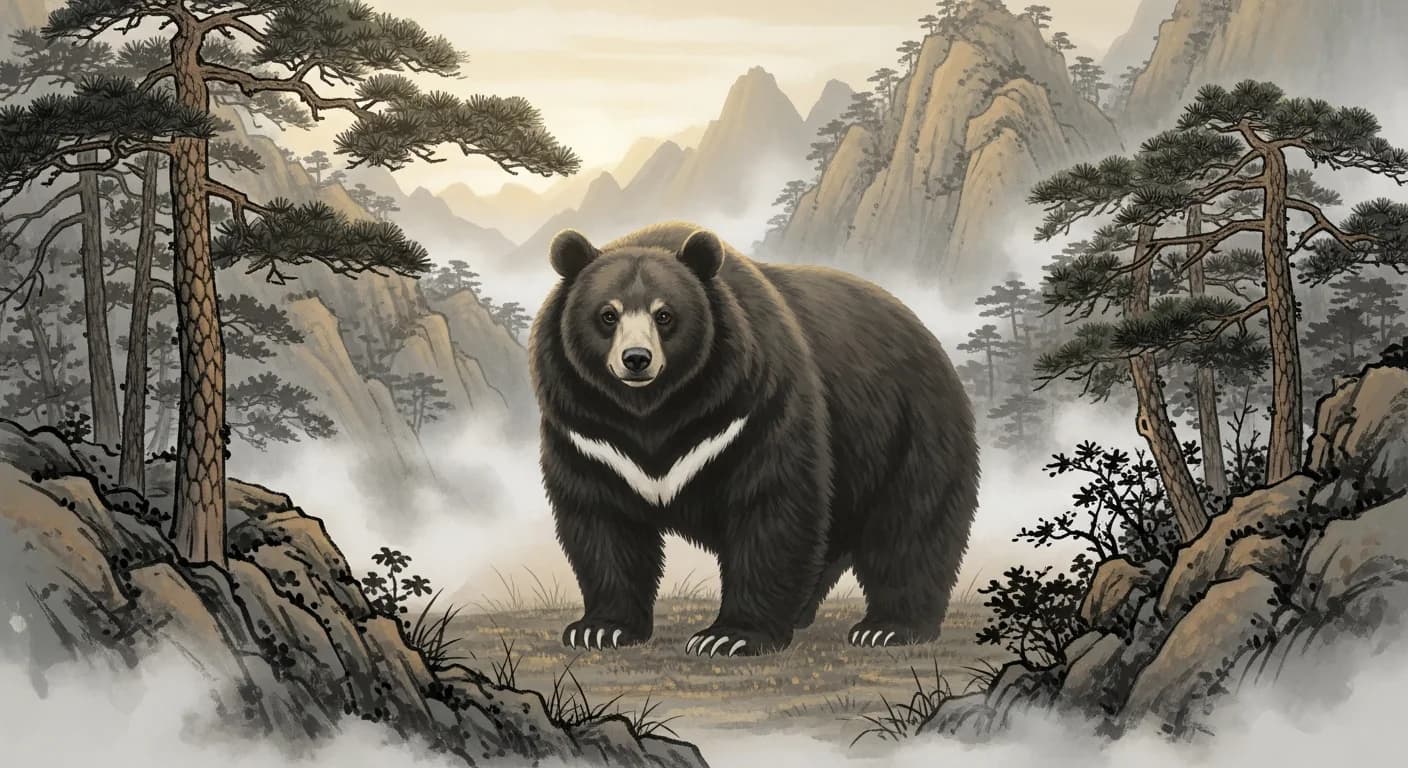
Bear Dream Meaning — Rooted in the Dangun Myth and Korean Shamanic Tradition
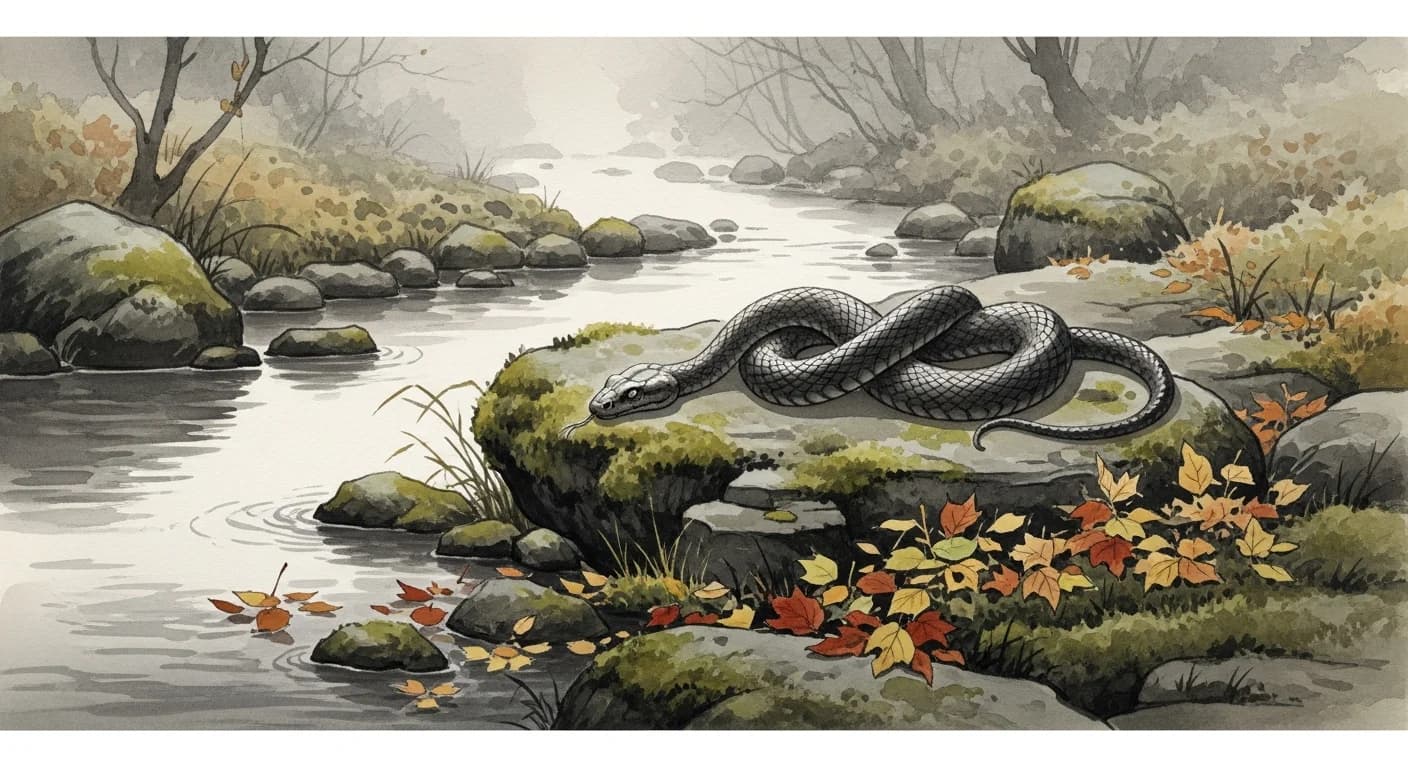
Dead Snake Dream Meaning: Korean Interpretation (Good or Bad Omen?)