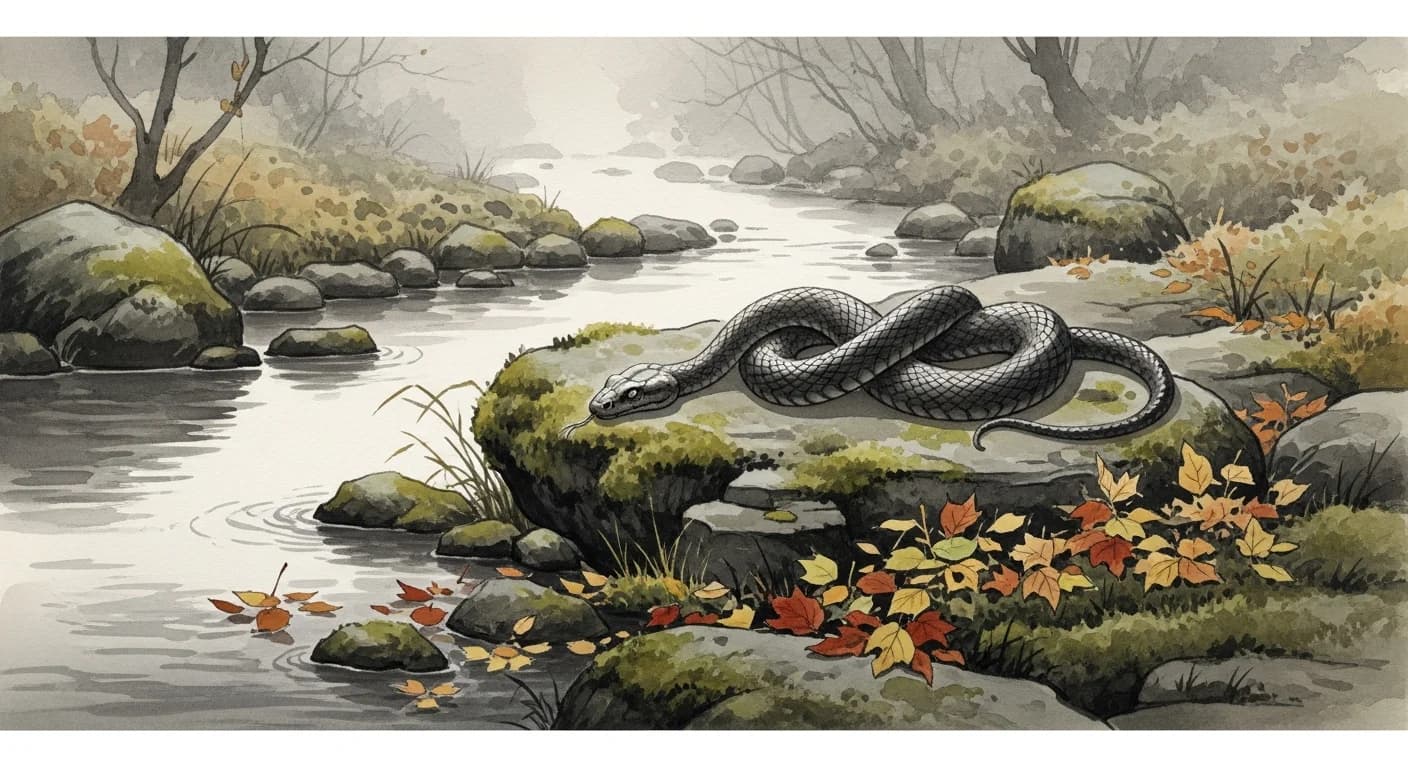
Dead Snake Dream Meaning: Korean Interpretation (Good or Bad Omen?)
If you dreamed of a dead snake last night, whether it's a blessing or a warning hinges entirely on one crucial detail: did you kill that snake yourself, or did you simply stumble upon it already dead? In Korean dream interpretation (꿈해몽), a living snake embodies wealth, vitality, and life force — so a dead snake can signal the exhaustion of that very energy. But here's the reversal you should know — if you were the one who defeated that serpent, tradition counts it among the most powerfully auspicious dream omens of all.
Finding an Already-Dead Snake — An Inauspicious Warning

When a dead snake simply appears in your dream without any action on your part, Korean dream tradition classifies this as an inauspicious omen (흉몽). The symbolism mirrors the living snake in reverse: where a live, coiled serpent signals incoming wealth and vitality, a lifeless one indicates the depletion of that same energy. You may find your physical stamina, health luck, or overall vitality declining in the near future. If you have been pushing yourself too hard or ignoring mounting fatigue, this dream may reflect your body and mind sending an urgent signal. For pregnant women, a dead snake dream is particularly unfavorable as a pregnancy omen (태몽) — the opposite of the auspicious living snake dream that traditionally predicts a healthy child and prosperity. After this dream, consider slowing down, scheduling a health check, and prioritizing rest.
Killing the Snake Yourself — A Powerful Good Omen
The moment you become the active agent — the one who hunts down and kills the snake — the interpretation flips completely. Actively killing a snake is one of the strongest auspicious omens (길몽) in Korean dream tradition. It signals the removal of the competitors, rivals, or obstacles that have been blocking your progress. For employees, expect long-awaited promotion or recognition from superiors. For entrepreneurs and business owners, this dream foretells deals closing and sales climbing. More broadly, a period of elevated social recognition is approaching — your abilities and contributions are about to be seen clearly by others. If the snake was venomous (독사), the power of the omen amplifies: long-standing, deep-rooted problems finally reach resolution, and reputation that has been tarnished may be restored.
The Emotions in the Dream Are the Real Key
Korean dream interpretation gives equal weight to the emotional texture of a dream as to its content. If you felt relief or lightness upon seeing the dead snake, it signals that you have genuinely worked through past fears, difficult relationships, or challenging circumstances — you have set down a burden you no longer need to carry. If you felt unease, sadness, or dread at the sight, the dream suggests unresolved issues linger, or that you have not yet fully made peace with a change in your life. The same image — a dead snake — delivers entirely different messages depending on how it made you feel.
Dream Variations
Dream of Finding a Dead Snake
Simply discovering an already-dead snake is inauspicious — it points to depleted life energy and vitality. Take it as a prompt to assess whether you have been overextending yourself, and make space for recovery and health maintenance.
Dream of Killing a Snake
Killing a snake yourself is a powerfully favorable omen. It means obstacles and adversaries that have slowed you down are being cleared from your path. A promotion, a breakthrough, or a business success is drawing near — now is the time to pursue your goals actively.
Dream of Killing a Venomous Snake
The venom elevates the stakes and the meaning. Killing a venomous snake signals that a serious, long-festering problem is finally resolved. Social recognition and reputation restoration are on the horizon — results you have waited a long time for are about to materialize.
Dream of Stepping on a Snake and Killing It
Killing a snake by stepping on it is inauspicious — watch for unexpected difficulties, health setbacks, or accidents. For pregnant women, this specific variation is traditionally read as a warning of miscarriage risk and warrants extra care.
Dream of a Dead Snake Coming Back to Life
A dead snake reviving in your dream is an auspicious reversal omen. Something you had written off as hopeless may surprise you with new life. A breakthrough is waiting in what seemed like a dead end — do not give up too soon.
Dream of Seeing a Snake Corpse
Seeing a snake that has already become a corpse — without killing it yourself — can symbolize unresolved guilt or a sense of moral reckoning. This dream often calls for self-reflection and encourages a fresh, renewed approach to how you live.
Dream of Killing a White Snake
White snakes hold the highest auspicious status in Korean dream symbolism — they are near-divine emblems of supreme fortune. Killing one in your dream is therefore inauspicious: it suggests turning away good fortune that was just about to arrive. After this dream, be especially attentive to valuable opportunities and relationships you may be overlooking.
Dream of Killing a Snake Coiled Around Your Body
Freeing yourself from a snake that was wrapped around you — and killing it — signals liberation from forces or circumstances that have been constraining you. A long period of pressure or restriction is ending, and the freedom to move in your chosen direction is returning.
Dream of Killing a Snake with Blood Flowing
Blood flowing after you kill a snake intensifies the auspicious signal: this is a decisive ending to a long-standing hardship. Deals that were stuck can be sealed, and achievements or promotions you have waited for are about to become real.
Cultural Context
In Korean traditional folk culture, snakes were never simply reptiles — they were revered as divine beings embodying wealth, abundance, and immortality. The snake's ability to shed its skin was read as the eternal cycle of death and rebirth, making it a powerful symbol of undying life force. The household serpent (구렁이) was known as the 업 (a household guardian spirit) and was worshipped as a protector of the family's fortune. The proverb 'like a wealthy household's 업 departing' captured the deep belief that a serpent leaving the home meant prosperity leaving with it. In this cultural framework, a living, dynamic snake dream heralds arriving fortune and vitality, while a dead snake represents that very energy having run dry. Conversely, actively subduing and killing a snake in a dream holds the same symbolic weight as defeating evil spirits or obstacles in shamanic (무속) belief — it is a powerful auspicious sign that one is reclaiming control over one's own fate and inviting new energy forward.
Western Psychological Perspectives
Western psychology approaches the dead snake dream from angles that make for a fascinating contrast with Korean tradition. In Freudian psychoanalysis, snakes are quintessential symbols of male libido and repressed sexual energy. A dead snake in a dream can represent the suppression or exhaustion of these drives — the desires or impulses that were once powerful have finally lost their force. Freud would note that feeling relief in the dream indicates successful repression, while lingering anxiety suggests the unconscious is still resisting that suppression.
Jungian analytical psychology reads the image differently. For Jung, the snake is an archetypal figure from the collective unconscious — representing transformation, healing, and wisdom. A dead snake is therefore not a symbol of ending but of transition: like a serpent shedding its skin, the death signals the conclusion of an old self or an outgrown way of life, and the beginning of a new phase in the individuation process. The dead snake marks a psychological turning point from which a more mature self emerges.
Modern cognitive science and neuropsychology offer a third lens. Because snakes are evolutionarily hard-coded as threat-detection objects in the human brain, they appear frequently in dreams. A dead snake may emerge when the brain is processing the resolution of a recognized threat or stressor — essentially running a 'threat terminated' signal through the hippocampus and amygdala, the brain regions most involved in fear processing and emotional regulation.
What stands out across these perspectives is a shared insight: the snake's death is a threshold, not an ending. Korean tradition sees it as the depletion of fortune energy (a warning to conserve and recover), while Western psychology tends toward reading it as the clearing of a danger or the shedding of an old identity (a signal of growth). Both cultures agree that something significant has shifted — they simply read the direction of that shift differently.
Frequently Asked Questions
The dead snake dream resists any simple verdict. Killed it yourself? That is strength — the signal that you have what it takes to clear the path ahead. Found it already dead? That is your inner compass warning you to rest and restore. Korean dream tradition and Western psychology may disagree on which direction the change runs, but both agree on this: when a snake dies in your dream, something in your life has reached a turning point. The question worth sitting with is not whether it is lucky or unlucky — it is what you want to do now that the old thing is gone.
Related Dreams
Black Snake Dream Meaning — Fortune and Warning in One Symbol
Green Snake Dream Meaning: A Powerful Omen of Life, Wealth, and Change
Red Snake Dream Meaning — Where Auspicious Fortune and Warning Meet
Snake Attacking Dream Interpretation

Dead Bird Dream Meaning — Warning Sign or Signal of Transformation?

Dead Fish Dream Meaning: Auspicious Sign or Inauspicious Warning?