Dream of Dying — Meaning & Interpretation
If you woke up startled from a dream where you died, here's something that might surprise you: in Korean dream interpretation, dreaming of your own death is one of the most auspicious signs you can receive — an omen of financial fortune, career breakthroughs, or a meaningful new relationship. That said, there's a crucial nuance. How you die in the dream changes everything.
Auspicious Meaning: Death as the Dawn of Something New

In Korean folk dream tradition, death in a dream does not signal literal danger. Instead, it signals the end of an old chapter and the birth of something better. Dreamers frequently report exam successes, long-awaited job offers, promotions, or unexpected financial gains in the days following such a dream. The more peaceful the death — drifting away without pain or fear — the stronger the auspicious energy is believed to be. For unmarried dreamers, this symbol is also associated with the arrival of a meaningful romantic partner. Think of it as the unconscious mind clearing the old to make space for the new.
Cautionary Meaning: When Fear and Agony Shift the Symbol
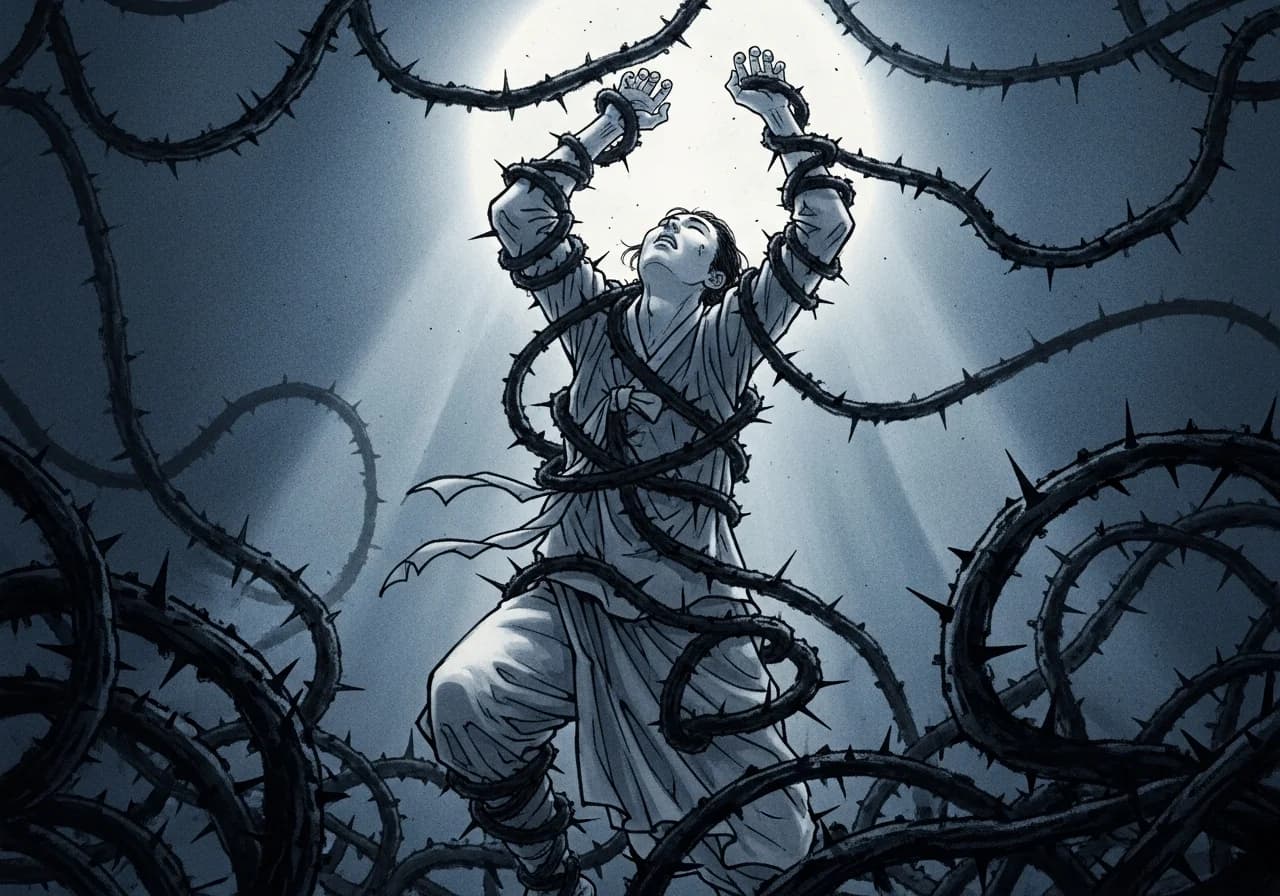
Not every death dream is a good omen. Dying amid extreme terror, prolonged struggle, or desperate attempts to escape carries a different message. Rather than predicting external misfortune, this type of dream reflects unresolved psychological conflict, suppressed stress, or deep resistance to change that the conscious mind hasn't yet addressed. It is the unconscious sending an urgent signal — not about the future, but about the present emotional state. If these dreams recur, it's worth checking in with your stress levels and considering what emotional weight you may have been carrying without release.
How the Method of Death Changes the Interpretation
In Korean dream tradition, the manner of death carries its own symbolic layer. Dying in a fire signals total life transformation — the old self burns away to make room for a radically new existence. Drowning brings a cleansing symbolism: all worries wash away and blocked situations resolve smoothly. Being shot and killed is associated with financial gains and unexpected income, with a headshot meaning resolution of long-standing worries, and a chest shot meaning a deeply held wish comes true. Dying in a traffic accident points to success in difficult exams or favorable career transitions. Dying of illness signals a period of authentic self-determination — rejecting unjust obligations and forging your own true path.
Dream Variations
Dying Peacefully in a Dream
Dying without pain or struggle is considered among the strongest auspicious omens in Korean dream interpretation. It foretells the smooth resolution of ongoing matters and the arrival of unexpected good fortune. If you wake from such a dream feeling strangely calm or light, that sensation itself is considered part of the positive energy. Any current difficulties are signaled to dissolve naturally and soon.
Dying in Agony in a Dream
Dying in fear and suffering signals that unresolved emotional conflicts or suppressed stress are surfacing from the unconscious. It is not a severe omen for external misfortune, but it is the dream's way of urging you to listen to yourself — to acknowledge what you have been carrying without addressing it. Self-care and emotional expression are the appropriate responses to this dream.
Dying in a Fire in a Dream
Fire symbolizes purification and radical transformation in Korean symbolism. Dying in a fire in a dream signals the complete burning away of your old life and the emergence of an entirely new existence — whether in career, relationships, or lifestyle. This is one of the most potent transformation omens in Korean dream tradition.
Drowning and Dying in a Dream
Drowning carries a cleansing symbolism in Korean dream lore: all worries and obstacles are washed away, blocked situations flow freely, and joyful news is on the way. Far from being an ominous sign, drowning to death in a dream is an auspicious omen that long-standing difficulties — especially in finances or relationships — will soon resolve.
Being Shot and Dying in a Dream
Being shot and killed in a dream is auspicious for finances — unexpected income or monetary gains are predicted. The specific location of the wound adds detail: a headshot signals the resolution of long-standing worries, while a chest shot signals the fulfillment of a deeply held wish. This dream is frequently associated with lottery luck in Korean folk tradition.
Dying in a Traffic Accident in a Dream
Dying in a traffic accident predicts success on challenging exams or favorable outcomes in job searches and career transitions. Though the imagery is sudden and violent, the symbolism is of arriving precisely where you most wanted to be. The abruptness of the accident mirrors how quickly life can pivot in a positive direction.
Dying of Illness in a Dream
Dying from illness in a dream signals a time of clear-eyed self-examination and authentic self-determination. It represents shedding unjust obligations and outdated identity patterns to discover who you truly are — a symbol of inner renewal rather than physical decline. The illness strips away what was false, leaving only what is genuine.
Being Stabbed and Dying in a Dream
Being stabbed and killed in a dream symbolizes the healing of long-suppressed emotional wounds. The violent imagery represents pain that is finally being acknowledged and released. Long-standing emotional conflicts are moving toward resolution, and the recovery that follows the wound is the real message of this dream.
Recurring Dreams of Dying
Dreaming of dying repeatedly signals that the unconscious mind is urgently communicating unresolved stress, a suppressed desire for change, or deep-seated dissatisfaction with the current direction of life. In middle-aged adults, recurring death dreams commonly coincide with major life transitions — retirement, children leaving home, or significant relationship shifts. These dreams deserve attention rather than dismissal.
Cultural Context
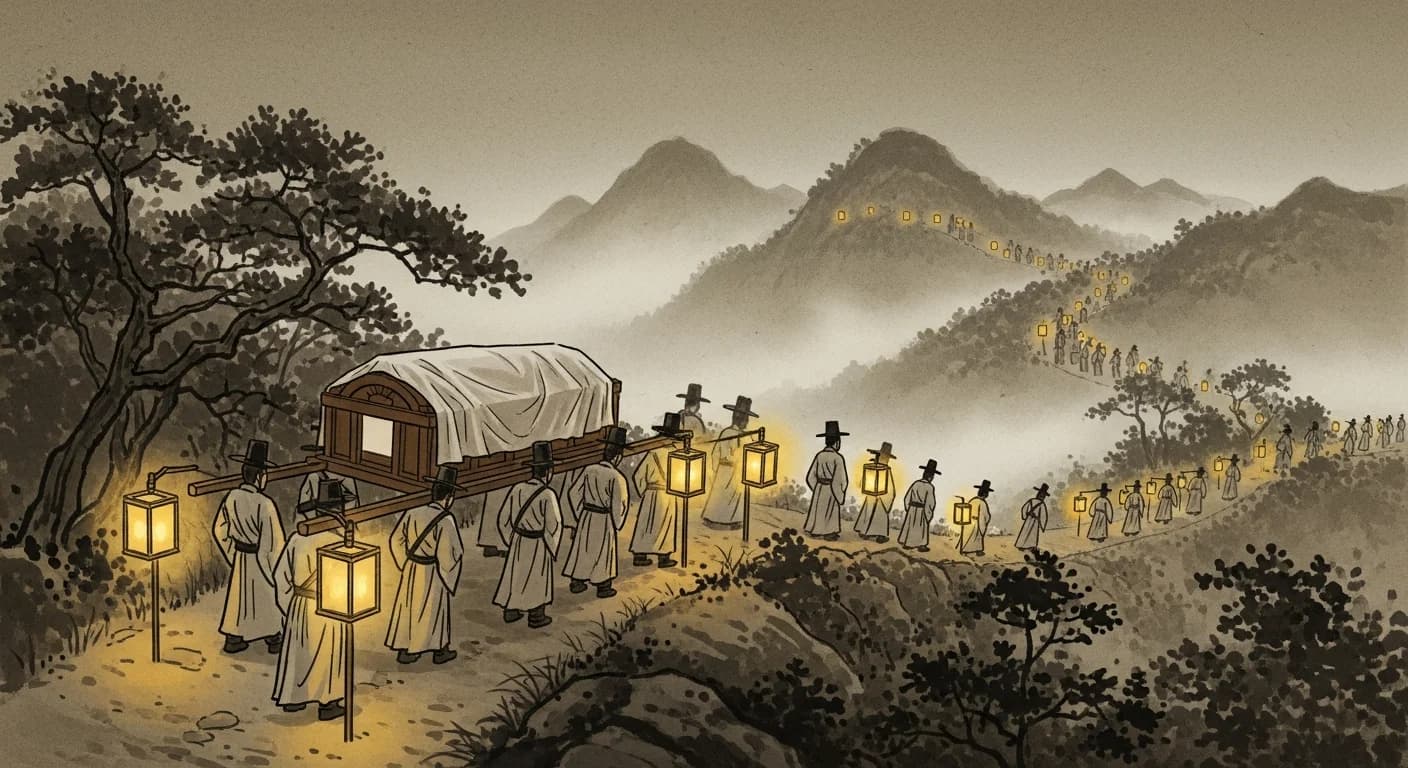
In Korean culture, dreams have been regarded as sacred channels of prophetic insight since the Three Kingdoms period. Dreams about death are especially intertwined with Korean shamanistic belief (무속 신앙), in which death represents a guided passage — the soul following the death messenger (저승사자) from this world to the next realm. Because Korean cosmology views death and rebirth as a continuous cycle rather than a permanent ending, dying in a dream is not interpreted as an omen of literal death but rather as a powerful signal of new beginnings. During the Joseon Dynasty, official dream interpreters played important roles in royal and noble courts, where death dreams were consistently decoded as symbols of completion and fresh departure. This interpretive framework, layered with shamanistic, Buddhist, and Confucian influences, underpins the contemporary Korean tradition of treating one's own death in a dream as one of the most auspicious signs possible.
Western Psychological Perspectives
Western psychology approaches dying dreams through frameworks that differ from Korean tradition, yet arrives at strikingly similar conclusions about transformation and change.
Freud interpreted death dreams as expressions of repressed unconscious wish-fulfillment. Dreaming of your own death may express a suppressed desire to escape current responsibilities, relationships, or a sense of guilt pressing from beneath consciousness. Freud also noted that the ego cannot truly conceive of its own non-existence, so death dreams often manifest as watching oneself die from an observer's perspective — the psyche representing its own annihilation indirectly, at a safe psychological distance.
Jung offered a more positive reading. He interpreted dying in a dream not as ego death to be feared, but as a necessary psychological shedding on the path of Individuation — the lifelong process of becoming one's most authentic Self. For Jung, these dreams signal the activation of the universal Death-Rebirth archetype from the collective unconscious, representing the integration of previously rejected aspects of the psyche such as the Shadow or Persona. A death dream, in Jungian terms, is an invitation to surrender the old self so that a truer, more complete identity can emerge.
Modern sleep neuroscience adds a third lens. The brain processes unresolved emotional material during sleep, and elevated cortisol levels during periods of stress correlate with increased threat-simulation dreams, including self-death scenarios. Rather than being pathological, these dreams are now understood as adaptive — the brain running worst-case simulations to rehearse coping strategies and regulate emotional responses to real-world anxieties, identity shifts, or major life transitions.
The convergence is striking: Korean tradition and Western psychology both identify dying in a dream as a signal of transformation and new beginnings. The divergence is in emphasis — Korean folk tradition reads it as an omen of external fortune (wealth, promotion, luck), while Western psychology reads it as a mirror of internal change (ego dissolution, emotional processing, identity renewal). Both framings, ultimately, point toward growth.
Frequently Asked Questions
Dreaming of your own death is not the dark omen it might feel like in the moment of waking. Across both Korean folk tradition and Western depth psychology, this dream consistently points toward transformation, release, and new beginnings. If the death was peaceful, welcome the coming changes. If it was frightening, listen to what your inner world is asking for. Either way, this dream is telling you that something significant is shifting — and that the next chapter is already in motion.