Faceless Dream Meaning — What Korean Dream Tradition Reveals About the Hidden Self
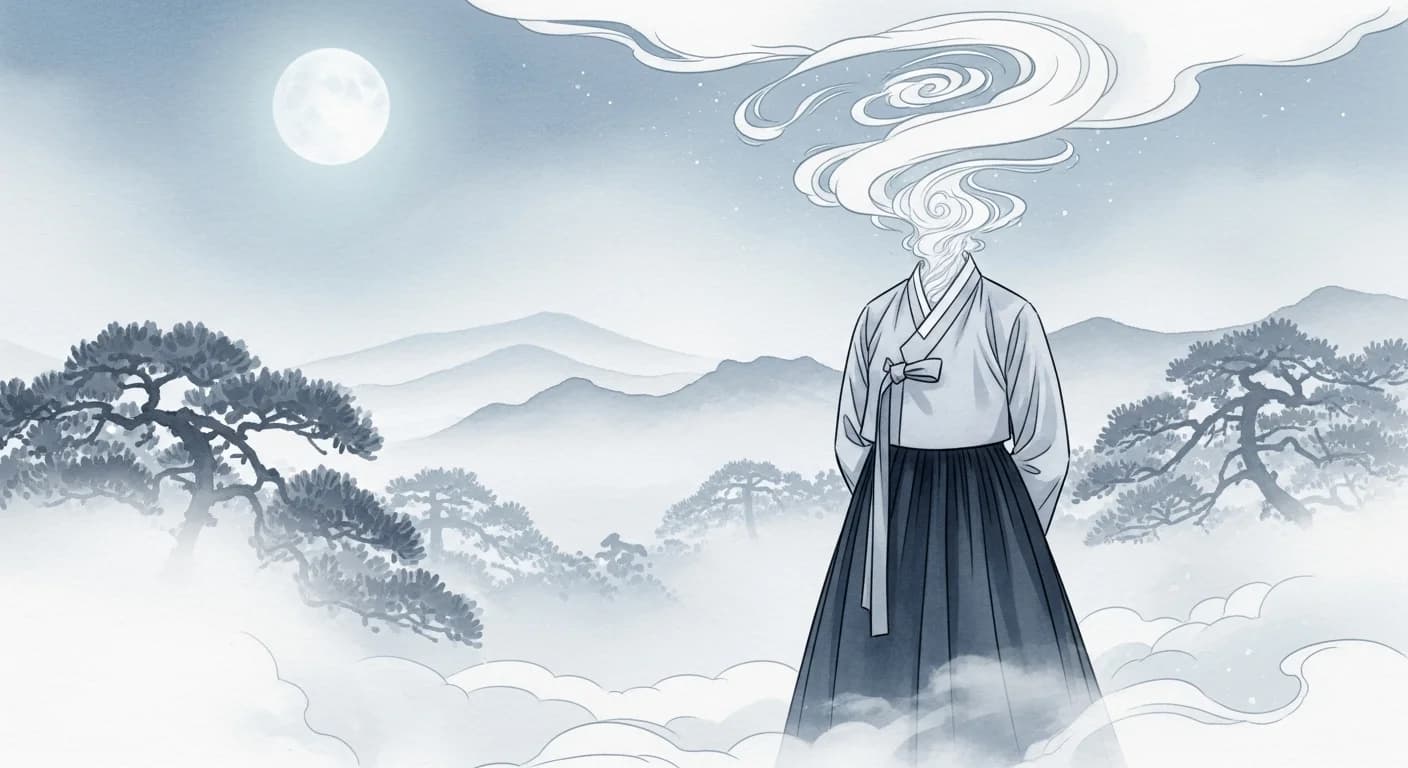
If a faceless figure appeared in your dream last night, Korean dream tradition treats that encounter as far more significant than a random nightmare. In Korean shamanism and folk belief, the face is regarded as the window to the soul (혼) and the stamp of one's destiny — so its absence carries a precise symbolic weight that has been documented in dream lore for centuries. Here's the part that surprises most people: the same faceless figure can be either a dire warning or a deeply auspicious sign depending entirely on what it was doing in your dream.
A Threatening Faceless Figure — Warning of Hidden Enemies
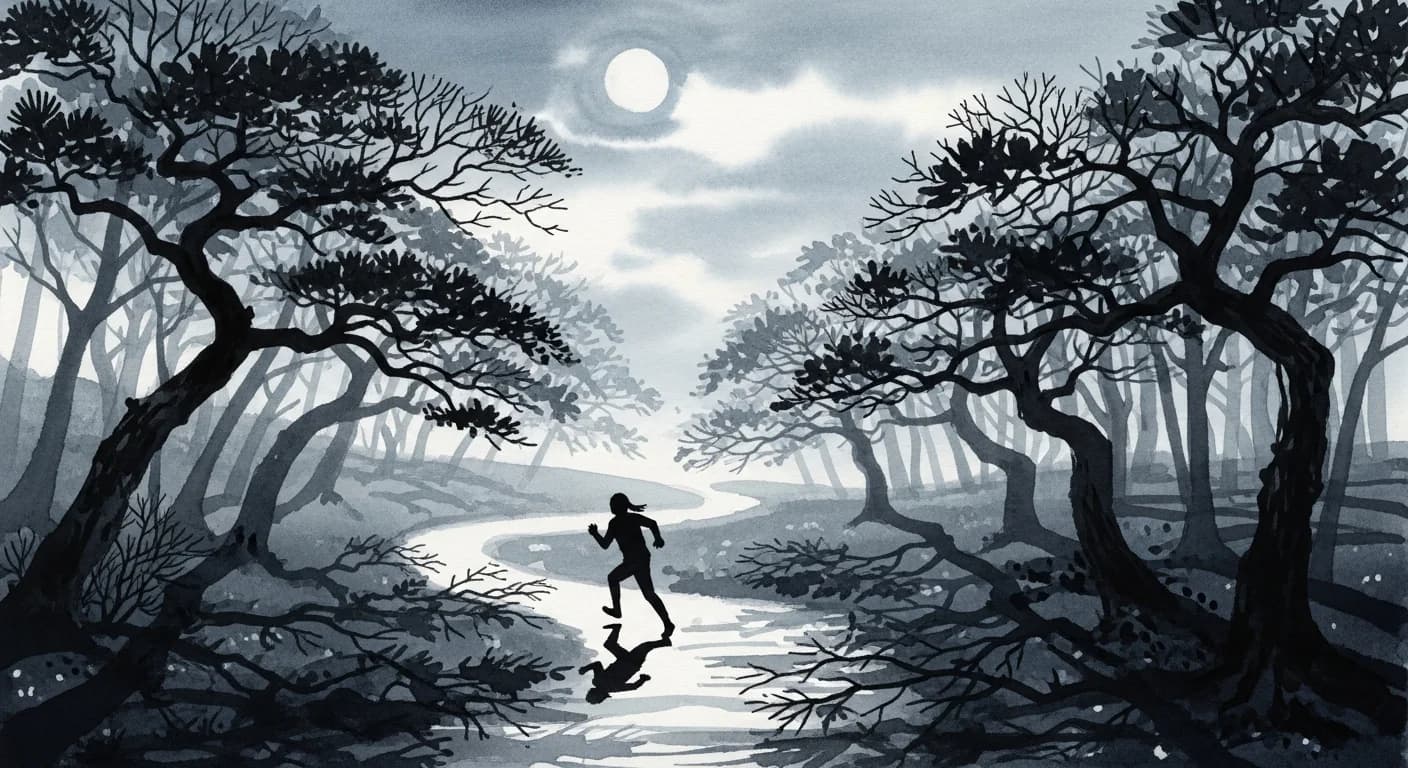
When a faceless stranger chases, threatens, or menaces you in a dream, Korean dream interpretation classifies this firmly as 흉몽 (an inauspicious dream). The core symbolism is the inability to identify the threat. This kind of dream warns of a hidden rival or adversary harboring ill will in your waking life — someone whose true intentions you cannot read. It signals a period requiring extra vigilance in your professional and personal relationships, particularly with people you have recently met or those whose motivations you have not fully understood. Rather than triggering alarm, treat this dream as a prompt to be observant.
A Familiar Person's Face Disappearing — A Relationship Under Strain
When someone you know — a family member, close friend, or colleague — appears in your dream with a blurry or absent face, it suggests that relationship may be weakening or heading toward disconnection. In some interpretations, it serves as a premonitory signal that this person may soon face hardship, change, or health challenges. Dreams where a family member's face vanishes often reflect deep-seated anxiety about separation or loss. If this dream recurs, spending more intentional time with that person and tending to the relationship is the traditional advice.
Your Own Face Is Missing — The Quest for Identity
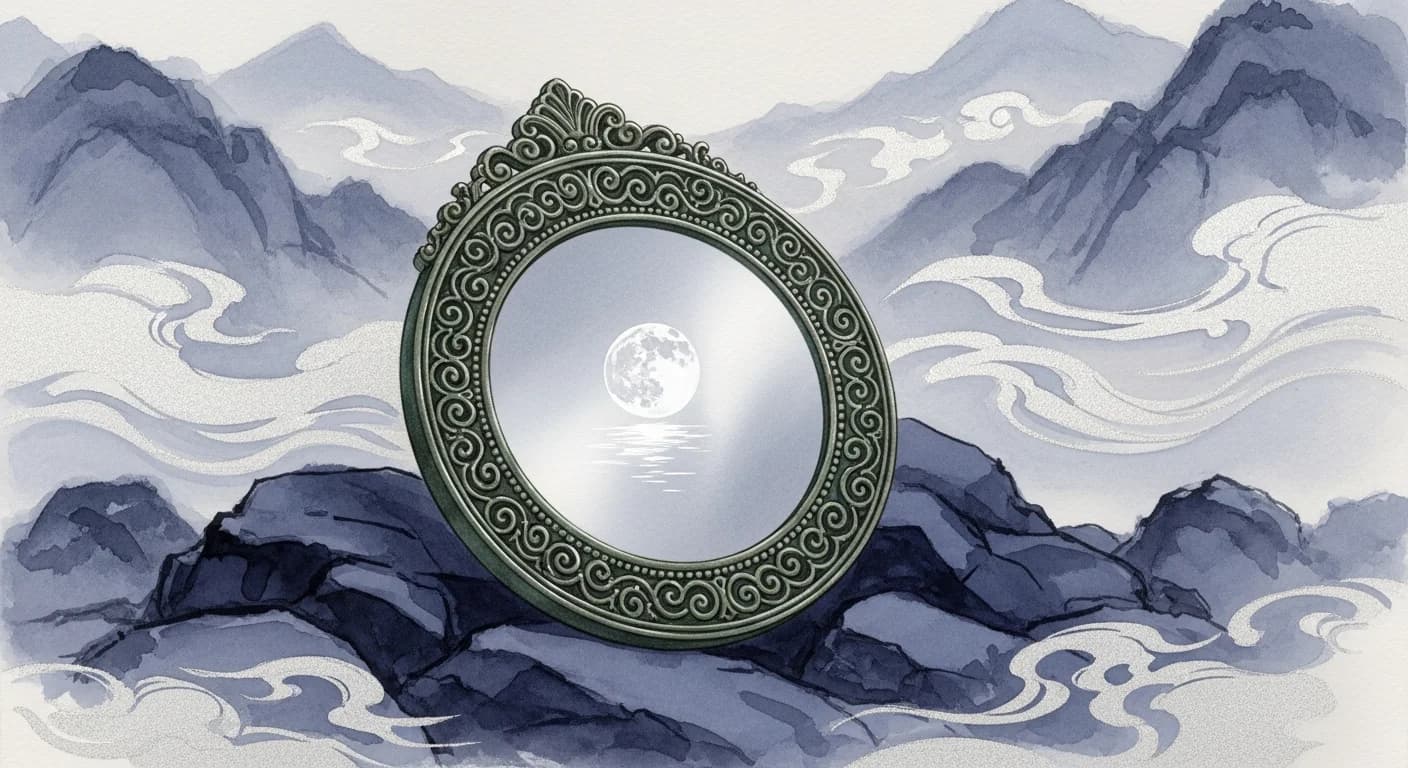
Dreaming that your own face is absent — particularly when looking into a mirror and seeing nothing — sits in neutral territory. Rather than signaling misfortune, it expresses the inner question: Who am I right now? This dream frequently surfaces at major life transitions: a career change, a move, the end or beginning of a significant relationship. Korean folk belief reads it not as a loss of self, but as the active process of shedding one identity and reaching toward another. Sit with the discomfort; it is the feeling of growth.
Receiving Help from a Faceless Figure — The Auspicious Stranger

When a faceless being offers you a gift, extends a helping hand, or guides you without causing harm, this is a clear 길몽 (auspicious dream). In Korean shamanic tradition, a benefactor without an identifiable face is understood as a divine or celestial force intervening on your behalf — a heavenly helper whose identity is beyond the dreamer's current understanding. If you are facing an important decision, exam, or business challenge, this dream is a promising sign that unexpected support or a beneficial person will emerge at the right moment.
A Faceless Presence Quietly Nearby — Ancestral Protection
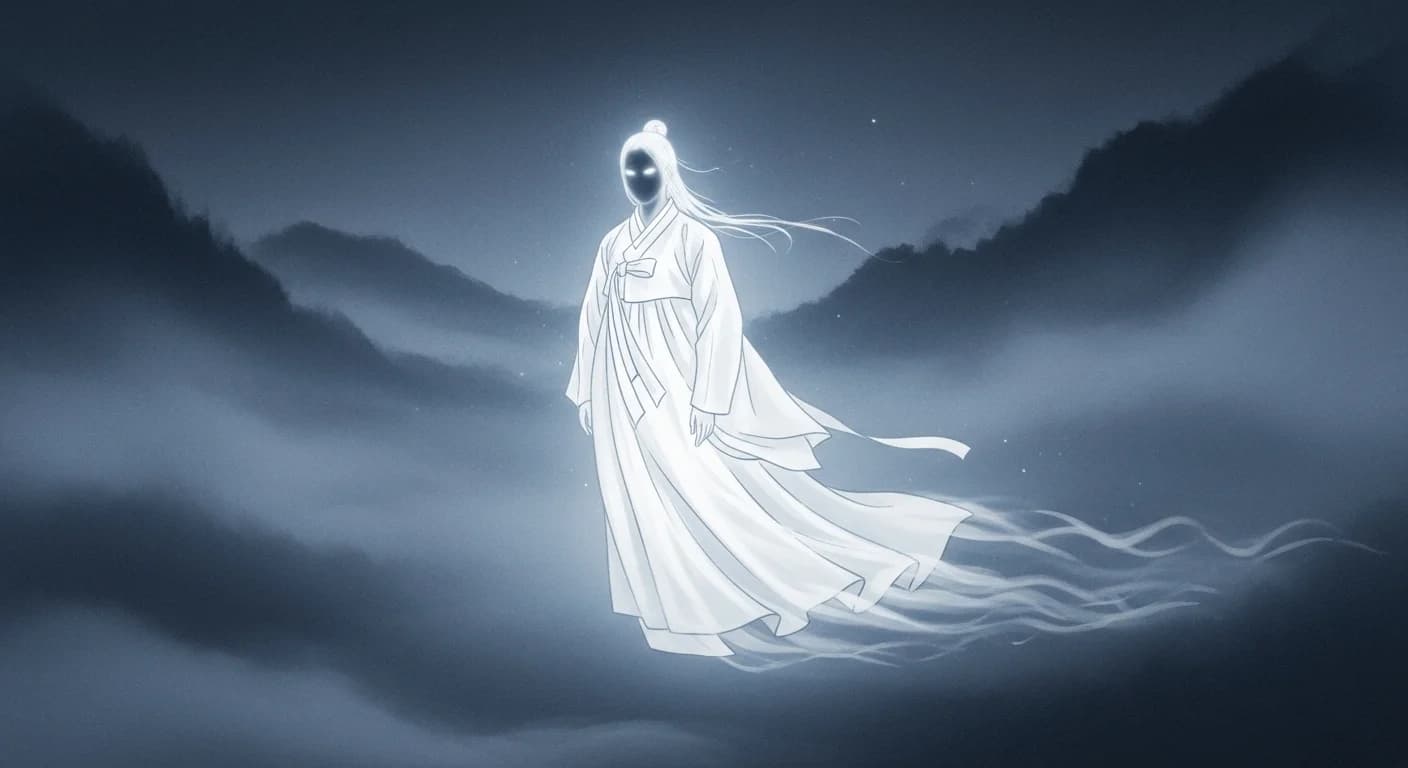
When a faceless figure simply accompanies you without threatening or helping — just present, calm, and watchful — Korean shamanism interprets this as an ancestral spirit or guardian deity offering silent protection. The absence of a face indicates it has not yet chosen to fully reveal itself, but its presence is benevolent. If the emotional atmosphere of the dream was peaceful or even comforting despite the strangeness, this is among the most reassuring faceless dream interpretations.
Dream Variations
A Faceless Person Speaks to You
When a faceless figure addresses you directly in a dream, it symbolizes a voice rising from the deepest layers of your unconscious — suppressed emotions or a personal truth you have been avoiding. If you can remember what was said after waking, pay attention: these messages often contain genuine clues about important life decisions waiting to be made.
A Blurry or Obscured Face in a Dream
A face that is blurred rather than entirely absent suggests a relationship or situation that is not yet clearly defined. You may be in the early stages of a new connection whose nature is still unclear, or in an existing relationship where the other person's true character or intentions haven't fully come into focus. It's a prompt to look more carefully before committing.
Looking in a Mirror with No Reflection
The mirror-with-no-reflection dream is one of the most psychologically charged variations. It specifically points to a crisis of self — the feeling that you have lost your authentic identity inside the roles and expectations others have placed on you. The dream asks a direct question: Are you living as yourself, or as who others need you to be?
A Deceased Person Appearing Without a Face
In Korean shamanistic tradition, when someone who has passed away appears in your dream without a face, it indicates unresolved feelings or words left unspoken between you. The spirit is seen as unable to fully manifest because the connection between you remains incomplete. Honoring them through ancestral rites (제사), visiting their grave, or simply speaking to them in your heart is believed to bring peace to the spirit — and to the dreamer.
A Faceless Romantic Partner
Dreaming of a romantic partner without a face most commonly signals that your ideal partner has not yet appeared in your life, and the dream is a kind of anticipatory vision. If you are already in a relationship, it may reflect that you don't yet fully know your partner — their true motivations or inner world remain a mystery. Either way, the interpretation leans positive.
A Faceless Child in a Dream
A child without a face can represent your own pure, undeveloped inner self, latent creative potential, or — for those hoping to conceive — a taeong (태몽, conception dream) in which the arriving soul has not yet fully formed its earthly identity. The emotional atmosphere of the dream is the key indicator: a joyful, peaceful child is an auspicious sign, while a distressed one reflects anxieties about children or family.
Being Chased by a Faceless Entity
The pursuit dream featuring a faceless pursuer is a strong signal that something in your waking life is being actively avoided — a difficult conversation, a decision, a confrontation with your own feelings. The dream is not predicting danger so much as reflecting the mental and physical cost of avoidance. Notably, if you escaped or defeated the entity in the dream, Korean tradition reads that as a sign that you will overcome the real-world challenge if you face it directly.
Cultural Context
In Korean traditional dream interpretation (꿈해몽), the face holds a uniquely elevated status. It is seen as the manifestation of a person's social identity, fate, and the condition of their soul (혼). Dreams featuring an absent or unrecognizable face have long been categorized as symbols of incomplete manifestation — a presence that exists but cannot yet be fully seen or known.
Within Korean shamanism (무속), a figure that appears without a face is understood to occupy the boundary between the world of the living and the realm of spirits. An ancestral spirit appearing without a face is interpreted as having an urgent message for its descendants but lacking the means to fully convey it — a call to perform ancestral rites (제사) or visit a grave.
From a Confucian perspective, a missing or blurred face in a dream signals that the relationship with that person is not properly defined or that ritual propriety (예) between you has been disrupted. Buddhist interpretation goes further: the faceless figure can represent 'no-self' (무아), the Buddhist concept that fixed, permanent identity is an illusion — a teaching dream urging you to release your attachment to a fixed self-image.
Korean conception dream (태몽) tradition also has its own interpretation: a faceless child is sometimes described as a 'waiting soul' — a spirit that has chosen the family but has not yet taken on its complete earthly form.
Western Psychological Perspectives
Western psychological traditions offer a rich set of frameworks for understanding faceless dreams, and they converge on some striking conclusions.
From a Freudian standpoint, the face is the mask of the ego — the socially constructed self presented to the world. A faceless figure in a dream signals an intrusion from the id, the unruly domain of desires and anxieties that the ego cannot control. The facelessness is itself significant: it represents a repressed impulse or fear that refuses to take a specific, recognizable form, remaining formless and therefore harder to confront.
Jungian psychology treats the faceless figure as one of the most evocative dream symbols in the entire archetypal lexicon. It may represent the Shadow — the unacknowledged, rejected parts of the self — or the Anima/Animus, the inner feminine or masculine figure that drives so much of psychological life. The absence of a face means the dreamer has not yet brought this inner figure into conscious awareness. Confronting the faceless figure, in Jung's framework, is literally the work of individuation: the lifelong process of becoming a complete, integrated person.
Modern cognitive psychology offers a more grounded explanation. The fusiform face area (FFA) in the brain's temporal lobe is responsible for facial recognition and is active even during sleep. When it fires incompletely — which happens more frequently during periods of heightened stress, anxiety, or identity disruption — faces in dreams become distorted or absent. High social anxiety, major life transitions, and identity crises are all known triggers for faceless dream experiences.
Cross-culturally, the faceless figure appears as a near-universal symbol of dread and the uncanny. Japanese folklore has the noppera-bō (のっぺらぼう), a faceless ghost that represents the unsettling dissolution of identity. The Western internet mythology of the Slender Man — tall, featureless, and threatening — tapped into the same ancient archetype and spread virally precisely because of its deep psychological resonance. That a symbol this consistent appears independently across cultures underscores how fundamental the human face is to our sense of reality, safety, and self.
Frequently Asked Questions
Faceless dreams are unsettling precisely because they strip away the most human feature we rely on to navigate the world. But in Korean tradition and in modern psychology alike, this strangeness is purposeful. Whether the dream warns you of a hidden threat, reflects your own identity in flux, or signals that an unseen protective force is nearby, the faceless figure deserves your full attention. The dream isn't trying to frighten you — it is asking you to look more honestly at something you have been avoiding, including, perhaps, yourself.