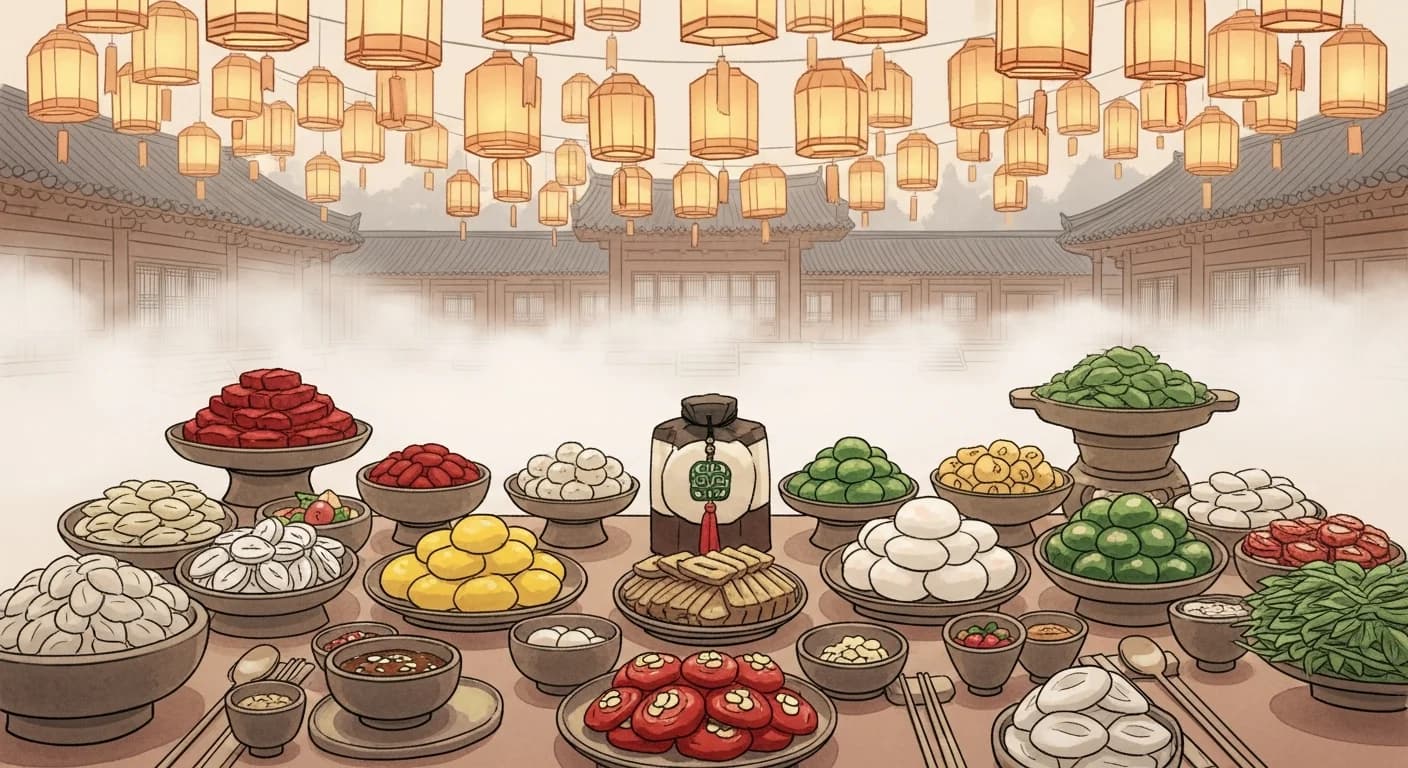
Feast Dream Meaning — Abundance, Community, and Hidden Warnings
If you sat before a lavishly loaded table in your dream last night, Korean dream tradition has genuinely good news for you — a feast brimming with food and laughter is one of the most auspicious omens in the entire 꿈해몽 canon. In Korea, a feast (잔치) was never just a meal; it was a village-wide ritual of celebration, a moment where the whole community gathered to mark life's most significant passages. But here is the twist — sitting alone at that feast, or finding the table bare, carries an entirely different message, one you will want to pay attention to.
Abundant Feast Dream — Rising Fortune and Better Relationships
Attending or hosting a feast with a warm, lively atmosphere is a classic auspicious dream in Korean tradition. It signals that even casual or low-key efforts will yield results far beyond what you expected, and that unexpected wealth or good news is making its way toward you. If alcohol or drinks were being passed around at the feast, this amplifies the auspicious reading — it adds longevity and health to the already strong financial forecast. The many people sharing joy with you in the dream reflect real-world potential: a helpful collaborator, a generous patron, or a long-awaited reconnection may be just around the corner.
Family Feast Dream — Household Harmony and Prosperity
When the whole family gathers around a feast table in a dream, Korean interpreters read it as a sign of household harmony and coming prosperity. Long-standing tensions within the family are predicted to dissolve naturally, and a windfall of unexpected good fortune is on its way to the entire household. If parents or relatives you have not seen in a long time appeared at the table, their presence is itself a positive omen. Days after this dream, reaching out to family members or revisiting old relationships tends to be rewarding.
Inauspicious Feast — Chaos, Isolation, and Caution
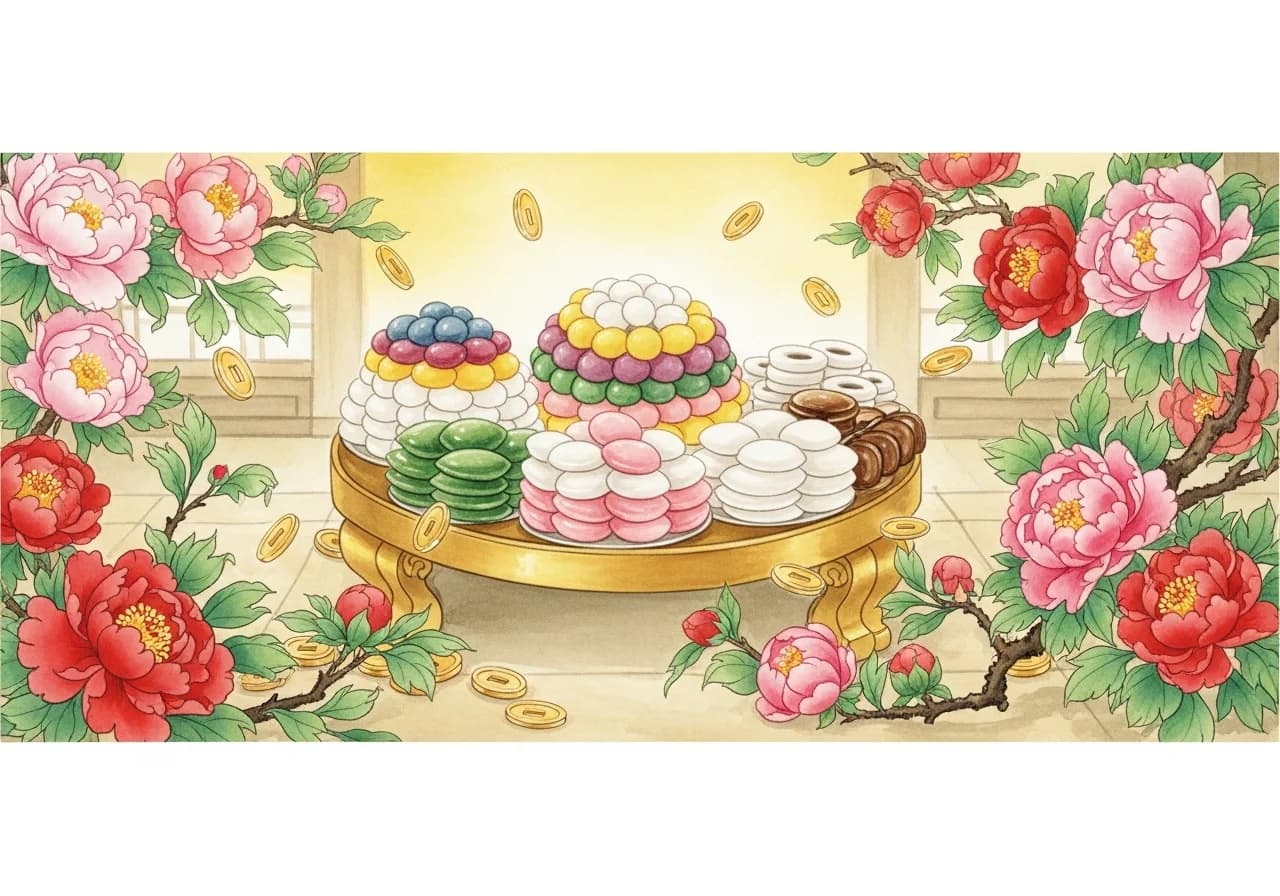
The same feast symbol carries a very different meaning when the atmosphere turns dark. A wedding feast where cups are overturned and food is scattered in disarray is a warning: instability and mounting anxieties are approaching. The most significant inauspicious scenario is sitting alone at an otherwise lively feast — this warns of social isolation, loneliness, or betrayal by someone you trusted. If you were at the feast but unable to eat, only watching others dine, Korean interpreters take that as a signal to attend to your physical health and consider a medical checkup.
Dream Variations
Attending a feast dream
Being invited and attending a joyful feast is auspicious — it signals rising financial fortune and improved social relationships. Projects and efforts already underway will deliver impressive results, and recognition from others is on the way.
Hosting a feast dream
Hosting the feast yourself signals wealth accumulation and the arrival of good news. One important qualifier: if the feast was poorly attended or the mood was flat, the dream warns that current plans may not reach their full potential.
Wedding feast dream
A wedding feast dream is entirely defined by its atmosphere. Beautiful, musical, and joyful means good things are coming in love and relationships. Chaotic, with overturned cups and disorder, is an inauspicious warning of growing worry and conflict. Your emotional state during the dream is the clearest guide.
Funeral feast dream
Paradoxically, sharing food at a funeral gathering is considered auspicious in Korean tradition. It suggests that unexpected fortune or a positive life turn is coming even within a difficult situation, and that longstanding worries may finally be resolved.
Abundant feast table dream
Seeing a table laden with overflowing food is a classic auspicious omen for significant financial gain. For business owners it predicts prosperity; for employees it may indicate a promotion or pay raise. A table piled with rice cakes and fruit makes the reading even stronger.
Empty feast table dream
Arriving at a feast to find an empty or nearly bare table warns that anticipated plans or gains may fall through, or that finances could become strained. It is worth reviewing current investments or spending plans with extra care.
Dol-janchi (first birthday feast) dream
The dol-janchi is Korea's first birthday celebration — a major community event. Dreaming of one is auspicious, symbolizing new beginnings, business prosperity, and growth energy. For expectant mothers, this dream is sometimes interpreted as a pregnancy dream (태몽) indicating a bright, healthy child.
60th birthday feast dream (hoegap feast)
The hoegap (환갑) feast celebrates a person's 60th birthday — a milestone of longevity and wisdom in Korean culture. Dreaming of one is auspicious: long-term efforts will finally bear fruit and you will receive recognition and respect from those around you.
Alone at a feast dream
Sitting alone in the middle of an otherwise lively feast warns of social isolation, loneliness, or betrayal by a trusted person. Pay close attention to your close relationships and look for signs you may be taking someone's loyalty for granted.
Family feast dream
All family members gathered at a feast in warm celebration is a gentle, deeply auspicious omen. Old conflicts within the family are predicted to resolve naturally, and good fortune will visit the entire household.
Cultural Context
In Korean tradition, a feast (잔치) was far more than a communal meal — it was a ritual marker of life's most pivotal transitions. Milestone celebrations like the dol-janchi (a child's first birthday), hoegap/hwangap (a parent's 60th birthday), a wedding, and the communal meal following a funeral were events the entire village participated in together. This was the embodiment of 상부상조 (mutual aid) — neighbors contributing labor and food to celebrate or grieve alongside a family they might barely know. The cultural weight of this tradition is why a feast in a dream carries such broad symbolic power: it represents not just personal good fortune, but restored community bonds, rising social esteem, and household prosperity. An abundantly laden table (잔치상) symbolizes two of the five blessings (오복) — wealth (부귀) and longevity (수) — while an empty table or scattered food warns of depleted resources or the severing of important bonds.
Western Psychological Perspectives
Western psychological frameworks offer a fascinating counterpoint to Korean dream interpretation of feasts, illuminating the inner dimensions that complement the tradition's outward, communal focus.
From a Freudian perspective, a feast dream connects deeply to the oral stage of psychosexual development. The abundant sharing of food in dream imagery often represents the unconscious fulfillment of unmet desires for nourishment and affection rooted in early childhood. Being invited to a feast can be read as a sublimated expression of the libidinal desire for acceptance and recognition — the dreamer's psyche constructing a scenario where those needs are finally, fully met.
Jungian analytical psychology approaches the feast as an archetypal image from the collective unconscious, linked to the archetype of the Self and community wholeness. A richly laden feast table symbolizes inner integration — the ego moving in harmony with the Self through the individuation process. Sitting alone at a feast, or finding it empty, takes on the opposite meaning: it may represent the Shadow or a sense of separation from the collective, signaling that inner work is needed to restore psychological wholeness.
Modern cognitive psychology and neuroscience frame feast dreams as the brain's processing of social belonging and safety needs during sleep. When a person is experiencing stress or social isolation in waking life, the brain may reactivate memories of communal abundance to restore psychological equilibrium. If feast dreams recur for you, they may be pointing to an unmet need for greater social connection and a stronger sense of community.
What is striking is how Korean tradition and Western psychology both affirm the feast as a fundamentally positive symbol, yet emphasize different dimensions. Korean dream interpretation focuses on external, communal outcomes — material fortune, family harmony, social standing. Western psychology turns inward, centering the individual's inner state of belonging and psychological fulfillment. Together they offer a complete picture of why the feast is one of dream symbolism's most resonant and universal images.
Frequently Asked Questions
A feast dream sits at the intersection of abundance, human connection, and community — one of the most symbolically rich images in Korean dream interpretation. If the table was full and the laughter was genuine, your fortune in both wealth and relationships is on an upward trajectory. If you found yourself alone or the table was bare, treat it as a prompt to reconnect with those around you and check in on your wellbeing. Either way, the feast invites you to look more closely at what is truly nourishing — and what is missing — in your waking life.
Related Dreams

Food Dream Meaning — What Korean Dream Interpretation Says About Eating in Your Sleep

Rice Dream Meaning — What Korean Dream Tradition Says About 밥꿈
Cooking Dream Meaning: What Korean Dream Tradition Reveals

Alcohol Dream Meaning — What Korean Tradition Says About Drinking in Dreams
Pig Dream Meaning in Korean Culture — Good Luck or Warning?