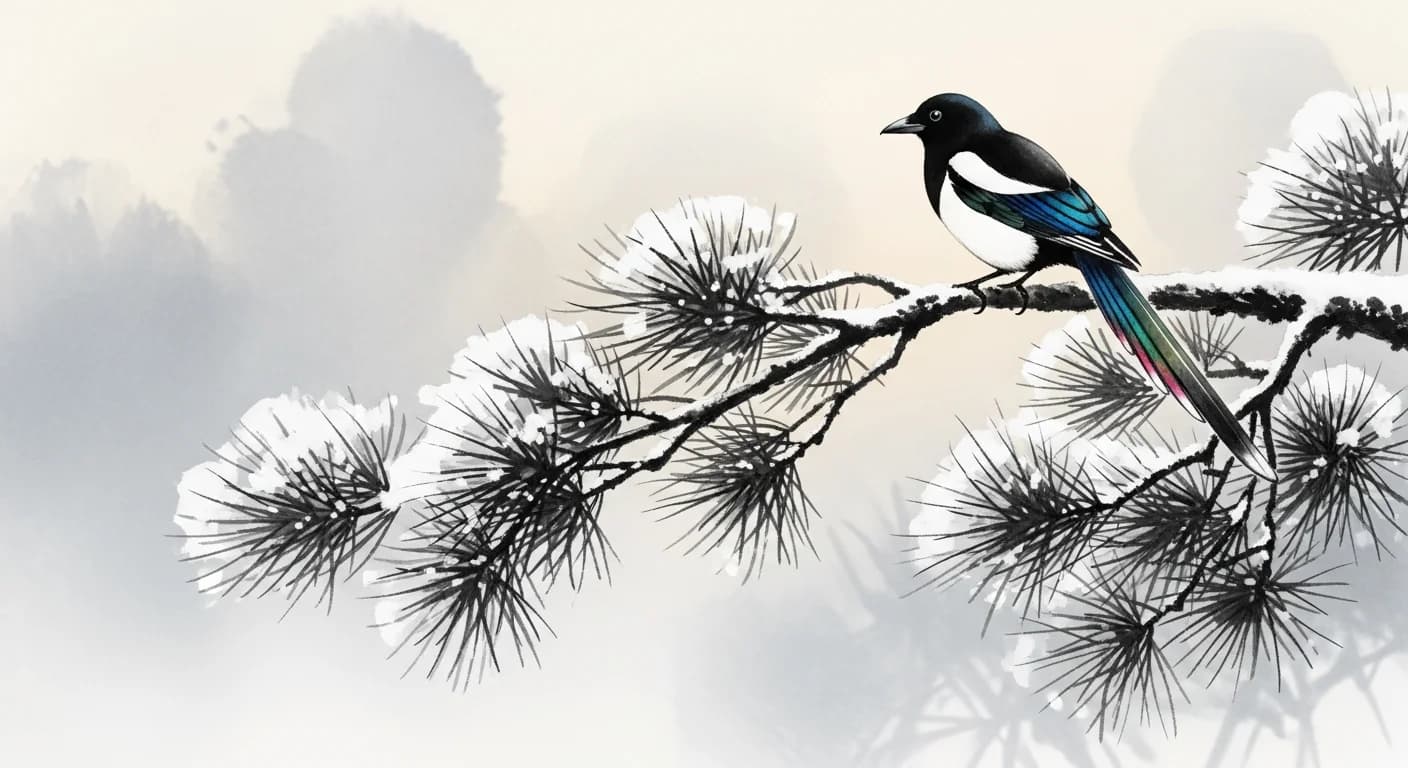
Magpie Dream Meaning: Korea's Beloved Herald of Good News
Dreaming of a magpie is one of the most auspicious omens in Korean dream interpretation — a direct signal that joyful news and a welcome benefactor are drawing near. The proverb 'when a magpie calls in the morning, a guest is coming' traces its roots to the Silla era, and the magpie's role as heaven's messenger of good fortune has been woven into Korean culture for over a thousand years. There is one crucial distinction worth knowing, however: a magpie flying away or lying dead carries an entirely different meaning, so the context of the dream matters enormously.
Auspicious — Good News, Benefactors, and Celebration

A magpie calling, flying toward you, or perching on a rooftop is a classic good omen in Korean dream lore. Hearing its clear song in a dream suggests that long-awaited news is on its way, or that someone you have not heard from in some time is about to make contact. If the magpie lands on your shoulder or hand, the interpretation becomes even more powerful: a benefactor is coming directly to you, ready to offer decisive help. For those awaiting exam results, a job offer, or a business deal, this dream is a strong indicator of success. A magpie flying into your home signals impending family celebration — a marriage proposal, a pregnancy announcement, or a promotion may well be in the offing. A flock of magpies calling in chorus indicates that multiple allies and supporters are entering your life, marking an excellent period for expanding your network or launching a new venture.
Inauspicious — Missed Opportunities and Communication Blocked
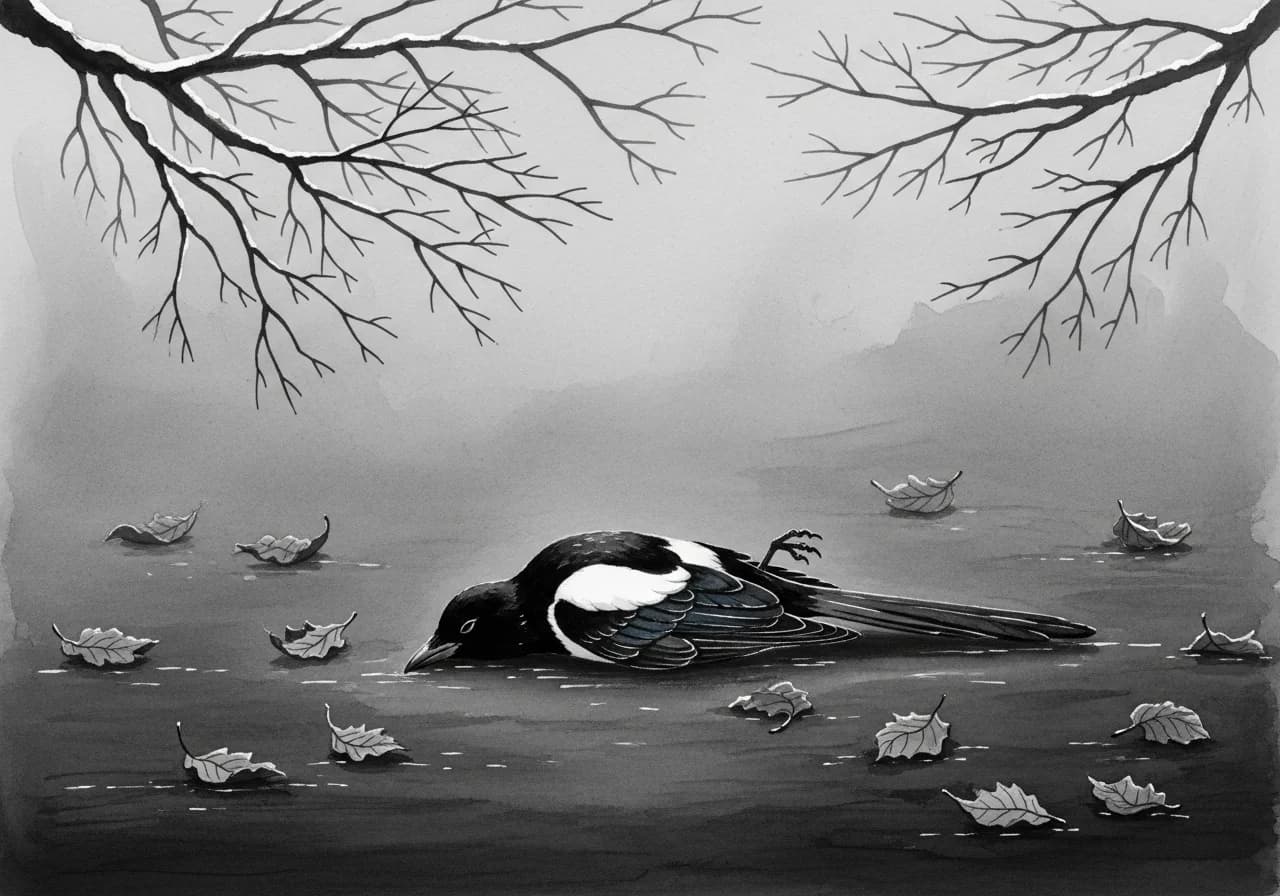
Not every magpie dream brings good news. A magpie flying away or disappearing from sight warns that an opportunity may slip through your fingers, or that anticipated good news could be delayed or cancelled. After this dream, avoid rushing important decisions and take more time to assess the situation carefully. A dead or injured magpie unable to fly is a warning that expected news may not arrive, or that communication with someone close could break down. Plans may not unfold as hoped — it is wise to prepare contingency measures in advance. A magpie aggressively pecking or diving at you signals that someone in your environment may be jealous or trying to obstruct you; take extra care with your words and actions to avoid conflicts at work or at home.
Neutral — Heaven's Advice to Wait and Prepare
A magpie sitting quietly in a tree and watching you calmly carries a nuanced message: good news is indeed coming, but the timing has not yet fully ripened. This dream counsels patience and thorough preparation rather than pushing ahead prematurely. Rather than forcing outcomes or making hasty decisions, use this period to build a stronger foundation. When the right opportunity arrives, you will be ready to act with confidence — and that readiness is what this dream is quietly asking you to cultivate.
Dream Variations
Magpie Calling Dream — News Is On Its Way
A magpie singing loudly or with a clear, bright voice is a classic good omen. Expect a welcome visitor or long-awaited joyful news. The Korean proverb 'if a magpie calls in the morning, a guest is coming' may well become reality. The clearer and louder the call, the stronger the auspicious sign.
Magpie Flying Toward You — A Benefactor Arrives
A magpie flying directly toward you or alighting on your shoulder or hand is an exceptionally strong auspicious dream, indicating that a benefactor is coming to help you or unexpected good fortune is on its way. You can anticipate positive developments in career, business, or romance.
Magpie on the Roof — Family Fortune Approaches
A magpie sitting on your rooftop, calling, or beginning to build a nest signals impending good fortune for the household. In Korean folk tradition, a house with a magpie's nest is said to attract wealth and official advancement — this dream announces that joyful family news is near.
Flock of Magpies Dream — Many Supporters Arrive
A flock of magpies appearing together or calling in chorus signals multiple benefactors and collaborators entering your life to drive great success. It marks a highly favorable time for business expansion or building strong cooperative relationships.
Dead Magpie Dream — Blocked News, Disrupted Plans
Seeing a dead magpie is an inauspicious dream, warning that expected joyful news may be thwarted or communication with someone you have been waiting to hear from may be cut off. Important appointments or plans may go awry — prepare for unexpected variables.
Catching a Magpie — Wish Fulfillment and Success
Catching a magpie by hand is a powerful dream of wish fulfillment — exam success, a business deal closing, or achieving a long-sought goal. As a taemong (pregnancy omen dream), it foretells a bright, multi-talented child.
Magpie Taemong — An Intelligent, Gifted Child
Dreaming of a magpie during pregnancy is interpreted as a taemong foretelling an intelligent, artistically gifted child. Since the magpie symbolizes wisdom and communication, the child is said to grow into a person of outstanding communicative ability and natural leadership.
Magpie Entering Your Home — Joyful Family Changes
A magpie entering through the door or window of your home heralds joyful changes for the family — marriage news, a pregnancy, a job offer, or a promotion. It may also foretell the arrival of a precious new relationship or a highly welcome visitor.
Magpie Flying Away — Opportunity Slipping, News Delayed
A magpie flying away from you is a cautionary dream, warning that an opportunity may slip away or anticipated good news may not arrive. Avoid rushing important matters or pressing forward without adequate preparation.
Magpie Attacking You — Jealousy and Conflict Warning
A magpie aggressively diving at you or pecking you warns of jealousy or sabotage from someone in your environment. Conflicts and misunderstandings may arise at work or at home — exercise great care with what you say and do.
Cultural Context
The magpie holds a uniquely cherished place in Korean folk culture as the quintessential bird of good tidings. The proverb 'when a magpie calls in the morning, a welcome guest is coming' is a folk belief spanning centuries, with roots stretching back to the Silla-era myth of King Talhae, where the magpie first appears as a divine herald. So beloved is the bird that it was designated Korea's national bird in 1964.
The magpie's most celebrated mythological role is in the Chilseok (칠석) legend of the Ojakgyo (오작교) — the Bridge of Birds. On the seventh day of the seventh lunar month, magpies and crows are said to form a living bridge across the Milky Way so that the separated star-crossed lovers Gyeonu (the cowherd, Altair) and Jiknyeo (the weaver girl, Vega) can reunite for a single night each year. Through this legend, the magpie became not merely a bird but a powerful symbol of connection — a mediator between separated souls, a messenger bridging heaven and earth.
In childhood folk custom, children would toss a lost milk tooth onto the roof and call out, asking the magpie to take the old tooth and bring back a new one — a testament to the bird's perceived role as an agent of exchange and renewal. A magpie nest on a rooftop or tall tree near a home was believed to bring official advancement and wealth to that household, while harming a magpie was considered a serious invitation of misfortune.
Western Psychological Perspectives
Viewed through the lens of Western psychology and comparative folklore, the magpie dream reveals additional layers of meaning.
From a Freudian perspective, the magpie — famous for collecting shiny objects — can symbolize suppressed desires and the hoarding instinct of the unconscious mind. The bird's chattering may represent repressed impulses pushing toward expression. A dream of a magpie stealing or carrying off objects could reflect projected longing for something belonging to another.
In Jungian psychology, the magpie embodies the Messenger archetype — a mediator moving between the conscious and unconscious, carrying meaning across the threshold. Just as the magpie builds the Ojakgyo bridge in myth, the dreaming magpie may signal a process of inner integration, bridging ego and Self. Its strikingly contrasted black-and-white plumage can also represent the tension between the Shadow and the Persona — two opposing faces of the psyche made visible.
Modern cognitive psychology views the magpie dream as a reflection of latent expectations around communication and interpersonal connection. These dreams frequently occur when the dreamer is waiting for important news or yearning for contact with someone significant — the brain processing this anticipation through a culturally resonant symbol. The magpie's loud, persistent call may represent the unconscious signaling that there is information demanding attention.
Across cultures, the magpie carries complex, often dualistic symbolism. In British and Irish folk tradition, the famous rhyme 'One for sorrow, two for joy' frames the magpie as an ambiguous messenger of fate. In China, as in Korea, the magpie is called 喜鵲 (Xǐquè, 'joy bird') and is a beloved symbol of happiness and marital bliss, commonly featured in wedding décor. By contrast, some European traditions associate the magpie with boastfulness or trickery — a reminder that the same bird can carry radically different meanings depending on cultural context.
Frequently Asked Questions
The magpie dream stands as one of the most warmly welcomed omens in Korean dream interpretation. When Korea's national bird — the herald of heaven — appears in your dream, it is an invitation to open your heart to the good news and welcome encounters drawing near. The more vivid and active the magpie's presence (calling, flying toward you, entering your home), the stronger the auspicious signal. If the magpie flew away or appeared injured, take the dream as a gentle prompt to slow down, prepare more thoroughly, and wait for the right moment. As with all dreams, consider the overall mood and your emotional response — they are the most personal and reliable guide to what your dreaming mind is telling you.
Related Dreams
Crow Dream Meaning — Warning, Reversal, and the Dual Symbolism of Korea's Black Bird

Sparrow Dream Meaning — A Korean Guide to Small Fortune and Family Blessings

Bird Flying Dream Meaning
Owl Dream Meaning — Between Wealth Omen and Warning in Korean Tradition
Many Birds Dream Meaning — What a Flock of Birds Symbolizes in Korean Dream Interpretation