Persimmon Dream Meaning — Complete Korean Dream Interpretation Guide
If you dreamed of ripe, glowing persimmons last night, Korean dream tradition has a clear message for you: abundance and long-awaited reward are ripening in your life. Persimmons hold a place in Korean culture that goes far beyond ordinary fruit — presented as royal tribute in the Joseon Dynasty and offered at every ancestral rite, they are symbols of patience, harvest, and blessed fortune. But there's a catch worth knowing: the condition of the persimmons and what you were doing with them in the dream changes the reading dramatically, from strong good luck to a genuine warning.
Auspicious Persimmon Dreams — Wealth, Success, and Reward

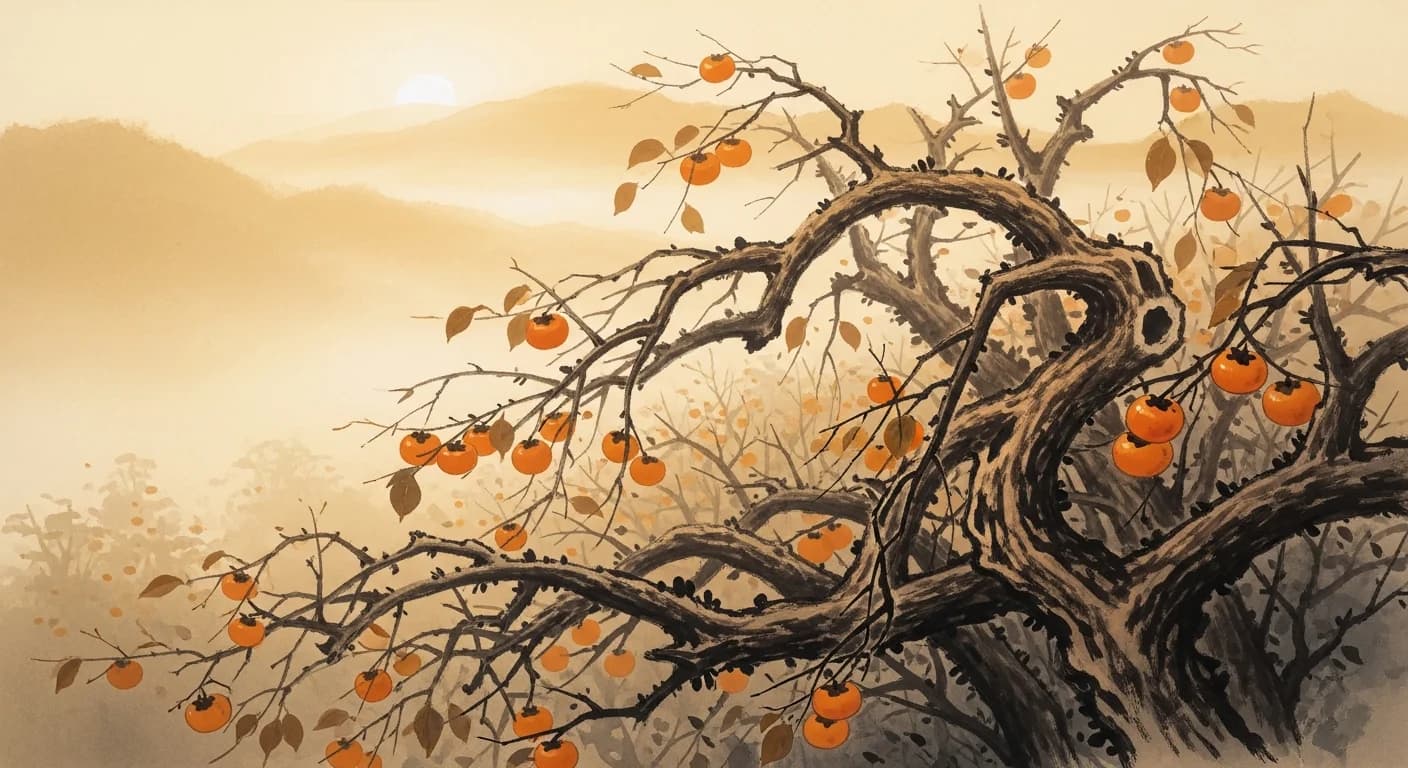
Picking or eating ripe persimmons — especially fully softened hongsi — is one of the most celebrated wealth and success omens in Korean dream tradition. Long-nurtured efforts are about to pay off, with unexpected income, promotions, and exam results among the blessings most commonly associated with this dream. If the persimmon tree in your dream was heavily laden with fruit, the sign points specifically toward major achievements in business or career.
Receiving persimmons as a gift is equally auspicious. The dream foretells that a benefactor or helpful person will appear from an unexpected direction, and that good news is headed toward your family. Receiving dried persimmons (gotgam) in particular hints at rewards arriving after long effort and the timely securing of needed resources.
Climbing a persimmon tree to pick fruit is a powerful symbol of achieving a specific goal — whether that's a university place, a new job, a promotion, or a professional qualification. Filling a basket with persimmons signals joyful household news or a substantial increase in material wealth.
Inauspicious Persimmon Dreams — Warnings to Heed
Rotten or spoiled persimmons appearing in a dream are a cautionary signal. They warn of potential health issues, strained relationships, or flaws in current plans that have not yet been noticed. Rather than pushing forward aggressively, the dream urges a pause to reassess — Korean dream tradition frames this as the universe giving you a chance to course-correct before something breaks.
Dropping and breaking hongsi you are carrying, or having someone else take your persimmons, signals financial loss or a missed opportunity through carelessness or poor judgment. In business or financial matters, the message is clear: slow down and double-check the details.
Eating unripe, green, astringent persimmons in a dream sends an intuitive message about poor timing. It encourages patience — plans are not yet ready to bear fruit, and moving too early risks souring what might otherwise be a sweet outcome.
Context-Dependent Dreams — Buying, Selling, and Dropping
Dreams involving buying or selling persimmons carry meanings that shift with the details. Buying persimmons can hint at marital friction or property complications ahead, while selling them may reflect emotional guardedness and hidden feelings in waking life. However, when the transaction is smooth and satisfying, the dream leans positive — signaling a favorable business deal or commercial success.
Dropping persimmons while picking them can be either a warning about overreaching or carelessness leading to missed opportunities, or a gentler signal that acknowledging a small mistake promptly will allow for quick recovery. Pay attention to how you felt in the dream — the emotional tone is often the most reliable guide to which reading applies.
Fortune and Wealth — What Persimmon Dreams Mean for Money
Among food-related dreams in Korean tradition, persimmon dreams are one of the most consistently linked to financial fortune. Harvesting or receiving multiple ripe persimmons suggests unexpected income, favorable investment outcomes, or strong business performance is approaching. Seeing a large pile of vibrant persimmons is an especially powerful omen of both great wealth and social prestige arriving together.
Conversely, losing persimmons or encountering rotten ones is a signal to review your finances and hold back on impulse spending or risky investments. As a general guide: vivid, ripe, abundant persimmons in your dream are the universe telling you the conditions for reward are right — use that energy to act with confidence in the right direction.
Dream Variations
Eating Hongsi Dream — Sweet Success and Pregnancy Omen
Eating sweet, fully ripened hongsi (the soft, almost liquid-ripe form of persimmon) is an auspicious dream signaling that current endeavors will proceed smoothly and result in financial reward and deep personal satisfaction. As a pregnancy dream (taemong), it foretells the birth of a gentle, healthy, and happy child. The more vivid the sweetness felt in the dream, the greater the anticipated reward.
Picking Persimmons from a Tree Dream — Achieving Goals
Picking persimmons directly from a tree is a powerful good-luck dream signaling success in exams, job applications, promotions, or business ventures. In Korean dream interpretation, the greater the harvest, the larger the anticipated gain. This is one of the clearest 'go-for-it' dreams in the tradition — if you were reaching for fruit and successfully picking it, the timing for pursuing your goals is favorable.
Dried Persimmon (Gotgam) Dream — Long-Earned Rewards
Dried persimmons (gotgam) in a dream symbolize rewards arriving after sustained effort and patience. Receiving gotgam from someone signals that a benefactor's help or a trusted partnership will bring success to a business or project, and that resources or capital you have been seeking are about to become available. Gotgam also carry associations with winter preservation and endurance — the dream acknowledges that you have been patient, and that patience is about to pay off.
Dream of Many Persimmons Piled Up — Great Success Ahead
Seeing a large, abundant pile of vivid persimmons is among the most auspicious dream scenarios in Korean tradition. It forecasts major success in whatever project or endeavor you are currently pursuing, along with the accumulation of significant wealth and social prestige. For entrepreneurs, it signals a new opportunity on the horizon; for employees, a well-deserved promotion may be closer than you think.
Rotten Persimmon Dream — Warning to Check Health and Plans
Rotten persimmons warn of health issues, interpersonal conflicts, or flaws in current plans. After this kind of dream, it is wise not to delay overdue health checkups, and to review important relationships and ongoing projects with honest eyes. The core message is not doom — it is a timely heads-up to catch problems while they are still small and fixable.
Receiving Persimmons as a Gift Dream — Unexpected Good Fortune
Receiving persimmons as a gift foretells unexpected windfall income or the timely help of a benefactor arriving from an unforeseen direction. Joy within the family and an improved reputation among peers are likely to follow. If the person giving the gift appeared warm and benevolent, the fortune signaled is all the stronger.
Eating Astringent Persimmons Dream — Hardship That Leads to Triumph
Despite the unpleasant taste, eating astringent persimmons can actually be interpreted as a positive sign that hardships will be endured and ultimately overcome, leading to social advancement or business prosperity. The bitterness itself is the message: what feels difficult right now is the necessary stage before the sweetness arrives. Think of the persimmon's own transformation from puckering green fruit to honeyed hongsi.
Persimmon Pregnancy Dream (Taemong) — Daughter or Son?
Persimmon dreams hold special significance as pregnancy omens (taemong) in Korean folk tradition. Picking up a persimmon or hongsi that has fallen to the ground traditionally predicts a beautiful daughter, while harvesting large, vibrant persimmons directly from a laden tree foretells the birth of a son with a bright and promising future. Korean folk surveys consistently rank seed-bearing fruits — persimmons and peaches chief among them — as some of the most commonly cited boy-baby omens.
Persimmon Tree Dream — Influence, Wealth, and Benefactors
A persimmon tree in a dream relates to authority, wealth, and meaningful connections. A tree laden with fruit foretells welcome news or the arrival of an important relationship in one's life. Seeing three persimmon trees is interpreted as a sign that a strong patron or benefactor is about to appear. Climbing the tree actively symbolizes goal-directed ambition and the pursuit of something you genuinely want — the act of reaching upward itself carries positive energy.
Dropping Hongsi Dream — Warning Against Careless Losses
Dropping and breaking hongsi you are carrying is an inauspicious sign warning of financial loss or an opportunity squandered through carelessness. It advises careful attention to important matters in progress — contracts, investments, or significant commitments. If you felt distress or regret watching the fruit break on the ground, take that emotion seriously as a prompt to double-check important details in your waking life.
Cultural Context
In Korean culture, persimmons carry symbolic weight that extends far beyond their role as seasonal fruit. Certain varieties were presented as royal tribute to Joseon Dynasty kings, and persimmons remain an indispensable offering at ancestral memorial rites (jesa) and at Chuseok and Seollal celebrations. From a Buddhist perspective, the persimmon embodies transformation and spiritual growth — the journey from bitter, astringent green fruit to sweet orange hongsi mirrors the path of practice, patience, and enlightenment. Confucian tradition uses the grafting of persimmon trees as a metaphor for education and character formation: without proper cultivation, neither a tree nor a person produces quality fruit.
The beloved Korean folktale 'The Tiger and the Dried Persimmon' illustrates how deeply persimmons are embedded in the folk imagination — the fearsome tiger flees in terror simply upon hearing the word 'persimmon,' suggesting the fruit is more powerful even than the greatest predator. The custom of leaving a few unpicked fruits on the tree for magpies (kkachi bap) reflects a cultural ethic of generosity and harmony with the natural world. All these layers of meaning converge in dream interpretation: the persimmon stands for abundance, the fruits of effort, sharing, and blessed fortune earned through patient cultivation.
Western Psychological Perspectives
From a Freudian standpoint, fruit in dreams symbolizes unconscious longing for sensory pleasure, fulfillment, and gratification. Eating a ripe, sweet persimmon can be interpreted as an expression of oral-stage desire and libidinal satisfaction — a symbolic fulfillment of deep sensory needs that the waking mind may not openly acknowledge. Eating a bitter or astringent persimmon may reflect repressed desire, unmet needs, or a sense of deprivation in waking life. Freud viewed food imagery in dreams as one of the primary channels through which drives too threatening for conscious acknowledgment find symbolic expression.
From a Jungian perspective, the persimmon offers one of nature's most compelling individuation metaphors. The fruit's transformation from bitter, astringent green to sweet, yielding orange directly mirrors Jung's concept of individuation — the long process of making peace with the shadow, integrating unconscious dimensions of the self, and maturing into wholeness. The imagery of abundant harvest also connects to the Great Mother archetype from the collective unconscious, a primordial symbol of fertility, vitality, and life-giving abundance. Harvesting persimmons in a dream may represent the decisive moment when long-cultivated inner potential finally manifests in the outer world — what Jungians might call a moment of Self-realization.
Modern cognitive psychology and neuroscience see fruit dreams as connected to reward anticipation, goal-directed motivation, and perceived emotional or material deprivation. When a food with strong seasonal and cultural resonance — like the persimmon — appears in dreams, it often reflects psychological readiness for a life transition or intense anticipation of an impending change. Abundant harvest imagery may result from the brain's reward circuitry activating during periods of stress or anxiety, generating compensatory imagery of fulfillment and security. Research suggests that people with strong goal-oriented thinking tend to dream more frequently in metaphors of fruition and reward. Both Korean and Western traditions ultimately converge on a shared insight: the persimmon's physical ripening from bitter to sweet is a naturally compelling metaphor for positive transformation, and dreams know it.
Frequently Asked Questions
Persimmon dreams occupy a special place in Korean dream tradition as one of the richest and most layered fruit omens available. If your dream featured ripe, glowing persimmons being harvested, received, or enjoyed, take it as a confident signal that patient effort is about to bear fruit — in finances, career, family, or personal goals. If the persimmons were rotten, lost, or unripe, use the dream as a timely nudge to check your health, your plans, and your relationships before moving forward. Like the persimmon itself — transforming from bitter and astringent to honeyed sweetness through patient time — the best outcomes in life reward those who cultivate well and wait for the right moment.