Road Dream Meaning — What Your Path Dream Is Telling You
If you walked confidently along a wide, sunlit road in your dream last night, Korean dream tradition has something clear to say: the path ahead is opening for you. In Korean culture, the road (길, gil) is one of the most direct symbols of life direction and future prospects, making road dreams among the most vivid and specific omens the tradition recognizes. Here's the thing, though — the exact same road can be a powerful good omen or a serious warning depending on whether it was wide or narrow, bright or dark, open or completely blocked. That distinction is everything.
Wide, Bright Road Dreams — Auspicious Signs of Clear Progress
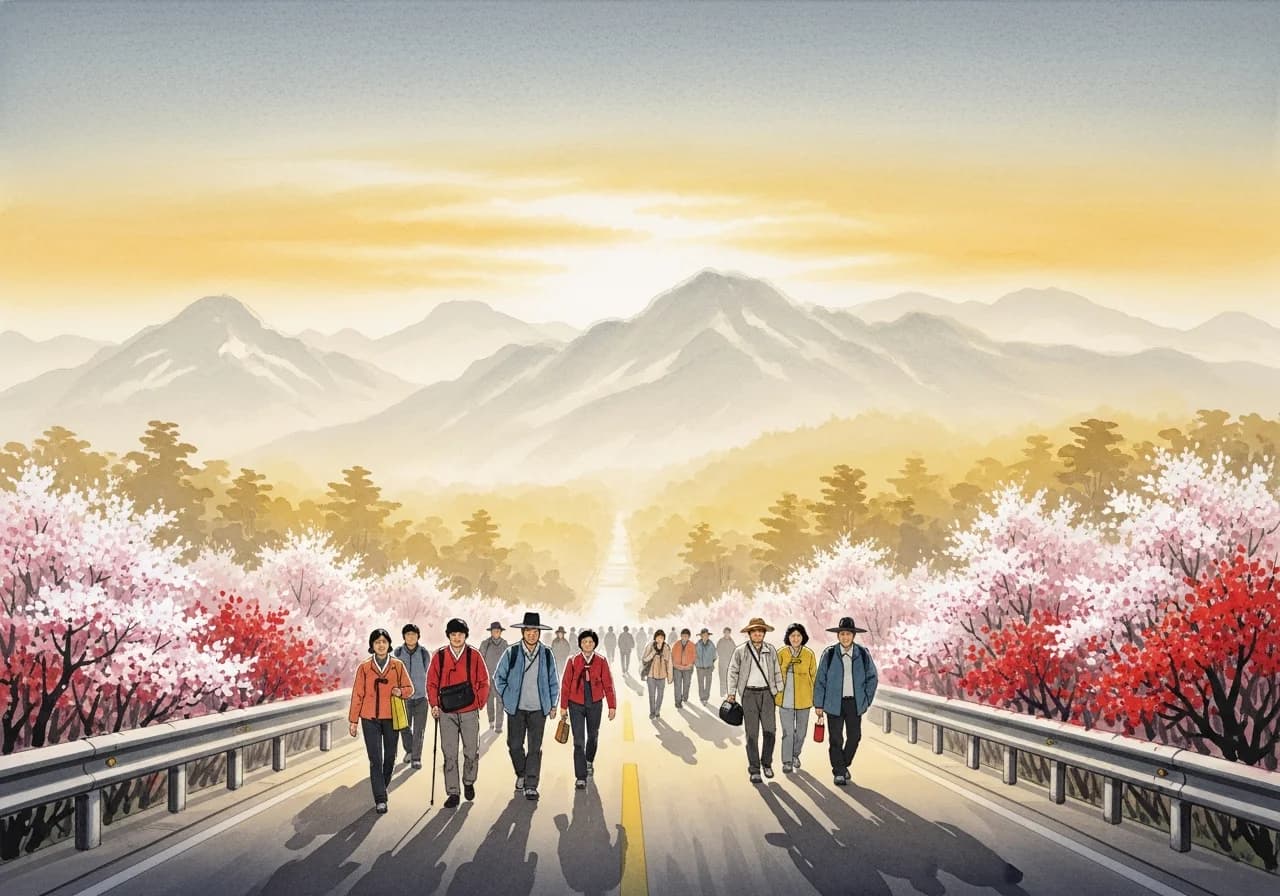
Walking or running confidently along a wide, well-paved road is one of the most auspicious (길몽, gilmong — good omen) scenarios in Korean dream interpretation. The clearer the view ahead and the better the road's condition, the stronger the indication that a current goal — business venture, job application, exam, or major project — will succeed and progress smoothly. A road completely free of obstacles carries an especially powerful positive charge. Dreaming of powerfully climbing an uphill road carries the same energy: the struggle is acknowledged, but the summit is promised. Meeting a helpful stranger or discovering something valuable along the road are also read as signs that unexpected good fortune and a helpful ally are on their way.
Blocked Road and Dark Road Dreams — Warnings of Obstacles
A road that suddenly ends or is completely blocked represents the opposite — an inauspicious (흉몽, hyungmong — bad omen) warning that unexpected barriers may arise in a plan or goal currently underway. The specific obstacle matters: construction or a temporary blockage suggests a short-term delay, while a solid closed wall signals the need for a fundamental rethink of strategy. Walking alone on a pitch-dark road at night reflects feelings of isolation and anxiety about the future, warning that you may face a difficult period without the support of those around you. There is a hopeful exception — if a light appears or someone arrives while you walk that dark road, it suggests that help will come even in your most difficult moment. Falling or having your feet sink into the road warns of an unexpected mistake or accident that may cost an important opportunity.
Crossroads Dreams — Standing at a Life Decision
Standing before a forked road is interpreted as neutral rather than inherently good or bad. It is the dream mind's way of acknowledging that a significant choice — career, relationship, relocation, or business — lies directly ahead in waking life. In Korean folk tradition, crossroads were regarded as liminal points where spirits gathered and fate diverged, making them spiritually charged locations even in dreams. If one branch looks brighter and more open in the dream, that is taken as guidance toward the more favorable option. If both paths look dark or unclear, the message is to gather more information before deciding. After having this dream, rushing into a major decision is generally not advised.
Nature Path Dreams — A Signal to Rest and Recover
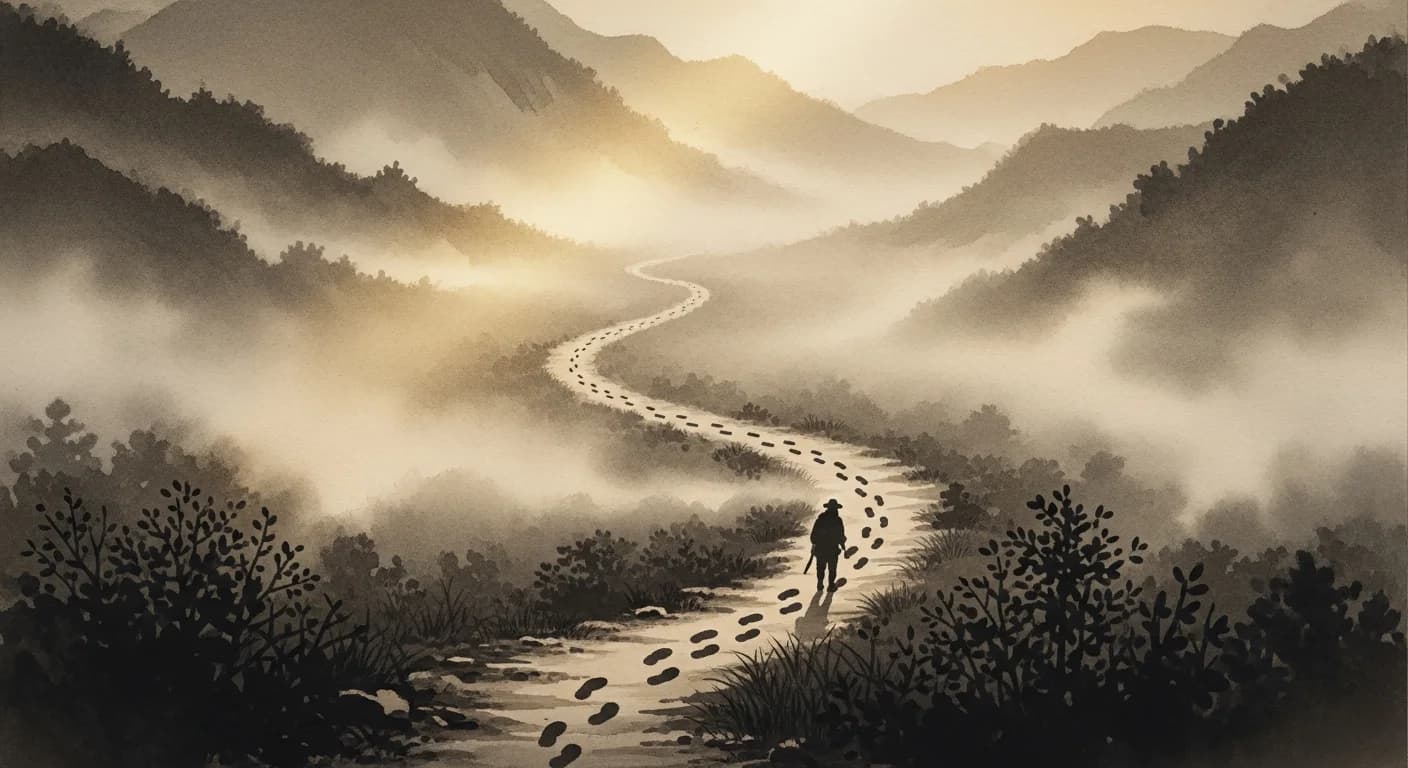
Leisurely strolling along a narrow mountain trail or country path in beautiful natural surroundings is read as a neutral-to-positive dream with a specific message: your inner self is asking for rest. This type of road dream reflects a deep desire to escape the pressures of daily life and a genuine need for emotional recovery. Rather than treating it as a fortune omen, the tradition suggests taking it as permission — and perhaps a directive — to slow down and restore yourself.
Dream Variations
Forked Road Dream / Crossroads Dream Meaning
Standing at a two- or three-way fork signals strongly that an important real-life decision — career, relationship, relocation, or business — lies ahead. In Korean folk tradition, crossroads were regarded as spiritual boundary points where fate pivots. If one branch appears brighter and more open, that choice is suggested to be the more favorable path.
Blocked Road Dream / Dead End Dream Meaning
A road that is completely blocked and offers no way forward warns of unexpected barriers in a current business venture, job search, or relationship. Construction or obstacle-blocked roads suggest a temporary setback, while a solid closed wall indicates the need for a fundamental change of strategy. If the dream shows finding a detour and pressing forward regardless, it suggests the dreamer will ultimately overcome the difficulty.
Dark Road Dream Meaning
Walking alone on a completely dark road at night is an inauspicious dream reflecting anxiety and a sense of lost direction about the future. If a person or a source of light appears while walking that dark road, it suggests a helpful figure will arrive to guide you out of crisis. Being chased on a dark road signals intense stress or psychological pressure in waking life.
Uphill Road Dream Meaning
Powerfully climbing a steep uphill road is an auspicious dream symbolizing the process of overcoming hardship to achieve one's goals. Struggling but persisting upward foretells that despite trials, ultimate success awaits. Conversely, giving up mid-climb or rolling back down warns of setbacks in a current endeavor.
Downhill Road Dream Meaning
Walking or running downhill can go either way depending on the feeling in the dream. A light, easy descent is an auspicious sign that a difficult period is ending and a comfortable phase is approaching. However, losing control and sliding down uncontrollably warns that a situation may deteriorate rapidly or that physical and mental health may be declining.
Narrow Path Dream Meaning
Walking a narrow path only wide enough for one person signals that current choices are severely limited, or that the dreamer is navigating a difficult course alone under significant pressure. Successfully passing through to the end means hardship will eventually yield results; turning back suggests wish fulfillment will be delayed.
Wide Open Road Dream Meaning
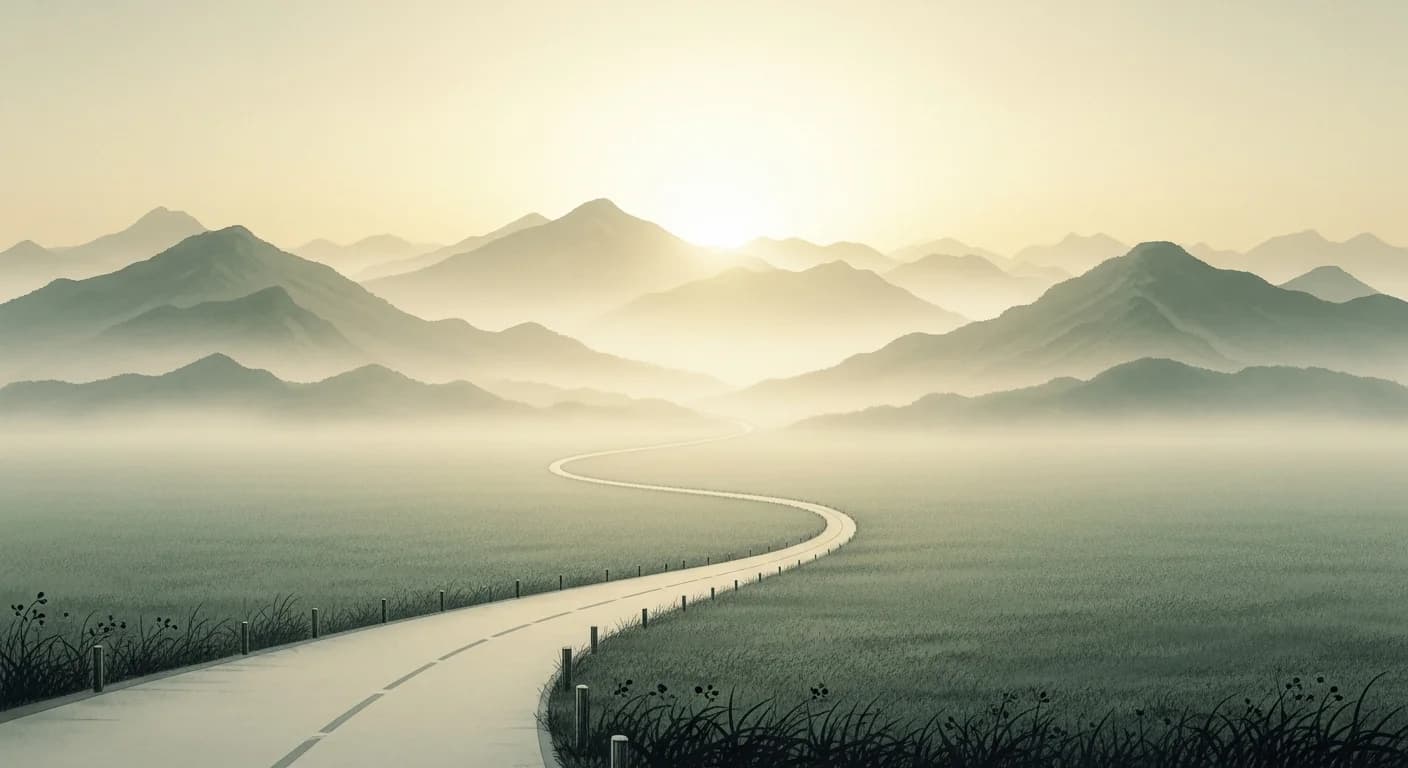
Walking or running along a wide, well-paved boulevard is a classic auspicious dream indicating that the road ahead is open and smooth. Particularly if the road is nearly empty of traffic and people, allowing free movement, it foretells business success, smooth career progress, and the removal of all obstacles.
Getting Lost on a Road Dream Meaning
Getting lost and wandering on a road reflects a psychological state of drifting without direction or purpose in life. It often appears when anxiety is high before an important decision or major change. If you eventually find your way in the dream, confusion in real life will also resolve; remaining irreversibly lost signals the need for more careful planning and outside guidance.
Meeting Someone Important on a Road Dream Meaning
Meeting a familiar face or a helpful stranger on the road and walking together or receiving their assistance is an auspicious dream foretelling that an unexpected benefactor will appear in waking life to help resolve a problem. If the help comes while walking a difficult road, it suggests that employment, business, or financial issues may be resolved through networking or a fortunate encounter.
Cultural Context
In Korean folk culture and tradition, the road (길, gil) has always carried meaning far beyond mere physical passage — it is a living metaphor for destiny, life direction, and the journey of existence. Expressions like 인생길 (the road of life), 앞길 (the road ahead), and 살아갈 길 (the path by which to live) are so deeply embedded in everyday Korean speech that the road as a symbol of fate and future is essentially inseparable from the language itself. In shamanic tradition (무속, musok), roads were understood as conduits between the living and the dead. The 진오귀굿 ritual involved the shaman opening a clear path for a departed spirit to travel smoothly to the afterlife — the shaman's core function was quite literally to make the road passable. Crossroads and intersections were regarded as liminal points where spirits and deities gathered, and it was taboo to pass through them alone at night. For this reason, a crossroads appearing in a dream was treated with great caution, interpreted as a sign that the dreamer stands at a spiritual boundary requiring careful action. In Buddhist tradition, the Eightfold Path (팔정도) frames the road as the very route to enlightenment, and dreams in which a Buddha or sacred figure guides the dreamer along a road were interpreted as signs of spiritual awakening and divine protection. Korea's road dreams thus function as more than fortune-telling — they have long served as mirrors for self-reflection on life's direction.
Western Psychological Perspectives
Western psychology brings a rich set of lenses to road dreams that complement the Korean tradition rather than contradict it. Sigmund Freud viewed roads and journeys in dreams as representations of the routes through which unconscious desires seek expression in the waking world. A well-paved, open road symbolizes libido — life energy — flowing freely without repression, while a blocked or dark road represents suppressed desires or unresolved psychological conflicts. Getting lost on a road, in Freud's framework, reflects the ego's inability to navigate between the id's impulses and the superego's moral constraints — a state of inner confusion that the conscious mind hasn't yet resolved.
Carl Jung took a broader view. In his analytical psychology, the road in a dream symbolizes the process of individuation — the lifelong journey of the ego toward the true Self. A crossroads represents a psychological branching point where integration with archetypes such as the Shadow or Anima/Animus is called for. A dark or labyrinthine road reflects the exploration of the deeper unconscious, which Jung considered not threatening but necessary — the darkness is part of the path, not a detour away from it. For Jung, the dream journey was an inner quest through which the individual discovers life's meaning and moves toward wholeness.
Modern psychology and sleep research have found that road dreams are closely linked to stress, career anxiety, and fear of change. People at life transitions — job loss, career change, relocation, or a breakup — frequently report dreams of blocked roads or getting lost. From a cognitive neuroscience perspective, these dreams are understood as the brain's way of safely simulating real-world uncertainty and the weight of decision-making. Recurring road dreams, researchers note, are a reliable signal that real-life decisions remain unresolved or that inner conflict has not been worked through.
Cross-culturally, the contrast is instructive: where Korean tradition emphasizes the road as a channel of collective fate and spiritual passage, Western culture tends to frame the road through the 'life is a journey' metaphor — stressing individual choice, self-determination, and the freedom to chart one's own course. Both traditions ultimately agree, however, that how you navigate the road in your dream reflects how equipped you feel to navigate the road in your life.
Frequently Asked Questions
Road dreams are among the most personal messages the dreaming mind can deliver — a direct report on how you feel about the direction your life is heading. A wide, lit road tells you to trust your momentum; a blocked or dark one asks you to pause and reassess. Whatever road appeared in your dream, the tradition's invitation is the same: take a moment to honestly examine where you're going, and whether the path you're on is truly the one you want to walk.